

El-Sayed rallies in Ottawa County, outlines progressive Senate vision
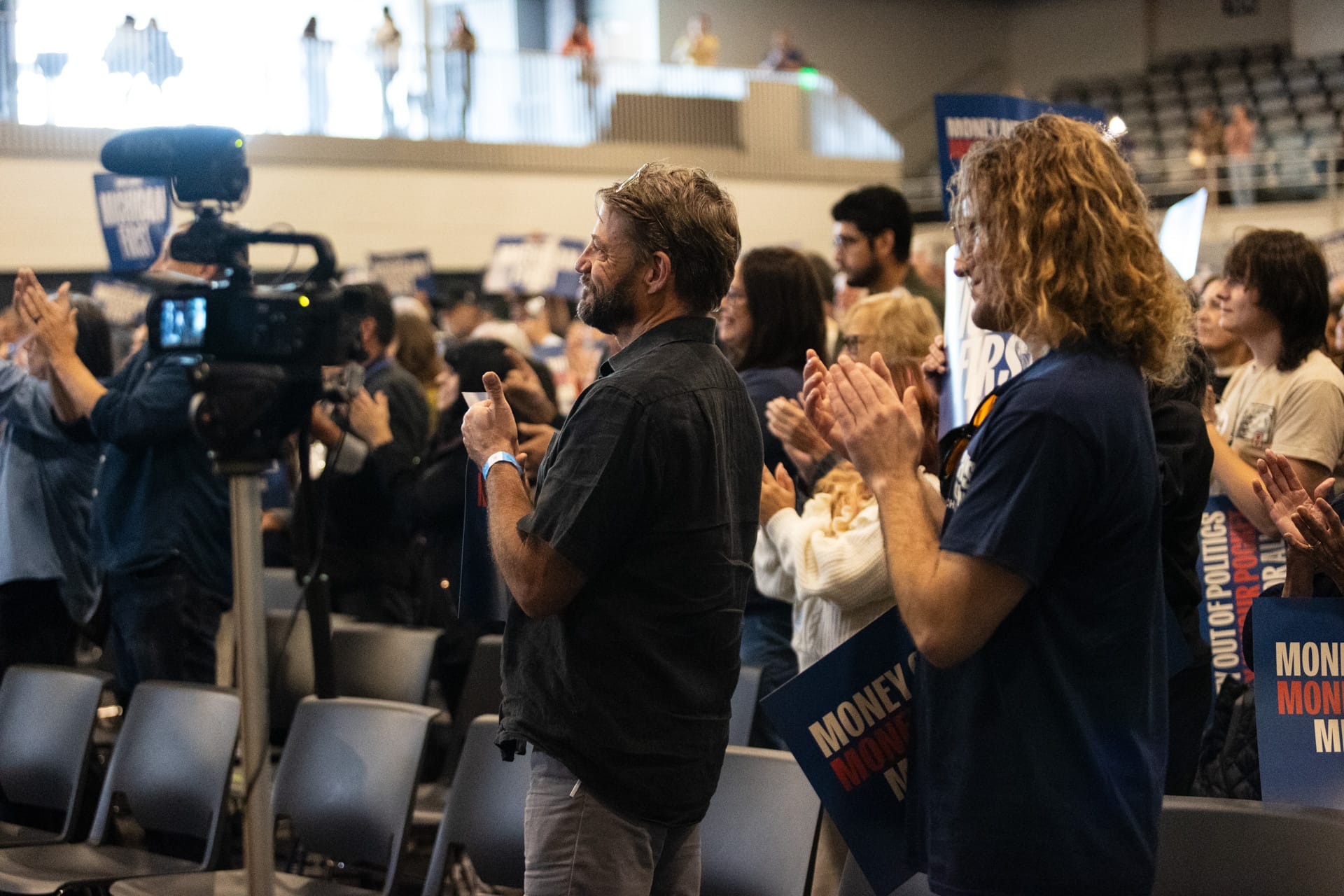
Deep in Ottawa County, a traditional stronghold of West Michigan conservatism, an overflow crowd gathered Sunday, Oct. 26, to witness an unusual convergence of media, grassroots activism and high-stakes U.S. Senate politics.

HOLLAND — Deep in Ottawa County, a traditional stronghold of West Michigan conservatism, an overflow crowd gathered Sunday, Oct. 26, to witness an unusual convergence of media, grassroots activism and high-stakes U.S. Senate politics.
Local Latino community leaders Cynthia Martinez and Rebecca Padnos Altamirano organized a live town hall and podcast recording that brought physician, epidemiologist, and Democratic U.S. Senate candidate Dr. Abdul El-Sayed to a region rarely visited by progressive candidates. The event featured national journalists and father-daughter duo Jorge and Paola Ramos, co-hosts of "The Moment" (El Momento), a multigenerational, English-language podcast co-produced by iHeartMedia's My Cultura Network and Radio Ambulante Studios.
Martinez is a Mexican American filmmaker, journalist and West Ottawa School Board trustee who released her documentary, "First Voice Generation," in 2025. Meanwhile, Padnos Altamirano is an entrepreneur, author, activist and educator.
The atmosphere inside the venue reflected both the urgency of the moment and the unique stakes of El-Sayed’s candidacy.
A former Detroit health director, Rhodes Scholar and Wayne County health officer, El-Sayed has mounted a campaign that defies standard political playbooks.
Refusing corporate political action committee money and advocating for systemic reforms — from Medicare for All to restructuring federal law enforcement — El-Sayed laid out a distinct political vision that links public health directly to the core survival of democratic institutions.
The race for Michigan's open Senate seat has become one of the nation's premier battlegrounds, featuring a sharp contrast in vision between El-Sayed and Republican nominee Mike Rogers, a former U.S. representative and FBI agent.
While national groups have targeted the state heavily heading into the general election, polling shows a competitive contest leading up to November. President Donald Trump was also in Michigan on Sunday, stumping for Rogers and Republican gubernatorial candidate John James.
El-Sayed's campaign continues to emphasize that focusing on healthcare costs and economic stability resonates directly with working-class voters across the state.
Throughout the multipart interview in Holland and a subsequent campaign rally, El-Sayed delivered a series of sharp, candid observations on faith, immigration, constitutional law, economic justice and political strategy.
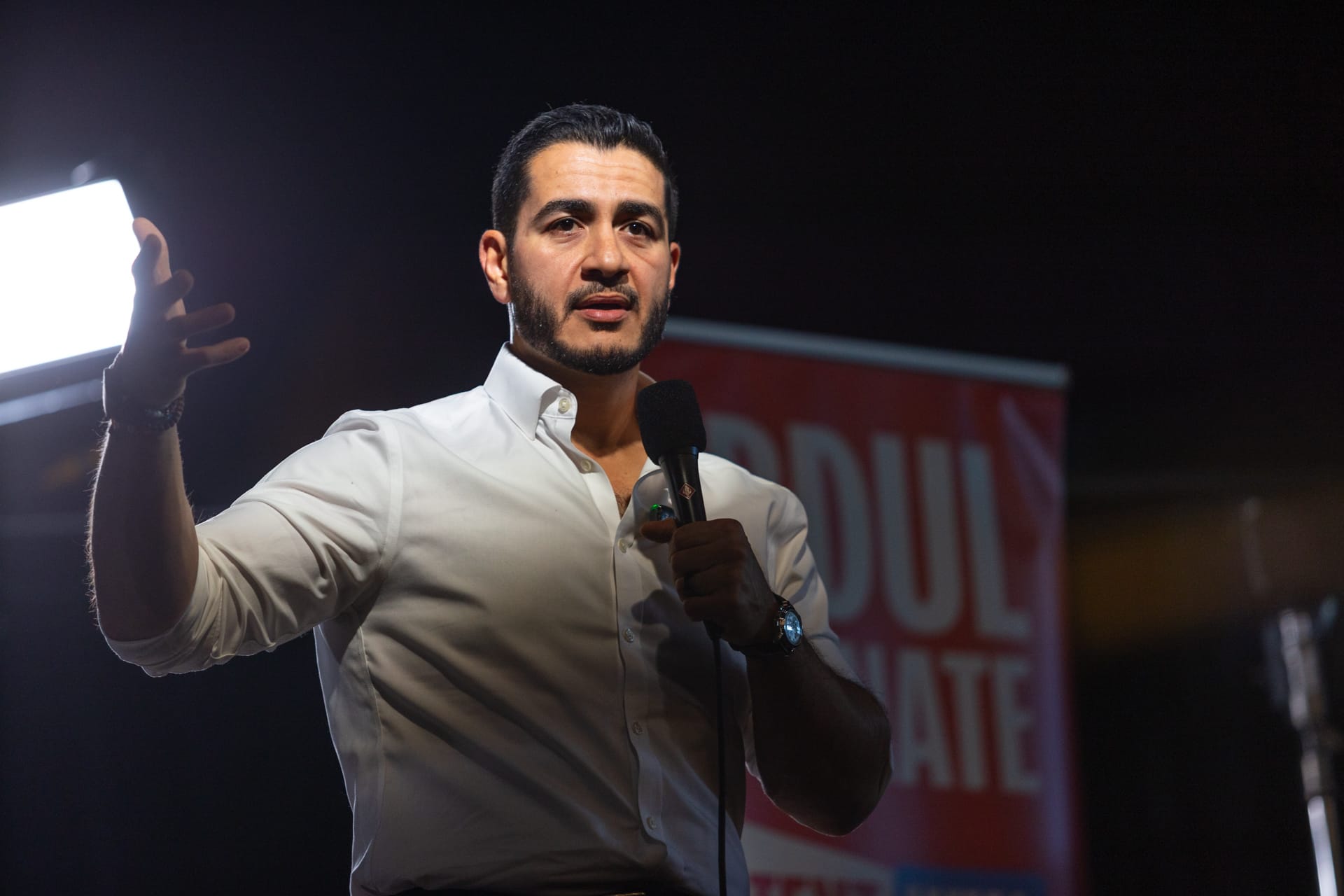
On faith, morality and state coercion
Addressing questions about how a deeply held personal faith intersects with progressive political positions — including reproductive freedom and LGBTQ+ rights — El-Sayed rejected the conservative framing that presents American elections as a binary choice between religious dogma and secular liberalism.
Drawing on personal reflections about his Muslim faith and his late grandmother, he argued that true spirituality is rooted in personal conscience and voluntary commitment, not state-enforced compliance.
As El-Sayed explained, his tradition rejects coercion at its foundation.
"There’s actually a statement in the Quran itself that says there is no compulsion in religion. You can't tell somebody else to live their life according to a particular set of precepts because, at the end of the day, the point of the thing is about it being a relationship you have with God," he said.
He contrasted that individual relationship with the purpose of constitutional governance, noting: "Faith is about you and God, not everybody else. America — the Constitution — is about everybody else relative to each other."
"It's always funny to me when people try to read their faith into public law, because what you're telling me is you're more concerned about what other people do as a function of your faith, and what you can force other people to do, rather than what you choose to do as a function of your faith," he said.
Challenging voters to rethink what faithful living demands, he added: "Any faith that is about what you don't do and less about what you do, you're missing the point. So often people are like, 'Well, you can't do this, and you can't do that as a function of your faith.' Okay, but what do you do? Show me how you're uplifting the poor. Show me how you're taking care of the needy. Show me how you're fighting hunger. Show me how you're fighting oppression."
Reflecting on how institutional pressures can dilute moral clarity, El-Sayed asked the audience: "How often is it that people who are part of an institution and have very clear morals find themselves doing something that is immoral, simply because the institution told them to do it?"
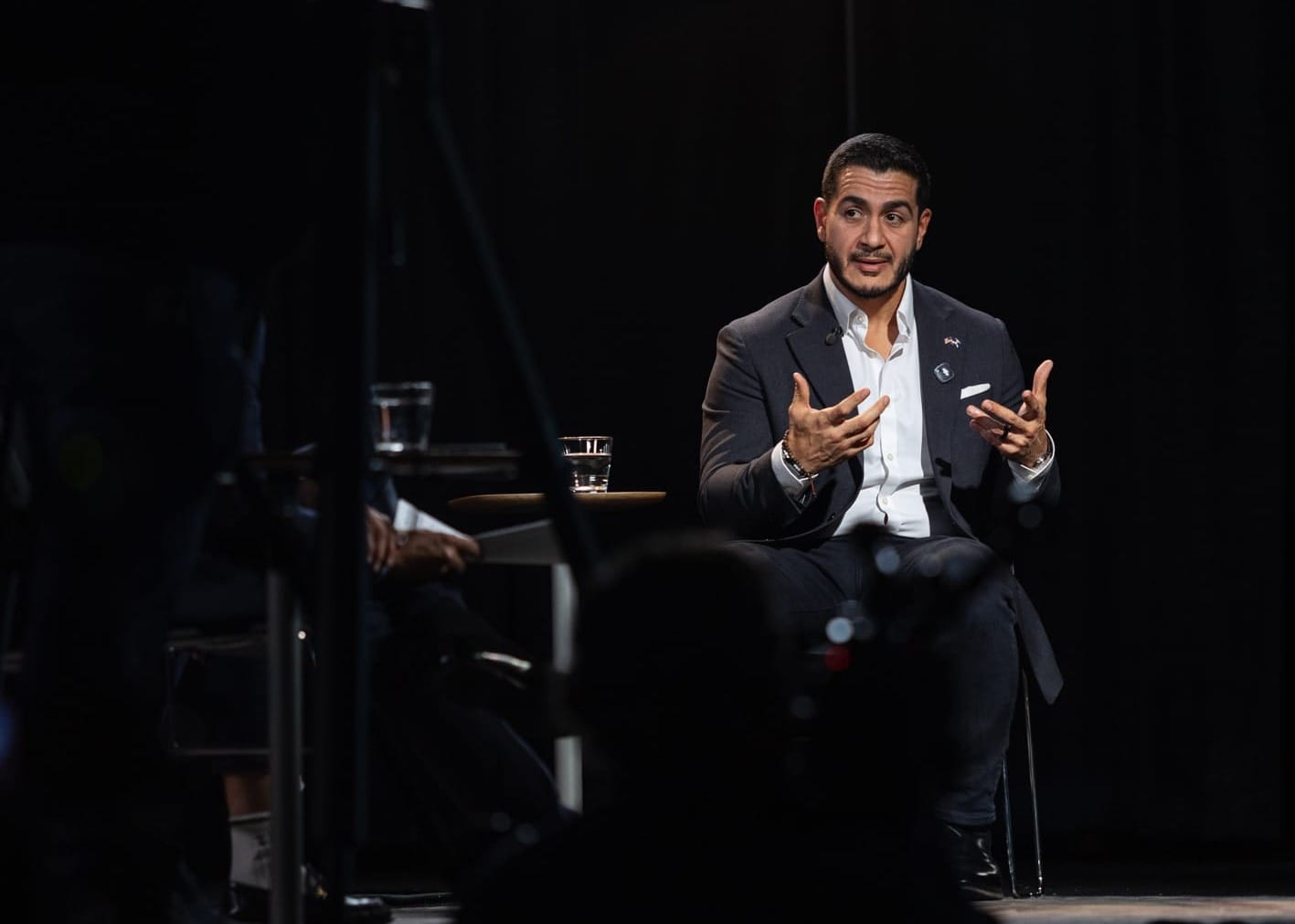
On identity politics, margins and the 'middle of the tent'
When asked whether Democratic outreach often feels like seasonal pandering, El-Sayed critiqued how major political parties traditionally segment immigrant and minority communities.
He outlined a campaign strategy that rejects identity-based tropes in favor of universal economic and constitutional appeals.
"One of the problems and frustrations that a lot of folks have with Democrats is we talk about a 'big tent,' but the way we organize the party is by pushing everybody into one corner of the tent," he said. "Rather than standing in separate corners of the tent, we want to talk in the middle of the tent about the things everybody has in common. It doesn't matter where your family immigrated from. ... It doesn't matter how you pray: You need a good job."
He warned against allowing political opponents to define acceptable identities within marginalized groups.
"They set up this trope of the 'ideal immigrant' or the 'ideal child of an immigrant,' and then they get to decide who that person is. And here's the game: Nobody ever fits. You're never quite ideal enough ... unless you're politically siding with them," he said. "The minute that you assent to a litmus test for whether you're one of the good ones or one of the bad ones is the minute that they divide the whole community and nobody quite makes it."
Speaking directly to his identity as an Arab American candidate in Michigan, he noted that voters are far more concerned with shared values than candidate backgrounds.
"When your name is Abdul in Michigan, there's always a small number of people who want to use your name or your faith to try to divide you from other people," he said. "But the vast majority of people care less how you pray — they really want to know what you pray for. They're not as interested in the differences in your name; they want to know if you care to know their name."
He refused to let critics use his heritage to demean the electorate.
"When they say, 'Oh, well, we think we can attack your name and faith to get people to vote against you,' that's not really a comment on me; it's a comment on Michigan. Michiganders are open-minded, big-hearted, earnest, and gritty. It's insulting to watch them be assumed to be anything other than those things."
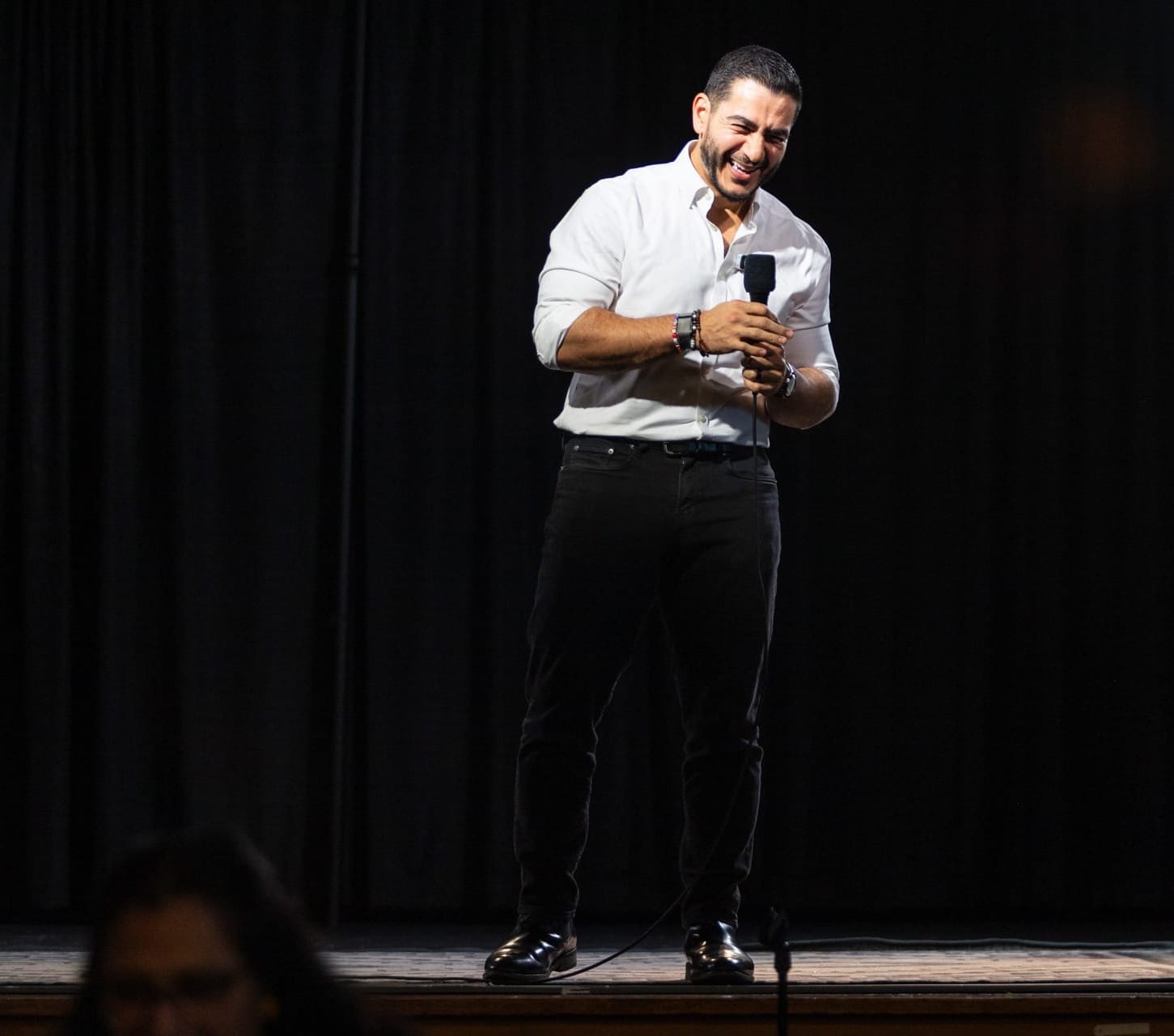
On restructuring ICE and the rule of law
A central focus of the discussion was immigration enforcement.
El-Sayed expanded on his long-held call to abolish Immigration and Customs Enforcement and replace it with a system modeled on civil constitutional principles.
He carefully delineated border security — managed by U.S. Customs and Border Protection — from internal enforcement, arguing that ICE's contemporary practices resemble paramilitary overreach rather than constitutional law enforcement.
"ICE is, in effect, an agency that has flipped the Constitution and immigration law," he said. "They take immigration law as the supreme law of the land, and they will enforce immigration law even to the detriment of the Constitution itself. In this country, the law of the land is the Constitution, and every other law gets enforced within the bounds of the Constitution."
Illustrating the stark difference between due process and arbitrary detention, he offered a vivid comparison.
"What is the difference between an arrest and a kidnapping? When you're under arrest, you are told you're under arrest, you know exactly who's arresting you, you are told why, and you are told how to challenge the circumstances of your arrest," he said. "Kidnapping is just somebody coming and picking you up off the street. Ask yourself whether ICE detention looks more like an arrest or kidnapping."
He expanded on the political origins of federal enforcement power and cautioned that ICE is no longer operating solely as an immigration agency.
"I don't think that ICE is actually about immigration under this administration — ICE is about mobilizing a paramilitary force on our streets. To understand ICE, you also have to understand Jan. 6," he said. "When you normalize acting outside the bounds of the Constitution under the guise of immigration enforcement, it opens up the opportunity to do a lot of other non-constitutional things."
Despite the complexity of national immigration policy, El-Sayed pushed back against political paralysis.
"We talk about immigration like it's an unsolvable problem. This is a very solvable problem. We've just got to choose to solve it. ... I don't want to do the politics of running away anymore."
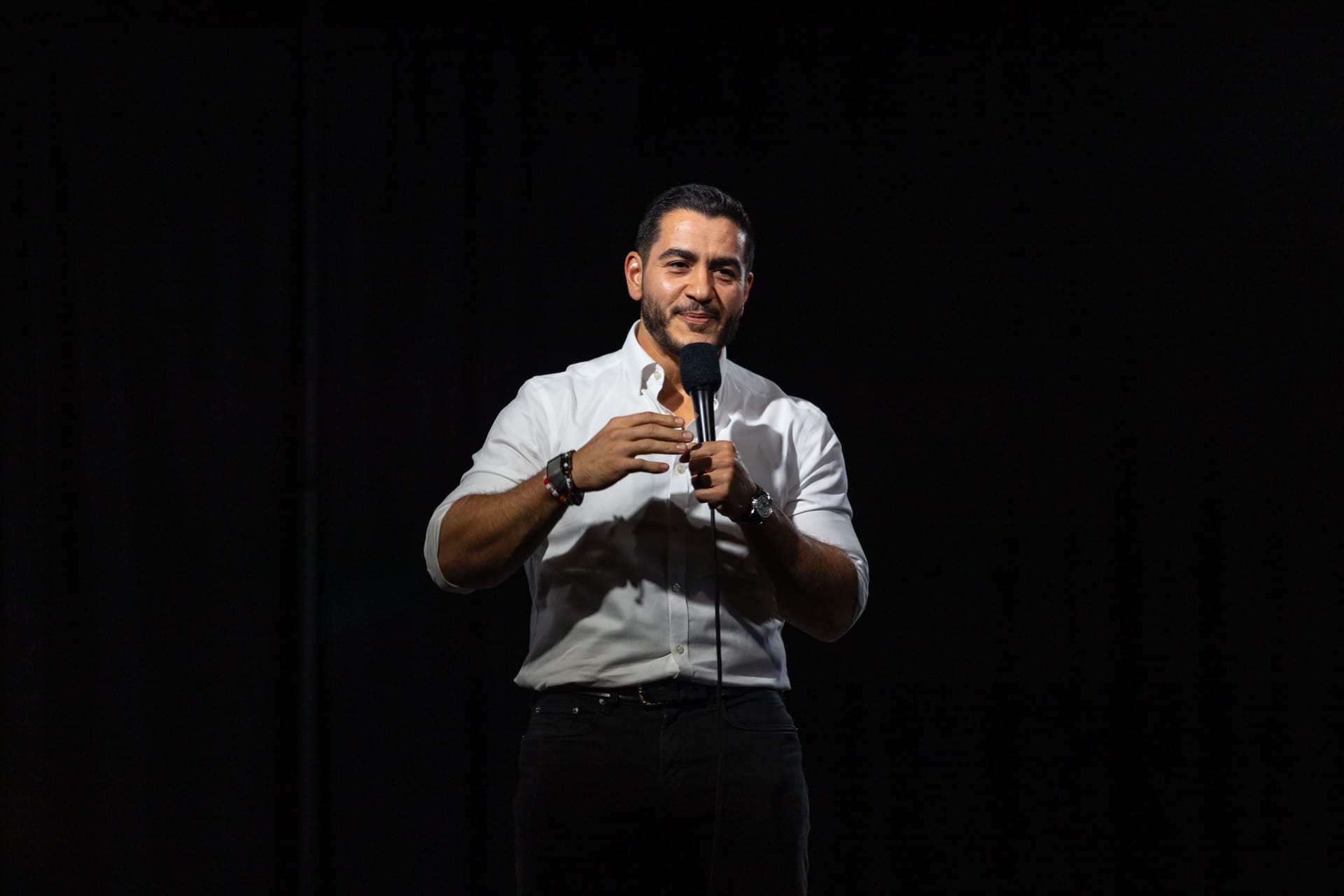
On the healthcare crisis and economic realities
As a physician and epidemiologist who co-authored a definitive book on universal healthcare, El-Sayed offered a stark analysis of current federal policy directions.
He warned that pending rollbacks to Medicaid coverage and Affordable Care Act subsidies will destabilize the entire medical economy, creating a catastrophic feedback loop for private insurance holders as well.
"Our healthcare system is too often more focused on billing than healing," he said. "It shouldn't be this hard in the richest, most powerful country in the world to see a doctor, and it should not be this hard to pay your taxes and know that that money is going to be spent on you and your kids, rather than dropping bombs on somebody else and their kids."
Detailing the systemic consequences of safety-net reductions, he explained: "You're going to watch tens of thousands of people in every state get kicked off of Medicaid. When they get kicked off, they still need help. ... So what do they do? Show up to an emergency room with the worst manifestation of the illness. The cost gets pushed back onto people who pay premiums. ... It's what economists call a death spiral."
Expanding on the political origins of federal enforcement power, he cautioned that federal spending choices reveal deep political hypocrisy, noting how priorities shift when funding services versus military action.
"Republicans are so worried that somebody who might not be able to get services gets services, but instead you want to literally buy bombs to drop on somebody else. It makes zero sense to me," he said.
Connecting economic hardship back to corporate dominance in Washington, El-Sayed argued that Donald Trump is not the cause of current political issues, but rather a product of them.
"Donald Trump is not himself the disease of our politics. Donald Trump is just the worst symptom of the disease of our politics," he said. "The disease is the system that allows billionaires, corporations and special interests to buy and sell politicians in ways that leave them rigging the system against us."
On foreign policy, diplomacy and political courage
When questioned on foreign policy — ranging from military interventions to trade relations with Mexico and diplomatic ties with Cuba — El-Sayed called for a return to constitutional checks on executive power and a shift away from corporate-driven interventions.
Addressing broader political cynicism, he challenged the notion that leaders should rely strictly on campaign polling to dictate their principles.
"American-manufactured guns are responsible for a lot of the cartels' power. ... It's rich to me to hear about the fentanyl crisis from people who have taken so much money from the pharmaceutical industry that kicked this crisis off in the first place," he said.
Decrying political gamesmanship in Washington, he emphasized that too much of politics is dictated by people for whom it is not a matter of life and death.
"Too much of politics is dictated by people for whom politics is not a matter of life and death. And right now, there are a lot of people who are struggling with the life-and-death issues of politics. I'm not going to the United States Senate to play the political game," he said.
El-Sayed urged politicians to reclaim public leadership over consultant-driven messaging, emphasizing that true leadership requires standing up for core principles rather than simply following polling data.
"Too often people in my party pay attention to consultants who run polls who say, 'Oh, this is unpopular, you shouldn't talk about it,'" he said. "I don't think the job of a politician is just to say what's popular. I think the job is to make popular what is right."
Closing with a rally call to the assembled crowd in Holland, El-Sayed urged voters to embrace active civic participation.
"It's not about how much time you have; it's about how much of yourself you're willing to put into your time. ... When they come for our neighbors, we won't back down," he said. "When they come for our healthcare, we won't back down. When they come for our union rights, we won't back down ... because it's our democracy and we intend to use it."
A defining test in a battleground state
As the event concluded with dynamic calls to action from local organizers and city officials, the gathering in Holland highlighted a pivotal moment in Michigan's U.S. Senate race.
Historically, Democrats have maintained a strong hold on Michigan's Senate representation, winning every Senate seat up for election in the state since 1994.
However, two-term Democratic incumbent Gary Peters announced in January 2025 his decision not to seek re-election, creating a rare open-seat contest in a premier battleground state.
El-Sayed ultimately secured the Democratic nomination in a closely watched primary in August, narrowly defeating U.S. Rep. Haley Stevens.
In one of the state's most expensive primary races, El-Sayed’s campaign mobilized grassroots support and prominent progressive surrogates to eke out a narrow margin of victory — winning by approximately 15,000 votes out of nearly 1.5 million cast.
The general election is Nov. 3.
— Sarah Leach is the executive editor of the Ottawa News Network. Contact her at sleach@ottawanewsnetwork.org. Follow her on Twitter @ONNLeach.


