

Princess Laurentien of the Netherlands promotes cultural ties, the powerful migration story
Princess Laurentien of the Netherlands was in West Michigan this week to visit with Holland-area organizations to improve cultural ties.

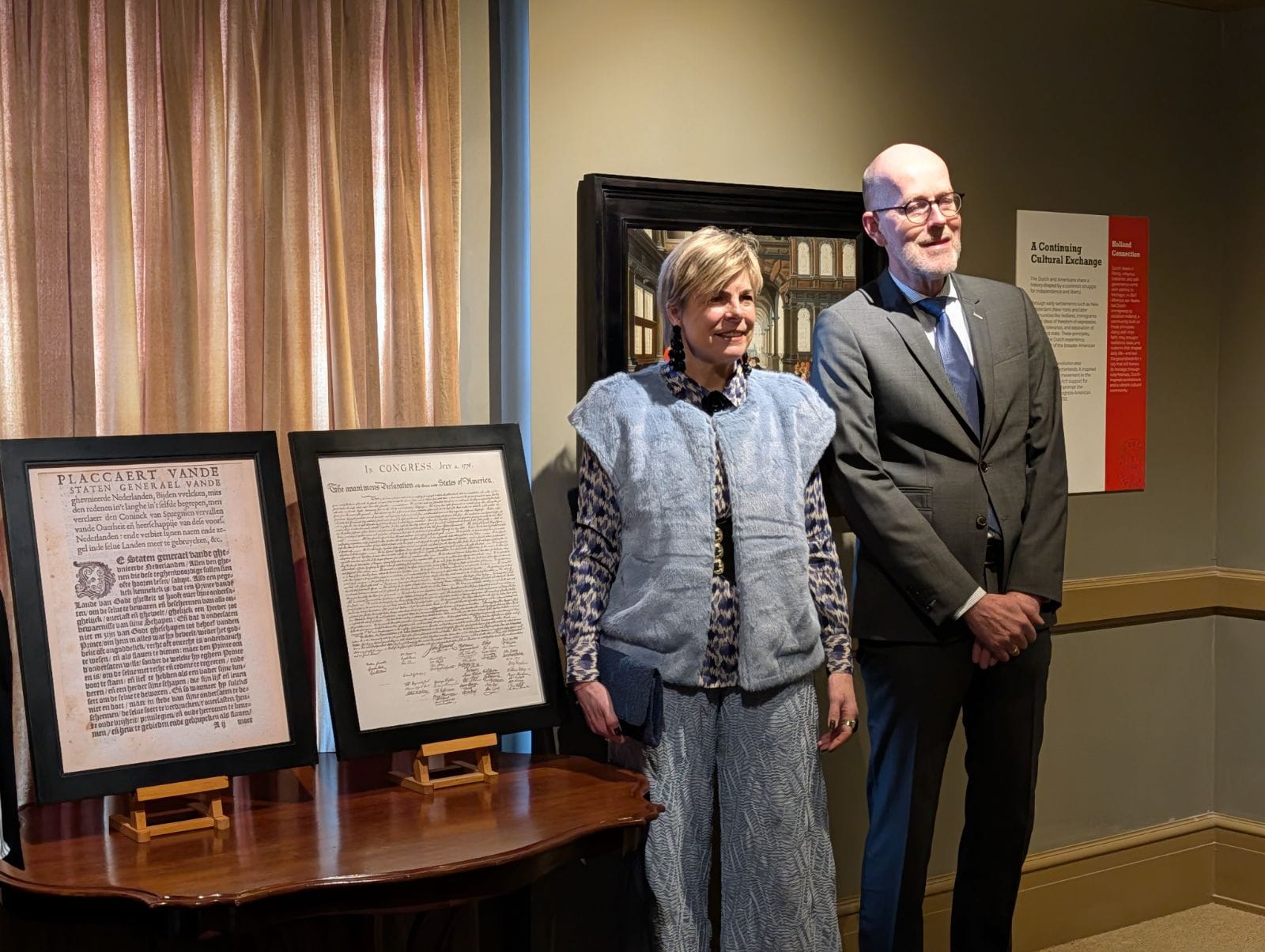
HOLLAND — Holland had a brush with royalty Tuesday, when Princess Laurentien of the Netherlands visited the Holland Museum.
Her Royal Highness Princess Laurentien of the Netherlands was in West Michigan this week to visit with Holland-area organizations to improve cultural ties.
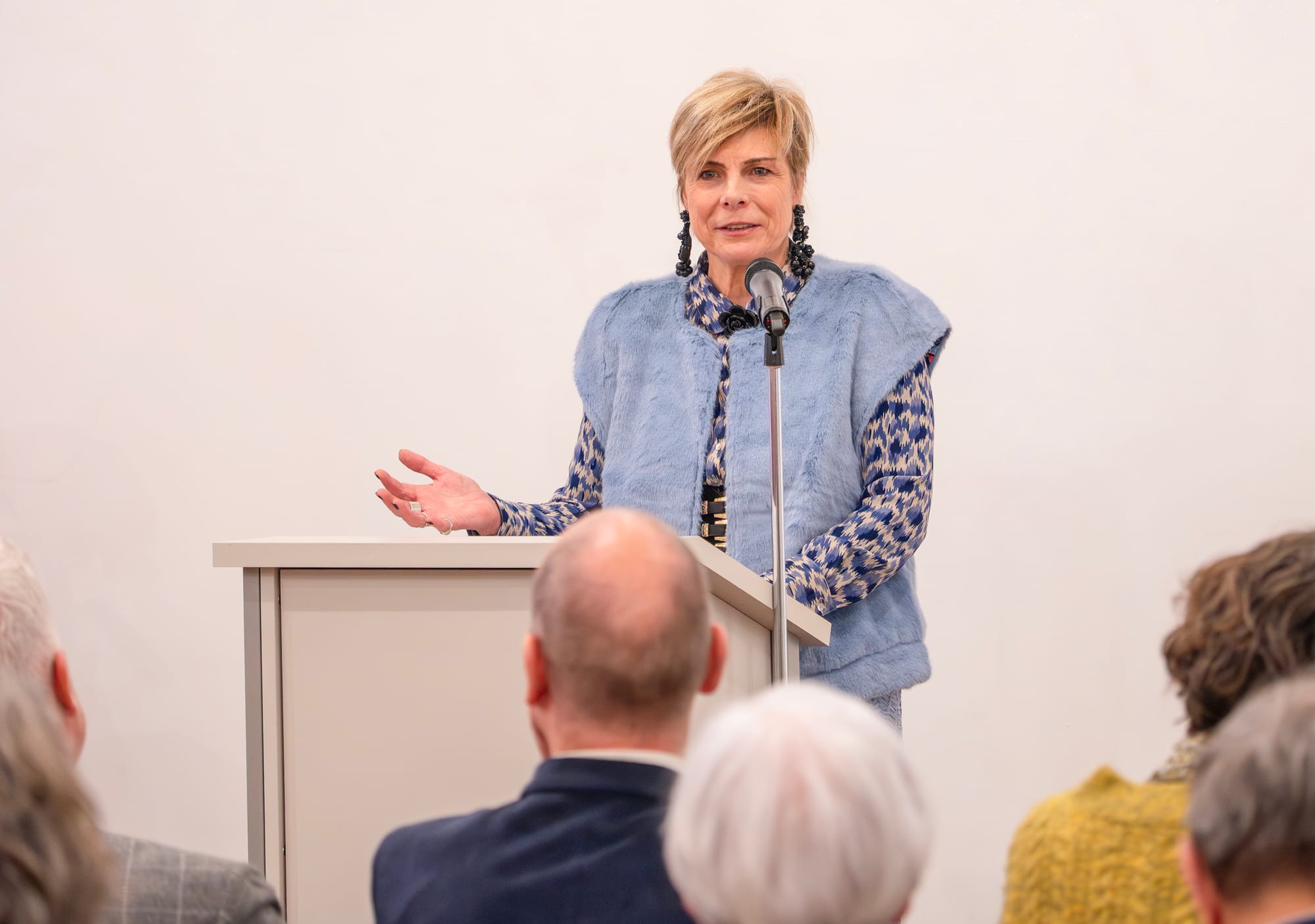
"So many of you said, 'Welcome to Holland,' and that really brought something home; it's very humbling to be in a community where you're so proud of your roots, so I take that away, and you are giving me the great presence of understanding the importance of roots and being humbled by your pride in our culture," Laurentien said Tuesday at the museum.
After meeting with 15 students from Holland Public Schools, each of whom presented her with an orange rose — she is a member of the House of Orange in her home country — the princess toured the museum, including a new second-floor installation called “Renouncing Tyranny: The Dutch Act of Abjuration and the American Declaration of Independence.”
The America250 exhibit highlights the "parallel ideals of liberty, self-governance, and democratic values that both nations hold dear," the museum said.
The Dutch Act of Abjuration, signed on July 26, 1581, was a formal declaration of independence by the Low Countries (the English translation of Netherlands) from the reign of King Philip II of Spain.
The document argued that a ruler who oppresses their subjects and violates their traditional rights is no longer a king, but a tyrant, and can therefore be rightfully deposed. It came at the height of the Eighty Years' War, where the Dutch provinces were fighting against Spanish rule.
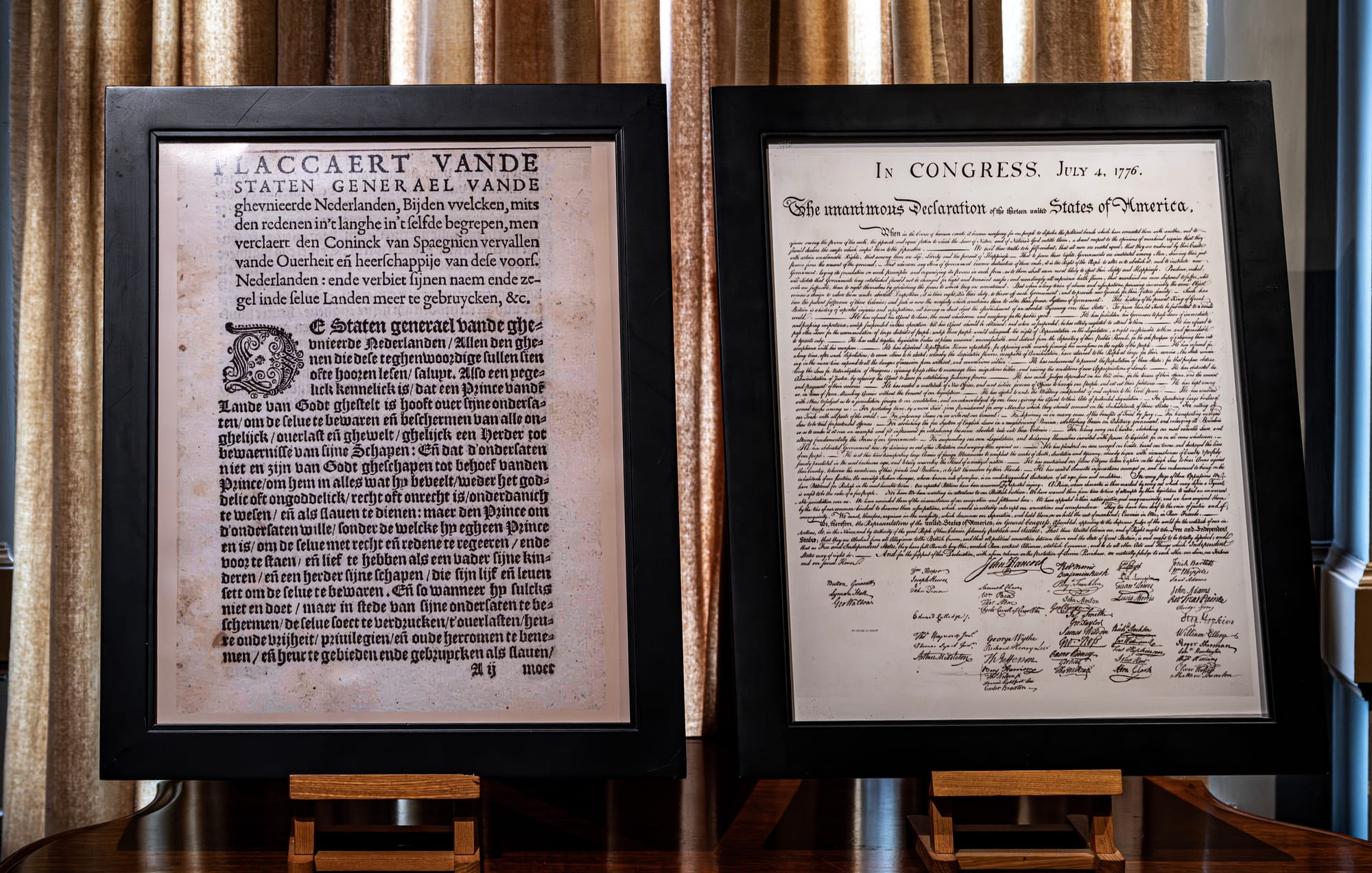
Historians often point to the Act of Abjuration as a primary influence on Thomas Jefferson and the American Founding Fathers when they drafted the Declaration of Independence in 1776.
While the Dutch Act didn't immediately end the war, it led to the birth of the Dutch Republic.
Later, the signing of the U.S. Declaration of Independence came after escalating tension over the past several years with British rule over the American colonies, which ultimately led to the Revolutionary War (1775-1783).
"Our connection with the Netherlands is not only part of our past, but an ongoing relationship grounded in shared goals, cultural exchange, and mutual respect; and it is something we hold close to our hearts," the museum said.
The Dutch and the Dutch
Laurentien, Petra Laurentien Brinkhorst, is married to Prince Constantijn and is the sister-in-law of King Willem-Alexander of the Netherlands, who assumed the throne in 2013 after his mother, Beatrix, abdicated at the age of 75.
The Netherlands has a system of government of a constitutional monarchy, where the head monarch serves as the head of state, but remains politically neutral, and the prime minister is the de facto head of government.
The history of the House of Orange-Nassau dates back to 1544, when a young German named William of Nassau inherited the Principality of Orange, a small sovereign state in southern France.
Because Orange was a "sovereign" principality, it gave William the rank of prince, which provided him with the legal status and prestige needed to later challenge the king of Spain.
Known as "William the Silent," he led the revolt against Spain and kept the title of stadtholder ("place-holder," serving the Dutch provincial governments as their military commander and chief executive.
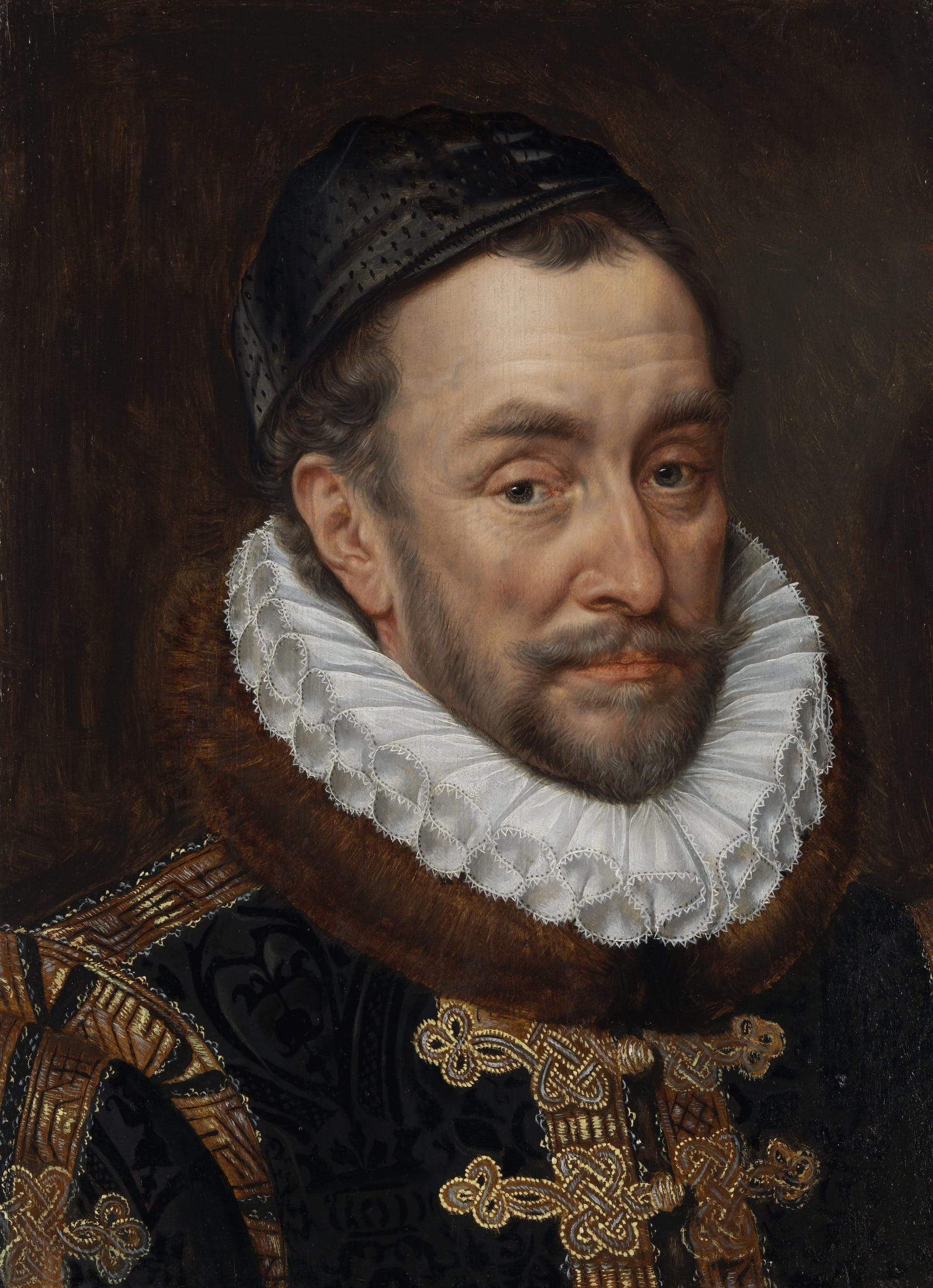
The first king didn't arrive until 1806, when Napoleon Bonaparte conquered the Netherlands and installed his brother, Louis, as "King of Holland," forcing the last Stadtholder, William V, to flee to England.
After Napoleon was defeated, the Dutch invited the House of Orange back and William the Silent's descendant was proclaimed King William I in 1815.
The historical relationship between the Netherlands and Holland, Michigan, began in 1847, when the Rev. Albertus Van Raalte led a group of Dutch Calvinist separatists to Western Michigan.
At the time, Van Raalte and his followers were fleeing religious persecution and economic hardship in the Netherlands and they wanted to build a "kolonie" — a self-sufficient "little Holland" in the American Midwest where the Dutch language, Reformed faith and traditional values could be protected from outside secular influences.
Since then, both Dutch populations have maintained a diplomatic partnership and cultural exchange, with King Willem-Alexander and Queen Máxima visiting the Grand Rapids area in 2015 and Willem's mother, Queen Beatrix, visiting Holland in 1982.
Read More: A look back at previous Dutch royal visits to Michigan
In 1997, Princess Margriet (Beatrix's sister and Willem's aunt) and her husband, Pieter van Vollenhoven, came to Holland for the city's sesquicentennial celebration. The princess spoke at a ceremony in Centennial Park for the unveiling of the "Immigrants" sculpture by Dutch sculptor Bert Kiewit in Kollen Park and the unveiling of a plaque in front of the sculpture of the city's founder, Albertus C. Van Raalte, in Centennial Park on Oct. 1, 1997.
In 1952, Queen Juliana (Beatrix's mother) visited Calvin College. She previously visited Holland when she was Princess Juliana in 1941.
Highlighting the story of migration
The princess said her tour of the museum, seeing the historical documents and her conversations with local leaders, reminded her that the story of migration is a human story with many lessons for all.
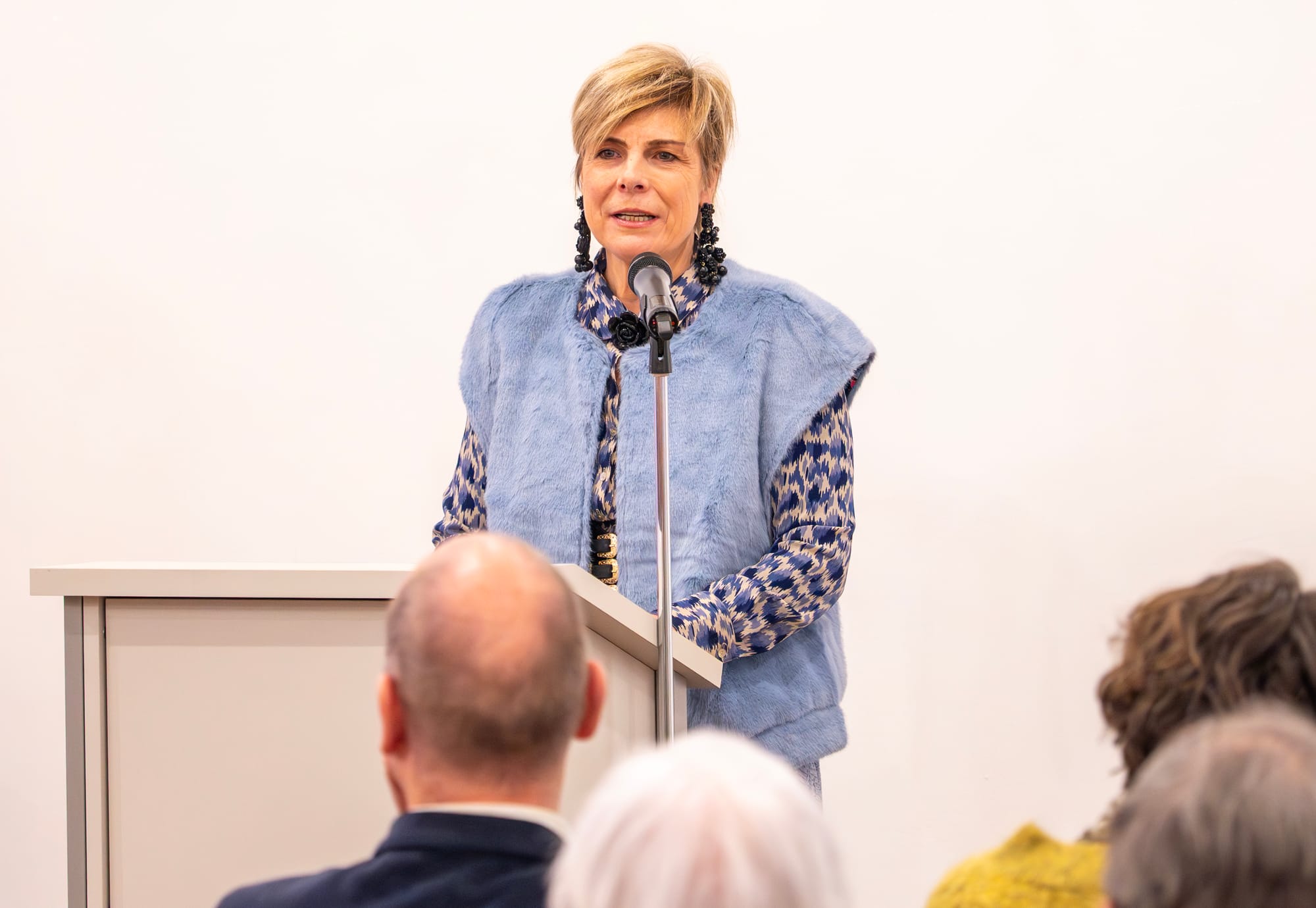
"You've reminded me of the importance of migration, and that it is an issue of all times," she said. "Today, there are 304 million people on the move around the globe, which is 3.7% of the global population; half of them, almost half, are women. And it really shows that migration is a fundamental challenge and issue of all times.
"It's a human story, and we can look at migration from statistics or from other perspectives, but in essence, it's a human story, and it's a deep act of resilience and resistance, but also of hope and opportunity for a better life, for safety and for perhaps resisting what we want to leave behind."
Laurentien said she deeply admires and respects immigrants, noting how difficult it is to leave one's homeland for the unknown.
"Today, I feel the tremendous resilience that you have to leave behind your loved ones and to find a place where you don't know what the future holds. It's also a story of hope, and people want to open up new horizons."
She also thanked prominent Holland businessman and philanthropist Jim Brooks, former CEO and chairman of Beverage America and Brooks Beverage Management, who gave the princess a guided tour of the museum and its various exhibits.
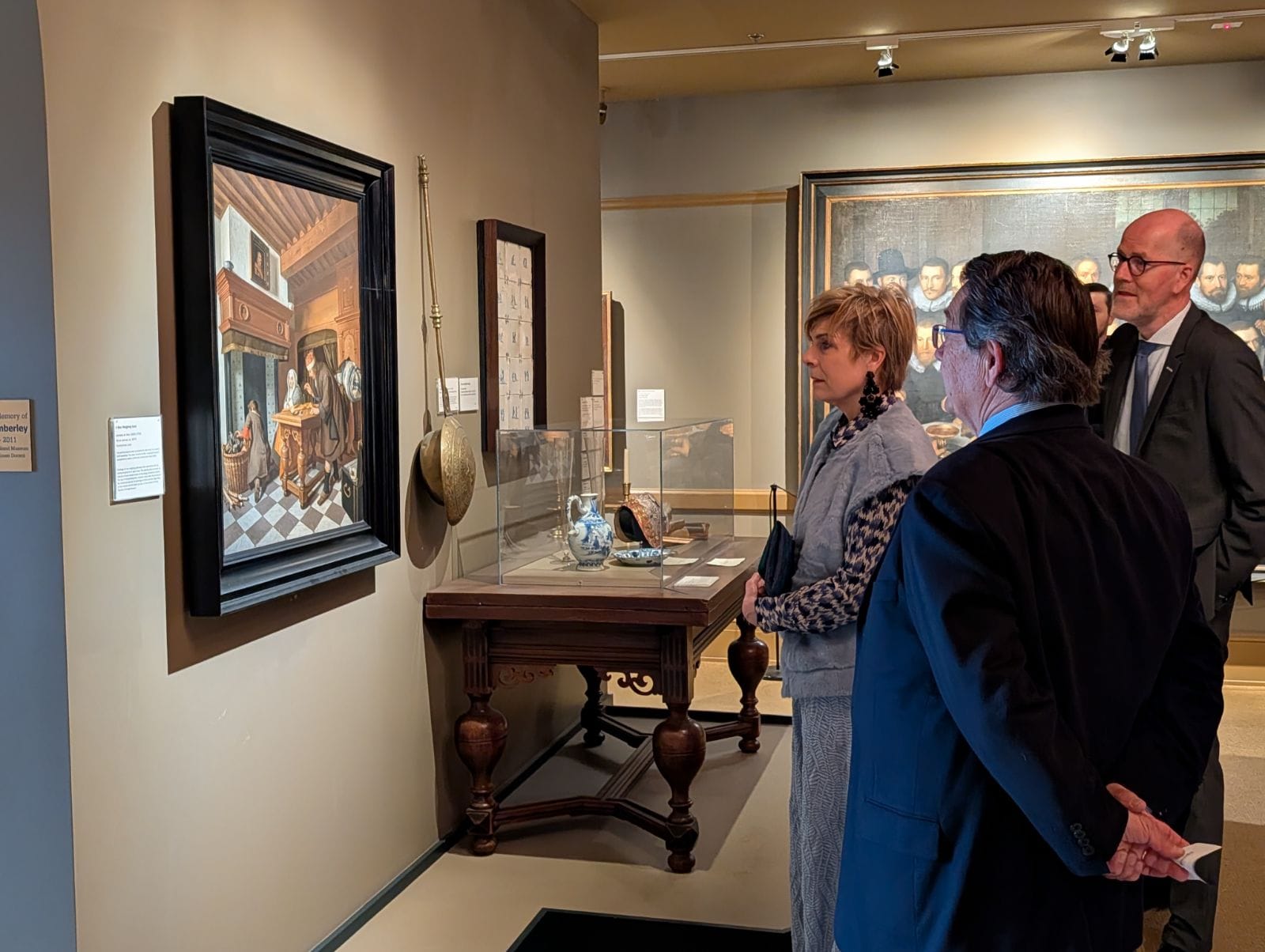
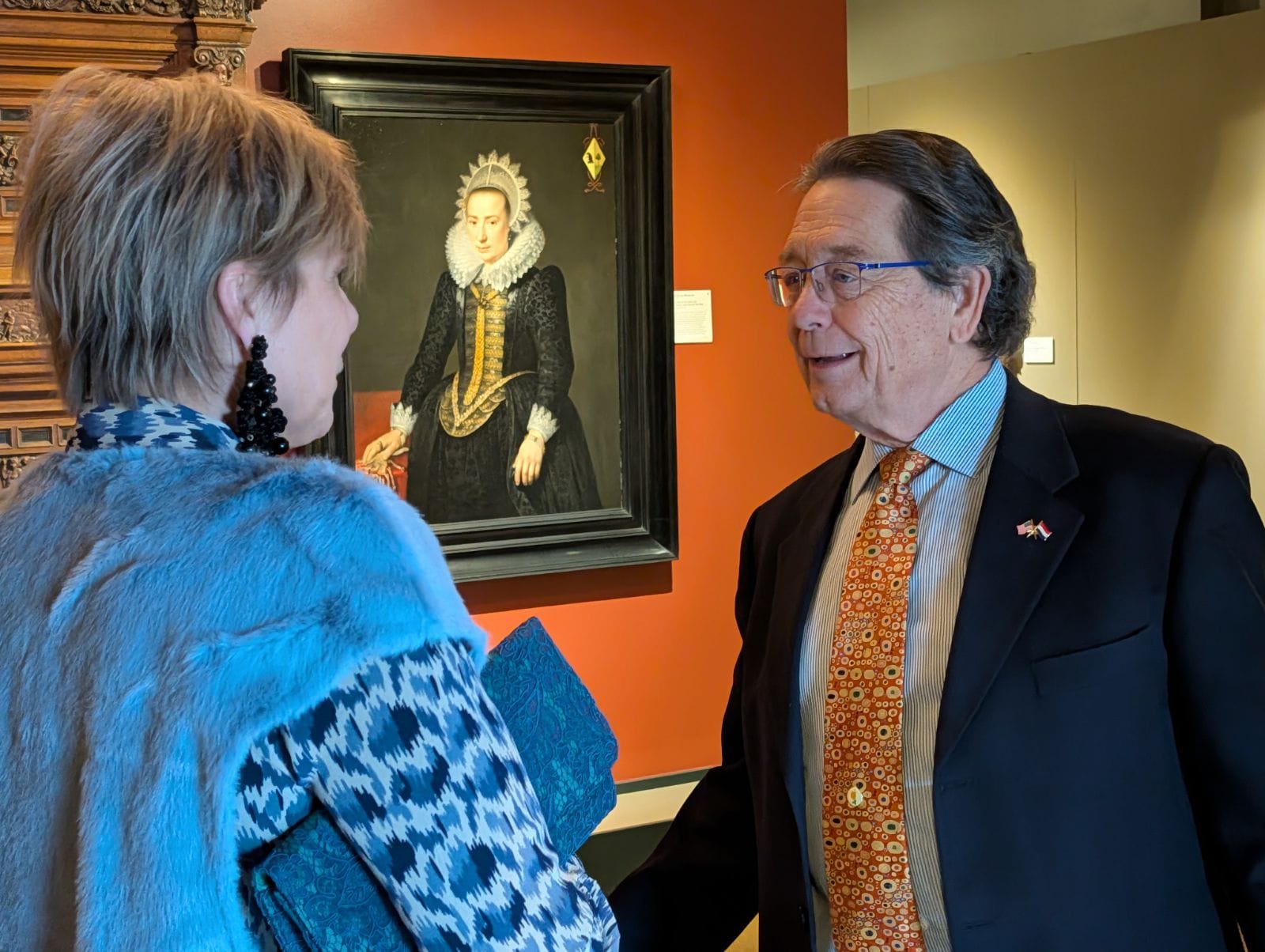
Prominent Holland businessman and philanthropist Jim Brooks gives Her Royal Highness Princess Laurentien of the Netherlands a guided tour of the Holland Museum on Tuesday, March 17, 2026. [ONN photos/Sarah Leach]
"Mr. Brooks, you talked about the need for innovation, that we have to keep having an open mind — and I really take tremendous inspiration from this," Laurentien said. "You remind me of your ancestors — that this is still holding up our culture today.
She spoke of the resilience and the hope that every person needs to thrive.
"Hope is, for me, a very deep word," she said.
She shared a story where she was helping "victims of a government wrongdoing" and that she recognized the wrongdoing that put her in conflict with the elected officials.
"I was told by a member of the government that I should stop doing that because I was giving people hope," she said.
[ONN video/Dirk Wierenga]
She spoke poignantly about the wisdom she has cultivated over time, being a royal, which has influence, but little direct power.
"As you can imagine, my life is about building bridges, and you have to meander around all the different rough seas that are making up our lives. And this is sort of poetic, but you can read between the lines, I'm sure," she said. "So when somebody tells you that you should stop doing something because you give people hope, I think something ignited in me and said, there are limits to what you can have people stop doing. And as long as you don't make things political, everybody deserves hope. So that really ignited me, at great expense, but you have to just continue."
Museum staff also gifted the princess with the book, "The Rough Seas: An Immigrant's Journey from Holland to Holland," the self-published story of local business owner Klaas deBoer's youth in the Netherlands, the emigration experience and how he made a new life for himself in Holland, Michigan.
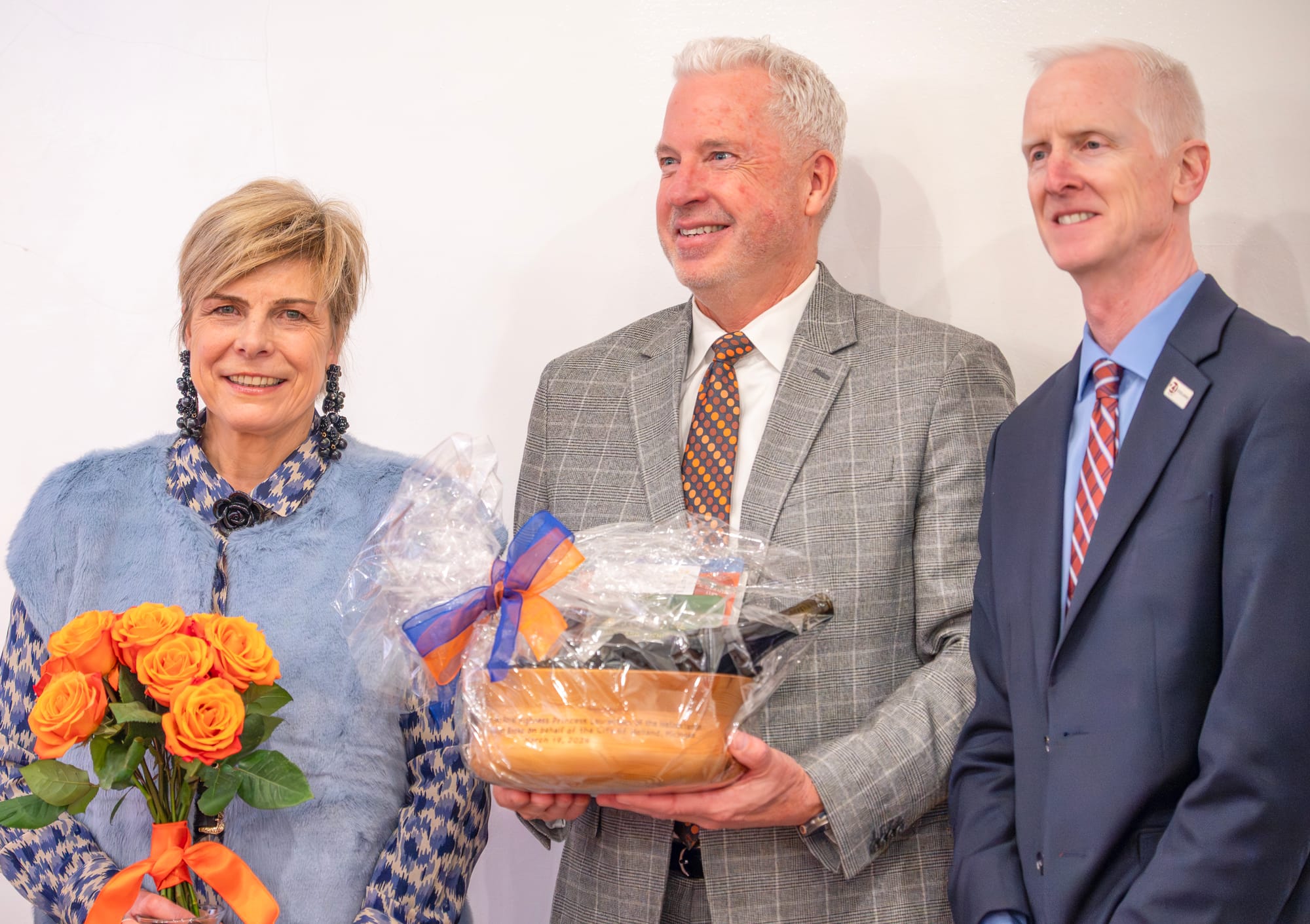
The book, published in 2009, examines the internal conflict many immigrants feel toward their new country and their country of origin — the sense they belong to both, yet fully to neither.
DeBoer's father eventually went into business with Fritz Hoekstra, father of former U.S. Rep. Pete Hoekstra, to become co-owners of Hempel's Pastries on 13th Street in Holland in 1958. DeBoer's brother, Jake, eventually bought the business, renamed it DeBoer Bakery and relocated it to the north side of Holland, where it still operates today.
DeBoer owned and operated the Soccer Stop from 2004 until selling the business in 2015.
Local resonance
After Tuesday's museum tour, Laurentien met with local leaders, including Holland Mayor Nathan Bocks and Ottawa County Board Commissioners Josh Brugger, chair of the board, and Doug Zylstra, who represents the city of Holland on the board.
Brugger, whom Laurentien addressed as "Brew-her" during her speech, noted the serendipity of his name — Brugger means "bridge" in Dutch — and her message of "building bridges."
"I think that we live in a time where we have to build bridges, where, no matter where we come from, what our thoughts are, we have to constantly keep listening, even though it may be painful, but in the end, you need to keep on listening and valuing anybody's thoughts — even if we don't agree," she said.
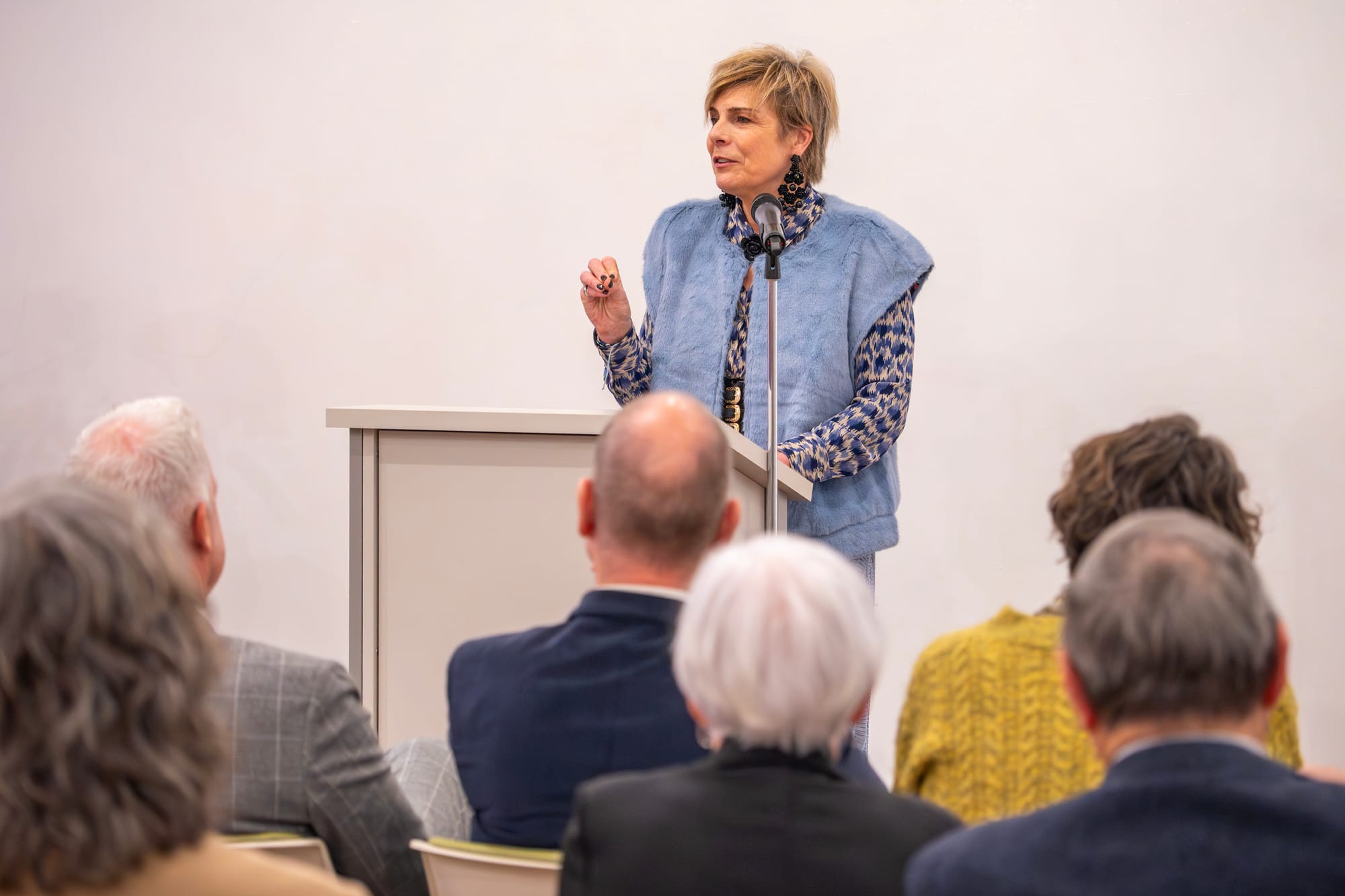
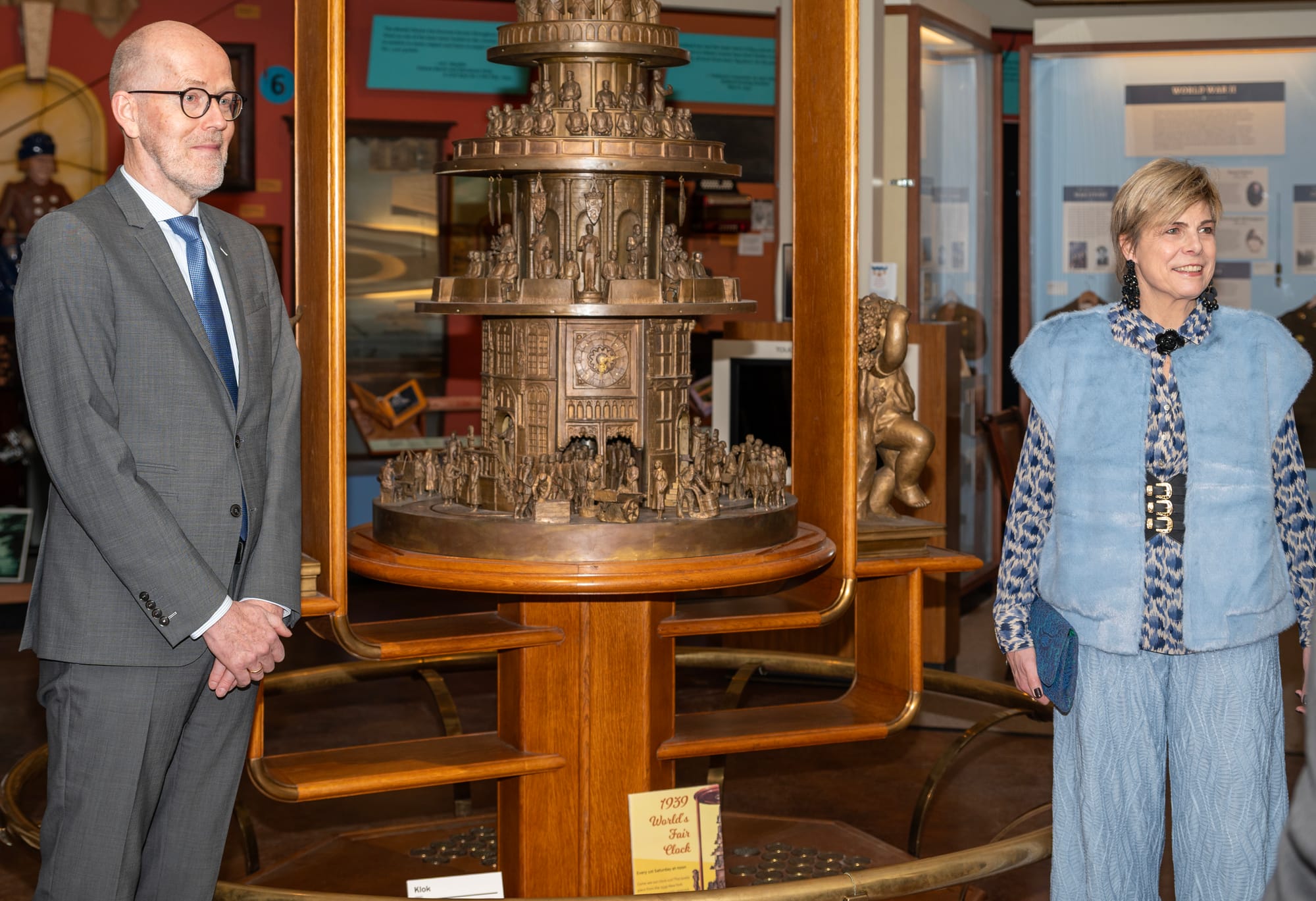
Her Royal Highness Princess Laurentien of the Netherlands at the Holland Museum on Tuesday, March 17, 2026. Far right, she poses with Eric Strating, consul general of the Netherlands to Chicago. [ONN photos/Dirk Wierenga]
"We came up with a notion of quiet resistance, and that comes from within, that if you know where you come from, and you know what your values are and where you stand, then you can actually quietly resist and build bridges, and therefore keep innovating," Laurentien said.
Brugger said when he met the princess, they briefly explained to one another how their official roles work and he saw parallels to her message with the county's current political landscape after several years of tumultuous management under far-right conservative group Ottawa Impact.
"'Bring boring back' was a phrase I often shared with residents while campaigning two years ago," Brugger said of his bid for the board in 2024. "It seemed to resonate then, and I believe it does even more today."
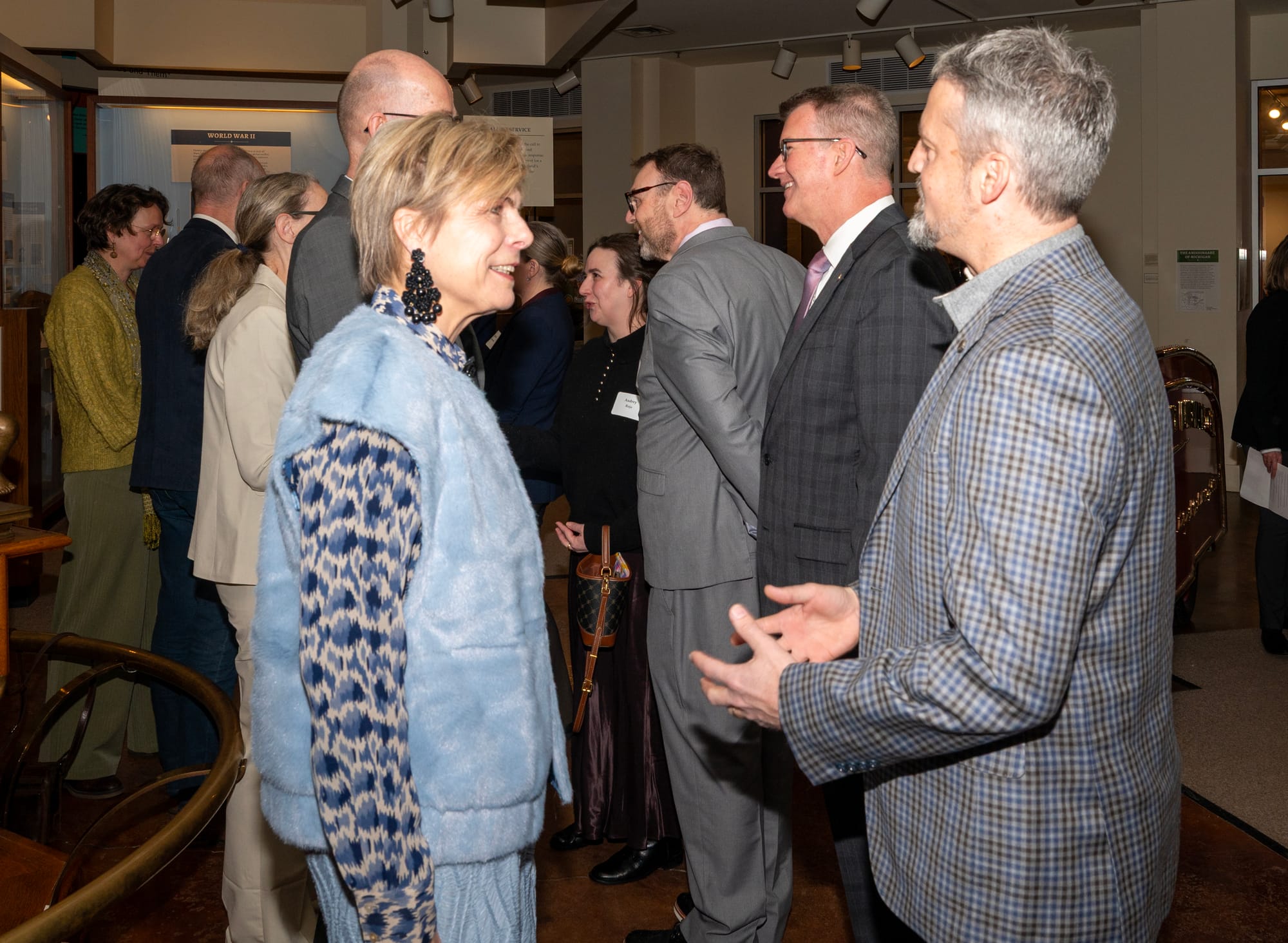
The board chair said he was struck by Laurentien's composure, which added strength to her remarks.
"People are tired of the noise. We’d all be better off if politicians quit posting on X or Truth Social or wherever and instead quietly got to work for the people," Brugger said. "The princess’ encouragement to be a part of a quiet resistance for what is good, for what is right, is something we can all do. And to do it without drawing attention to it is to be a part of what Princess Laurentien calls the quiet resistance. We can all sign up for that."
Marking a milestone at Calvin University
Laurentien visited Calvin University on Monday, March 16, to help celebrate the school's 150th anniversary with a tree-planting ceremony at the campus' DeWit Manor.
The ceremony was intended to represent deep roots and enduring partnerships.
"By planting the tree at Calvin University, it reminded me of the importance of roots. So we have resilience. We have hope and roots," Laurentien said during the Holland event on Tuesday.
Please consider becoming a monthly donor!
Founded in 1876 by Dutch immigrants of the Christian Reformed Church, Calvin University in Grand Rapids originally was intended to train ministers within the immigrant community.
It maintains deep ties to the Netherlands through its Reformed theological roots, early adoption of Dutch theologian Abraham Kuyper's liberal arts philosophy, a Dutch studies program and visits from the Dutch royal family.
In addition to the tree-planting ceremony and museum visit, Laurentien was scheduled to deliver a public lecture at Calvin University on "Human-Centered Solutions" on Wednesday evening.
— Sarah Leach is the executive editor of the Ottawa News Network. Contact her at sleach@ottawanewsnetwork.org. Follow her on Twitter @ONNLeach.


