

Allendale adopts data center moratorium, joins growing list of communities grappling with issue
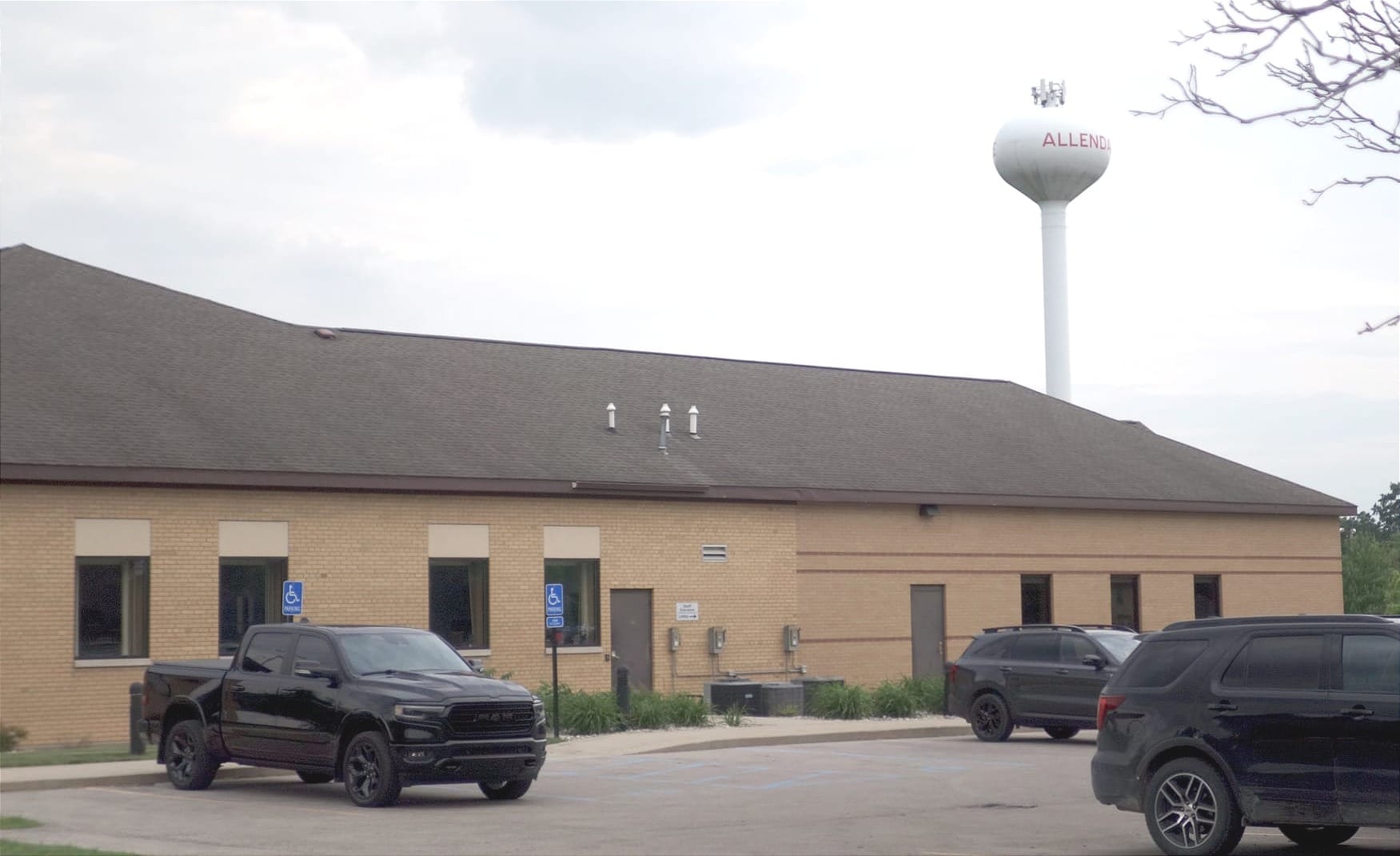
Allendale Township joined a growing number of Ottawa County municipalities that have put yearlong moratoriums in place, preventing data centers, battery storage facilities, large-scale solar farms and wind farms from being built.

ALLENDALE TWP. — Allendale Township joined a growing number of Ottawa County municipalities that have put yearlong moratoriums in place, preventing data centers, battery storage facilities, large-scale solar farms and wind farms from being built.
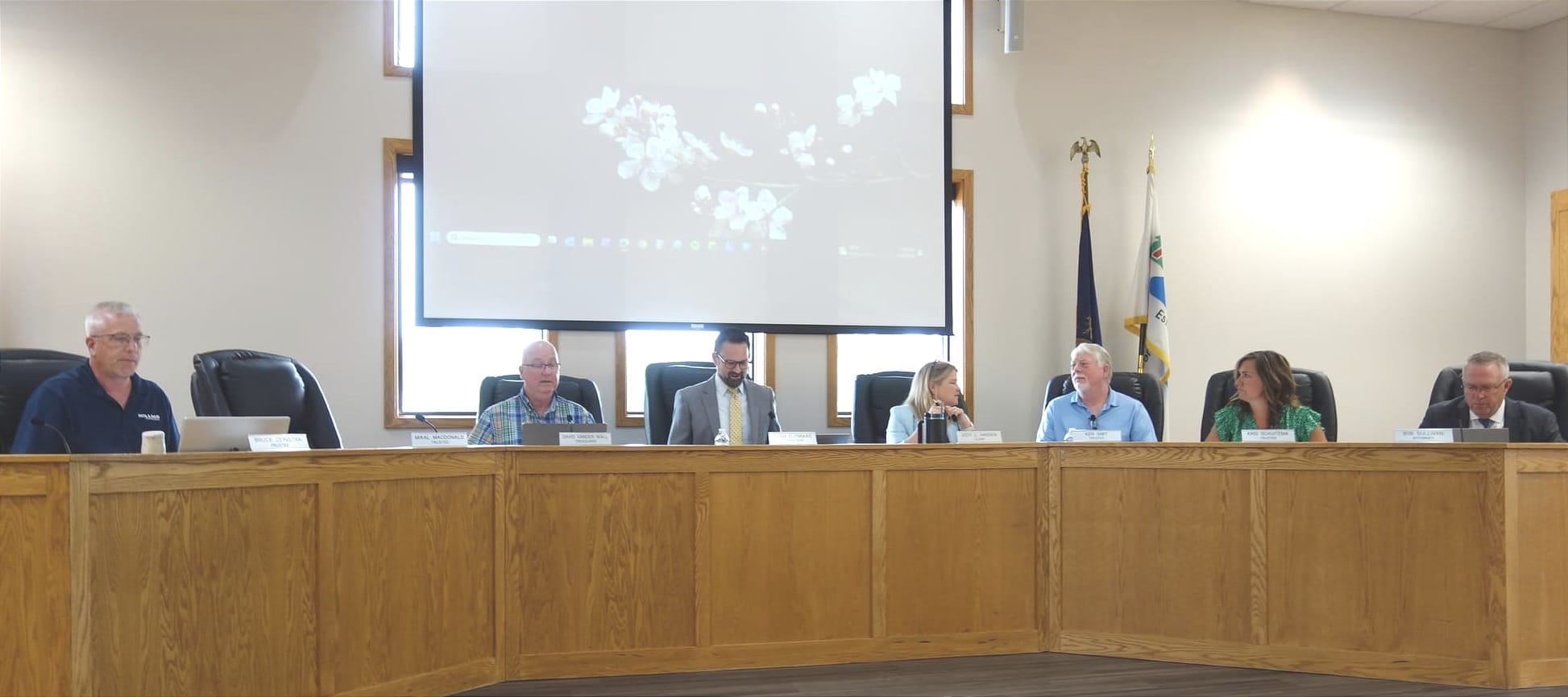
The moratorium was first presented to the township’s board of trustees by Supervisor Adam Elenbaas during the May 26 meeting.
“The reason for the moratorium is because the residents we represent are asking for it,” Elenbaas said.
A growing trend
Allendale is the second township in Ottawa County to adopt a moratorium on data centers after Zeeland Township approved one in March.
Unlike Zeeland’s moratorium, Allendale’s includes green energy initiatives such as solar and wind energy.
Blendon Township, located a dozen miles south of Allendale, considered a moratorium on battery storage after community pushback over a proposed 14-acre lithium-ion Battery Energy Storage System by Key Capture Energy.
Ultimately, Blendon decided against a moratorium to avoid the developer seeking direct approval from the Michigan Public Service Commission under Public Act 233. That route allows the board to work on drafting strict local ordinances to maximize safety stipulations rather than pausing. However, the board explicitly directed its planning commission to explore a moratorium on data centers, because there are currently no ordinances on the books to regulate them.
Allendale Treasurer David Vander Wall described the township’s moratorium as not an immediate “no” to any projects.
“As we think about the moratorium, I think we should think that it’s not an automatic no,” Vander Wall said. “If it’s a yes, it’s with conditions that benefit the community.”
There are currently no proposed projects in Allendale that would be affected by the moratorium, but there are proposed projects in nearby townships.
Current proposed projects
In Ottawa County, two large-scale solar projects have been proposed.
The first sits on the border of Jamestown and Zeeland townships. The Silver Maple Solar project would span 2,316 acres of primarily farmland.
Another large-scale solar project is under evaluation at the very northern tip of the county in Chester Township. The project, titled Michigan Ottawa Kenowa by managing company Open Doors, would take up an estimated 1,200 acres, also mainly on farmland.
Although no data centers have been proposed in Ottawa County, Microsoft has presented three in nearby townships. One has been officially proposed in Gaines Township, south of Grand Rapids.
As Allendale’s board met to discuss the moratorium in front of an audience of five, dozens of Lowell Township residents and neighbors packed a board meeting to protest a presentation of a second Microsoft data center in Kent County. The Microsoft presentation followed a vote from Lowell’s board that rejected a six-month moratorium on data centers.
In northeast Allegan County’s Dorr Township, a third Microsoft data center was proposed, but is currently on hold after that township’s board approved a 12-month moratorium on data centers.
The board intends to use the moratorium to further look into potential hazards the projects could bring.
Elenbaas explained the hazards that have already been identified.
“The big concerns from the community are the noise that’s generated, the power that’s used and the water that gets consumed,” he said. “Ottawa County has a serious groundwater shortage issue in some areas right now, and the concern is that if a data center were to come in and suck that water out of the ground for their use, then it wouldn’t be available for the residents’ use.”
Allendale’s moratorium language allows the township board to study and implement revisions to its ordinances and regulations.
What are data centers?
Data centers are large, physical facilities used to store digital information that makes up the Internet. Data centers store and process digital data required for cloud computing, websites, streaming services and artificial intelligence.
The data centers Microsoft has proposed would be used to expand Microsoft’s cloud storage. According to a presentation for Lowell by Microsoft, “Datacenters have become integral to our lives, from connecting with family and friends, to facilitating contactless payments and remote working, our modern lives are reliant on the functionality datacenters provide and demand is growing.”

There are approximately 3,000 operational data centers in the U.S., a number that is expected to grow. Most new developments being proposed and built are in rural areas, according to Pew Research. Most data centers are being proposed in the South and the Midwest. In the Midwest alone, there are 419 planned data centers and 655 existing ones — a 64% increase.
Although technology companies point to economic benefits, opposition is growing across the political spectrum in communities over fear of excessive consumption of resources such as energy and water, as well as worries over environmental and noise pollution.
A March 12-18 Gallup survey found that 7 out of 10 Americans oppose data centers coming to their communities.
— Eric Johnson is a reporter for Ottawa News Network. Contact him at newsroom@ottawanewsnetwork.org.


