


Behind the screens: How GVSU’s new command center streamlines campus emergency response
GVSU’s Department of Public Safety has opened its expanded Operations Command Center, a modernized hub designed to streamline emergency response, surveillance coordination, and after-hours facilities management across its Allendale, Grand Rapids, and regional campuses.

ALLENDALE — Grand Valley State University’s Department of Public Safety has officially opened its expanded Operations Command Center, a modernized hub designed to streamline emergency response, surveillance coordination, and after-hours facilities management across its Allendale, Grand Rapids and regional campuses.
Opened in late August, the new facility is roughly one-third larger than the department’s previous dispatch space. According to department leadership, the upgrade was built to alleviate cramped conditions and improve staff workflow.
"We had a previous facility with the same basic capacity, but this is probably at least a third bigger," leadership explained, noting that the layout provides "more space so people have a better work environment" and aren't "quite as on top of each other as they were previously."
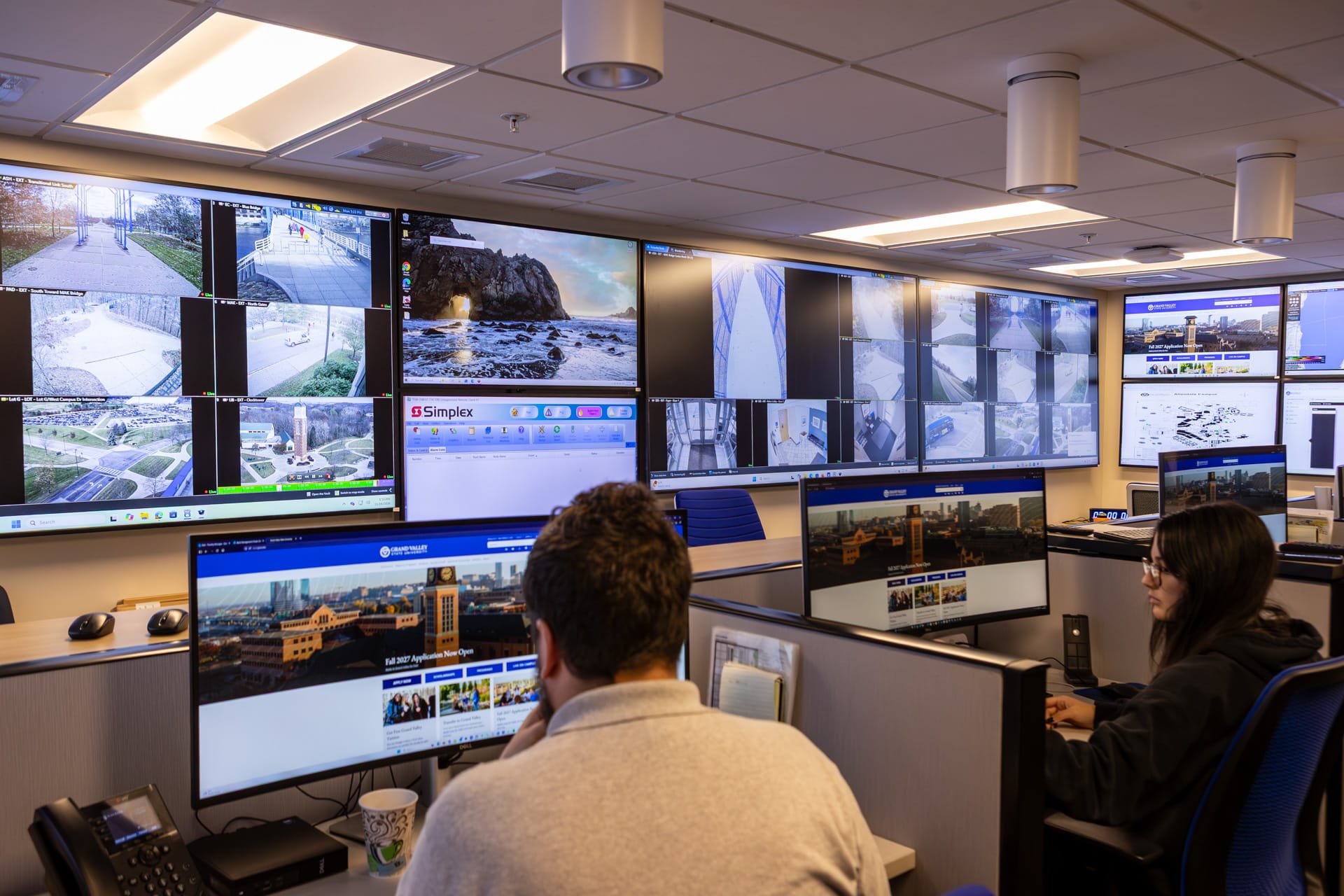
Staffed by five full-time dispatchers alongside temporary workers and student employees, the center integrates multiple systems — including weather radar, building access controls, and direct CAD feeds from Ottawa County and the Grand Rapids Police Department — under one roof.
Surveillance, ALPRs
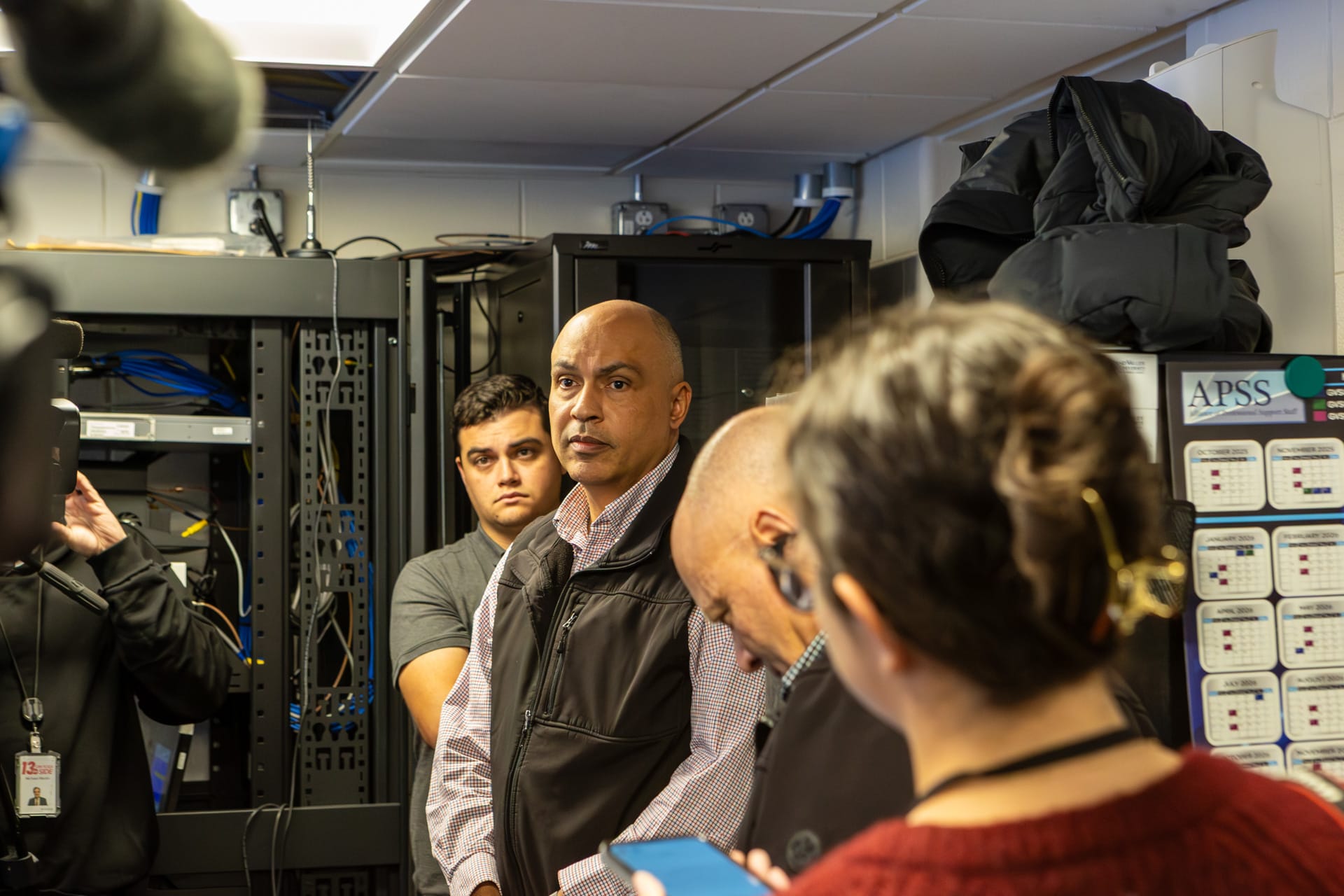
During a media tour of the facility, department officials addressed the university’s broader surveillance infrastructure, including the use of Automated License Plate Readers.
GVSU participates in the Flock Safety network, utilizing ALPR cameras positioned along Lake Michigan Drive. However, Chief Lindstrom confirmed that these devices are currently non-operational following local incidents.
"We do have two cameras that have been operational on Lake Michigan Drive," Chief Lindstrom said. "Unfortunately, neither are currently operational. They've both been vandalized and are not currently operational. We do have intentions to get those back up and running though in the near future."
Regarding the university's network of roughly 1,700 camera lenses across campus, Command Center Operator Andrew Johnson emphasized that operators do not actively monitor live video feeds on a routine basis.
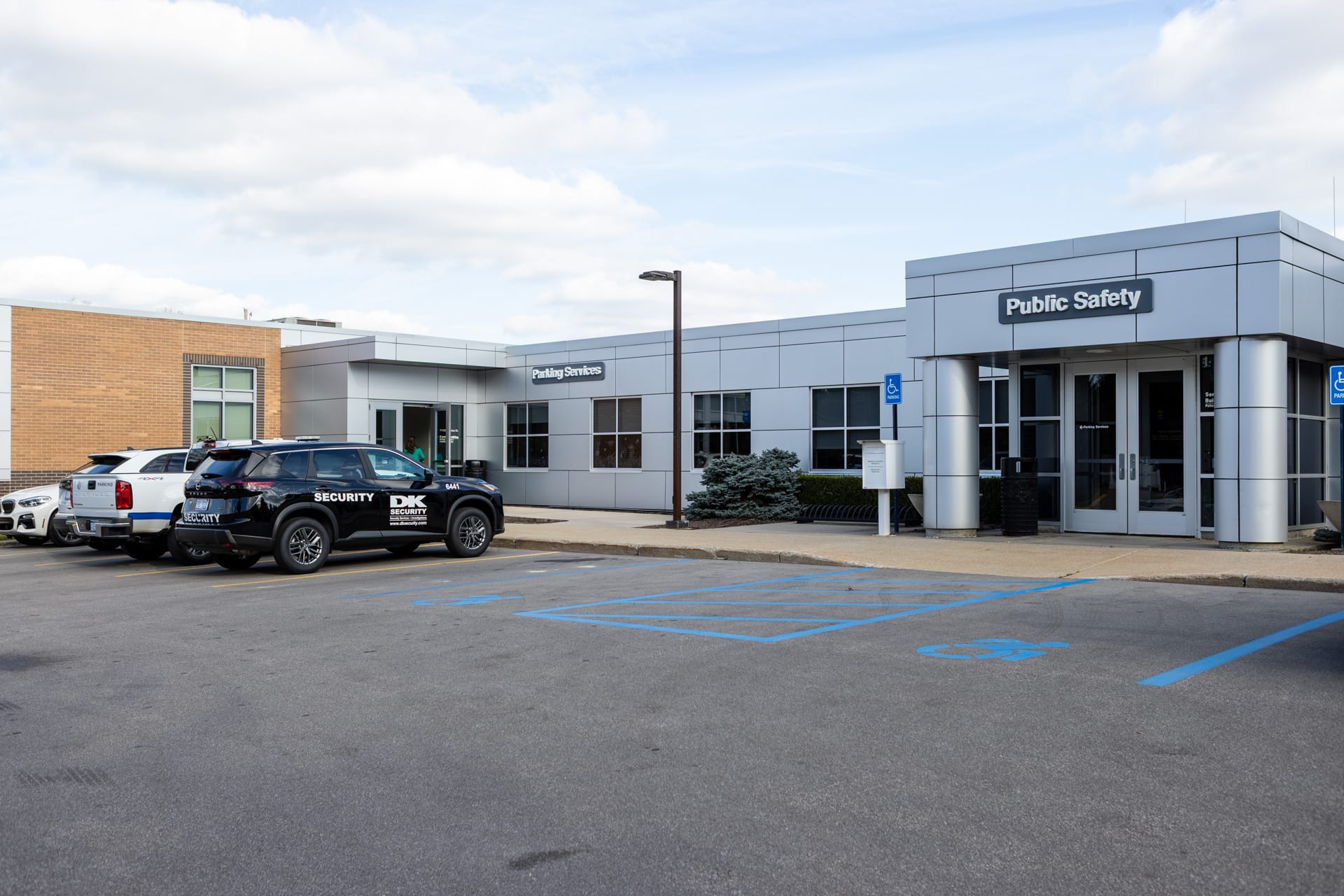
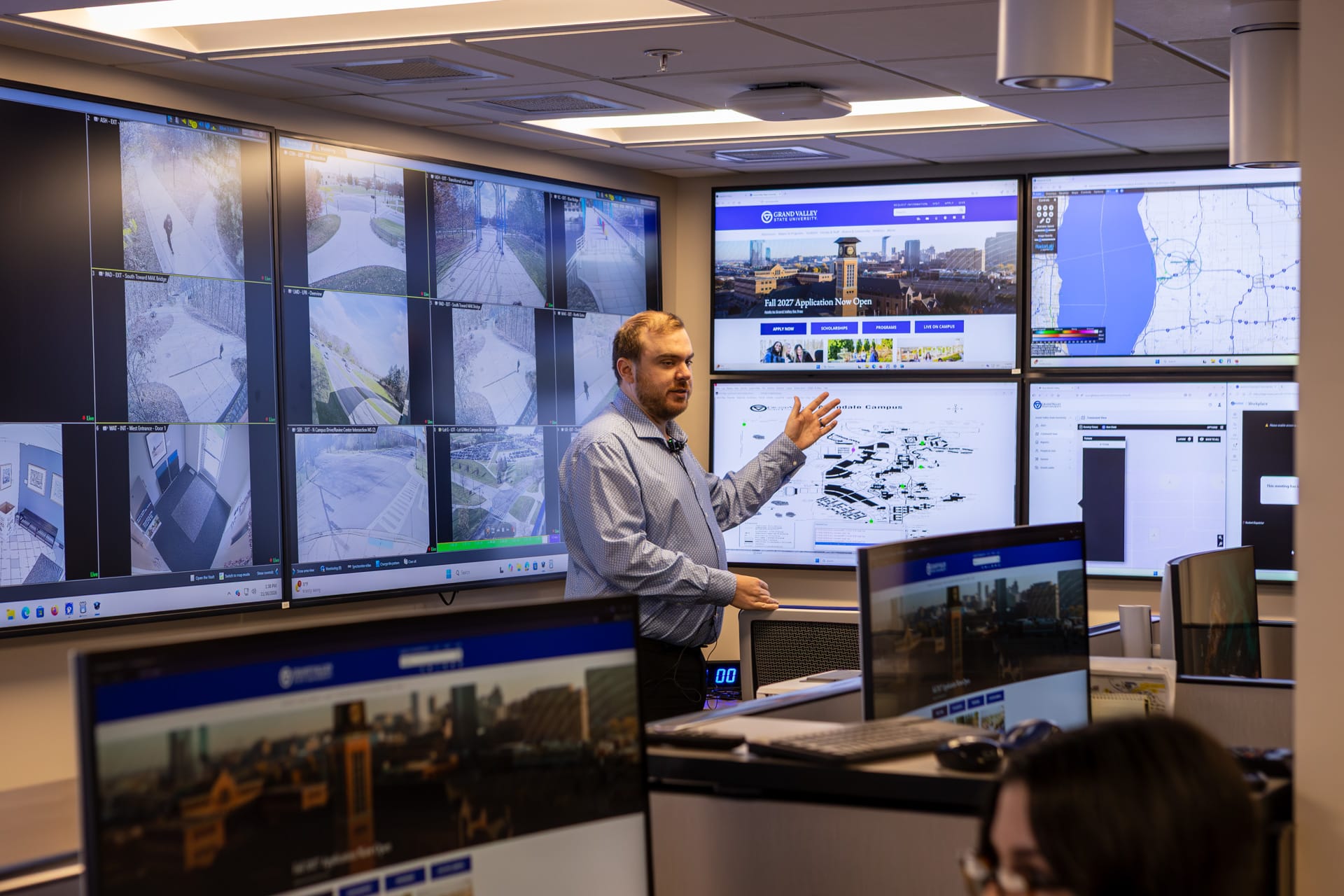
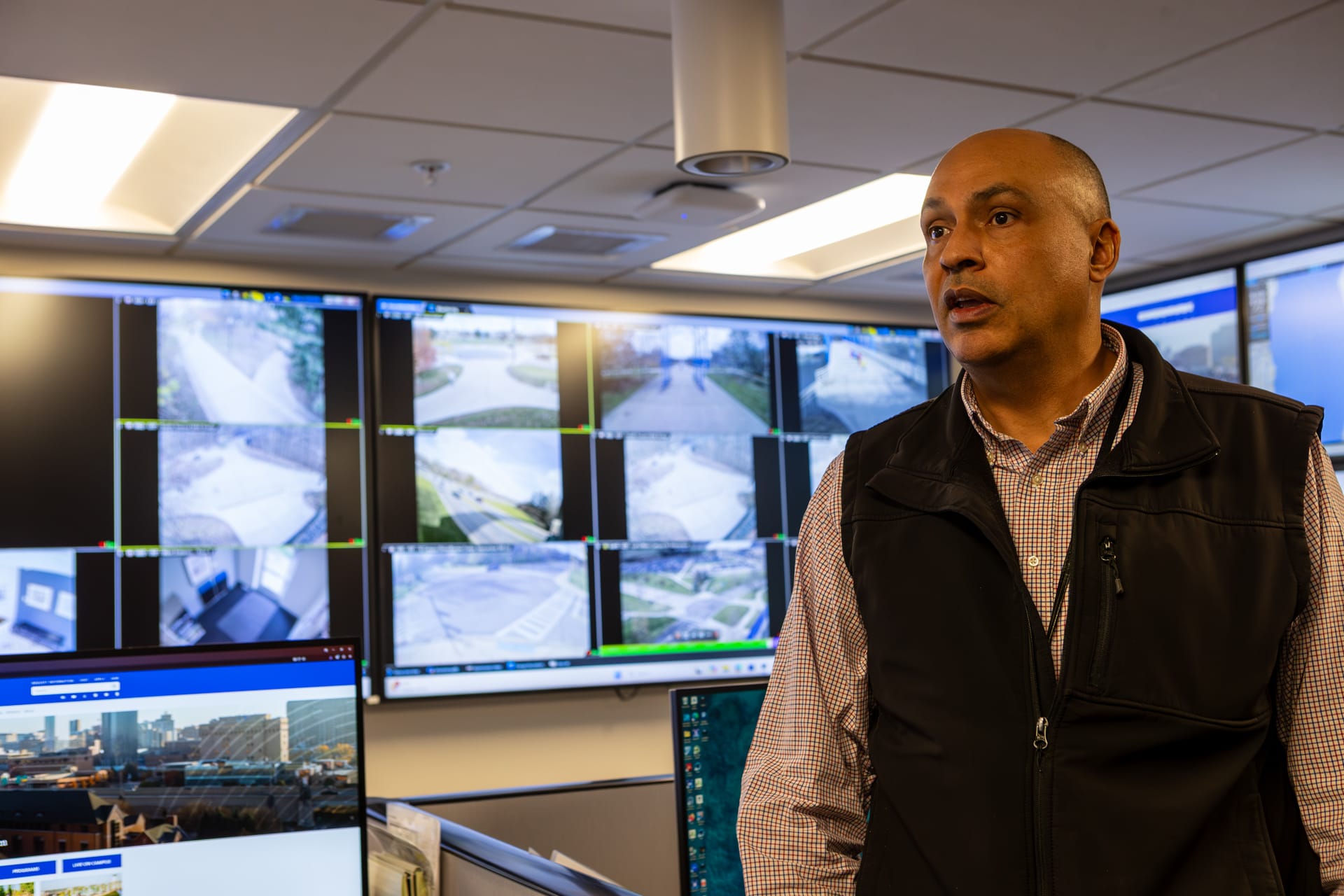
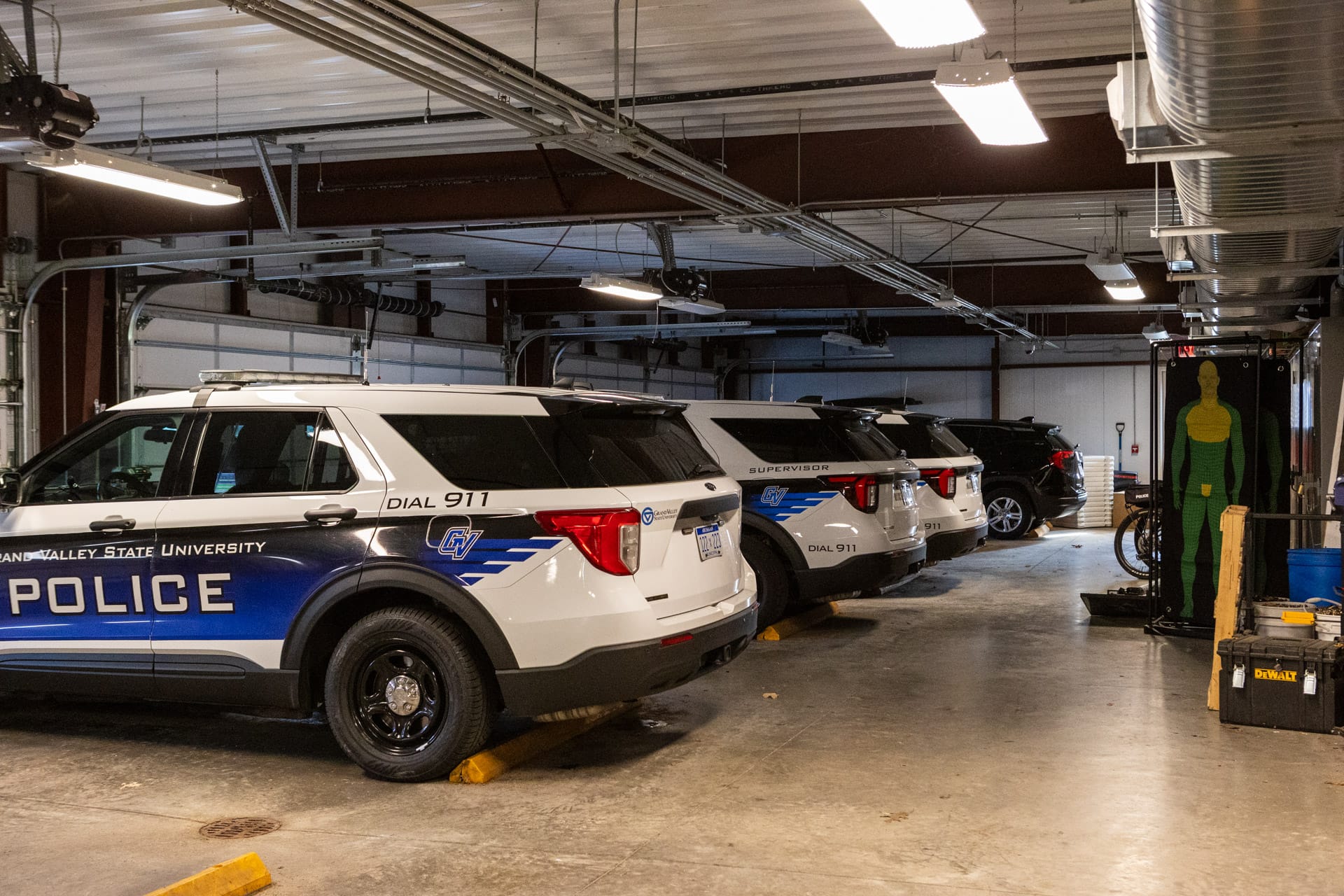
Grand Valley State University’s Department of Public Safety has officially opened its expanded Operations Command Center. [Cathy Seaver/ONN]
"As you guys can see here throughout the room, we do not actively monitor cameras," Johnson said. Instead, the system serves primarily as a retrospective investigative tool. "With over 1,700 camera lenses watching different parts of the campus, we're able to go back and review that camera footage to help inform us on what exactly occurred and who potentially were the subjects involved."
Johnson noted that this capability has dramatically improved outcomes for common campus incidents: "Before we had the cameras, the odds of us finding a hit-and-run suspect were pretty slim to none. ... But now with the cameras, we have pretty decent odds of catching someone that hits a vehicle in a lot and takes off."
The primary exception to passive monitoring involves geofenced perimeters around campus bridge ledges. If an individual lingers in a designated zone, the system triggers an automatic alert. "We get an alert that notifies us," Johnson explained, allowing operators to send an officer to check if someone is "having a mental health crisis or they just need to talk to somebody."
Strict privacy boundaries are also enforced. Department officials confirmed that cameras are placed exclusively at building entrances and exterior perimeters. "Anywhere that you'd expect privacy, we don't have cameras," leadership noted.
"So any of our dorms, any of our academic buildings, the entrances will have cameras, but that is it." Because much of the hardware is six to seven years old and reaching the end of its manufacturer lifecycle, the department is currently in the process of refreshing hundreds of older camera units.

Real-time emergency coordination
Beyond video surveillance, the command center features several technical integrations aimed at shaving critical seconds off emergency response times:
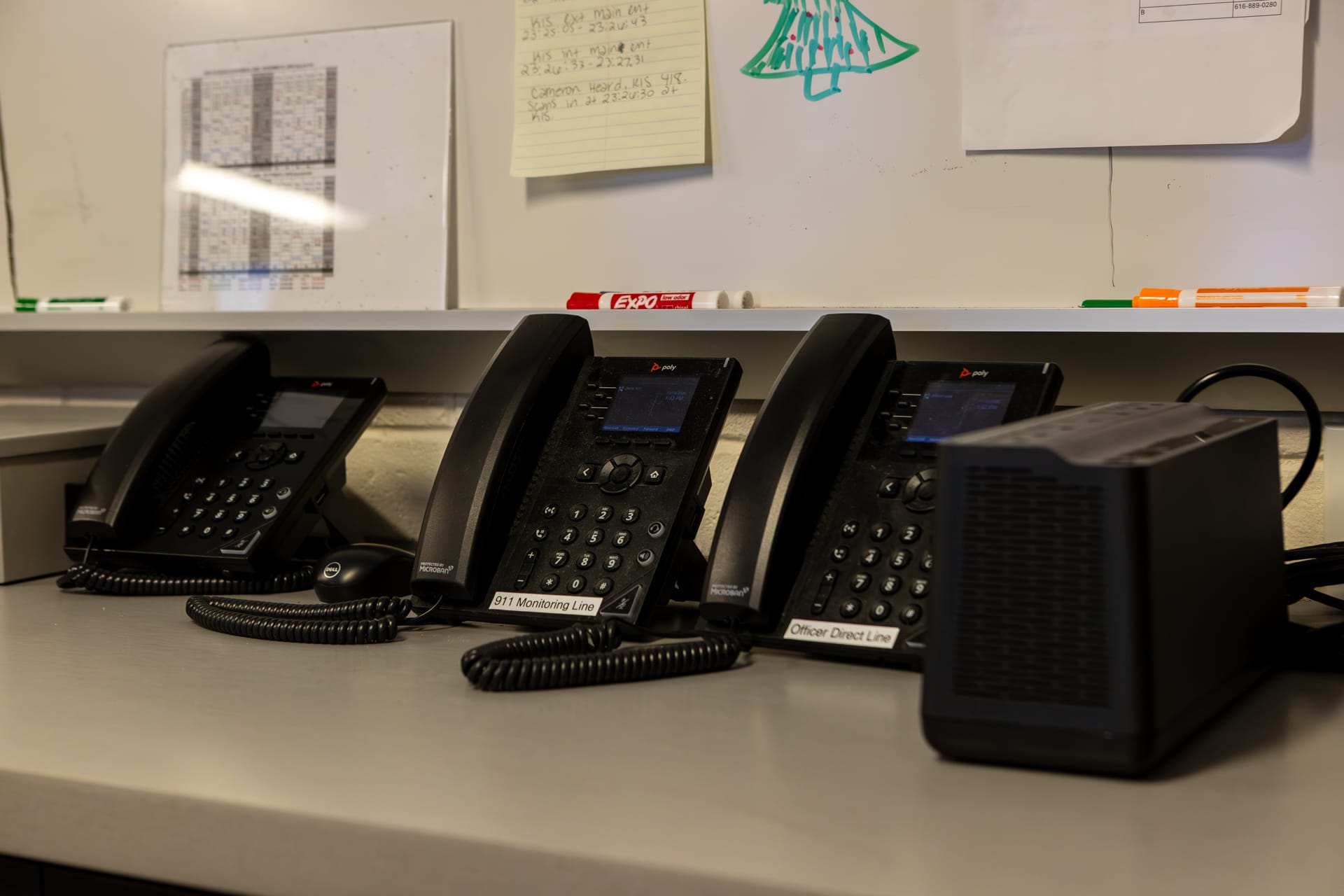
- Direct 911 landline integration: While active emergencies and medical calls are primarily handled by Ottawa County or GRPD, any 911 call placed from a campus landline rings into a muted phone in the center. "That gives us the ability to listen into it ... we can get them there a little faster and give them a heads up what's coming down from Ottawa County," Johnson said.
- RapidSOS and Laker Guardian: Operators use RapidSOS to track precise GPS coordinates for mobile 911 calls, helping differentiate active emergencies from potential "swatting" incidents. The center also monitors the Laker Guardian app, which allows students to set safety timers or text confidential tips.
- Emergency lockdown controls: Physical toggle switches inside the room — categorized by Allendale North, Allendale South, Pew Campus, Main Campus, and Health Campus — allow operators to instantly lock down exterior doors and electronic keycard access during an active threat.
- Weather and operations management: Dispatchers monitor live radar to coordinate safety decisions, such as pausing outdoor campus movements during severe thunderstorms or collaborating with administration on winter weather campus closures.
Reflecting on the investment, leadership emphasized that the center represents a vital commitment to the campus community. "We're proud of this center," officials said. "We spent a lot of resources to get this up and running. And it's really a highlight to further enhance to the public and to the campus community, the investment in safety and security and showing that this is a priority for the university."
— Sarah Leach is the executive editor of the Ottawa News Network. Contact her at sleach@ottawanewsnetwork.org. Follow her on Twitter @ONNLeach.


