

Officials pitch small homes to help solve housing shortage as Ottawa County reviews options
West Michigan needs to add 50,378 additional homes by 2030 to meet demand, according to Housing Next, a regional partnership serving Kent and Ottawa counties.
OTTAWA COUNTY — The starter homes of Ottawa County have become a thing of the past, replaced by sprawling subdivisions of 2,500-square-foot residences and luxury rentals, leaving a gaping void for young professionals and downsizing seniors.
Now, as the county assesses its housing needs over the next five years, some initiatives are in the works to create more options for residents.
The Ottawa County Department of Strategic Impact and the County Housing Commission have launched the “Small-Footprint Homes” initiative. The pilot program aims to jumpstart the construction of 1,000-square-foot dwellings, said Paul Sachs, the county’s strategic impact director.
"We view this small-footprint-home concept as a very viable opportunity to get needed for-sale housing products into the marketplace," Sachs said. "These are the homes we used to build. Our communities today all reflect these homes on right-size lots, and we’re showcasing this product to draw public attention to it."
High demand, low supply
The crisis in West Michigan mirrors a national supply drought, though the local squeeze is particularly acute. Michigan currently has 32 percent fewer listings than what is considered a balanced market, Sachs said.
In Ottawa County, where the median home price now hovers well above $400,000, the entry-level buyer has been effectively priced out.
West Michigan needs to add 50,378 additional homes by 2030 to meet demand, according to Housing Next, a regional partnership serving Kent and Ottawa counties.
The housing outlook points to continued high demand, a significant shortage of affordable homes and ongoing price growth.
The number of houses in Ottawa County has increased by 14.4% between 2010 and 2020 and by another 5.1% between 2020 and 2024, far outpacing state growth rates during these same time periods, according to Housing Next’s 2025 report on Ottawa County’s housing needs.
It is projected that the county’s number of households will increase by 5,239 (4.6%) between 2024 and 2029. The county’s projected growth rate of 4.6% is much faster than the state’s projected growth rate of 1.4%.
Other findings of the report:
- Notable growth is expected among seniors (age 65 and older): In 2024, household heads between the ages of 35 and 44 comprised the largest individual share (17.7%) of all households in Ottawa County, followed by households ages 55 to 64 (17.4%) and ages 45 to 54 (16.1%). Between 2024 and 2029, the most significant growth (22.0%) is projected to occur among households aged 75 and older. This will likely result in increased demand for senior-oriented housing, though other housing types will also be needed.
- Lower-income households will still comprise large shares of households through 2029, particularly among renters: Between 2024 and 2029, renter household growth is projected to be confined to renter households earning $75,000 or more, while households earning less than $75,000 are projected to decline in number. Nearly two-thirds (64.8%) of renter households will continue to earn less than $75,000 annually. As a result, rental housing demand for units that are affordable to low- and moderate-income households will continue to be in demand.
- Quality of households continues to be a challenge for many: There are approximately 1,454 renter households and 1,095 owner households in Ottawa County that live in substandard housing conditions, meaning they live in units that are overcrowded or lack complete plumbing or kitchens. There are approximately 10,590 renter households and 13,336 owner households in Ottawa County that are housing cost burdened (paying more than 30% of income toward housing costs), of which 4,783 renter households and 4,769 owner households are severe cost burdened (paying over 50% of income toward housing costs). As a result, many households are living in housing conditions that are considered to be below modern-day housing standards and/or are not reasonably affordable to many area households.
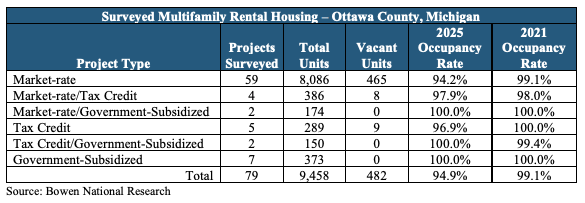
- There are not enough affordable multifamily rentals, with significant demand for very low- and low-income renter households: The overall occupancy rate of multifamily apartment rentals in the county is 94.9%, down from 99.1% from Housing Next’s 2021 survey. Project types with an affordability component (tax credit or government subsidy) have an occupancy rate of 96.9% or higher, and all government-subsidized projects are 100% occupied. Overall, this is indicative of a multifamily rental housing market with very high demand, the report said.
- Multifamily apartment rental rates are increasing rapidly: Among the most common market-rate bedroom types, median collected rents have increased between 23.1% (two-bedroom/two-bathroom) and 26.0% (one-bedroom/one-bathroom). Meanwhile, the median tax credit collected rents for the most common bedroom configurations have increased 23.3% (one-bedroom/one-bathroom) and 21.5% (two-bedroom/one-bathroom). While such rent growth will likely encourage additional multifamily development, it also poses a challenge for many of the area’s lower-income households whose income growth has not kept pace with rent growth, according to the report.
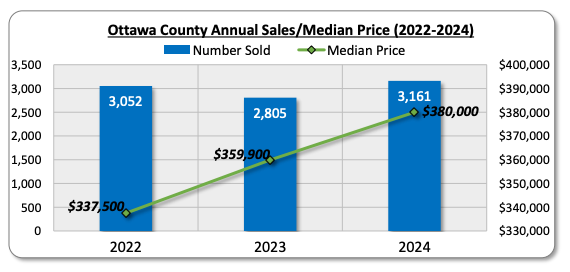
- Despite the relatively stable number of homes sold annually over the past three years, median home prices continue to escalate: While there were some fluctuations in the number of homes sold in the county over the past three years, this volume is generally considered stable, though the recent (2024) increase does show a renewed strength of for-sale housing activity. The median sales price continued to increase year over year, with the median sales price of homes sold increasing by 6.6% during 2023 and 5.6% during 2024, representing a cumulative increase of 12.6%.
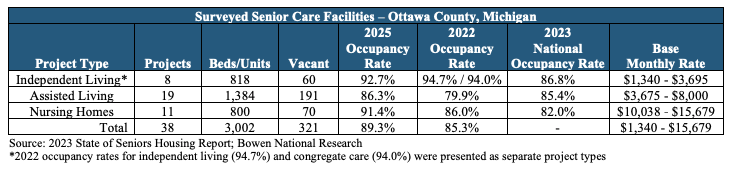
- Senior care housing has high occupancy levels,, and projected growth will add to demand: A total of 38 senior care facilities, including independent living, assisted living and nursing homes, were surveyed in the county. These facilities have overall occupancy rates that range from 86.3% (assisted living) to 92.7% (independent living) and a total occupancy rate of 89.3% in the county. All senior housing types have higher overall occupancy rates than the 2023 national occupancy rates.
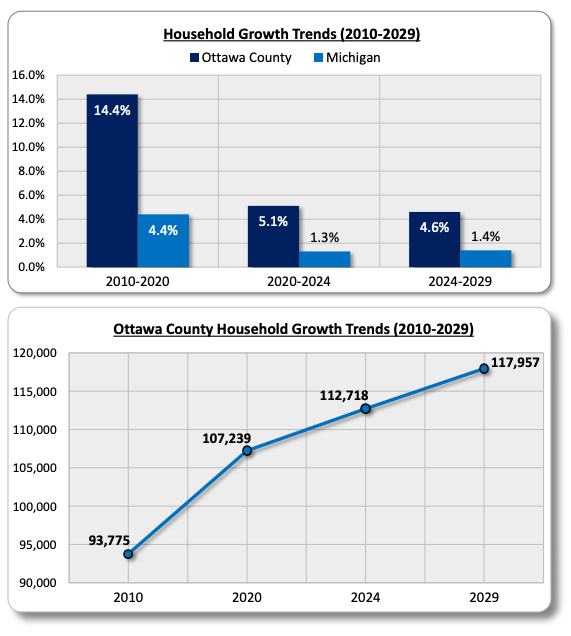
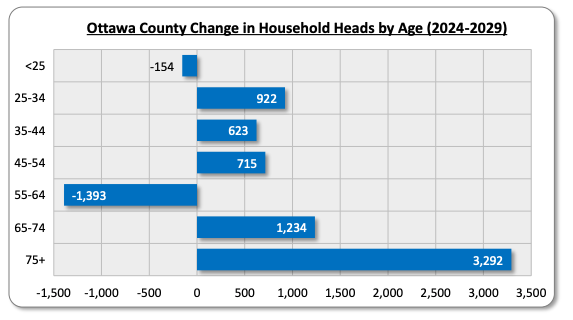
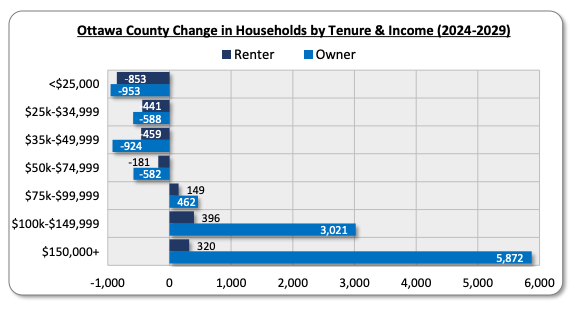
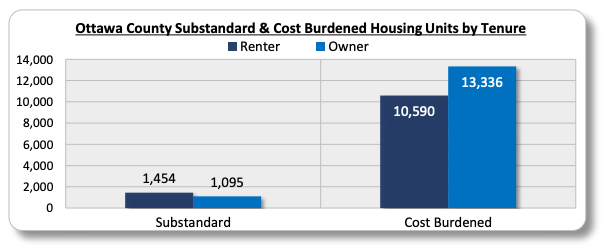
The number of houses in Ottawa County has increased by 14.4% between 2010 and 2020 and by another 5.1% between 2020 and 2024, far outpacing state growth rates during these same time periods, according to Housing Next’s 2025 report on Ottawa County’s housing needs. [Courtesy/Housing Next]
The report found that Ottawa County has a shortage of available inventory, a prevalence of substandard housing, rapidly increasing rents and high home prices, and rapid household growth.
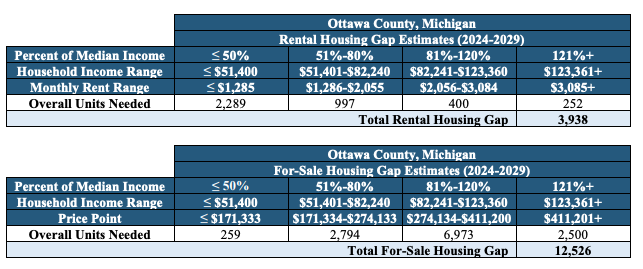
Although the report said additional housing units of all types are needed, the county has a particular need of 3,938 additional rental units, with 58% of those units needing to be at or below $1,285 per month to serve low-income households from 2024 to 2029.
The report also found that the county needed 12,526 for-sale housing units, with 56% of those needing to be between $274,134 and $411,200.
Free plans for small homes
The county recently released a series of 16 open-source architectural plans. The designs, ranging from 440 to just over 1,000 square feet, are free for builders, developers, and residents, according to the county’s website.
Sachs said the objective is to produce a home that can sell for under $300,000 — a critical threshold for a worker earning an entry-level salary of $70,000.
"That creates a great cycle of opportunity," Sachs said. "As seniors want to downsize to a product like this, it opens up their existing homes for others that can continue to move up the ranks of home equity."
While the homes are small, the county is emphasizing quality to combat the stigma often associated with high-density housing, Sachs said. The designs trade vinyl siding for durable materials like LP SmartSide, focusing on architectural charm rather than the "low-income" aesthetic that often triggers neighborhood opposition.
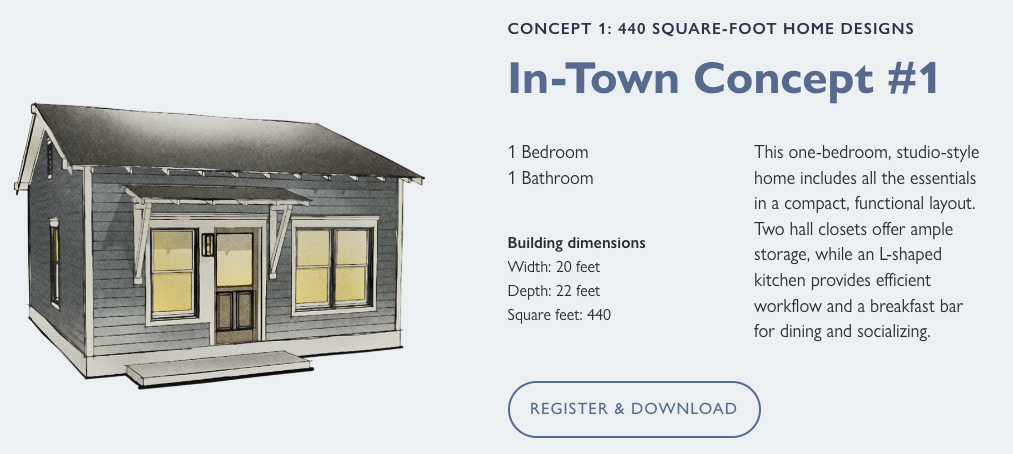
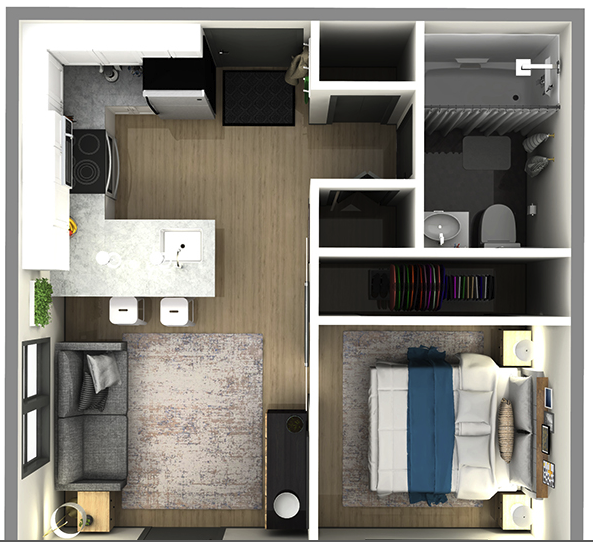


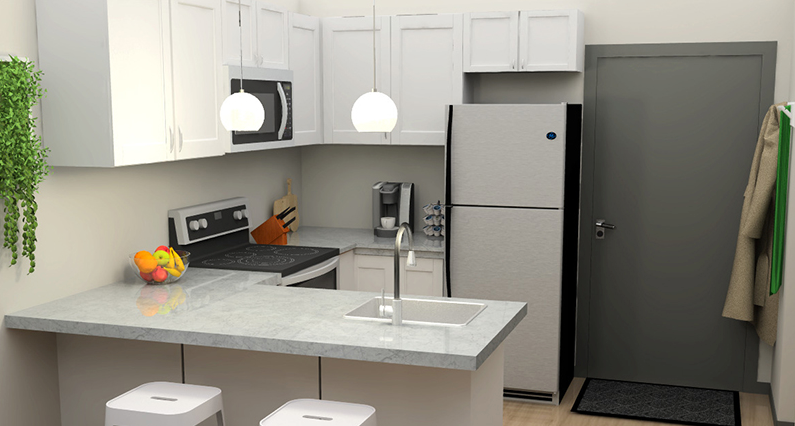
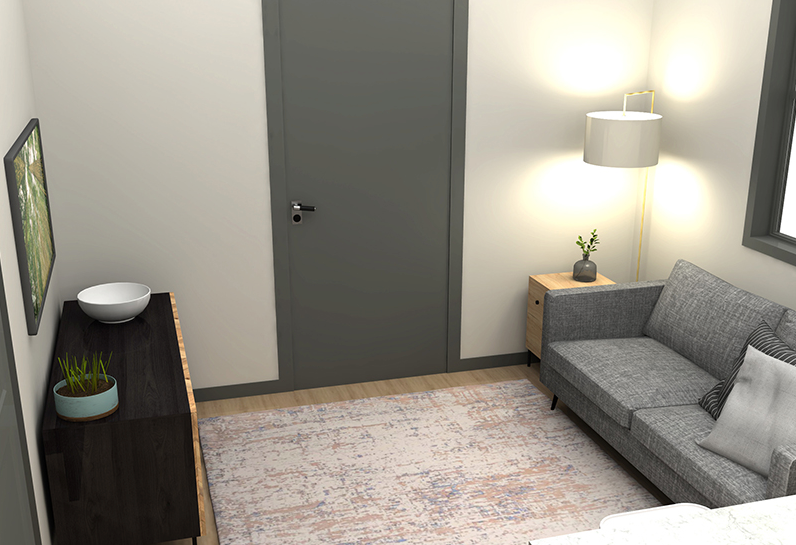
Ottawa County's Department of Strategic Impact is providing 16 home plans available for free public use. Ranging from 440 square feet to 1,056 square feet, they were custom-designed by Holland-based consultant Nick Rolinski and Hope College student and DSI staff intern Matt Daub. [Courtesy/Ottawa County]
"There's generally this misconception that a smaller home must mean low income or more crime," Sachs said. "Those are fallacies that we need to overcome."
The primary obstacle remains neighborhood opposition and the rigid zoning laws of the county’s 17 townships. In many areas, minimum square-footage requirements and mandates for large lots make small-scale development a legal impossibility.
While the county’s six cities are generally more open to density, Sachs is calling on township leadership to reconsider restrictions.
Because the county has no authority over local zoning, it will be something each township has to consider individually.
Sach said he is thrilled to see the city of Holland take initiative, noting that the seven small-footprint homes in a "cottage courtyard" design recently received planning commission approval to go in near 120th Avenue and Waverly Road.
He views the Holland project as a necessary "showcase piece" to prove the concept to developers who have spent the last 15 years avoiding small-scale projects due to regulatory hurdles.
"We love the charm of these communities today," Sachs said. "Why can’t we build it?"
Looking toward 2026
As the county moves into 2026, the housing forecast remains dominated by a shift from rentals to for-sale units. While the rental market has seen significant growth, Sachs notes a potential for over-saturation in some areas. The real need, he argues, is for the "workforce" to have the opportunity to own.
"To meet the need that we see, we have to not only have a strong '26 but a strong next four to five years of getting more and more products in the market," Sachs said.
Whether the program succeeds will depend on more than just blueprints. It will require a real shift in how West Michigan defines a "successful" neighborhood, he said.
"We’re creating the buzz, and that’s what we want," Sachs said. "We want this small-footprint homes project to be a conversation starter."
Please consider becoming a monthly donor!
Housing commission evaluates its role
Ottawa County also has a housing commission, which aims to work cooperatively with federal, state, and local governments to address housing needs.
The role of the commission, however, is in flux.
Originally created in 2006, the initial goal was to become a fully realized public housing authority, or PHA, which would have allowed the county to secure funding from the U.S. Department of Housing and Urban Development, acquire property, manage rentals, handle maintenance and work with partners to address local housing needs.
A PHA would allow the county to administer federal housing programs, such as issuing Section 8 vouchers.
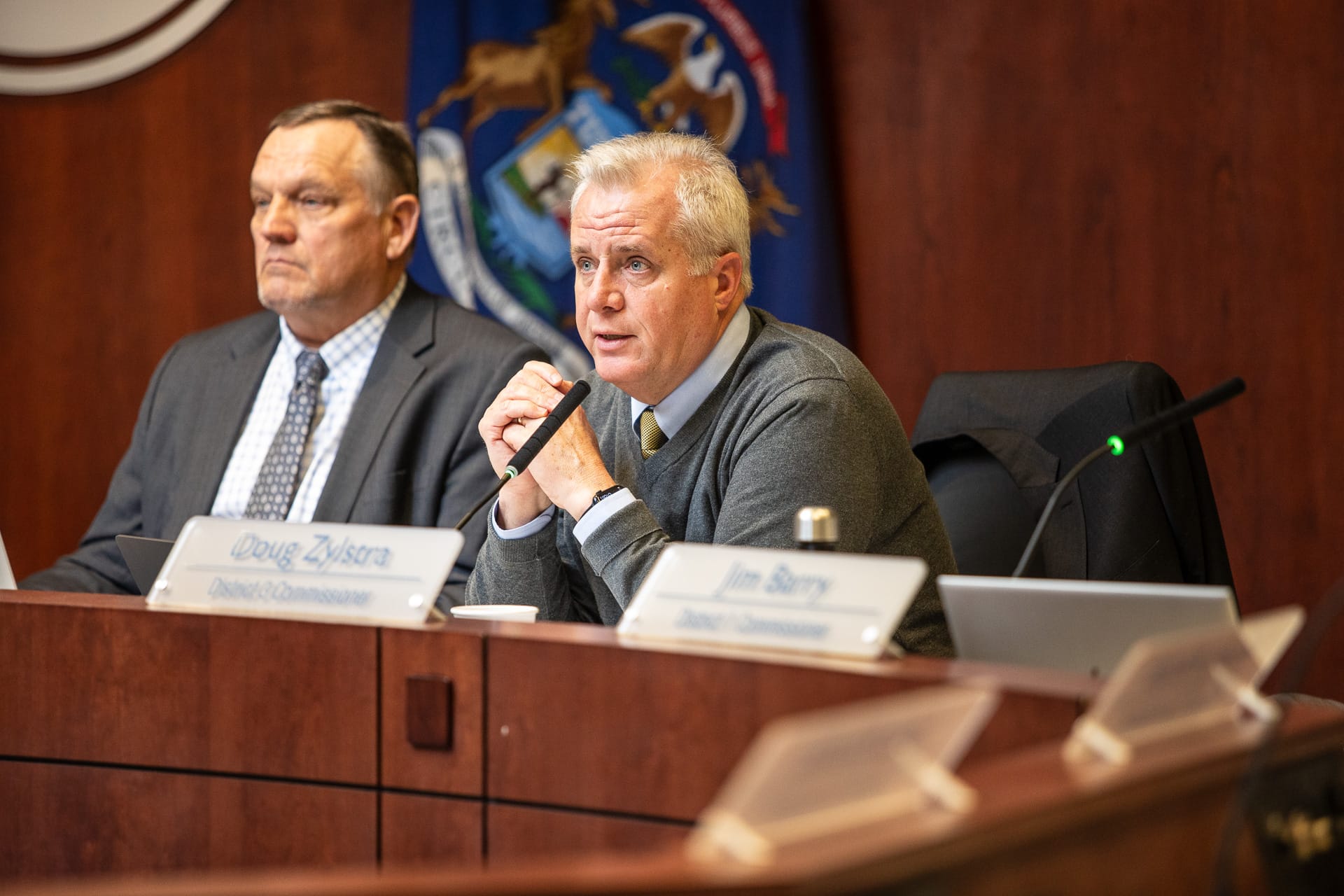
The county sought the authority status, but was unsuccessful, said Ottawa County Commissioner Doug Zylstra, who is a current member of the county’s housing commission.
“They sought PHA status for about five years, from 2008 or 2009 up until 2012; they never were able to get it,” Zylstra said. “There were a lot of conversations with Ryan Kilpatrick [of Housing Next] and with Lakeshore Advantage about having a need for a more institutional focus. We had Housing Next, but that wasn't really institutionalized. So, a lot of the discussion was: ‘How can we institutionalize Housing Next or get a regional, or at least a county-wide body that brings everybody to the table and helps us sort through the issues and helps us get solutions.”
That led to the county’s housing commission becoming inactive around 2012.
“The housing commission just stopped, because that was their whole goal,” Zylstra said.
However, the body would later be revived in 2019, this time trying to identify how it can help steer local housing policy because the state is not authorizing any more public housing authorities.
Zylstra said the question now is what role the commission can play in assisting with housing needs.
“How do we leave something more solid in the absence of a strong Housing Next, right? Let's convert that over to a housing commission that, at the county level, will be an advocate, that will be an engine, that will be a discussion place, that will be the focus for generating housing opportunity in Ottawa County,” he said.
Then COVID-19 pandemic hit, but one silver lining was the distribution of American Rescue Plan Act funds, more commonly known as ARPA. That led to more conversations on what the county could do.
“We had the advantage of ARPA, then we said: ‘What can we do?’ Housing Next was a bucket manager for housing, and they brought us the revolving loan fund.”
That fund, or RLF, operates through a partnership with IFF, formerly the Illinois Facilities Fund, to finance affordable housing projects, leveraging public funds like ARPA and private capital for low-interest loans to developers, supporting both rental and for-sale housing in the county.
The RLF aims to increase housing stock by reducing development costs, with repayments recycling back into the fund for future projects, and involves strategic planning and applications reviewed by committees.
“The original ask was for $8 million, and we got that bumped up to $10 million,” Zylstra said.
The county was able to leverage ARPA funds to start an eviction prevention program, which is operated by Good Samaritan Ministries in partnership with the 58th District Court to help renters and landlords avoid the eviction process.
The program aims to keep tenants in their homes and prevent homelessness through mediation, financial counseling and rental assistance.
“The eviction diversion was something the district court had been playing with for a while, so we took over that and advocated for that,” Zylstra said.
Other projects that received county backing were Samaritas, which helps connect residents with emergency housing, and The Dwelling Place in Holland, a nonprofit housing provider.
Zylstra hopes the county commission will continue to find new opportunities to expand housing volume and choice in Ottawa County.
“We have more opportunities to develop housing than we have before. Why should we stick with a very limited interpretation of housing commissions, which is a distributor of housing choice vouchers, which is already being done elsewhere for Ottawa County residents?” Zylstra said.
“We can do so much more, and we're not going to break the bank doing it.”
— Heather VanDyke covers northern Ottawa County for the Ottawa News Network. Contact her at hvandyke@ottawanewsnetwork.org. Sarah Leach is the executive editor of the Ottawa News Network. Contact her at sleach@ottawanewsnetwork.org. Follow her on Twitter @ONNLeach.


