

Ottawa County ditches housing commission for new advisory board to tackle housing crunch
In a major structural overhaul, the Ottawa County Board of Commissioners voted on June 23 to disband the county’s long-standing housing commission.

OTTAWA COUNTY — In a major structural overhaul, the Ottawa County Board of Commissioners voted on June 23 to disband the county’s long-standing housing commission.
In its place, officials are establishing a new housing advisory board — a transition intended to cut through bureaucratic red tape, bypass stalled federal certification efforts and leverage local private-sector expertise.
The policy shift pivots Ottawa County away from traditional, state-regulated housing models that manage contracts and loans, focusing instead on a collaborative, advisory approach to address the region’s growing housing shortages.
Pivoting away from bureaucracy
The decision to dissolve the old commission stems from years of navigating regulatory roadblocks.
Originally formed in 2006, the county didn't intend to operate as a traditional commission that owned and operated housing developments, but rather to foster solutions.
"Then, as the conversations started to emerge more seriously around 2017-18 about the need for advancing and increasing housing stock in the county, and the conversation re-emerged ... the recommendation was: 'Let's reactivate the county housing commission, so it can offer an opportunity to leverage additional federal and or state dollars to support housing needs,'" said Paul Sachs, director of Strategic Impact.

Left to stagnate in 2011, the commission was revived in 2019 — after it went dormant in 2011 after only five years of operation — to help secure state and federal funding.
The commission, however, struggled for purpose after the federal government stopped allowing new public housing authorities in 1999.
"Throughout 2019, we started to dive into, 'OK, now we're organized as a housing commission under statute that know allows no more than five members and provides the housing commission the ability to own and operate property,' but the county still philosophically said 'that's not our role, that's not where our direction is, but can we leverage additional dollars to help fund new housing construction?'" Sachs said.
"We learned over the next couple of years that HUD was not going to create any new public housing authorities that would open up additional allocations, project-based vouchers or housing choice vouchers that can help create more subsidies for housing units — and that was one of the main reasons that we're looking to have that housing commission," he said.
Read More: Ottawa County Housing Commission chides Grand Rapids for expanding into its territory
Meanwhile, the nearby housing authority in Grand Rapids helped with Ottawa County housing needs.
"During that same time, we started to engage deeper with the Grand Rapids Housing Commission. ... So, if we're not going to be a fully recognized public housing authority to leverage HUD dollars — Grand Rapids already serves that purpose for Grand Rapids and Kent County — that provides the ability for more of our residents and developers to access housing choice and/or project choice vouchers," Sachs said.
"So, as that then started to materialize, I've developed memorandums of understanding with Grand Rapids Housing Commission, where we collaborate, communicate, and are starting to expand on how we can support the housing space together."
Instead of fighting federal headwinds, Ottawa County forged a partnership with the neighboring Grand Rapids Housing Commission, which already administers U.S. Department of Housing and Urban Development vouchers for the region.
This freed the county to abandon its pursuit of a traditional, property-owning housing authority, Sachs said.
"As a county housing commission, we're kind of limited by statute, limited in membership," Sachs said. "There's tremendous value to say, 'If we're not going to be recognized as a Public Housing Authority, let's disband the housing commission under state statute, and let's create more of an advisory board for housing, where we can then expand our membership, get more thought partners to the table ... and be more innovative.'"
Inside the new Housing Advisory Board
The newly minted HAB will function strictly as a policy-guiding body. Administered by the DSI, its core mission is to study regional housing bottlenecks, recommend solutions to the board of commissioners and coordinate directly with local municipal governments.
Key features of the transition include an expanded membership from five to 11 voting members, representing a diverse coalition of stakeholders, including builders, realtors, lenders, nonprofit advocates and local officials.
Sachs noted the new model allows his department to work alongside developers as collaborative partners, helping them navigate local zoning disputes and community opposition.
"My hand is up to say I'm willing to walk alongside you as we navigate some of the local zoning and other NIMBYism aspects with developments that come forward," Sachs said. "We can really serve as collaborative partners to move projects forward under that umbrella of an advisory board; I think it just strengthens that understanding of how we can support the development community."
Sachs said it's important to get more input from more spaces to solve the intensely complex housing problem.
"More voices in, and more advocates in this space, from developers, nonprofit, for-profit at the table, financial institutions, even our employers, and just reorganizing how we help to identify and address what barriers may exist in this housing arena. Just simply changing the name from 'commission' to 'advisory board' gives more freedom to have more in-depth conversations with the private sector and help them," Sachs said.

"Part of what my strategy has been for the last several years working with the development community is saying, 'My hand is up to say I'm willing to walk alongside you as we navigate some of the local zoning and other NIMBYism aspects with developments that come forward.' We can really serve as collaborative partners to move projects forward under that umbrella of an advisory board; I think it just strengthens that understanding of how we can support the development community."
Most of the commissioners supported the expansion, with the goal of including more voices.
"I'm excited about this new committee. It brings together and gives Ottawa County's brightest and sharpest minds and volunteers, who operate in the housing space, a platform, a direct voice to the Ottawa County Board of Commissioners," said board Chair Josh Brugger. "Working collaboratively with local municipalities and townships, my hope is that this group will help us all find ways to reduce red tape, streamline approval processes, and find tailored solutions to housing needs in each of our communities."
Bipartisan consensus, complicated history
The restructuring represents a rare moment of alignment on a board that has seen its share of political friction.
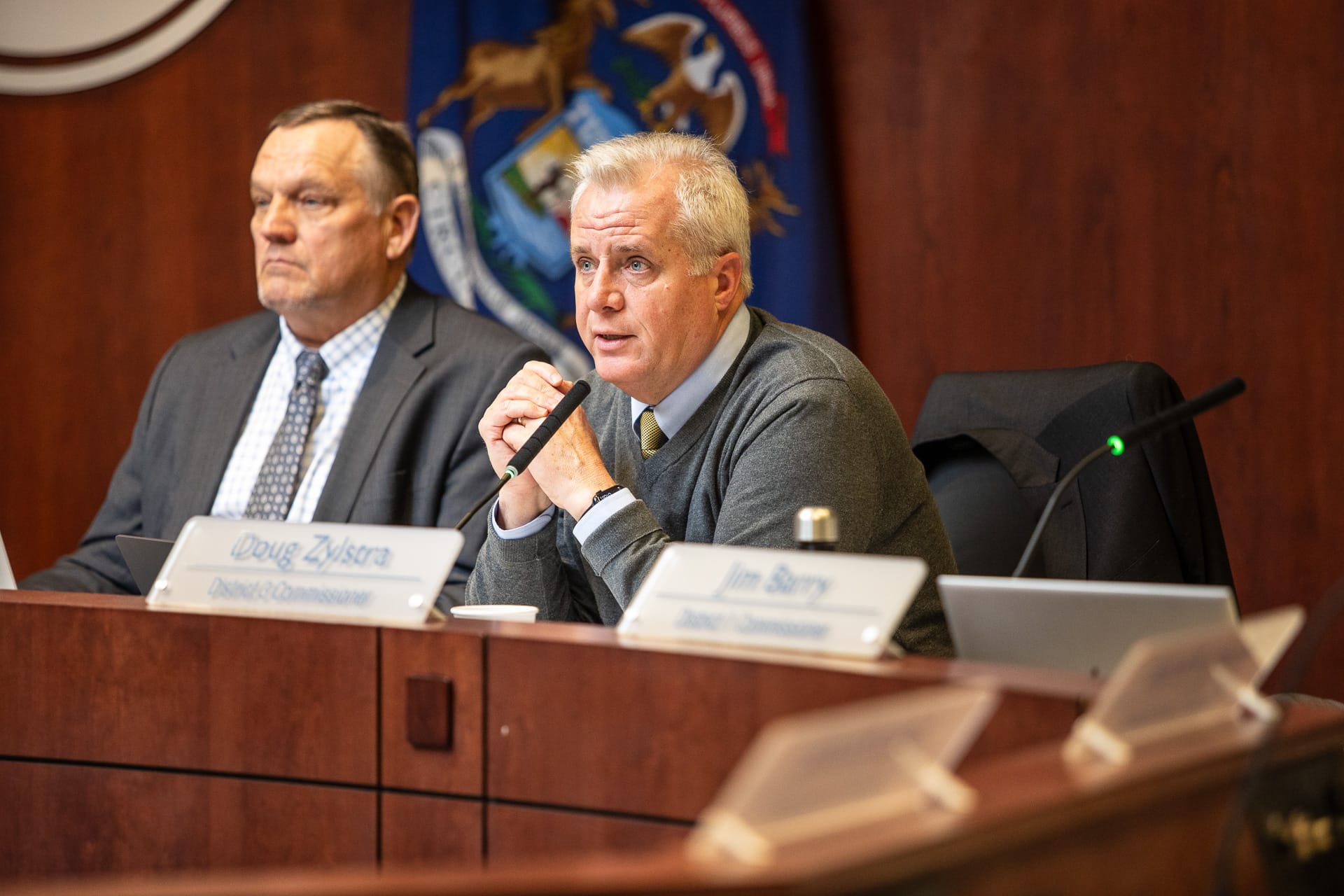
Commissioner Doug Zylstra, the board’s lone Democrat, has a long history with the county’s housing initiatives. He helped revive the dormant commission in 2019, only to be stripped of his seat in 2023 by then-board chair Joe Moss, leader of the far-right faction Ottawa Impact.
Zylstra was reappointed to the body in January 2025 under the current Republican majority.
For Zylstra, the transition is about mobilization.
"The main impetus behind this is to leverage volunteer energy in the community," Zylstra said during the June 23 meeting. "Throughout the whole process, it's about accessing the expertise we have in the community ... accessing just folks who want to make the mission work."
Commissioner Jim Barry, a local realtor who voted in favor of the restructure, echoed those sentiments, calling the decision "one of the most consequential items" on the board's agenda.
"We have a housing problem in Ottawa County, and I was proud to vote for the creation of this board to demonstrate our commitment to finding solutions," Barry wrote on social media.
Budget questions, next steps
While support for the restructure was strong, the transition did raise some financial questions during the meeting.
Commissioner Allison Miedema questioned whether the shift to an advisory board would impact the county budget or dramatically increase staff hours within the Department of Strategic Impact.
County Administrator Patrick Waterman acknowledged that DSI has requested a new dedicated staff position to support the board, with an estimated cost of $80,000 to $120,000 including benefits. While that request remains under evaluation, Waterman assured the board that operations would not stall in the meantime.
"Nothing [will happen to the advisory board in the meantime]," Waterman said. "The work will be able to get done."
— Sarah Leach is the executive editor of the Ottawa News Network. Contact her at sleach@ottawanewsnetwork.org. Follow her on Twitter @ONNLeach.


