

‘Shoveling sh!t’: Officials point to Ottawa Impact for new kerfuffle over compensation commission
Fresh tensions arose at the Ottawa County Board of Commissioners meeting Thursday as warring factions traded allegations over the bungled handling of the pay scale for the county’s water resource officer and treasurer.

Story summary
- The far-right faction of the board, known as Ottawa Impact, expressed its outrage on April 30 after the recent revelation that the county’s insurance authority found an “internal” way to recompense Water Resource Officer Joe Bush and Treasurer Cheryl Clark for raises they never received despite the county’s Officer Compensation Commission in 2024 voting for the increases.
- The moderate Republican majority, however, called those accusations “reckless” and said the new dustup over the compensation commission was a problem of Ottawa Impact’s own creation when they had a controlling majority of the board in 2023 and 2024.
- The compensation commission next meets 2:30-4:30 p.m. on Monday, May 4, in Conference Room D of the county’s Administration Building at the Fillmore Complex, 12220 Fillmore St., West Olive.
UPDATE: Ottawa County Board Chair Josh Brugger gave an interview on Monday morning, May 4, with WGHN's Mary Ellen Murphy. Listen here.
OTTAWA COUNTY — Fresh tensions arose at the Ottawa County Board of Commissioners meeting on Thursday, April 30, as warring factions traded allegations over the bungled handling of the pay scale for the county’s water resource officer and treasurer.
The far-right faction of the board, known as Ottawa Impact, expressed its outrage on April 30 after the recent revelation that the county’s insurance authority found an “internal” way to recompense Water Resource Officer Joe Bush and Treasurer Cheryl Clark for raises they never received despite the county’s Officer Compensation Commission in 2024 voting for the increases.
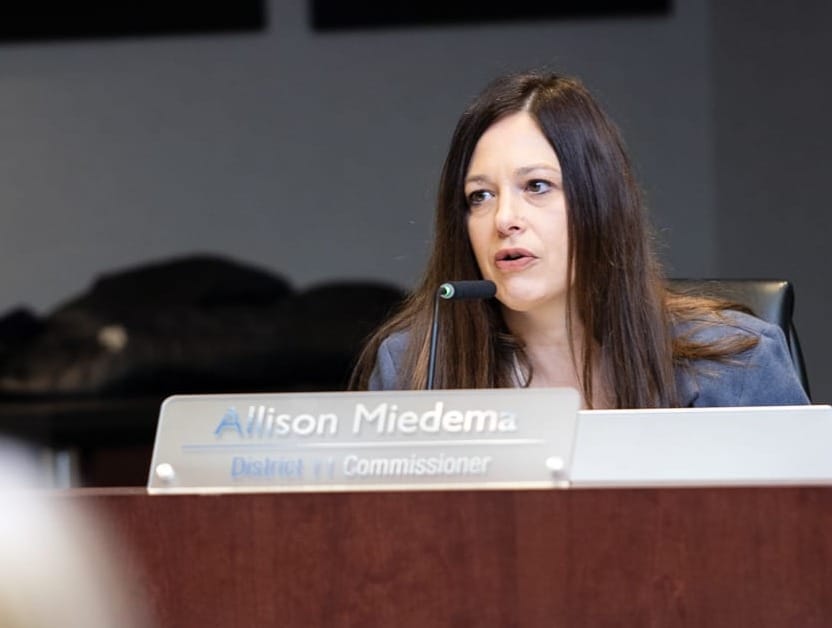
“I was disappointed and, to be frank, frustrated and somewhat angry to be learning about the additional wages to be given to our treasurer and water resource commissioner,” Ottawa Impact Commissioner Allison Miedema said at the board of commissioners’ meeting on April 30.
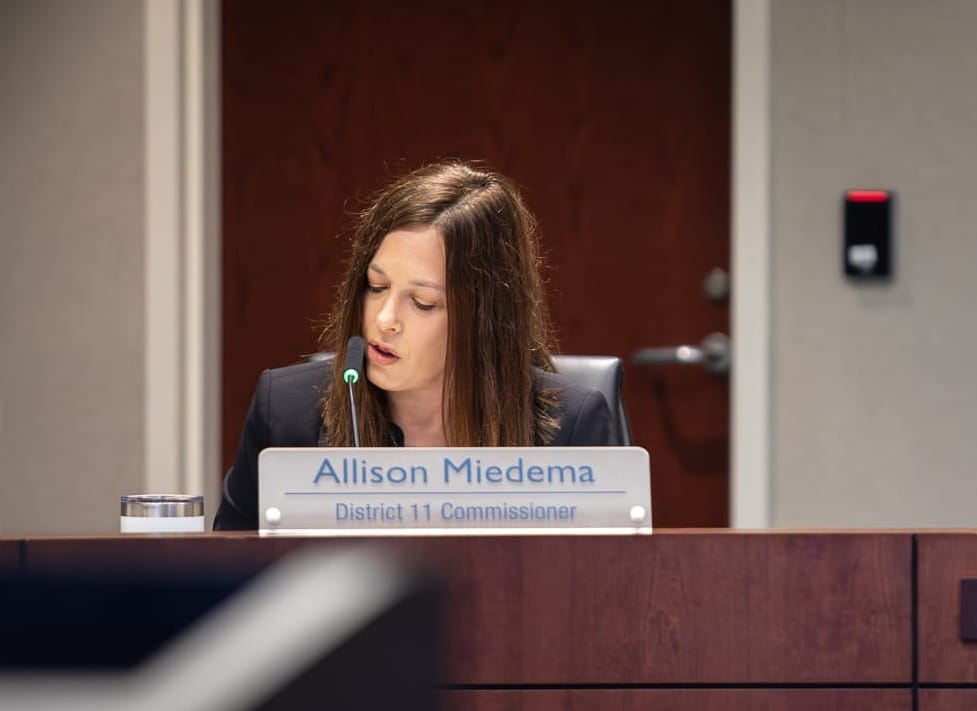
“I have to wonder what other elected officials are being paid more money than we aren't aware of. Has that taken place before? Are there commissioners that sit on this board that are getting paid? Now more money because they felt like they deserve to be paid more money? I think we deserve some answers, as this board,” she said.
The moderate Republican majority, however, called those accusations “reckless” and said the new dustup over the compensation commission was a problem of Ottawa Impact’s own creation when they had a controlling majority of the board in 2023 and 2024.
Onto the kerfuffle of the treasurer and water resources commissioner.
— Sarah Leach ☮️ (@ONNLeach) April 30, 2026
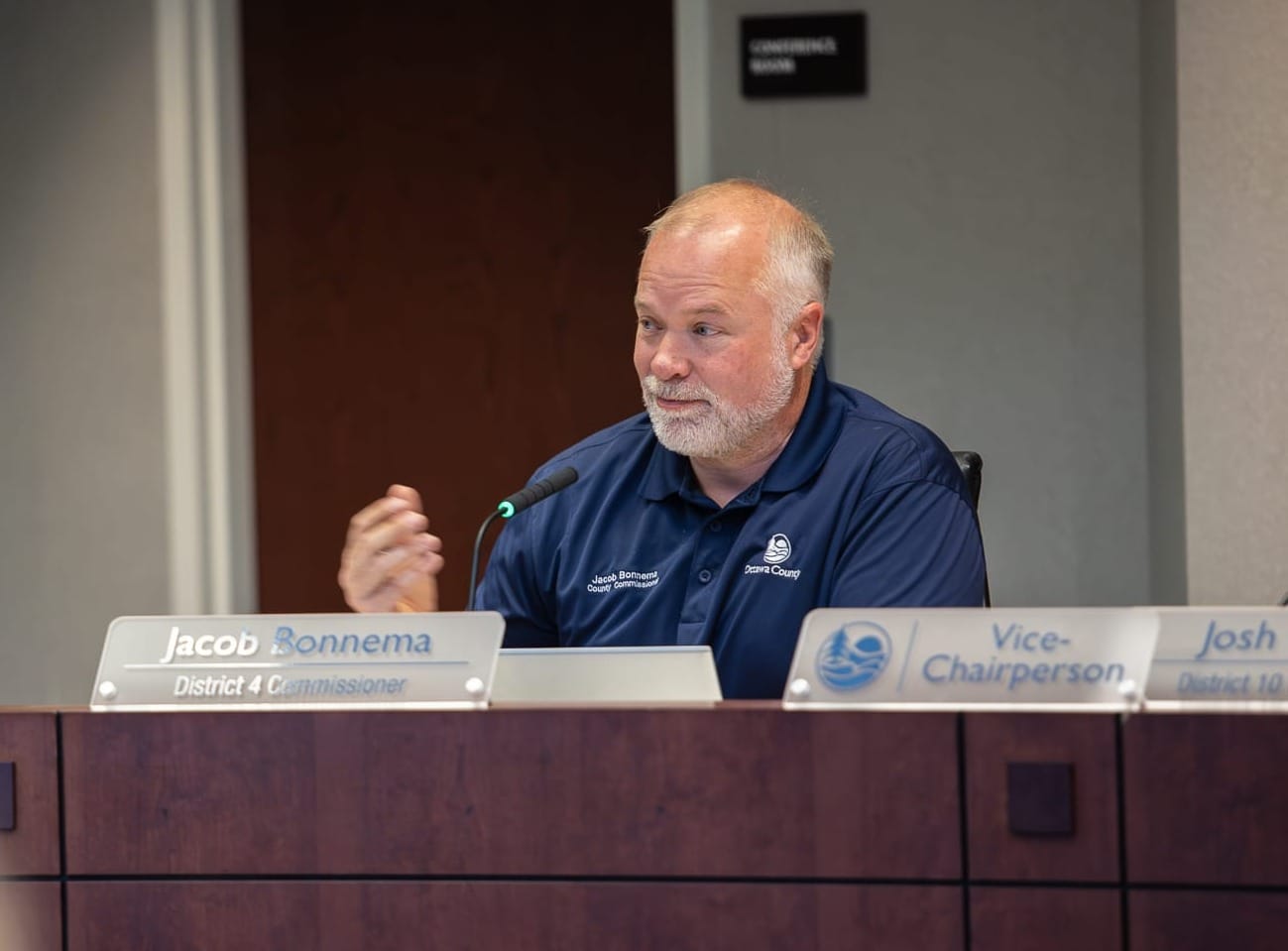
“The accusation that certain people are being paid without the whole board knowing is reckless,” said Commissioner Jacob Bonnema, who was elected in November 2022 with Ottawa Impact Republicans, but publicly split from the group in March 2023 and has become a vocal critic of former board chair Joe Moss, the president of OI, and Commissioner Sylvia Rhodea, OI’s co-founder.
“It's reckless. You should not be saying that. You are making accusations about things you know nothing of. You haven't asked your questions. What happened under Commissioner Moss' leadership with Epperson and Wetmore … I keep hearing it's like that,” Bonnema said, referring to a December 2024 closed session when Moss pushed through controversial severance agreements for political allies that were hired during Ottawa Impact’s controversial tenure.
“This is a false flag if I've ever seen one.”
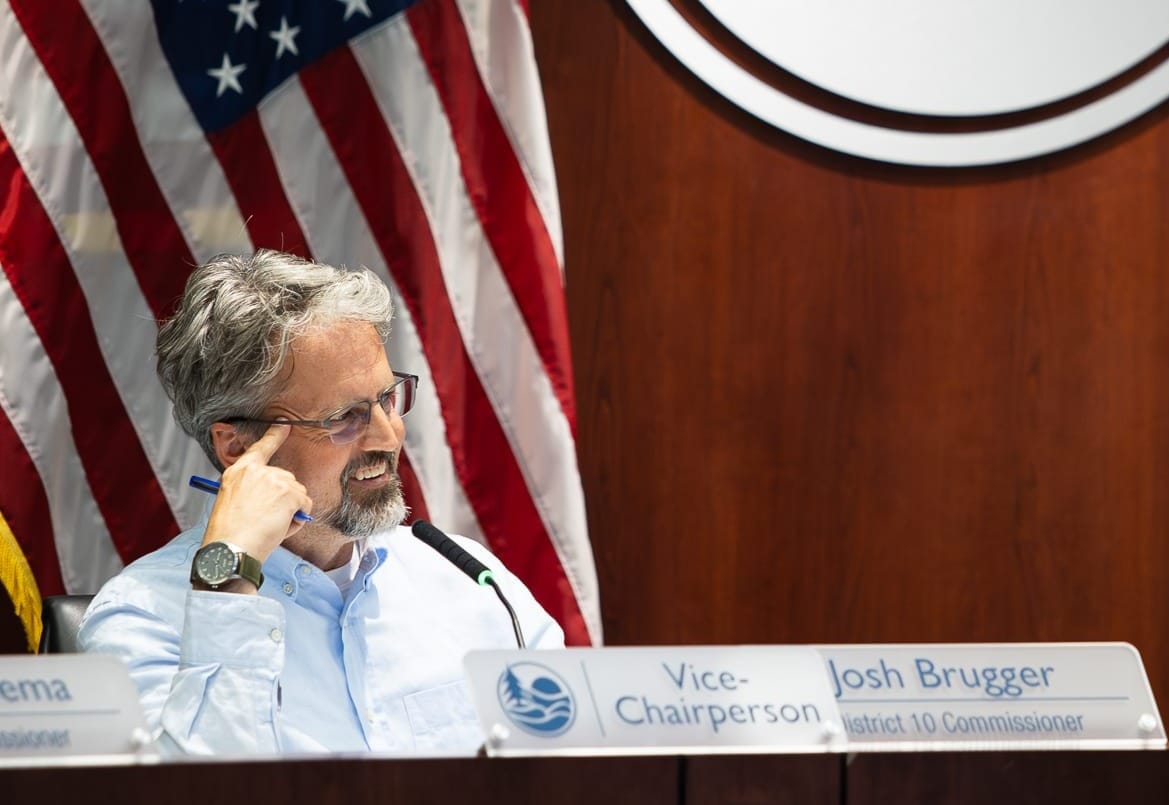
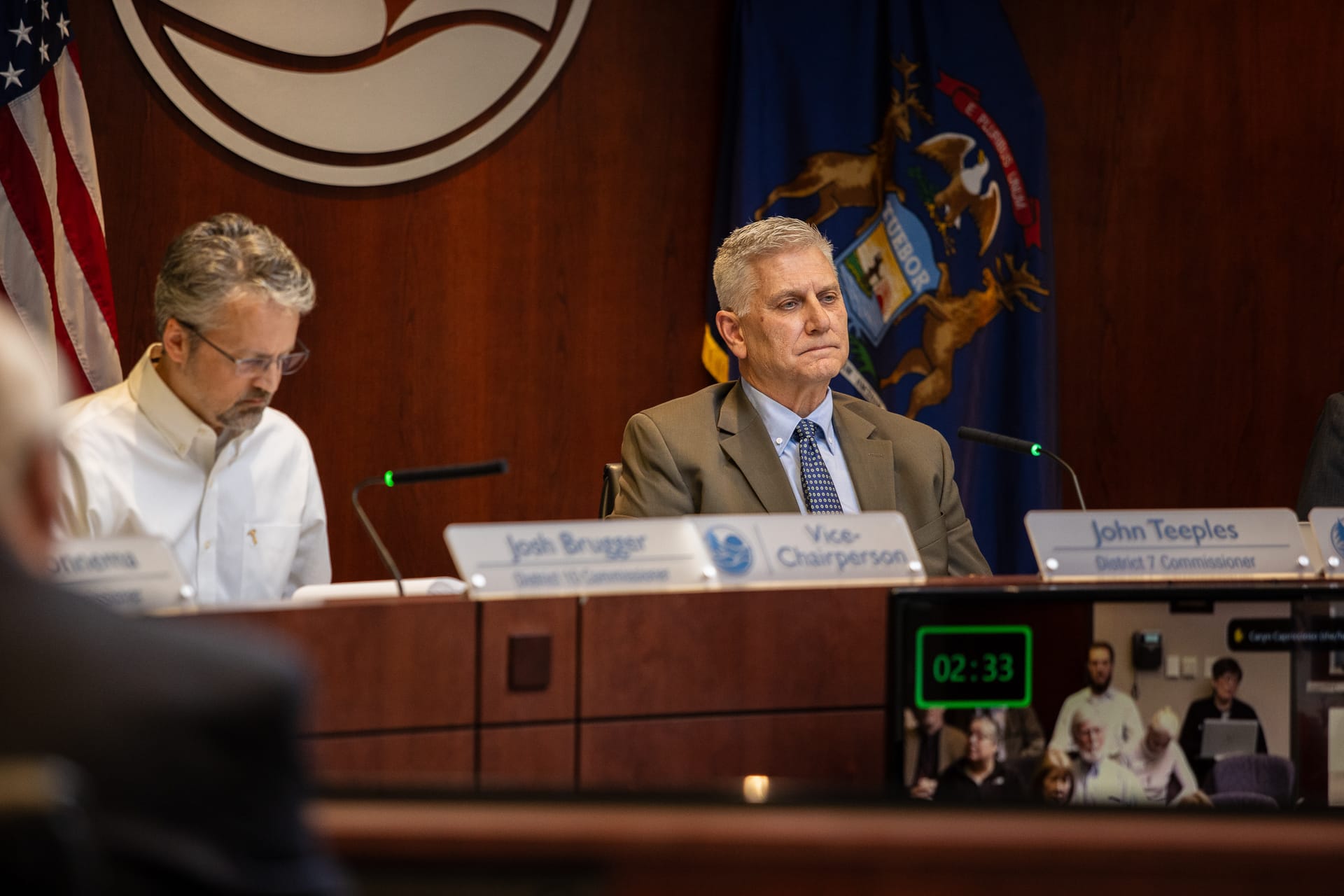
Board Chair Josh Brugger, also a moderate Republican, went a step further, saying he and colleague Commissioner John Teeples — who served as chair in 2025 — were put in the position of cleaning up the former board’s messes.
“Since taking office last January, the new board and especially John and I, have been shoveling a huge pile of sh-t,” Brugger told ONN on May 1. “That pile was created by Joe and Sylvia’s leadership. …
“When it comes to shoveling manure, Ottawa County farmers know that eventually you’re bound to step in it.”
How we got here
Among the various responsibilities of county boards in Michigan, commissioners are responsible for determining compensation levels for county employees, as well as for themselves and elected officials.
Because pay levels can become a sticky political subject, especially when a board is setting its own compensation, Michigan counties have the option of creating a compensation commission to handle the task.
The compensation commission is a citizen-appointed board, where participants serve three-year terms. Formed in late 2005 in Ottawa County, the commission is charged with making recommendations for the pay of county elected officials in even-numbered years.
State statute requires that the compensation commission must complete its work within 45 days of its first session and may not meet for more than 15 "session" days; all meetings and actions by the commission also must be in compliance with Michigan’s Open Meetings Act.
November 2022
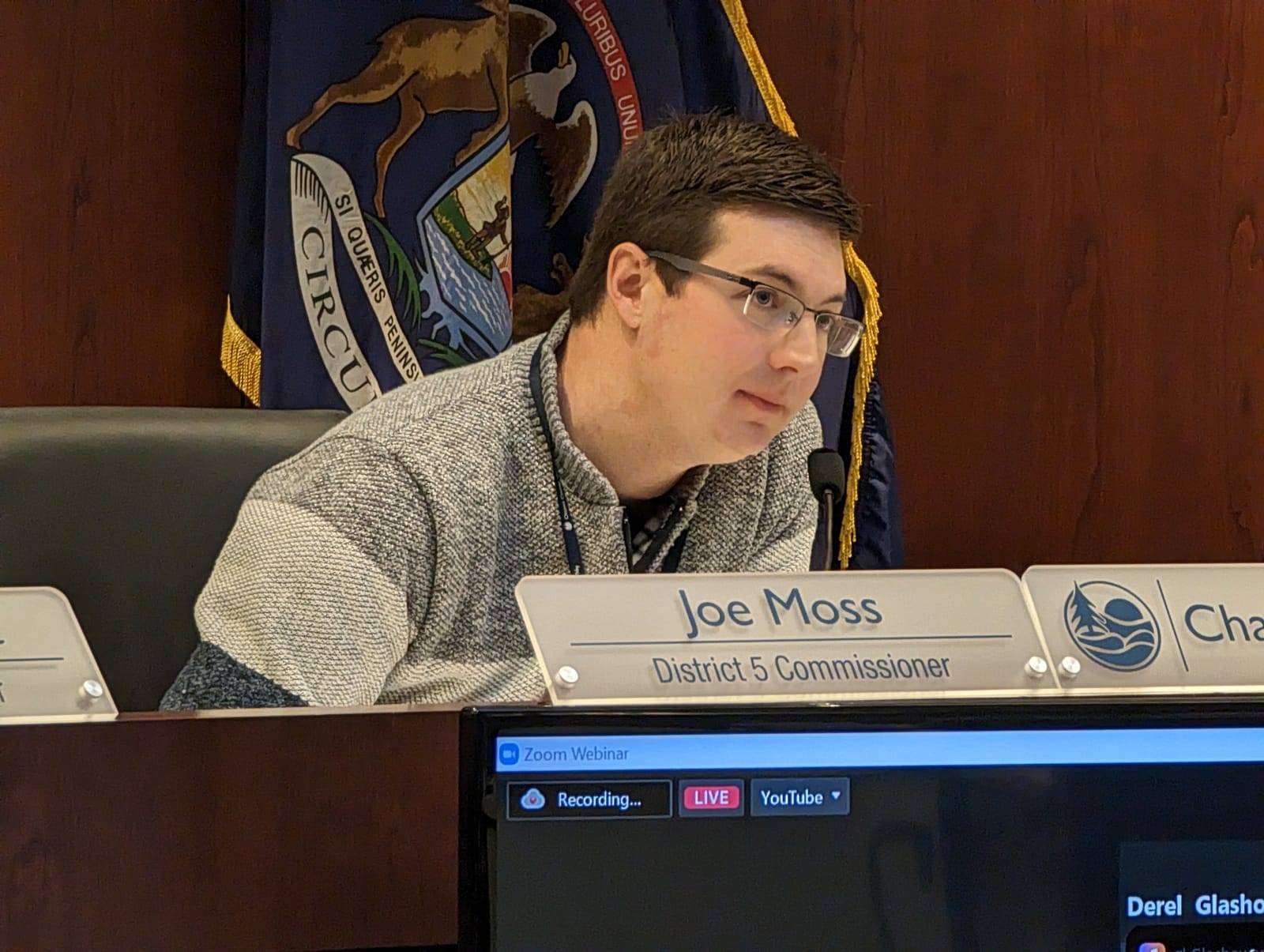
Moss, who formed Ottawa Impact in 2021 over frustrations with county and state COVID-19 mitigation measures, recruited a slate of candidates to run for seats on the county commissioners in 2022. After being sworn in 2023, the group made a series of controversial decisions — including firing longtime county corporation counsel Doug Van Essen, then-administrator John Shay and an ill-fated attempt to demote and fire Health Officer Adeline Hambley.
OI’s tumultuous two-year tenure in power led to seven lawsuits as well as a brief investigation from the Michigan Attorney General's Office over Open Meetings Act violation allegations.
December 2023
In a December 2023 board of commissioners meeting, Ottawa Impact commissioners appointed four new members to the commission, all of whom either have politically or financially supported OI:
- Mark Brouwer
- Craig Dunlap
- Angela Loreth
- Lynn Janson
March 2024
In 2024, the compensation commission first met on March 11, setting the 45-day deadline to complete its work for April 25. In total, the commission met five times
April 11, 2024
The first determinations occurred on April 11, when four of the six active commissioners — one resigned after the first meeting — unanimously decided three separate determinations to forward to the county board:
- The prosecutor, sheriff, treasurer, clerk/register of deeds, and water resources commissioner shall have a salary increase of 8% effective Jan. 1, 2025, and a salary increase of 6% effective Jan. 1, 2026. (Approved 4-0)
- The chairperson of the Ottawa County Road Commission shall have a salary set to $15,500 per year effective Jan. 1, 2025, and a 0% increase effective Jan. 1, 2026, and all other road commissioners shall have a salary set to $12,500 per year effective Jan. 1, 2025, and a 0% increase effective Jan. 1, 2026. (Approved 4-0)
- The chairperson of the board of commissioners shall have a salary increase of 60% effective Jan. 1, 2025, and a 0% increase effective Jan. 1, 2026. The vice chairperson of the board of commissioners shall have a salary increase of 60% effective Jan. 1, 2025, and a 0% increase effective Jan. 1, 2026. All other commissioners shall have a salary increase of 60% effective Jan. 1, 2025, and a 0% increase effective Jan. 1, 2026. All commissioners shall receive a monthly stipend of $1,000 for purposes of compensation for healthcare coverage. (Approved 3-1)
May 2, 2024
At its May 2 meeting, the six commissioners unanimously approved:
- Additional salary increases for the treasurer and water resources commissioner to make their compensation match the clerk/register of deeds, effective Jan. 1, 2025, and provide a 6% increase to their salaries, effective Jan. 1, 2026.
Larry Jackson, who served as the chair of the compensation commission in 2024, then signed a resolution memorializing the May 2 votes and the determined raises that would then advance to the full board of commissioners for consideration.
May 14, 2024
After widespread media coverage reported that county commissioners could receive a 60% raise and $1,000 monthly stipends — totaling $152,747.60 in additional annual costs — Moss removed the compensation commission’s determinations from consideration at the county board’s May 14 meeting, saying the May 2 meeting occurred outside the 45-day window, meaning those actions were invalid.
Moss also claimed that Jackson, an active member of the Ottawa County Democrats, colluded with local media outlets to interfere with a May 7 special recall election that saw Democrat Chris Kleinjans successfully defeat Ottawa Impact Republican incumbent Lucy Ebel.
Read More: Ottawa County commissioners poised to receive 60% raise
Despite the documented evidence of the board’s votes, Moss claimed the 60% raises were a "phantom increase” and accused Jackson of “election interference” and “collusion.”
"The Democratic liberal media are truly the enemy of the people,” Moss said at the May 14, 2024, meeting.
After the meeting, Jackson refuted Moss’ allegations.
“Regarding Chair Moss’ unfounded and damaging allegations of misconduct, including accusations of colluding and election interference, I categorically deny these claims,” he said in a statement.
At the May 14 meeting, Moss said the May 2 determination to increase the base pay of the treasurer and water resource commissioner to $122,833 to match that of other countywide positions, such as the clerk/register of deeds, would be outside the window the commission was allowed to operate.
May 17, 2024
Kallman Legal Group — which at the time served as the county’s corporation counsel after being hand-picked by Moss in January 2023 — provided a legal opinion on May 17 to commissioners.
“The primary issue with the May 2, 2024, meeting was that it was held after 45 days had elapsed. The first meeting of the commission was held on March 11, 2024, which therefore required all determinations be made on or before April 25, 2024,” according to the opinion.
That left the action of April 11 as the only determinations by the compensation commission that the board of commissioners could consider.
Read More: As Ottawa County tries to fix pay for electeds, process might be completely compromised
However, the commissioners’ pay raise vote was also legally problematic because only four compensation commissioners were present on April 11, and the vote on that determination was a 3-1 split.
According to the state statute that governs county compensation commissions: “A majority of the members of the commission constitutes a quorum for conducting the business of the commission. The commission shall not take action or make a determination without a concurrence of a majority of the members appointed and serving on the commission.”
That means that although a four-member quorum was present at the April 11 meeting, because only three compensation commissioners approved it, “a majority of the members appointed and serving” on the commission weren’t in concurrence.
In addition to that, a review of the county’s calendar showed that the April 11 meeting was never properly noticed in accordance with the Open Meetings Act.
According to the OMA, a decision made by a public body may be invalidated by a court if the public body “has not complied with the requirements of MCL 15.263(1), (2), and (3) [i.e., making decisions at a public meeting] or if failure to give notice in accordance with section 5 has interfered with substantial compliance with MCL 15.263(1), (2), and (3), and the court finds that the noncompliance has impaired the rights of the public under the OMA.”
That meant the decisions on April 11 were entirely invalidated.
Kallman also asked Jackson to “memorialize the determinations and votes that occurred on April 11, 2024, and prepare written meeting minutes,” despite the fact that minutes had already been produced.
“They're asking me to write meeting minutes when we already have meeting minutes,” Jackson said on May 17, 2024. “I don't know if a civilian person is supposed to be typing up meeting minutes for an official county meeting.”
Additional legal questions also arose — including whether or not the board of commissioners followed state statute correctly when it appointed the four new members in December 2023 and not before Oct. 1 and if the compensation commission had the authority to make a determination for county road commissioners, who are appointed, not elected — however, these points were not further publicly addressed.

May 23, 2024
When improper notice issues crop up, typically, public bodies hold additional meetings and votes to correct anything that is not in compliance with OMA or other laws.
Because the compensation commission’s work per state statute is limited to the 45-day window, the body couldn’t reconvene again until 2026; however, that didn’t stop Moss and Kallman from doing just that.
During the May 14, 2024, board of commissioners meeting, Moss said he would entertain a revised determination from the compensation commissioner at the county board’s next meeting, which was scheduled for May 28.
Read More: Ottawa County officials may not get raises amid legal controversy
Commissioner Doug Zylstra, the board’s lone Democrat, asked at the time if it was legal to send the matter back to the compensation commission, which technically had disbanded.
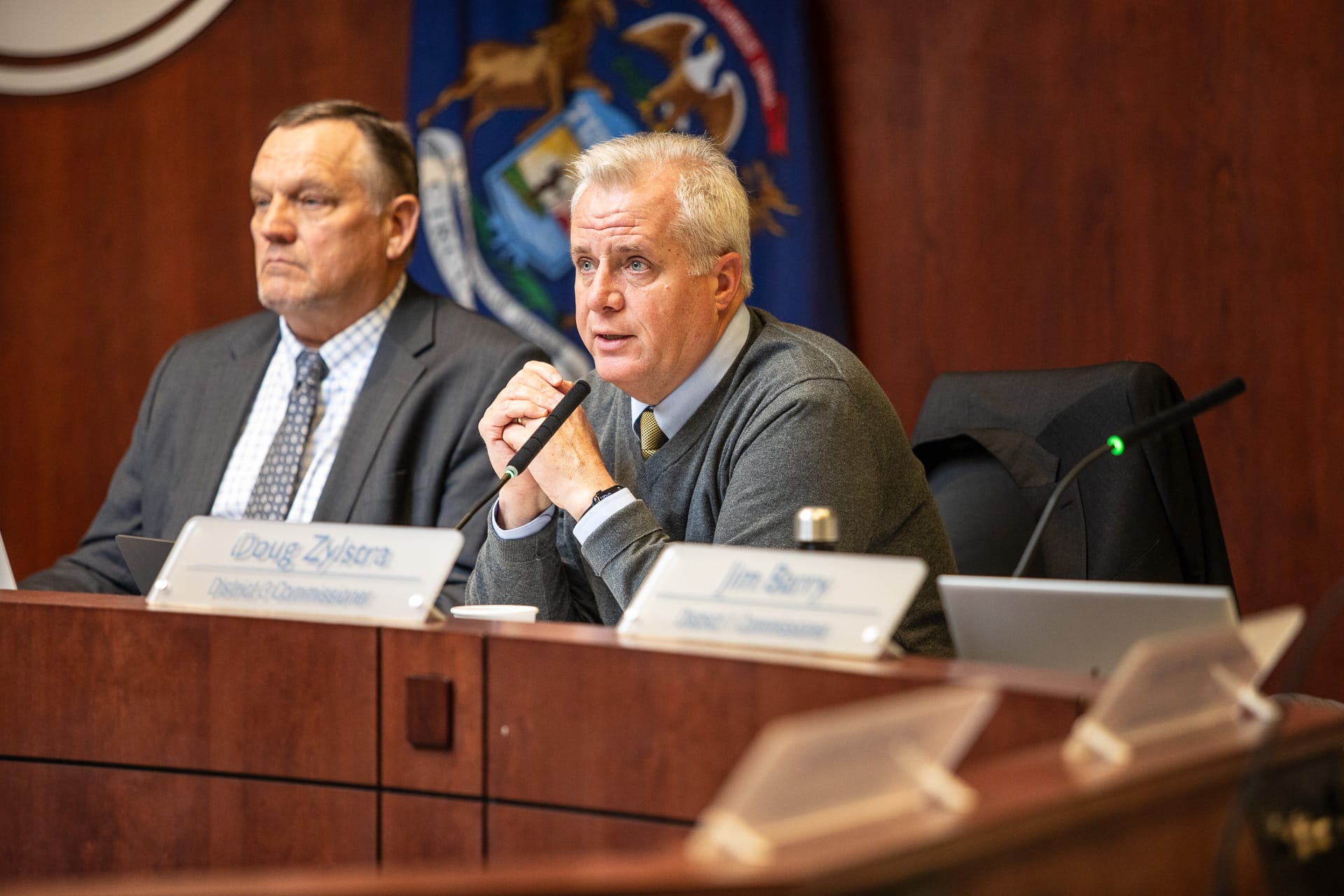
“I'm not sending anything back,” Moss said. “I'm asking for something that's valid.”
At a May 23 “re-enactment” meeting of the compensation commission, then-interim administrator Jon Anderson explained to the compensation commissioners that the meeting was intended to memorialize the valid votes from the April 11 meeting — the raises for countywide officers and road commissioner raises.
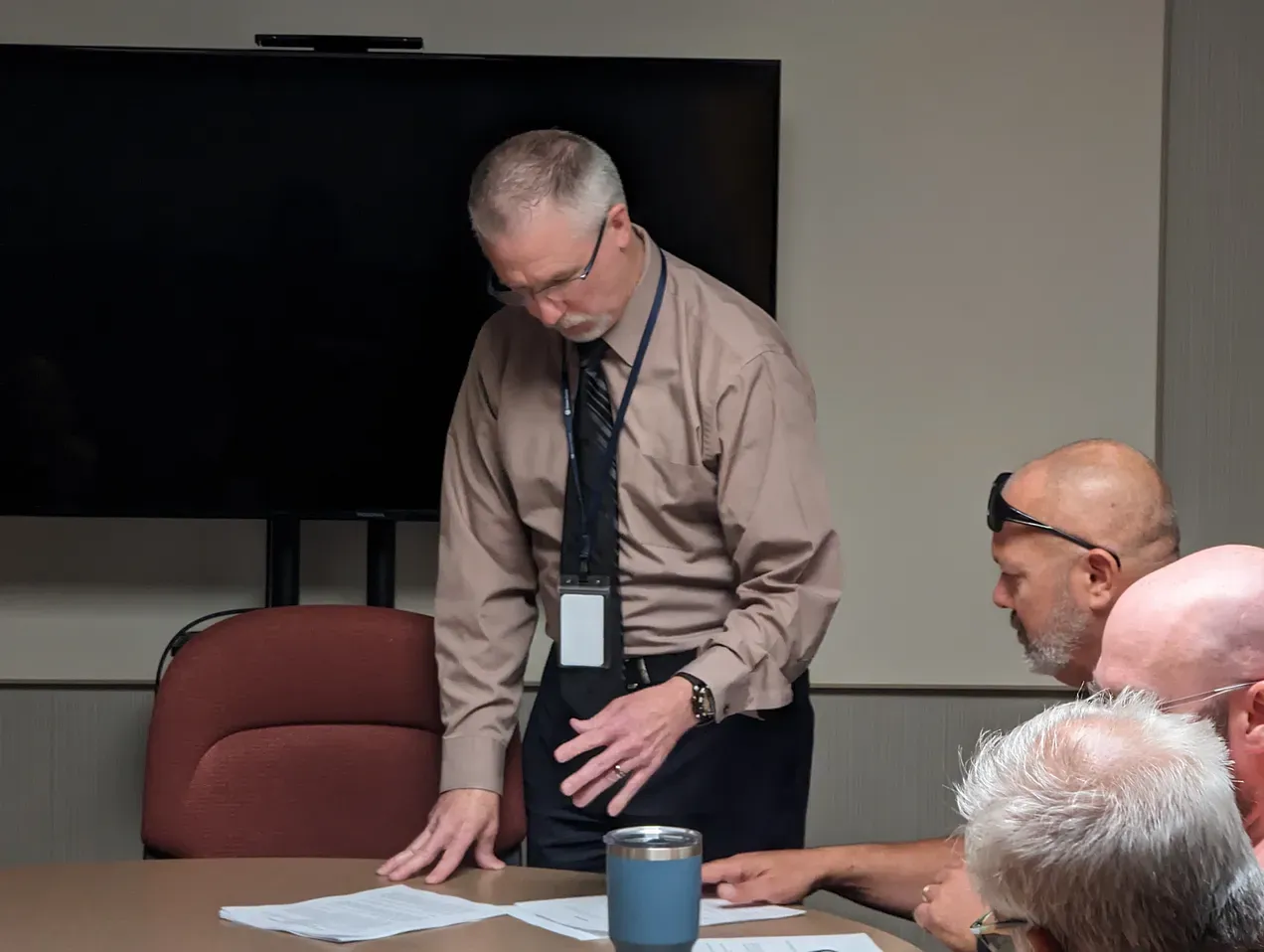
“Everything was done fine, it just wasn’t properly noticed,” Anderson said of the April 11 meeting. “That’s all this is. We need to get better about who notices these things. It wasn’t properly noticed; that goes through the clerk’s office, apparently. Some were expected to be noticed by the administration. It’s one of those things.”
Compensation Commissioner Mark Brouwer said when the process began in March 2024, it was supposed to be led by former administrator Johns Gibbs, who was fired by the Ottawa Impact-led board of commissioners on Feb. 29, 2024 — after Ottawa Impact hand-picked him to succeed Shay in January 2023 without a formal search process.
“When they kicked [Gibbs] out, it all went downhill,” Brouwer said.
Read More: Compensation commission 're-enacts' April meeting to comply with OMA, but will it work?
Jackson refused to attend the May 23 “re-enactment,” saying he doubted the legality of the meeting.
“The meeting on April 11 wasn't posted, so in turn wasn't legal,” Jackson said in 2024. “I'm not taking any action until I get feedback from someone outside of the Kallman (Legal) Group. I want to get this done, but I want to do it by the book this time, and I need to make sure we are taking the correct action, and that isn’t fixing a document that I signed that could be not legal.”
Some compensation commissioners seemed conflicted about the ability to move forward with the re-enactment.
“I don’t feel comfortable making any rulings or any decisions without having Kallman here,” said Angela Loreth. “I’m not sure what we’re able to do. I don’t feel comfortable voting on anything without speaking to counsel.”
Loreth pointed out Jackson’s absence and the fact that two commissioners not present at the April 11 meeting were present at the May 23 meeting, meaning a true re-enactment wasn’t possible.
“I just don’t see how we can move forward without Larry present,” she said.
That prompted a short recess while the county’s legal counsel was sought out to address the commissioners’ concerns.
Kallman attorney Lanae Monera briefly attended the meeting and said the commission was able to re-enact the two items from the April 11 meeting and that it didn’t matter if the names and vote totals differed from the original meeting.
“It’s a re-enactment of the April 11 meeting, and it doesn’t matter if the same members aren’t here and different members are here,” she said.
Van Essen, the former corporation counsel for the county, said the “re-enactment” meeting occurred outside the 45-day window and likely would be invalidated by a court if legally challenged.
“This is clear. It was stupid to call the meeting,” he said in May 2024. “What was done was done. And you can't fix it.”
After taking two 5-0 votes, which didn’t match the April 11 meeting in numbers or names, the issue was never brought up again publicly with the board of commissioners.
A new majority comes in
Ottawa Impact lost its controlling majority at the beginning of 2025, after only four of the seven OI incumbents seeking re-election managed to keep their seats, and no new OI members seeking open seats were elected.
As the new moderate Republican majority settled into their roles, their top priorities were to find a new permanent administrator — there were five from January 2023 to October 2025, when former deputy administrator Patrick Waterman returned to fill the current administrator role — and to settle the numerous outstanding lawsuits against the county stemming from the Ottawa Impact era.
One of those lawsuits was, in part, tied to a Freedom of Information Act request that an Ottawa County resident filed over Compensation Commissioner Lynn Janson’s text messages during the May 23 meeting, who oversaw the meeting after Jackson refused to attend.
Resident Adrea Hill claimed in the lawsuit filed on Oct. 30, 2024, that she believed Janson seemingly texted county staff, including corporation counsel, to summon Monera to the meeting to provide legal advice.
Read More: Sixth lawsuit filed against Ottawa County Board of Commissioners under Ottawa Impact leadership
In the lawsuit, Hill claimed that Kallman attorney Jack Jordan mishandled her FOIA request by providing an estimated fee of $352.79 and claimed the request “would require a search of communications on the county server of all of its more than 1,000 employees.”
When she protested the fee, Jordan denied that the fees were inflated, then subsequently refused to produce the records to Hill, claiming it was outside of the county’s purview, as Janson wasn’t a county employee.
On Dec. 10, that lawsuit was settled — all OI-related lawsuits were settled by the end of 2025 — but just one day earlier, the current board attempted to resolve the compensation issue for Water Resource Commissioner Bush and Treasurer Clark.
Read More: County commissioner: Ex-board chair Moss 'misled' colleagues to secure buyout to avoid probe
At the Dec. 9 finance meeting, Waterman brought before the committee — a committee of the whole at the time — to consider approving a resolution to accept the Officers' Compensation Commission’s April 11, 2024, determination to increase the salary for the county treasurer and water resources commissioner position “to equal the base pay of the county clerk/register effective immediately.”
Administrator Waterman said the compensation commission “unanimously agreed that the base pay for the county treasurer and water resources commissioner should be adjusted upward to equal the base pay of the county clerk/register of deeds (which had been determined previously).
“Unfortunately, the OCC failed to document that decision until after the 45-day period had expired. However, the OCC chairperson has confirmed that the commission did indeed make the decision to adjust their base pay within the required 45-day period, but due to an oversight, that decision was not included in the original resolution to the board of commissioners to give those positions the flat increase along with the corresponding percentage increase,” Waterman said in a summary of his request for the Dec. 9 Finance meeting.
The base wage adjustment of 8% totaled an additional $12,909 for the water resources commissioner position and $2,551 for the treasurer role.
Waterman told commissioners at that December meeting that Bush and Clark had confirmed that they would not seek back pay to the beginning of 2025.
Waterman also provided a signed affidavit from Jackson attesting that the four compensation commissioners present at the ill-fated April 11 meeting voted unanimously to increase Bush and Clark’s base pay by 8%.
“My understanding was that implicit in that vote was that the annual pay increases for the water resources commission[er] and county treasurer should be on top of the base salary equalized with the county clerk/register of deeds as we had previously concurred,” Jackson said in the affidavit. I believe that the three other members present that day had the same understanding.”
Although the affidavit was not dated, emails between Jackson and Van Essen dating back to Nov. 6, 2025, show the attorney — who remained as the corporation counsel for the county’s insurance authority, despite Ottawa Impact firing him as the county board’s attorney, then returned to broader work when the new majority arrived in 2025 — reaching out to Jackson asking for him to provide written documentation about the compensation commission’s 2024 work.
“Hi Larry: I don’t know if you recognize my name, but I was corporation counsel before OI and I am back in the fold,” Van Essen wrote to Jackson on Nov. 6. “Obviously, your commission was not provided adequate county legal representation during its tenure. On behalf of the county, I apologize to you.
“One of the things I have been tasked with is the question of whether the water resources commissioner and treasurer’s base bump was effective.”
Van Essen presented two scenarios to Jackson, then asked which was more accurate:
- There was a commission consensus on bumping the base of the two officers to the base of the clerk/register within the 45 days that was memorialized in the motion made on May 2, outside of the 45 days.
- There was no consensus reached by the commission until May 2, when the decision was memorialized as well.
In his reply later that day, Jackson affirmed that the first scenario was correct.
“Thanks a lot for working on this for them and all future county-wide elected officers in those positions,” Jackson wrote. “The first scenario is correct. We reached a consensus to increase the salary for the water resource officer and the treasurer within the next 45 days. Also, I’m thrilled that you’ve returned to make the county a place where all business is conducted in a non-partisan manner.”
On Dec. 3, Van Essen sent Jackson a prepared affidavit, and Jackson submitted a signed version on Dec. 5.
At the December Finance meeting, Waterman explained that the issue is not just about the percentage raises, and that the 8% and 6% raises were, in fact, enacted in 2025 and planned for 2026.
The issue was a second decision the compensation commission made at the April 11, 2024, meeting that separately increased the base pay for Bush and Clark, but wasn't reflected in the minutes that were prepared by then-executive aide Jordan Epperson.
“That's what we really dug into — to see when was that decision made to make the salary adjustment correct,” Waterman said. “It was an inadvertent oversight that they didn't include that when they made two percentage increases, a 6% increase and an 8% increase. That increase was based on the assumption of the decision being made that they were going to correct the base salaries.”
He said the legal question was when the decision was made, not when it was documented.
“Legal counsel has opined that the decision only needs to be made within the 45 days. It does not need to be documented,” Waterman said. “So we see this as a legal corrective measure to make that decision whole and effective.”
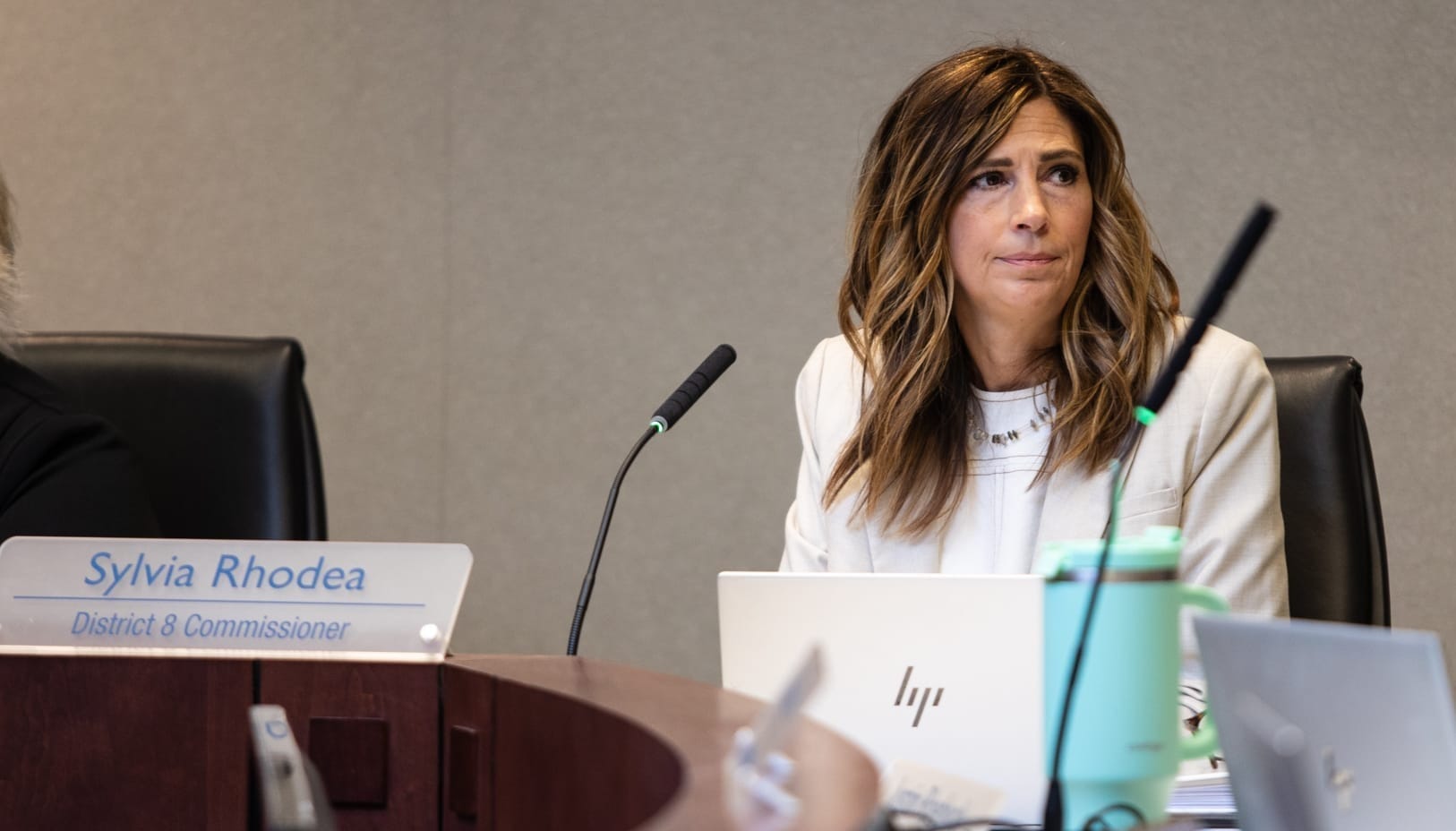
OI Commissioner Sylvia Rhodea asked Waterman if he had reviewed Kallman’s May 17, 2024, legal opinion on the compensation commission’s work.
“There's nothing to give us the mindset of why that opinion now has changed. Other than that, we now have different corporation counsel,” Rhodea said.
Waterman said it’s not a different legal interpretation; however, it is more thorough.
“Everything here is correct,” he said of the Kallman opinion. “Where it fell short was the difference on the decision needing to be documented. They didn't go that far as to make that interpretation, and that's what is really the difference here.”
“That's why we dug back into it — just to see if something was missed here. We'd like to make it correct if it's a possibility, and in fact, we do think it's legally possible to do that.”
Waterman and those commissioners who served on the board in 2023 and 2024 appeared confused about the specific details of the 2024 compensation commission saga, as there were numerous legal problems and political rhetoric from that time.
“Are there meeting minutes to back that up?” Miedema asked at the Dec. 9 finance meeting.
“I don't know if the meeting minutes reflect that decision. But I think the meeting minutes were pretty sparse. In fact, I don't think there were meeting minutes,” Waterman said. “I don't think that there were any, so we're going off of the legal opinion from Kallman at that time, who had conversations with the people on that committee and the chair at the time, as well as the two elected officials that were in those meetings advocating that their base pay be made the same. And clearly the answer was yes. That was the interpretation, that was the decision that was made. ‘We failed to document it within 45 days.’”
Minutes were created by Epperson, the former county aide, and were provided to the county in May 2024.
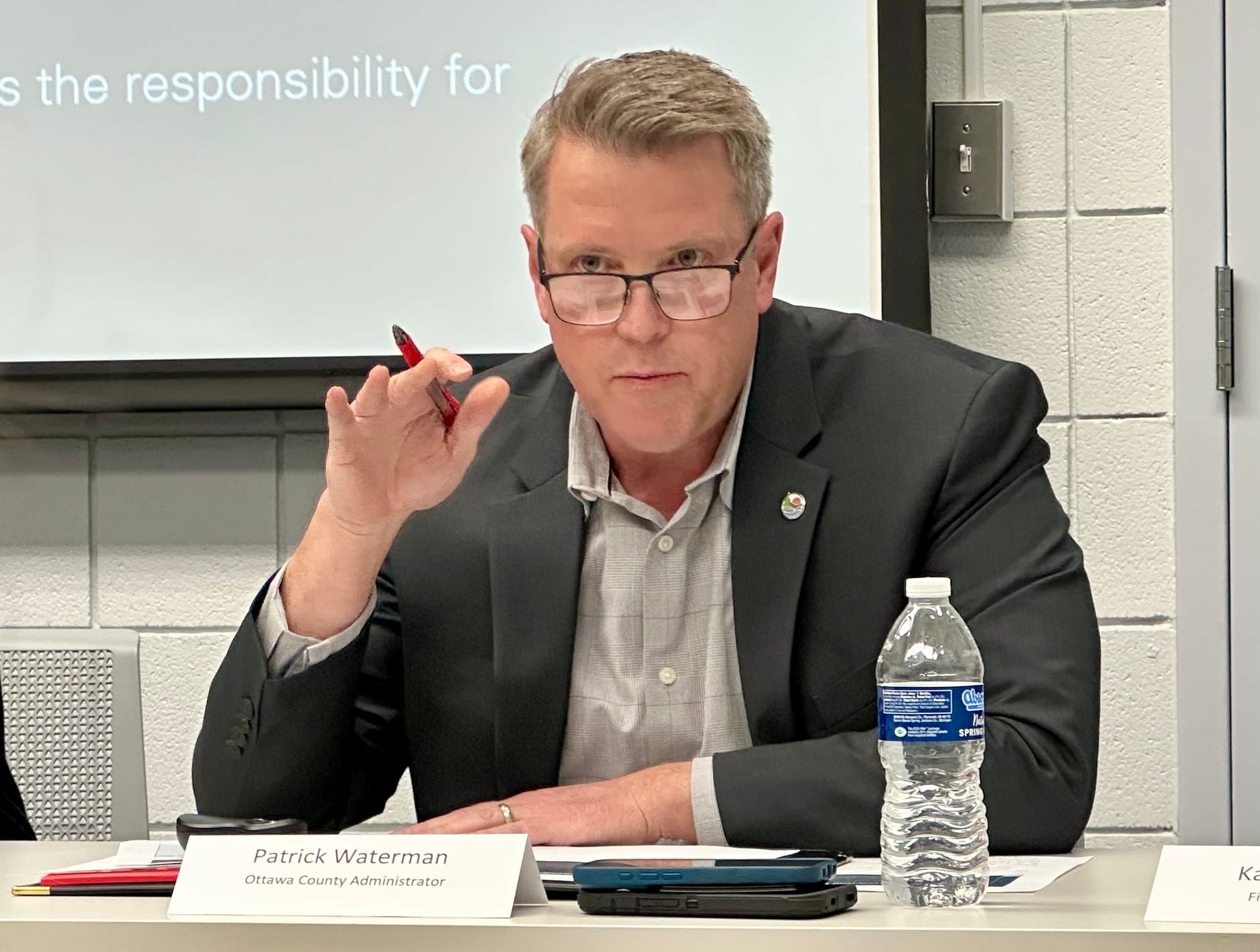
Waterman and the commissioners also did not appear to have an understanding of who was present at what meeting in 2024 and what the details were, despite widespread media coverage of the compensation commission’s work during that time period.
“I remember, back when we were looking at this issue, I was told that the May 2 meeting … which … I don't know who was there. I think I know who was there. I think there were four people, right?” he asked.
“It was all six,” Rhodea said.
Rhodea asked if this was setting a bad precedent for future board decisions.
“Let's say we all have a discussion, and in discussion, we agree on something, but we don't put it into a vote in a year and a half. Can the next board come back and say, ‘Oh, but they discussed it, and they all sounded like they agreed with it, but they didn't actually vote on it. But we think they actually really meant this. So, therefore, now this is what legally stands’? That's not a thing,” she said.
“That's why I'm bringing it to you for the decision,” Waterman replied. “Because you're right. It should have been noted, but we asked everyone, who said, ‘This is what the assumption was.’”
The Dec. 9 finance meeting then pivoted after Moss suggested that the county dissolve the compensation commission altogether, finding an unlikely ally in Zylstra, the only Democrat.
“Can we just avoid the whole issue and just abolish the compensation commission and just set the salaries?” Moss asked.
“Well, you would find a second there, Joe,” Zylstra said.
“I think long-term, we definitely need to do that,” Rhodea said.
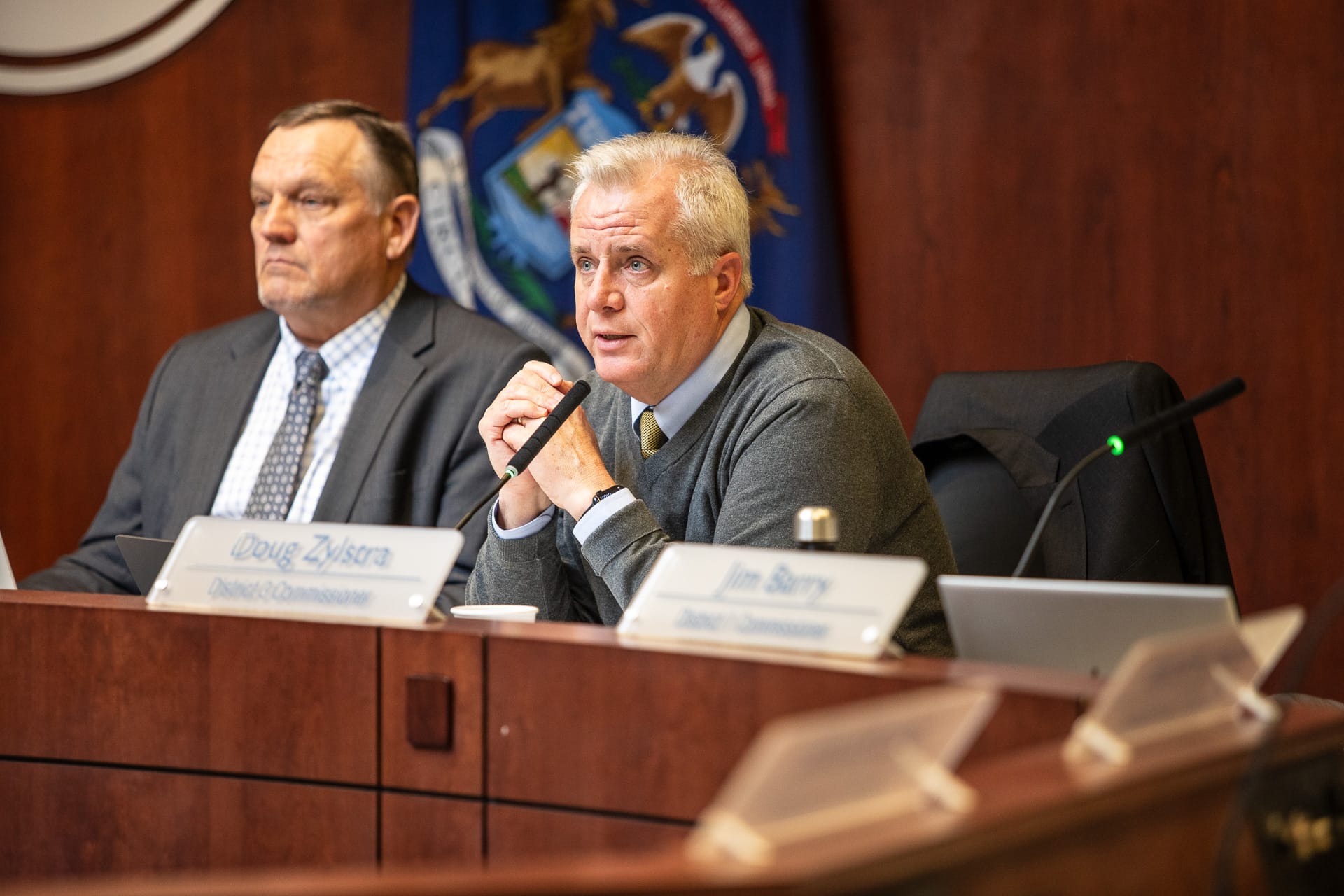
“There was a number of us who were on the commission at the time, and it was a very confusing moment,” Zylstra said. “And I definitely share Joe's ideas about the compensation committee because we see some of the issues with the compensation committee, as opposed to just straight up making decisions ourselves.
“If there were a way to do this, outside of this, what we're doing right here, I'd be supportive, but if we're going to use this mechanism to do that, I would not be supportive,” he said.
That got pushback from Commissioner Phil Kuyers, who was a county commissioner at the time the commission was created in 2005. Kuyers served from 2001 to 2022, when he lost to an Ottawa Impact challenger, then regained the seat after running again in 2024.
“I think getting rid of the compensation commission is a really bad idea,” Kuyers said. “We created it for a reason. I'd like to go back there and look at why we created it. I mean, it was for a really good reason.”
The question then appeared to make the moderate Republican majority uneasy, in addition to the Ottawa Impact commissioners and Zylstra.
“I'm in favor of tabling this. If we were going to be asked to make a decision today using the compensation commission, I would not be 100% comfortable voting in favor of it,” said now-Chair Josh Brugger, who at the time of the Dec. 9 meeting was vice chair. “What would make me more comfortable is if we have a legal recommendation that: ‘Yes, if the intent was on that meeting that their rates be adjusted accordingly, and we've got that corroborated, then I feel much more confident voting for that.”
“What if it turns out we're wrong?” asked then-chair John Teeples.
The committee voted 9-0 — Commissioners Jim Barry and Jordan Jorritsma were absent — to table the matter; however, next steps were not clear.
“Can I ask a clarifying question with regard to tabling this? Am I being asked to report back with testimony from the other people that were in that room, and then also some information on the background history of the compensation commission and what the legal realm or legal mechanism to change that?” Waterman asked.
Miedema said that even with the input of all the compensation commissioners from that time, it likely would change how she viewed the issue.
“You getting everyone else's thoughts from the Officers' Compensation Commission is going to change my particular vote on it. I definitely want to operate by something in writing that can be shown to everybody, because that's how government has always worked,” she said.
Rhodea said she wanted to see the minutes. Then Miedema said she wanted a review of the state statute and a fresh legal opinion, despite Van Essen providing his legal input that the raises would be legal.
Zylstra also added a request: “Is there another mechanism where we can affect these changes outside of this or the abolishment?”
Finance Chair Jacob Bonnema said it was important not to hold up a path forward.
“They've been very patient,” he said of Bush and Clark. “I think, whatever we decide here today, we need to keep it moving and get it cleaned up, because this has been dragging on too long already. I'd love to get it wrapped up in 2025 and not drag it into 2026.”
An ‘internal’ fix
The 2026 compensation commission’s first meeting on Wednesday, April 22, got off to a rocky start when the group attempted to vote to approve the minutes of the May 23, 2024, meeting — which was a “re-enactment” of the April 11, 2024, meeting.
“My thought was maybe we could approve the memorialization of the minutes, but I don't know if that's even possible,” said Amanda Price, a new addition to this year’s compensation commission as well as a former state representative and former county treasurer.
The commissioners quickly realized that their work would be complicated after not being able to approve minutes from 2024 and not being able to accurately summarize the previous compensation committee’s work.
“I have worked … with our team here trying to piece together the 2024 action,” said Deputy Administrator Brian Dissette. “What you see before you is my best effort to summarize the process and the actions which were successful, and then also note the actions that, due to lack of quorum as well as due to lack of the 45-day timeline.
“I've tried to make clear what did get approved and what did not get approved,” he said.
Dissette confirmed that the current stance of county administration and counsel is that the vote taken on April 11 that would have given a 60% raise to commissioners failed because there were not four votes to support it (four being the majority of the seven sitting commissioners at the time).
Dissette also said the vote on May 2, 2024, that approved additional salary adjustments for the treasurer and the water resources commissioner was invalid because it took place after the statutory deadline.
Janson, who was a 2024 commissioner and oversaw the ill-fated “re-enactment” meeting from May 23 that year, then asked if there were minutes from May 2.
“I'm not sure that tracks with my memory,” he said.
The May 2 meeting resulted in the formal resolution that was forwarded to the Moss-led board in 2024 and was memorialized in county records as part of a full board of commissioners meeting that year.
“Is that the same as the May 23?” asked Ron Frantz, another new compensation commissioner this year and former deputy administrator and county prosecutor.
“It’s the 24th,” Van Essen said of the meeting that took place on May 23.
“I think it was just one May meeting,” said Mark Brouwer, who attended both the May 2 and May 23, 2024, meetings.
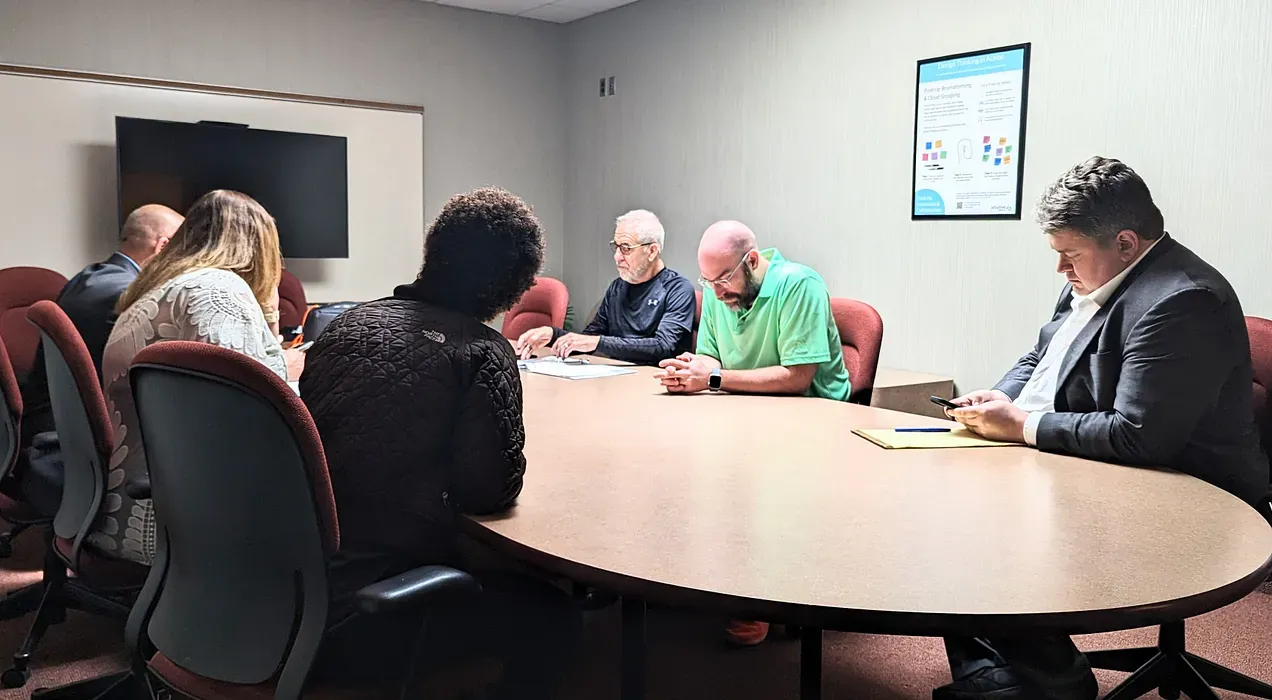
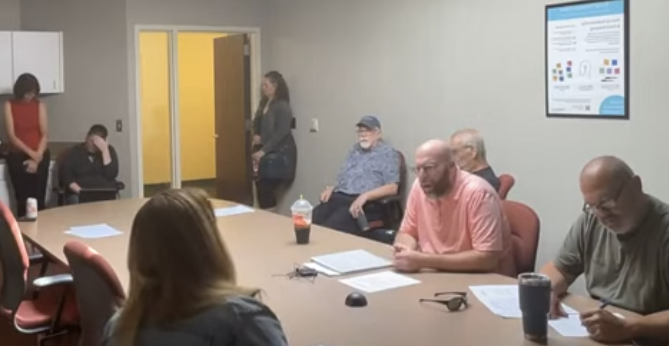
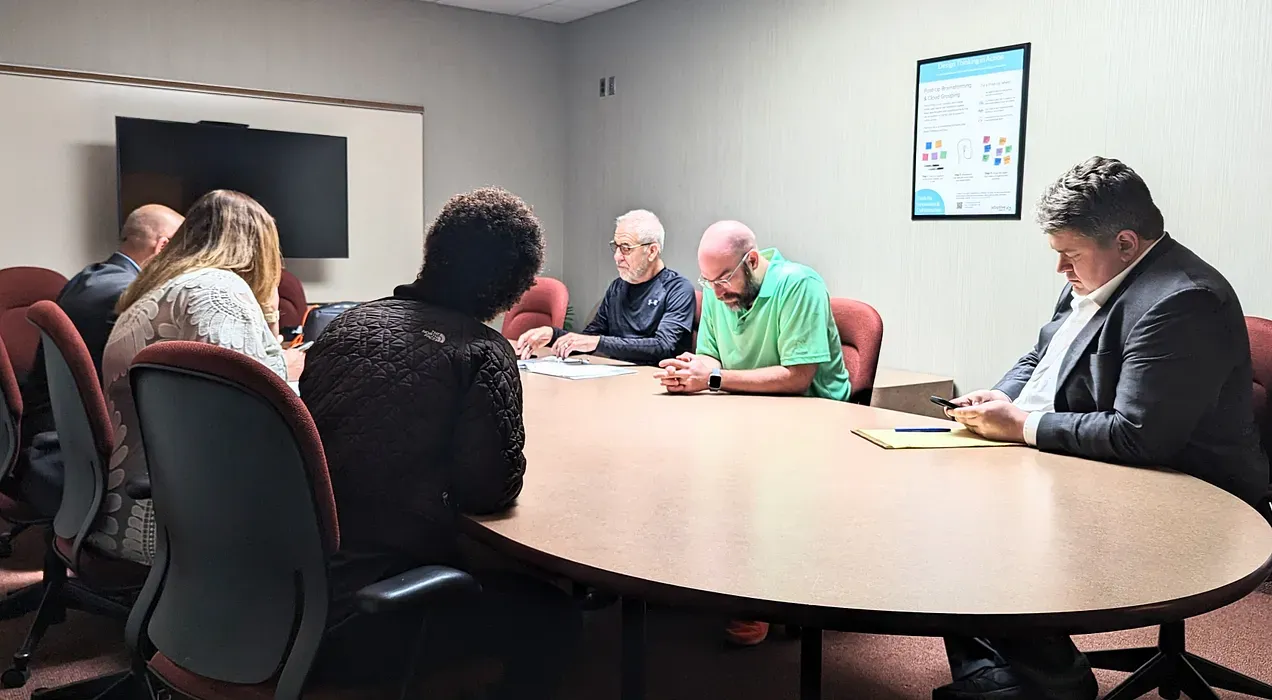
Ottawa County Compensation Commissioner Mark Brouwer is pictured on May 2 (left) and May 23, 2024. [ONN file]
The group ultimately decided not to approve any 2024 minutes because the documentation was so lacking.
Van Essen then attempted to steer the commissioners toward resolving the base pay issue for the water resource officer and treasurer.
“I think there's a lingering issue that this mission should take up fairly soon here. After the controversy developed beyond the commissioners, which kind of settled down fairly quickly, we had the treasurer and water resources commissioner …
“After the fact, we tried to figure out ‘When is a decision a decision?’ And you seemed to say ‘No decision had been made,’” Van Essen said to Janson.
“That is my recollection,” Janson said.
Van Essen then urged the commissioners to take formal votes immediately on all determinations they make.
“I think the premise we're operating on is if you're going to do that, it should be done in a little more formal way. Memorialize what the vote is so that there's clarity,” he said. “I do think it's a lingering issue that should be resolved by the commission fairly early on in this process. What are you going to do with that request that's been hanging out there for two years?”
“What methodologies will be available to try to get them back on track?” asked Frantz. “We can set salary, but can we also give a lump sum, or is there some other way?”
Van Essen said the goal of the commission ought to be “forward-thinking rather than going back, because you can end up doing more harm by trying to fix something that gets lost, and then two years later, what we don't want to have to do is explain what we did two years ago.”
“We've tried to deal with that internally,” he said.
That prompted follow-up questions from Janson.
“I guess I'd like to hear more about what you mean by ‘the county tried to do it internally,’” he said.
Van Essen then revealed that the county’s insurance authority had provided opportunities for additional work for Bush and Clark that bridged the gap of the lost pay increases they would have stood to gain.

“Recognizing that there was this confusion in this chaos, we found additional tasks that we needed done that we assigned on a temporary basis to each of those officers to try to make up the compensation difference,” Van Essen said.
“Why?” Janson asked.
“Well, because we felt strongly that they thought a decision had been made,” Van Essen explained. “We had these additional tasks that we needed to have done and we thought this was a way of internally freeing up this commission from having to go backward and deal with it.”
“And so that was an internal decision that the board of commissioners approved and made,” Van Essen said; however, the issue was never brought back to the full board after the Dec. 9 finance meeting.
“I guess that's a little disappointing to me that I'm volunteering my time to do this and the recommendations that we're making are being ignored by the county,” Janson said. “I find that rather frustrating.”
The “internal” fix Van Essen referenced was completed through the county’s insurance authority work group, a separate legal entity that Ottawa County created in 1989 to manage the county’s own insurance coverage and risk assessment — including addressing various legal liabilities.
Van Essen provided memorandums of understanding to ONN on April 29 that outlined the projects that were assigned to Bush and Clark. The contracts set up each to perform work outside of their normal job duties as 1099 independent contractors for the county outside of their standard employment.
Bush agreed to “undertake an analysis and provide a report” on the viability and value of property for sale to the Michigan Department of Transportation for an interchange that would extend the southern reach — or Phase 2 — of Ottawa County’s M-231 highway.
The insurance authority also asked Bush to determine the viability of the property to be used as affordable housing and/or residential housing development for a compensation of $12,000 — $909 less than what Bush would have made had his base pay been properly adjusted in 2024.
Clark agreed to report monthly to the insurance authority and its work group on statewide statutory and case developments in the "Rafaeli cases," referring to the landmark 2020 Michigan Supreme Court case on Rafaeli LLC v. Oakland County, where the court unanimously ruled that local governments violate the state constitution when they keep the profit (surplus proceeds) from selling a foreclosed property for unpaid taxes.
Clark also agreed to report to the insurance authority on the Pung v. Isabella County case, where the U.S. Supreme Court is currently considering whether local governments must pay "just compensation" based on a property’s fair market value — rather than just the auction sale price — when seizing and selling a home to satisfy a tax debt. A decision on that case is still pending.
Clark’s compensation for the work was for a one-time fee of $3,000 — $441 more than what Clark would have made had her base pay been properly adjusted in 2024.
Bush’s signed MOU was not dated in the records provided to ONN; however, it indicated a date sometime in December 2025. Clark’s also wasn’t dated; however, it indicated a date sometime in January 2026.
A problem of the county board’s own making?
In an April 29 interview with ONN, Van Essen explained that the emergent liability issue in the whole mess was with Bush’s compensation.
“Joe's was the big difference, and we didn't want to cheat Joe and give him a special assignment. And that, internally, wasn't worth us to ignore Cheryl, right? Part of what Joe gave up was the right to have his base [pay] at a certain level going into this compensation commission's deliberations,” he said.
One major factor that the county needed to consider — both in 2024 and now — was that, if the board of commissioners doesn’t act on the compensation commission’s determinations, state law says they automatically go into effect, Van Essen said.

State law defines actions a board of commissioners can take in response to a compensation commission’s determinations:
- Reject the determinations of the commission in whole or in part by a two-thirds majority.
- Accept the determinations.
- Do nothing, in which case, the determinations by the compensation commission will go into effect the following year.
In its May 17, 2024, legal opinion, former corporation counsel Kallman said, because “no proper determinations were made,” the board didn’t need to take action.
“By law, if there was a decision, then it's effective, because they didn't reject it,” he said of the county board. We had a situation where, frankly, only litigation would have resolved it, and some court would have to decide, ‘Did they or didn't they?’” Van Essen said.
“There's no question that they memorialized it in May after the window had closed. The question was, had they really effected it? The way the statute reads is it’s a decision that requires the concurrence of the majority. Well, what does concurrence mean? They don't have to vote. They don't really have to even keep minutes. Minute taking is a good way to memorialize, but the statute doesn't require that.”
That created a legally precarious situation that left the county vulnerable to court challenges, Van Essen said.
“So, it was one of those things that only, probably, litigation would have resolved. And who in Ottawa County needs more litigation?”
That’s why the insurance authority had to act, Van Essen said.
The MOUs for Bush and Clark were approved by the insurance authority’s “work group,” which is a subcommittee authorized to approve contracts of up to $50,000 without the full insurance authority’s approval.
The insurance authority’s minutes from its Jan. 19 meeting do not reflect the work group’s decision; however, Administrator Waterman told commissioners on April 30 that he did report the decisions and MOUs to the insurance authority during his regular report for the January meeting.
Commissioners react
At the county board’s April 30 meeting, Miedema added the compensation commission revelation as a topic of discussion.
Waterman, after the committee of the whole, said mixed feedback and the tabled base pay increase issue in December caused confusion, and he consulted Van Essen for alternative solutions.
“I indicated that this pay that the officers' compensation commission intended, … is something that was being discussed before I came on as an administrator. Prior administrator [Gary] Rosema was working on this with corporation counsel and trying to find a solution,” he said.
“We proposed the idea to both of them. Is this something you'd be interested in doing for a stipend to help offset that wrong that was made to you? They said, ‘Yes, that would be great,’ and presented that to the insurance authority work group. The work group liked the idea of it, because they were going to receive the services that they were asking for at what we think is a discounted rate compared to hiring a consultant to do that work. Problem solved.”
In an April 24 email to commissioners, Waterman said he tried to correct the matter at the Dec. 9 finance meeting.
“Part of the rationale in the desire to correct the monetary error was to avoid further potential litigation against the county by elected officials who felt they were wronged by county administration,” Waterman wrote.
“Due to stated concerns with risk and legal exposure, the committee did not feel comfortable correcting the mistake by means of the proposed solution (e.g., board resolution). As such, the matter was tabled, and I was given what I interpreted to be clear verbal cues from the committee to come up with other creative solutions to rectify the situation,” he wrote.
Waterman listed those verbal queues in the email:
- “If there were a way, and I’m very supportive of making this right, to do this outside of this, what we’re doing right here, I would be supportive.” (Zylstra)
- “We’ve just got to figure out a way to fix this.” (Teeples)
- “Is there any other thing that you haven’t flushed out yet, legally speaking, that would allow us to take a vote to approve this?” (Miedema)
- “Is there another mechanism where we can affect these changes that’s outside of this, or the abolishment [of the OCC]?” [Directed to me] (Zylstra)
- “You’re going to work on seeing if we can get something? No pressure.” (Bonnema)
“As I said in my email, I didn't report back to this board, and I should have done that, but my intent was to report back to the board,” he said. “And as you all know, something stays tabled.”
Despite the awkward optics, Waterman said, “What was done was legal, ethical. It was open. There was a public meeting. It was within the board work group’s authority to sign an outside contract. They do that often, and it alleviates the legal risk.”

He did, however, recognize that he didn’t update the board after the MOUs were signed with Bush and Clark, saying he “planned to do so once their work was complete and the results reported to the Insurance Authority Board of Directors.”
Van Essen also spoke at the April 30 meeting, saying that he tried to keep the April 22 compensation meeting on track by looking forward, rather than trying to resolve the complicated past issue of Bush and Clark’s lost base pay increase from 2025.
“I was trying to do it in front of the current compensation commission, which was about to get completely off the rails,” he told county commissioners. “My job at that meeting was to make sure they were following their purview. Their purview was not to try to figure out what the 2024 compensation commission did … they were ready in their approval of the minutes to try to figure out and answer that question.”
Van Essen said he felt compelled to set the record straight with the current compensation commission after Frantz asked about retroactively fixing the lost pay for the two officials.
“We're trying to redirect them [to] stay away from both of those issues and concentrate only on the future of those two elected officials and not worry about what happened in the past or whether there were any inequities,” Van Essen told county commissioners at the April 30 meeting. “And, in the course of trying to redirect them, I explained that administration had taken care of that issue. It was not something they needed to worry about.”
He said, as corporation counsel, he took input from then-interim administrator Rosema to “try to clean up a variety of different messes that were lingering from the previous board and the previous administration.”
“If Gary assigns this task to me, I will look into it. Gary came back the next day and said, ‘Doug, I want you to review Joe's [Bush] position that he is not being adequately compensated because, in fact, the commission had made its decision in 2024 that his pay should be equalized, and the board of commissioners had not rejected that.
“I performed, as I was tasked to do, an inquiry into that question. It's a messy legal issue,” he explained, “because while Kallman was absolutely correct that a decision had to be made by the compensation commission within 45 days, it doesn't describe how that decision has to be memorialized.”
Van Essen said he “polled the compensation commissioners” from 2024 and that “a majority said: ‘Indeed, we had made that decision within the 45 days and we documented it with our vote because we realized we hadn't actually taken a vote on that outside that window.’”
“A mess without question,” he said. “A $200,000 litigation if you wanted to take that one to court. We're getting good in Ottawa County at taking unusual questions to our court system, but the mess only got more complicated because the board of commissioners did receive the report of the compensation commission, including the compensation increase for the commissioners, including the equalization of the elected officials’ rates.”
He said that when the county commissioners opted to not to authorize any action from that year’s compensation commissioner work, “Was that a rejection of what the commission had done?”
“My research indicated [that] the commission had properly made a decision and only documented it outside. So now we have a $400,000 piece of litigation trying to figure out whatever the board did. Was it a rejection or not?”
While the administration, attorneys and county commissioners grappled with the issue, Van Essen said, Bush and Clark were “not getting paid.”
He said the insurance authority work group was able to waive the first-year increase for both and made the MOUs effective Jan. 1, 2026.
After the finance committee tabled the issue, “I've got a very angry Joe Bush and a very angry Cheryl Clark right now,” Van Essen said. “This was the resolution.”
He said the legal liability to defend $15,000 in compensation could have cost the county $400,000 after litigation, “trying to figure out what indeed the compensation commission did and what the board did or did not do.”
“The insurance authority work group is well within its $50,000 authority limit to offer them … these additional tasks for the one-year period,” Van Essen told county commissioners. “It won't increase your county salary at all or the benefits that go along with it. It won't assure that in the compensation commission of 2026, you're starting equal to the county clerk. Is that a compromise you're willing to accept to let this matter go away? They agreed.”
Pushback from OI, the Democrat
Zylstra said he understood the “recitation of facts,” but that the “central question was: Under what authority was that action taken?”
Van Essen said the insurance authority has had the authority for nearly 40 years.
“The authority was that the compensation is coming from not Ottawa County, but the insurance authority, which is a separate legal entity, and, in the process, they have resolved their claim against Ottawa County, which is the essential task of the work group … is to resolve potential litigation.”
Miedema wasn’t satisfied with that answer.
“Who gave you the authority to give the insurance authority that decision?” she asked.
“The board of commissioners, when they created the insurance authority, absolutely did,” Van Essen replied.
“No. We did not give you permission to come up with more dollars if you felt like, ‘Oh, somehow we think that the officer's compensation got this wrong.’ We didn't give you permission to take the insurance authority and to use it in this manner,” Miedema said. “In the meeting at the officer's compensation commission, you, in fact, said to [Janson], ‘You can do more harm in trying to fix something if you go backwards.’ Isn't that, in essence, what you're doing yourself?
“No, we were settling a controversy,” Van Essen replied. “That's what the insurance authority has done for 40 years. That's its task … is settling these disputes in one manner or another. That is absolutely within the purview of the insurance authority and that work group.”
Miedema pushed for more, saying that if Bush and Clark benefited from the work group’s decisions, why hadn’t county commissioners?
“Is there a county commissioner that’s coming to you right now and asking, because they felt like we didn't make our 60% increase at the officers' compensation commission? Do you have another commissioner that has asked you for that?”
“Absolutely not,” Van Essen said. “I don't have any commissioners coming and saying, ‘The compensation commission raised my salary, and that fiscal is not honoring that. Why is that not happening?’ That was the situation we had with Mr. Bush.”
Rhodea implied that if options existed for Bush and Clark, those should be available to her and other commissioners from the previous board.
“I think perhaps I should sue, and perhaps the officers' compensation commission can remember one more vote to pay me,” she said. “I'm just thinking … maybe some of us should be doing that. If angry officials mean we don't need to follow the law anymore, we're in a world of hurt. So, I think we need to take a look at how we're operating and make sure we're following statute.”
Zylstra, the Democrat, pointed to the December finance meeting, saying, “At some point between the end of the finance committee and the beginning of the insurance authority, a decision was made to compensate those individuals. Is that correct?”
“No,” Van Essen said. “A decision was to engage those individuals in two tasks that the insurance authority used as a means of compensating them.”
“As a means of compromising their claim,” Zylstra said.
“They had a claim. Absolutely,” Van Essen replied.
Zylstra pushed back.
“At what point was a decision made to, in my mind, abrogate what the commission said?” he asked. “Like, this is the salary, but the insurance authority made the decision to augment their salary, which is what I heard in the compensation commission.”
“At what point was a decision made to, in my mind, abrogate what the commission said? Like, this is the salary, but the insurance authority made the decision to augment their salary, which is what I heard in the compensation commission.” ~ Doug Zylstra
Van Essen said the work group didn’t contradict a standing decision from the compensation commission, its work group or the board or commissioners.
“Their salary is set by the county,” he said. “It did not include the $13,000. It did not include the $2,500. And it still doesn't.”
Zylstra said it was important to note the distinction of “at what point was the decision made to compensate these individuals in this manner in a way that the board, via the finance committee, rejected? Specifically, did the insurance authority take a vote on that at any time?”
Van Essen clarified that the insurance authority’s work group did have that legal authority and voted on the MOUs on Jan. 12.
The work group meetings are not noticed through Michigan’s Open Meetings Act.
Waterman stressed that the work group’s decision “was a benefit to the insurance authority to have this work done. It potentially pacified the litigation that was likely, and it addressed what I thought to be the board's directive to find another solution to fix this.”
Zylstra said his take from the December finance meeting was “we asked you to try to find a solution that we could sign off on. We were not given the ability to sign off on. The work group took that decision away from us. We didn't say, ‘Administrator Waterman, find a solution that the work group can solve.’ We said, ‘Find a solution that we all, as a board, can approve.’ Those are very, very different things.”
“My solution was to dissolve the compensation commission and then let us make that decision. If we had dissolved the compensation commission, we could have solved the issue. I don't want to go back in time, but that's how I viewed the issue,” Zylstra said.
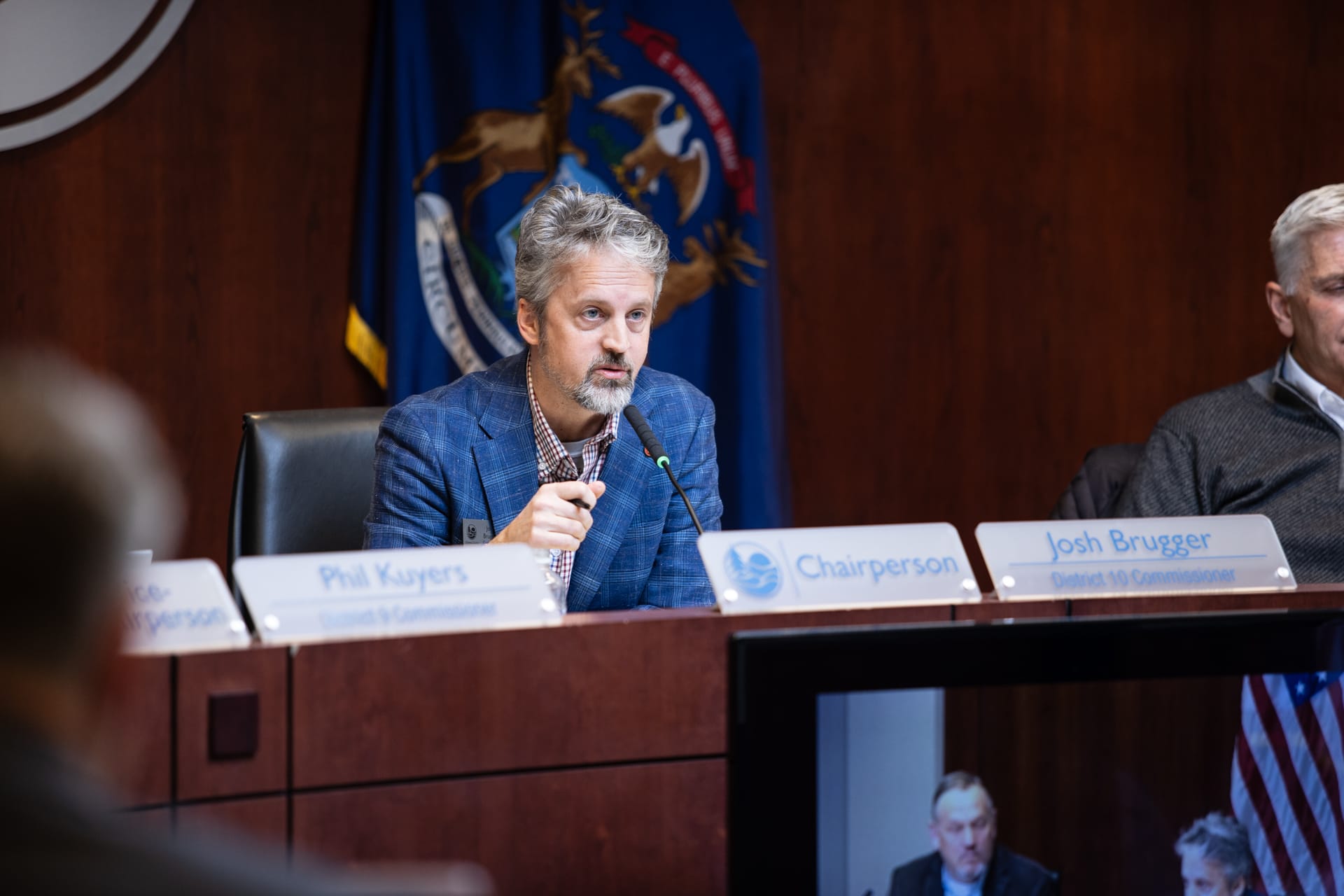
Brugger, the chair, said he understood Zylstra’s point, but that the finance committee never gave Waterman a clear directive.
“We never gave a directive. I appreciate that that's your interpretation,” he told Zylstra. “However, the motion was to table the recommended solution and to direct Patrick to come up with something else. It didn't say come up with something else and bring it back to the board.”
Commissioner Jim Barry, a member of the moderate majority, said it was normal for the insurance authority to assess the potential risk and mitigate it.
“Irrespective of whatever [Waterman] might have been directed with, if the insurance authority is sitting there looking at: ‘We've got liability exposure here on a compensation claim,’ they're not determining what that compensation should be. They're just, as an insurance authority, trying to determine at what price can we end the threat of litigation on the matter.
“They weren't hired as county employees. You just found the price point that there was no longer a threat of litigation over this.”
Current county board corporation counsel Ron Bultje said he didn’t see a legal issue with what the insurance authority’s work group did.
“The idea that county board decisions were changed, no, or compensation commission decisions were changed — that's not true. The insurance authority acted on its own with its own dollars with its own assignments, and these officials had to do things beyond their statutory authority to get these dollars from the insurance authority.”
Rhodea questioned whether the three other compensation commissioners on April 11, 2024, corroborated Jackson’s affidavit assertions and if Waterman followed the finance committee’s directions in December.
“My understanding was that testimony was requested of those officer compensation commission members, and then we, as a board, didn't hear anything more after those things were requested,” Rhodea said. “So, I would like a copy of those records because it appears to me that, based on whatever you received, you came to a conclusion … that money was owed to these two elected officials.”
Brugger said Rhodea’s question was “valid, given the solution” that had already taken place.
“But the solution might not have been needed if it wasn't justified,” Rhodea pushed back.
Moss chimed in after a lengthy discussion, after making the decision in May 2024 to not bring any of the compensation commission’s determinations to a full board vote.
“There's one element that I'd like to raise, and that's that members of the insurance authority were not aware of what the work group did,” he said of the January 2026 conversations and actions. “That probably should have had a little tighter connection.”
Waterman said there were no gaps in communication, as he updated the full insurance authority board after the work group opted to enter into the side contracts with Bush and Clark.
“I did report that to the insurance authority at the next meeting following that,” he said. “I give a report at every meeting. I did report that.”
Who is to blame?
Van Essen said the former board, under OI’s leadership, hired a series of inexperienced administrators and lawyers and appointed political cronies to the compensation commission who bungled the process.
“Because I'm in my final days here, I can be candid. When you put a whole group of commissioners up there that don't know what they're doing, and they hire an administrator who doesn't know what he's doing, and you hire a law firm that doesn't know what it's doing, and you put them in the cockpit of a 747 while it's flying … problems develop,” Van Essen said.
“And then they've got to be fixed. And the only fix in the public sector, when you create a mess like we've inherited, is litigation. So do you really need more litigation? Or can we fix some of these things and move forward? These people are part-time. They are not here all the time. We, the staff, have to pick up their messes, and this is a mess created by the board of commissioners.
“Are you kidding me? They're the ones that created this mess. And so, yeah, we could have another lawsuit and spend hundreds of thousands of dollars to talk about $20,000 or we could fix the problem. And so healthy counties fix the problem. That's why you have lawyers. That's why you've got staff,” he said.
The inexperience of the Ottawa Impact commissioners dating back to 2023 and continuing into the present day creates opportunities for new problems, he said.
“They don't even understand their role,” he said of OI commissioners. “They can't micromanage the sheriff's department. They can't micromanage the treasurer's office. They can't micromanage water resources. These are elected operations. They don't have any policy involvement there. Nor can they micromanage the insurance authority.
“So we fixed a $25,000 problem without lawyers and judges. ‘Oh, excuse me.’ And now they're gonna waste all of our time and energies wringing their hands,” he said. “I'm not apologetic for working with the administrator to fix a problem that avoids litigation, that gets additional work done that needs to be done, and that moves us forward.”
Brugger said it served no public good for the Ottawa Impact commissioners and Zylstra to cast aspersions on the current administration, the insurance authority and legal counsel.
“Rather than a fictional tale and accusations of ill intent made up by OI commissioners and, oddly in this case, by Commissioner Zylstra, what would be nice is an apology to the community and staff for having created the multi-million dollar mess,” Brugger said.
Bonnema said he appreciated that Waterman and Van Essen “handled it correctly.”
“You came up with a solution that we could move forward with, and this is in the best interest of Ottawa County,” said Bonnema, who sits on the insurance authority’s board, but not the work group. “I found out about this just like everybody else did, asked questions, and got satisfactory answers.”
He denounced the implications that the insurance authority did something improper.
“There's no backroom deals going on there,” Bonnema said. “This kind of language needs to stop, because this isn't helpful.”
Bush said he also blamed the prior board’s leadership, saying he remained “struck by how past missteps contributed … to an issue originally approved in 2024 by the Officers’ Compensation Commission and even documented in a unanimous 6-0 vote.
“The process leading up to this point was clearly flawed and required correction from prior leadership,” Bush said.
He pointed to the December finance meeting, saying the then-committee of the whole “had an opportunity to address these concerns through a resolution.
“At that meeting, there was broad acknowledgement that the issue needed to be fixed, along with commitments to do so. However, the matter was ultimately tabled, and directions were given to county administration to develop a legally sound solution. Corporate counsel and the administrator followed through on that directive through the Insurance Authority Work Group,” he said.
Bush said he took issue with criticism he faced at and after the board’s April 30 meeting.
“Following Thursday’s meeting, where several board members directed criticism toward me, I took time to reflect,” Bush said. “This morning, during my personal devotions, I was reminded of the importance of remaining grounded and steady in my values. I am committed to continuing to serve with integrity and dedication to the residents of Ottawa County.
“As reflected in today’s devotion: ‘Yes, life may be challenging when others turn against the Lord. But he is always worth following, regardless of the price. So do not fear. Stay faithful and obey God.’”
Clark said she responded to the additional project through the insurance authority with genuine interest, respect and professionalism.
“The Ottawa County Insurance Authority Work Group approached me with a request to provide regular reports on the multiple delinquent property tax lawsuits currently in progress. In recognition of the additional time and expertise required, the work group offered a stipend for this work. I accepted and formally entered into this arrangement through a signed memorandum of understanding,” she said.
“Since that time, I have been providing consistent and factual updates on these cases at the Ottawa County Insurance Authority Work Group meetings. My goal has been, and continues to be, to ensure that the Work Group receives accurate, timely and comprehensive information to support informed decision-making on behalf of the county and its residents,” she said. “I remain committed to fulfilling this responsibility with professionalism, integrity and transparency.”
Van Essen said that, although the current majority was a step in the right direction, inexperience is still a factor — and affects more topics and issues than commissioners can anticipate.
“There's not a lot of experience in county government there either. I mean, they're good-natured, and they've got good instincts, but a lot of this is complicated stuff, right? There's a reason I have all this gray hair,” Van Essen said.
“They don't know what they don't know, and they don't know a lot. We've got all kinds of crazy little things they don't even know about.”
What happens next
In addition to addressing the water resources officer and treasurer base pay question, some compensation commissioners want to revisit the increase for county commissioners.
Janson said his top priority wasn’t Bush and Clark, but more so raising the pay for county commissioners, which he described as “dreadfully low.”
“My more significant concern is the commissioner salaries. I believe they're dreadfully low compared to the work that our commissioners now do,” he said. “And I think before we get into tweaking percentages, we need to have a serious talk about how our commissioners are compensated for the significant time that they spend working for the county.”
Janson, echoing a frequent rallying cry of Ottawa Impact commissioners, said he favors a county government run by elected officials rather than employees.
“My biggest concern with this is, politically, we need to have an accountable commission, and we need to try to avoid a county that is run by the employees of the county … by the administrators,” Janson said. “Big decisions need to be made by people who are present. We need to encourage our commissioners to be present to make those big decisions.”
— Sarah Leach is the executive editor of the Ottawa News Network. Contact her at sleach@ottawanewsnetwork.org. Follow her on Twitter @ONNLeach.


