

Snyder urges GOP to appeal to all voters, reconcile: 'What's the greatest threat to the U.S.? It's us.'
Snyder, who served from 2011 to January 2019, is scheduled to speak at the Mackinac Policy Conference as a panelist for a session improving the state's K-12 education policy and is expected to unveil a new initiative aimed at closing Michigan's learning gap.

OTTAWA COUNTY — Former Michigan Gov. Rick Snyder will re-enter the public stage on Thursday, May 27, as a featured speaker at the Detroit Regional Chamber's annual conference on Mackinac Island.
Snyder, who served from 2011 to January 2019, is scheduled to speak at the Mackinac Policy Conference as a panelist for a session improving the state's K-12 education policy and is expected to unveil a new initiative aimed at closing Michigan's learning gap.
It's the first time the former Republican governor, known for his "One Tough Nerd" branding, has entered the political spotlight since leaving office and the subsequent fallout from the 2014 Flint Water Crisis that plagued much of Snyder's second term.
Before he boarded a ferry for Mackinac Island this week, however, Snyder visited Ottawa County, sharing his views on the state's current economic and political landscapes — as well as what he thinks Republicans need to consider if they want to fend off losing in the upcoming mid-term elections.
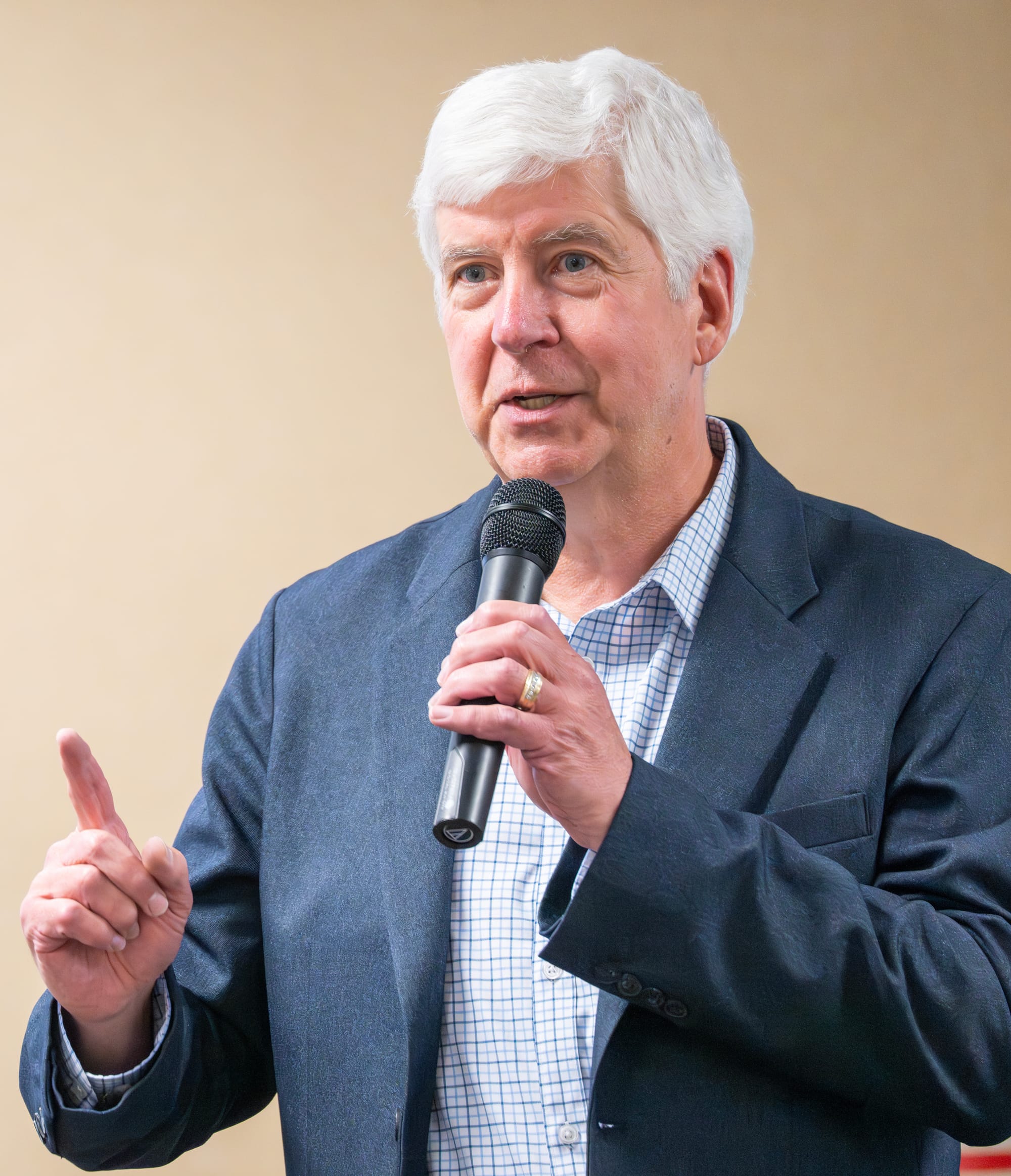
Weighing in on the state of the state
Snyder told a room of about 60 Ottawa County Republicans in late April that Michigan is "sliding backwards" under current Gov. Gretchen Whitmer's eight-year tenure.
"We do have a challenge in our state. I wish I didn't have to talk about it, but I'm happy to talk about it, because there's a solution to that problem. Where are we today as a state? We're sliding backwards again, and it's not a good thing. I'm not going to dwell on all the ways we're sliding backwards," Snyder said.
Although he didn't point to specific pain points of the state's challenges, Snyder said it's not about pointing fingers.
"My motto is 'relentless, positive action.' No blame, no credit. What's the problem? What's the solution? And be relentless in pursuit of solutions," he said. "We need to get us back on that positive path, because that positive path is going to be based on what all of us do together."
Snyder pointed to the national economic downturn in 2007-09, after the U.S. housing market collapsed, triggering a years-long recession.
"If you look at the decline we've gone through, a lot of people say it's going to take a long time to bring us back. ... You may not remember, but 2008 and 2009 was a huge low point in the history of Michigan. In the 2010 census, we were the only state in the nation that actually had a population decrease. We went backwards," Snyder said.
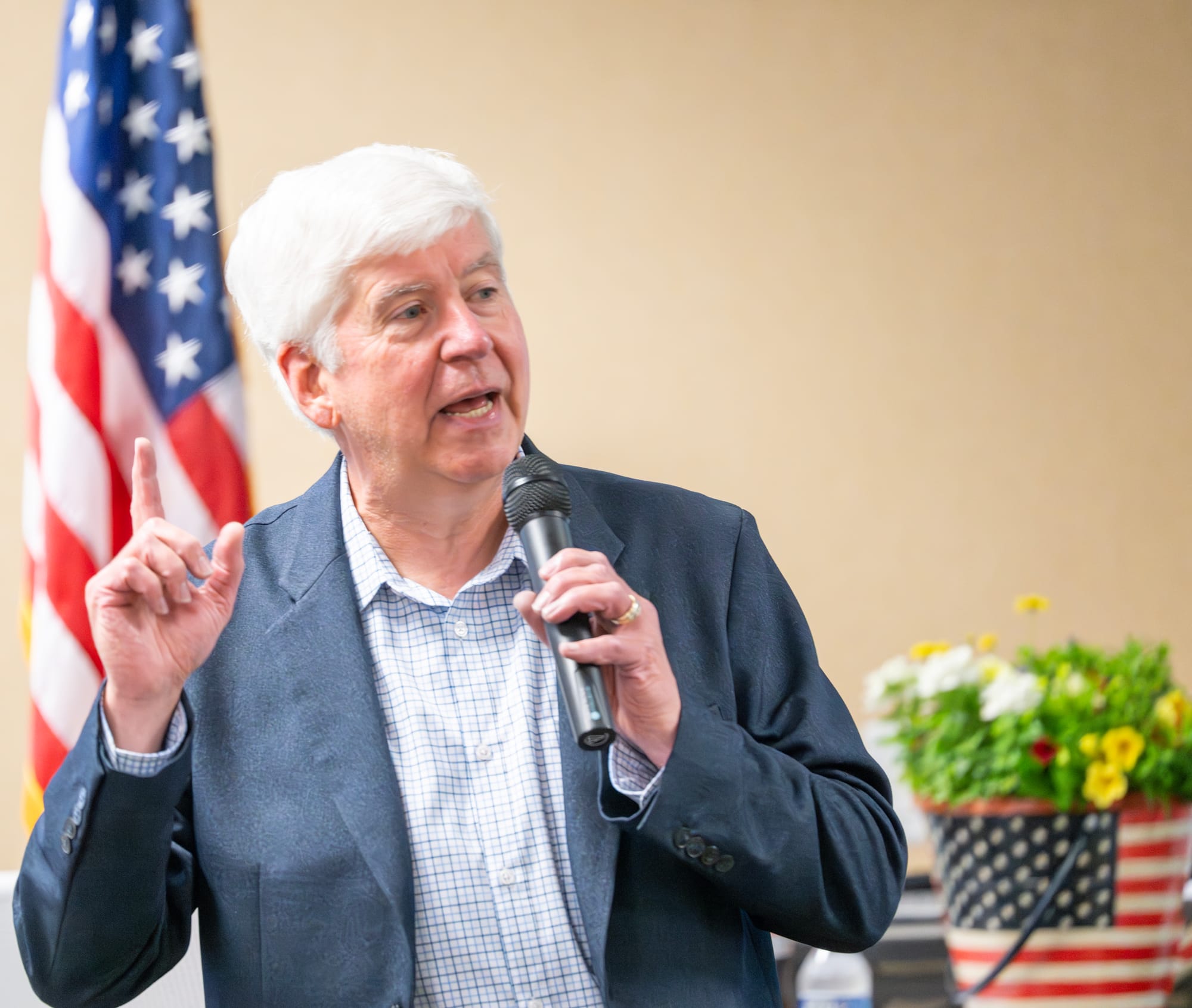
"The only state out of 50 states, we had the highest unemployment rate in the nation. There's a whole bunch of other things like that. But what did we do? We elected a new team of leaders to come to Lansing," he said.
Snyder said that the unfortunate time in the state's and nation's history inspired him to seek political office for the first time — aiming for the top spot.
"One of the reasons I ran was to reinvent Michigan; it wasn't to fix Michigan. We were broken. It's about reinventing Michigan," he said. "We literally got back to Top 10 in many, many different methods, and that's because we work together, and we made things happen, and we did that in eight years. So when you think about how many years it could take us to come back, remember it can happen quickly if we bring that focus again."
Snyder said one of the first things he did as governor was to be more transparent with the public in the form of an accessible dashboard.
"Part of it is having a system that we know how we're doing. ... One of the first things I did in my first state of the state is I got up and gave a dashboard for where the state of Michigan was, and asked people to measure me on how well we did," he said.
"I'm a nerd, and so I said, 'This is how I should be measured, as long as I'm in office.' ... The media and a lot of people in Lansing came up and said, 'Why did you do something so dumb? You give them all these metrics, so they've got something they can criticize you for.' I didn't understand that at all because I said, 'How do you know you're succeeding if you don't have measurements?' I said, 'I'm a half-full guy. I've never viewed it as half-empty. I'm not doing a measurement to show why we're going to fail. I'm going to do a measurement to show why we would succeed.' We need to get back to that."
Another key factor, Snyder said, is finding a way to innovate.
"The same old way of doing things doesn't work," he said. "In a lot of cases, in government, people have a fear of failure and criticism, so they won't try new things, because, again, it's very public if something doesn't work."
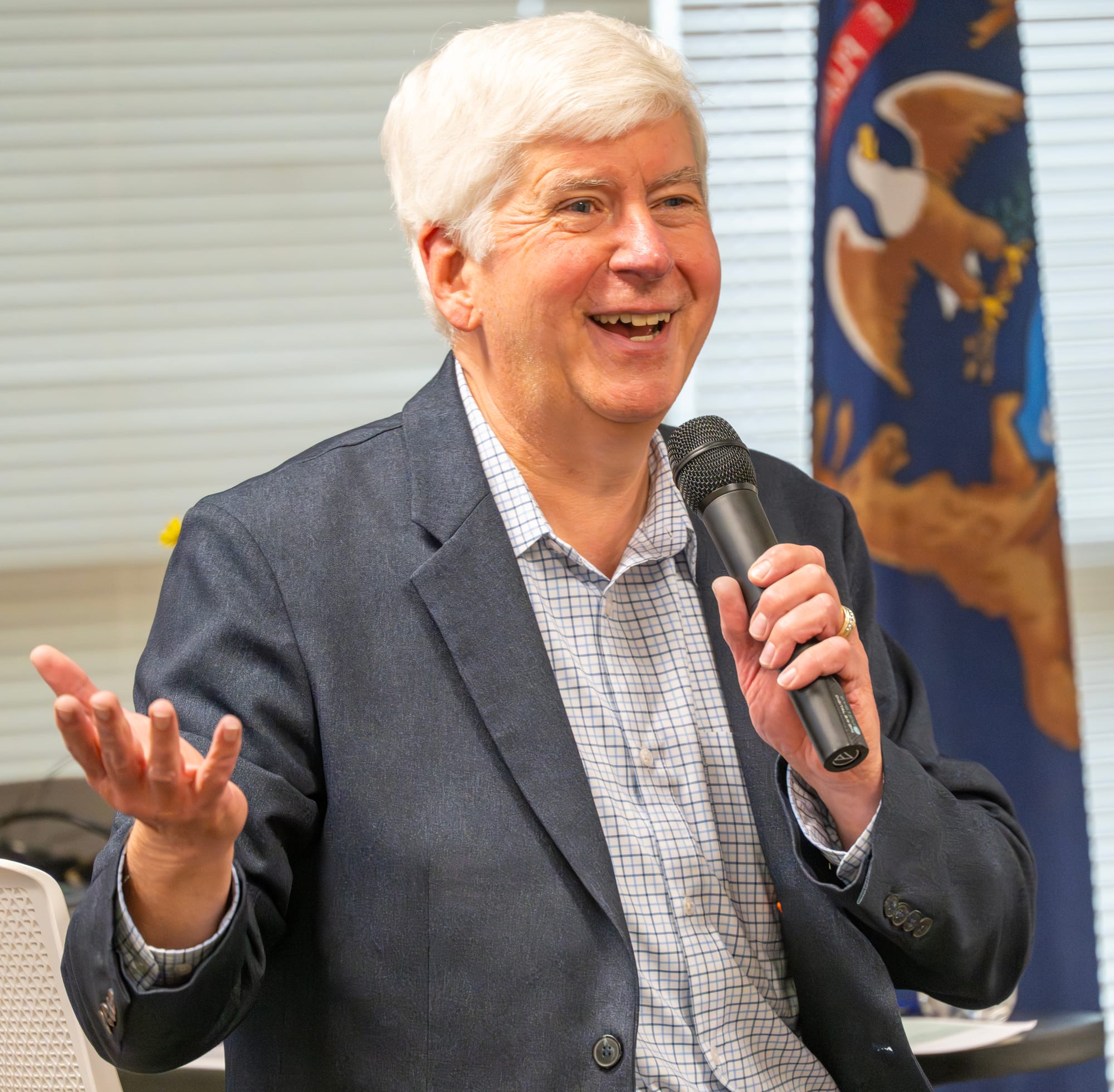
The bottom line, Snyder said, was that Republicans need to secure the governorship in 2026.
"This is simple. I'm a nerd, but it isn't rocket science. We need to win the governorship, and we need to win majorities in both chambers in 2026. I need you fired up to go make that happen, because it is possible, and there are a lot of different ways we can do that."
The most important way, Snyder said, is to have a "quality candidate." Second is to have a "positive Michigan agenda."
"It's not about talking in a negative fashion or saying what you don't like. The average voter wants to hear something good. They want to see how Michigan can be better, not just stopping things, but how we can be positive?"
One major priority, he said, is to lower taxes.
"I pretended I was at the family kitchen table with 10 million family members. Why did I do it that way?" he said, "because that's how we do it in our household. You sit there, and you have to make some tough decisions about what you're going to pay for, what you're going to invest in, what's coming in the future, how you handle things, and the way I always viewed it is government isn't there just to spend money."
He said part of the problem is that current officials and the public are looking to the government for all solutions.
"We have to have government, which has a defined role. It's not there to solve every problem known to man. It's there to solve specific issues and topics," Snyder said. "There's a lot of critical things we do need to spend resources on, but the way I viewed it, I'm taking a hard-earned dollar away from a taxpayer that's a family member, and before I ask for that dollar, I need to be confident we can show a return on investment that's as good as anything else they would spend that dollar on. If I took $1 that I couldn't justify, I shouldn't ask for that, right?"
He said the state budget has grown over the last several years on things that didn't meet that threshold.
"They've spent a lot of money on a lot of programs that I don't believe meet that benchmark. ... It's more the principle — we should leave some more dollars in your pocket in these difficult times," he said.
The biggest challenge, however, is to get fellow conservatives energized.
"Getting people involved and fired up ... that's one of the greatest challenges we're going to have in this election cycle as Republicans. It's a mid-term election, and it doesn't matter who is president; anytime there's a sitting president, there's headwinds you're going to face nationally that are going to make it more difficult to win. Again, having the right candidates and a quality Michigan message will make a difference," Snyder said.
He said local involvement and organization are key to fending off those political headwinds.
"The airways are going to be filled with a bunch of stuff. We have to sort through the noise again. We've got great quality candidates. We need to hear their message, and you can help amplify that," he said.
Part of that plan, however, is to stop the infighting within the Republican Party and get back to business.
"I'm a proud Republican. I want us to win. ... But we need to be thoughtful, and we want to bring people together, not push people away," he said.
He looked to his own governship as an example.
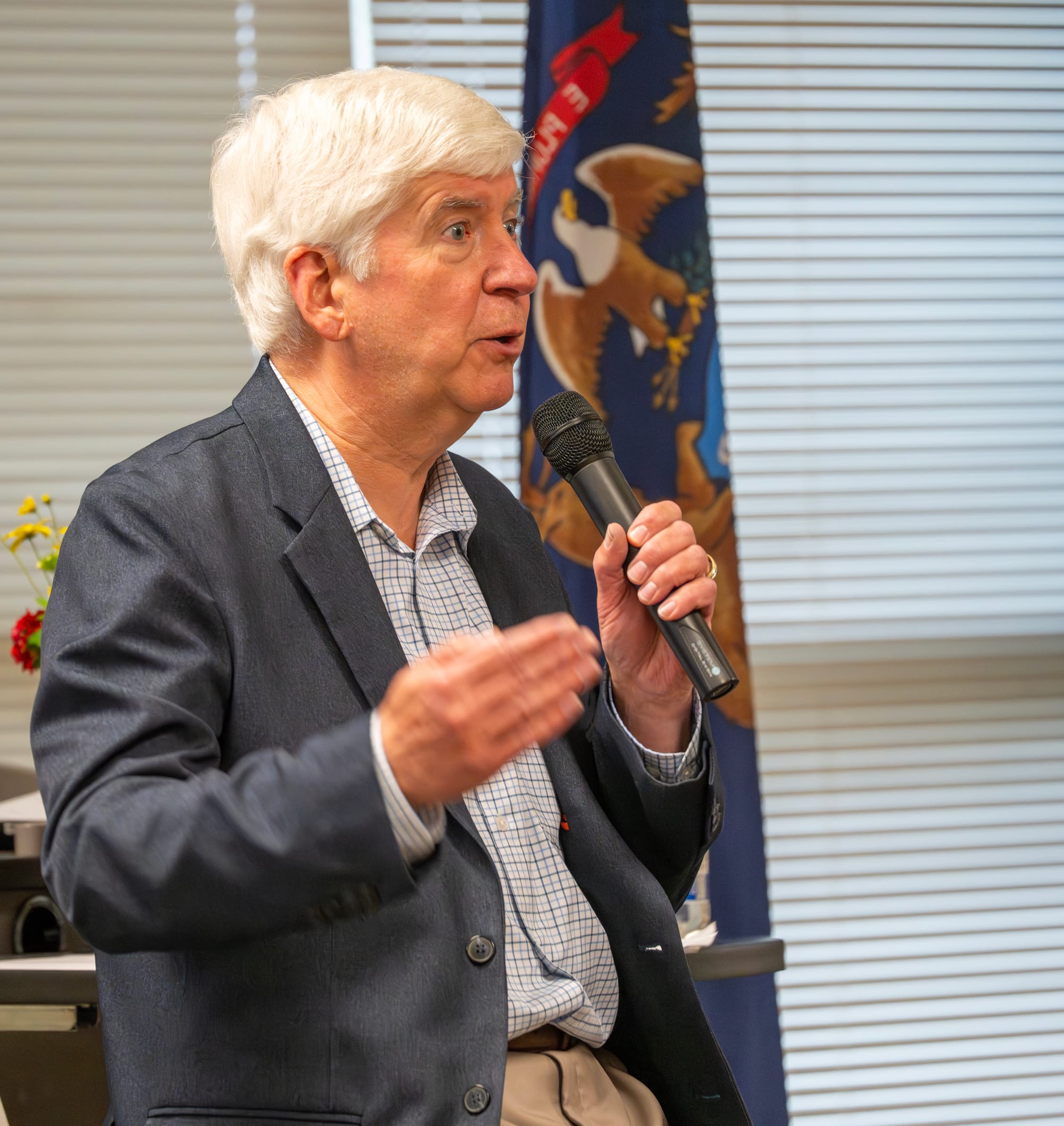
"How many times have you ever heard me call somebody a name? How many times have you ever heard me criticize anything?" he asked. "It's not needed. You can stand your ground. You can stand on your principles with conviction by just being open and honest and not bringing someone else down."
Despite holding Republican majorities in both legislative chambers and the governorship, Snyder cautioned against "running the table" on Democrats.
"We're not the only people with a good idea, but we stayed to our principles and would incorporate things and make them better," he said. "Didn't that make things run better? Didn't people learn to respect people better? Did we win together and work together?
"When you have a chance to govern, be thoughtful about how it's not about running people over. It's about winning together and sticking to your principles and moving Michigan forward. Isn't that a better way that our country could run?"
He said Michigan residents need to assert their place in the world and feel comfortable advocating for what they want.
"Michiganders, we're too humble. We gotta be louder and prouder about who we are, and we have to be more assertive about making that point, because if we don't do it, who's going to do it for us? So let's get out there and get people excited about doing things," he said.
Snyder complimented Ottawa County for its current course, both economically and politically.
"You guys have done tremendously well in Ottawa County. Take that spirit and show the rest of Michigan," he said.
Q&A
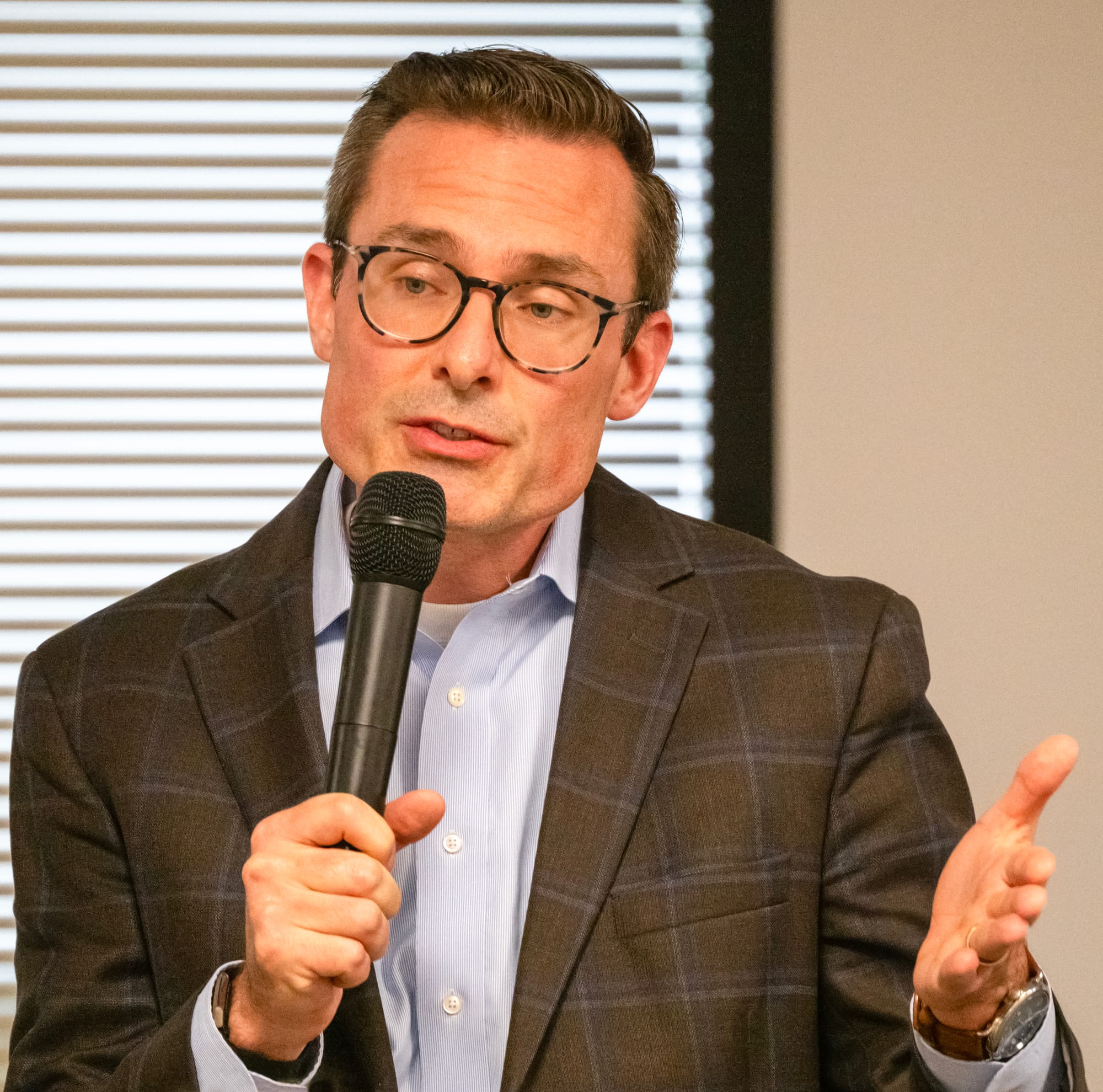
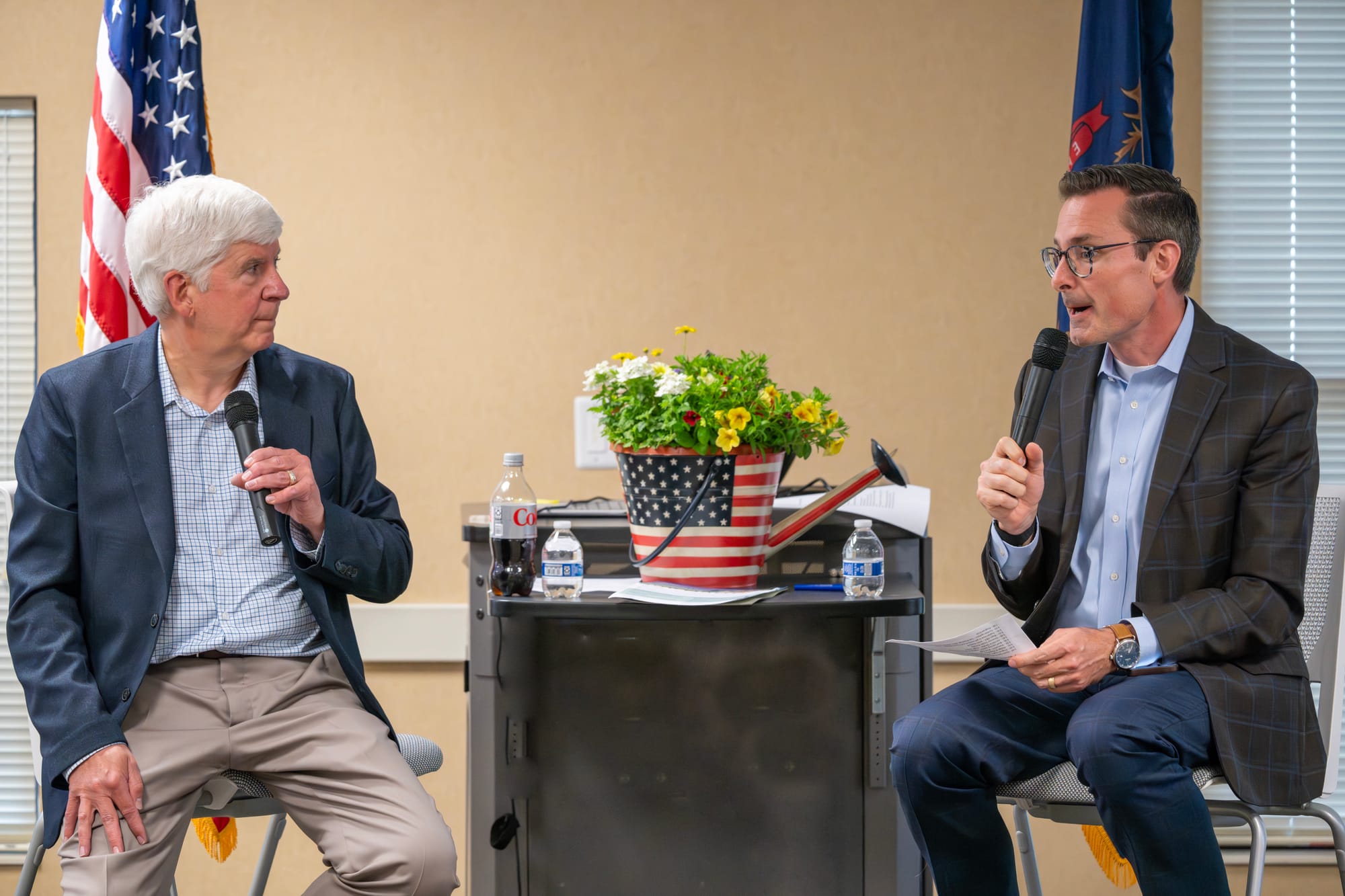
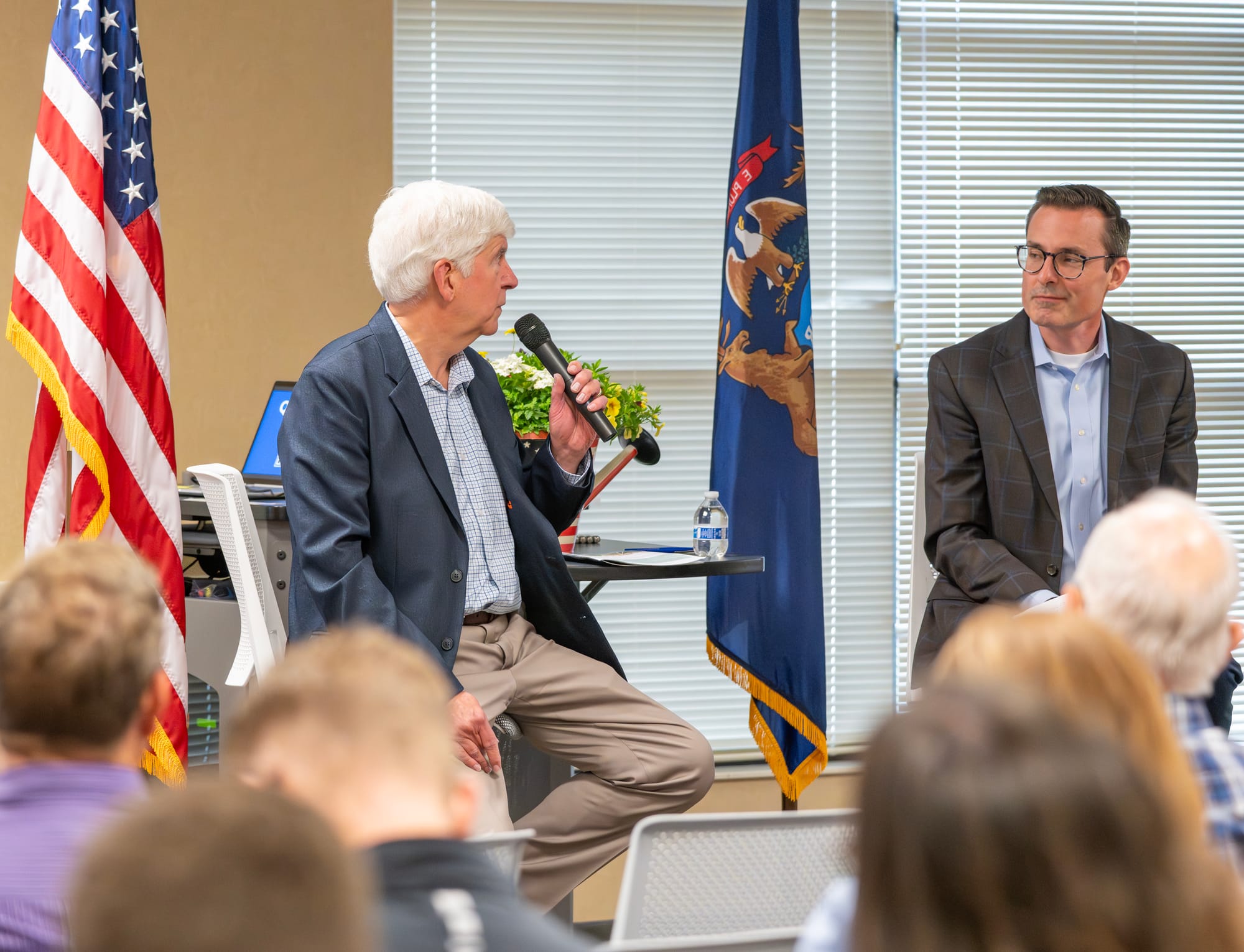
Snyder took questions from the audience after his remarks. Here is the Q&A that transpired with county Clerk Justin Roebuck moderating the discussion (edited for clarity and length).
How do you see civility playing a role in this election cycle, and, particularly as we have come up on, frankly, a lot of negativity in our politics over the past decade? Where do you see good quality Republican candidates really leaning into civility more than negativity and fear?
Snyder: I think we need to, because if you think about it, too many people have sort of checked out from the political process. You guys are active. You're here, so thank you for doing that. But we need to re-engage a lot of people. I told people, if you're running statewide in Michigan and you win every Republican in Michigan and nobody else, you lose; if you win every Democrat in the state of Michigan and nobody else, you lose.
There are a lot of people in the middle, and a lot of those people are marginal in terms of: Are they interested, involved, engaged or not, and do you see them ever wanting to engage in something negative? If you're in the middle, no, they want something they can believe in, and most of us do. We have to focus in on that.
The lack of civility has been on a cycle that's gotten so negative. I hoped the pendulum was going to start swinging back. It hasn't. It's gotten worse, but it's got to swing back.
What's the greatest threat to the United States? It's us. It's not North Korea, it's not Iran. The greatest threat to America is us not getting along with ourselves in terms of tearing ourselves apart. So I always tell people I am a proud Republican, but I'm a Michigander first and an American first, and I'm going to make the right calls. I'm basing them on the principles of why I'm a Republican, but you've got to make the right decisions, thinking about the greater interest.
When you're looking at a candidate, are you going to find a candidate that's only going to represent the people that elected them? Are they going to work hard to represent all the people — and I did that as governor.
How do you think removing Right to Work has affected Michigan so far?
Snyder: I didn't push Right to Work as an issue because I knew it'd be a divisive issue in our state in relation to the benefits it would bring. I probably underestimated that to some degree. I helped push it through. The Democrats in 2012 were talking about doing a ballot initiative preventing Right to Work from ever happening in Michigan. That would have gone in our Constitution, and it was a lot more stuff that would have devastated Michigan's entire economy. So I went to a meeting of labor before it made the ballot, and I said, "I don't think you should do this." I wasn't trying to be threatening, but I said, "I'll oppose it. I have to oppose it."
The sun came up the next day; everything was fine. It was the right thing to do for workers, in my view. I do support the underlying theory, but again, I thought I didn't want to have all these protests. But what it really did was it opened up the business pipeline for Michigan. It was a marketing thing. So our business pipeline of opportunities, of people looking to grow in Michigan, went up dramatically. We brought a lot of jobs into Michigan.
What it did was think about the workers' rights. It's important, but the bigger impact was it took a sign, like on a business door that said "closed," and it flipped it to say "you're open for business." And when they repealed right to work — all it did was flip the sign back to say, "we're closed for business." So, I'm firmer now, we should put Right to Work back in because it's the open for business.
What's a good example of a governor being a good coach and a working partner? How did that actually play out during your term?
Snyder: Talking to our partners and recognizing that they made things better, I proposed a lot of stuff, and we did pass a lot of stuff. We had that huge list, but I never took offense to my colleagues coming back to say they want to change something or do something different. I viewed it as that's continuous improvement, and having a dialogue of seeing things I might not have seen.
I didn't believe I had to get 100% of everything I proposed. If we got 50%-60%, how much more positive progress is that? And then, if you've proven you can work with somebody, you got that 60%, you can come back again and say, "Let's work on that 40%." If you get half of that, come back again and get 10%. You're at 90% of what you started with, just because you did it in a continuous cycle of coming back and continuing to work through issues. Isn't that cool? As opposed to saying that's a bad thing.
The other part is we talk to people. I had a fabulous team that was always talking, but I would do lunches on a regular basis with legislators. I would go over and walk the floor. It was communications and having that dialogue and talking to people. Because I think, if you ask legislators today from either party, they can tell you how often they sat down, or had the governor come talk to them about how things are going, or just say, "Can we have a sandwich together?" Stuff like that. That makes a difference, having a personal relationship.
I don't like win-loses. I mean, you do have some win-loses. It happens occasionally, but if that's your primary mode of operation, where you have a win-lose, that's a transaction, that's not a relationship, because you think it's rational for the person that's lost over and over again to want to work with you at some point. So that's why I was viewed as important to keep this dialog, to get people working together to create win-wins where might not have been a big win for them, but at least they can say they want something.
Things we're dealing with, certainly here in Ottawa County and really across the state, in a lot of ways, are the advent of solar, battery plants, data centers and agricultural communities that are really a sign of some changing times — and also this instinct to try to protect our rural land. How do you think candidates should approach that as Republicans in this next cycle?
Snyder: There's way too much hype and way too much noise and misinformation. I'll use data centers because you could do a very similar thing to solar. A data center done right in a community that's actually interested and potentially get that tax revenue done right is a very good thing. This is where I think the utilities, the people involved in the data center side, have done a terrible job communicating. They've lost the narrative. I actually tried to give them some advice, and I said there are about seven or eight key criteria. It's about water usage, electrical usage or electrical rates. It's about sound, it's about visuals, it's about what happens when that's eventually empty. There's a whole list of things that you can come up with, a gold standard to say, "Here's best practice." If you check all these boxes on this list, this is a really good thing, because it's going to generate a lot of tax revenue without a burden on your community.
Some people may not like it, but if you've addressed all those issues ... say we're only going to talk about or consider gold standard data centers. If it doesn't check all the boxes, go away. I don't even want you showing up in our community. I don't want to talk to you. But if you're going to check every box on this list, and it's been validated by everybody who's got a chance to weigh in on this list ... that's how we should be approaching it. So I think it's just been a terrible communications job, because we should want some of these initiatives. ... It's not rocket science, it's common sense.
What do we really need to do to reform taxes in Michigan? We've got a lot of options out there right now on the table being talked about ... the no tax on property, no taxes on tips, Social Security ... what do you see as a really healthy tax strategy?
Snyder: There are a lot of misplaced things in my view. ... A good tax system has three fundamentals. It's simple, it's fair and it's efficient. So, before you add any tricky things or extra exclusions or anything like that, a lot of those really don't make sense if you want a truly fair tax system. ... So what is simple, fair and efficient? It starts by taking a sheet of paper saying, "Put your income on the sheet of paper, put a tax rate on it, get a number and write a check." That's simple, fair and efficient.
It wasn't quite that simple. I mean, we had some things, but it was massively simplified. It made a huge competitive advantage for us. And when I was out marketing Michigan to grow jobs in Michigan, it was a home run shot the way we did it.
There are so many people in the middle who are just normal, everyday people who want positivity. There's also a challenge of energizing a base; they need some good, high-quality red meat stuff to energize that base and focus on the importance of what their mission is. How does one balance that out with the importance of working together, particularly if it's working in bipartisan ways, once you get into office?
Snyder: Some people view that as it's got to be controversial or a fight or "something I don't like about the other side." Well, I view good red meat as saying affordability. Shouldn't you get a tax cut and have more dollars in your pocket? Shouldn't we have third-graders that can read? Should we change every 120 years and have something besides seat time for people that want to try something new? Should we pay our debts off? You can go down the list. Should we have mental health resources accessible to people? Should we have smart justice, not hard or soft justice, but smart justice?
I don't know why those aren't red meat issues, but they're all positive things, right? Things we can do better. So there's no need to get to that. In a perfect world, I would take the word "fight" out of the American lexicon of politics. I don't use that word because ... do I want to fight with another Michigander? Do I want to fight with another American? I told people fighting belonged on the beaches of Normandy, not the beaches of Lake Michigan.
That doesn't mean you're rolling over. I was criticized in my first campaign because people thought I was too nice and wouldn't be tough enough. But can I do it with civility and respect, and do it in a way where it doesn't involve calling someone a name or saying, I'm going to fight with them? I believe in my values, I'm going to stick to my values, and I'm going to work hard to find ground to do that with other people.
What drives me crazier than almost anything is: If you think about how we let people behave in the political world, we wouldn't put up with that monkey business anywhere else in our lives. So what's the matter with us? That goes back about the thing about ourselves. If someone, a political person, behaves that way in your family or at the workplace, what would happen? There'd be an interesting family meeting, I guarantee you. And if it was in the workplace, they would be looking for a new job. So somehow we got screwed up enough where we sort of said it's OK in this one segment of our lives to behave in some totally inappropriate way compared to the rest of our lives.
I come back to say: Why don't we get the Ottawa County values back that we were taught when we were kids? And that's the kind of stuff we should be living in our political life, too.
Why is there so much of a push right now to take away local control and kind of move that to the state level, and how do you think we should slow that?
Snyder: I don't agree with that generally, and I think a lot of it needs to come back to say, "Let's create positive incentives for communities to want to do things that make sense. So instead of telling people you have to do it, I want to go out and, like the data center thing, explain it all in a gold standard way, and to say, "This is the standard. You're not going to even touch it with a 10-foot pole if it misses even a one box."
But then go out and find the communities that want data centers, and we should market that and let those businesses come — because once they're going and successful, other communities are going to say, "Well, that wasn't so bad. I want to do it, too." That's human nature. This is the adoption curve, instead of making a binary on or off done at the state level. ... The people that want to go faster ... let's not hold them back; let them try these things and see how it works out, and give them encouragement.

How do we get Michigan back on track in education?
Snyder: It's not going to happen overnight, so let's start serious reforms that are going to start moving the needle and showing how powerful that can be. And I think it's bigger than just education. We need to do it 1,000% just for the kids, but the nation is not doing that well.
The jurisdictions that do the best at being innovative on education, being forward-looking, understand how the world is changing — because if you think about where businesses are going to want to locate, where are they going to grow, we have to be more proactive and positive about who we are.
We need to be promoting the talent in Michigan, and we need to be reinvesting more in the talent.
You need limited incentives. ... You've got to have some tools in the toolkit, but they need to be smart ones.
— Sarah Leach is the executive editor of the Ottawa News Network. Contact her at sleach@ottawanewsnetwork.org. Follow her on Twitter @ONNLeach.


