

The Business Next Door: How Dutch immigrants built a business empire (The DePrees II)


The story of D.J. DePree is one of my favorites because it demonstrates the importance of management philosophy and assumptions about people and design.
In Part I, I noted that Jan DePree was one of the first Dutch patriarchs in Zeeland, and that his descendants were among its most ethical and entrepreneurial. Among them, I highlighted Peter Henry DePree (DePree Hardware) and Cornelius (Con) DePree (DePree Chemical). This week, I share the story of D.J. DePree, the initial force behind Herman Miller.
Read More: The Business Next Door: How Dutch immigrants built a business empire (The DePrees I)
Background
Herman Miller (now MillerKnoll Inc.) is one of Zeeland’s most famous companies. While its name is synonymous with design and its culture with “participative management,” that wasn’t always the case, even under D.J.’s tenure.
So, how did D.J. become associated with the company Herman Miller?
The short answer is that D.J. was the son-in-law of the company’s namesake: Herman Miller. But the long answer is more interesting.
Dutch Immigrants
Herman Miller was born in the Netherlands in 1868. In 1882, his parents, Harm and Stientje Smit Mulder, moved the family to the United States, where they settled in Grand Rapids.
In 1889, Herman changed his name to the more English-sounding “Miller,” became a U.S. citizen, and married Nellie Breen. Nellie was from Graafschap, Michigan, a tiny village just outside of Holland. Her parents, Kryn Breen and Nellie Visser Breen, had immigrated to America from Noord Holland, Netherlands, in 1867.
Initially, Herman and Nellie Breen lived in Grand Rapids, where Herman Miller worked for the Royal Manufacturing Co. By the mid-1890s, Herman was superintendent of the plant. By that time, he and Nellie had three children; among them was Nellie, born in 1893.
Michigan Star and Colonial Clock
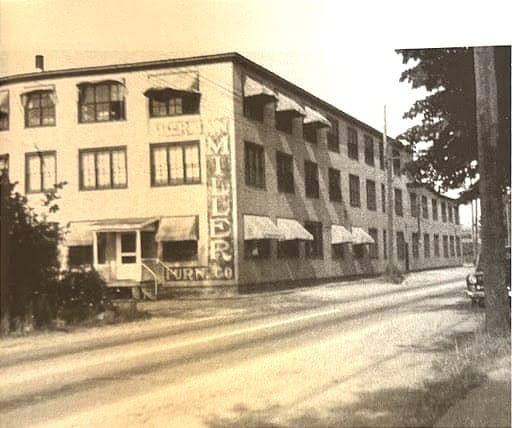
Around 1905, Herman invested in Jacob Elenbaas’ Michigan Star Furniture Co., which made wooden bedroom furniture, such as dressers, in an old canning plant at 51 W. Washington Ave. in Zeeland, and distributed them through Sears Roebuck and Company and its mail-order business.
In 1909, Herman became plant manager of the Colonial Manufacturing Co., located at 200 W. Washington St. (originally called the Colonial Clock Co. and located at 103 N. Colonial St.), also in Zeeland.
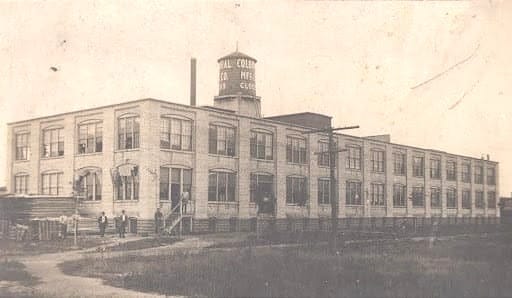
This happened because several people bought out the founder of the Colonial Clock Co., John Spyker, reorganized the business, supplied it with new capital, and hired Herman Miller to run the operation. The principals included:
- Hendrik DeKruif, who had sold his farm implement business
- Christian Den Herder, son of the founder of Zeeland State Bank
- Dr. Thomas Huizenga, son-in-law of Jan DePree
- Albert LaHuis, brother-in-law to Christian Den Herder
- John Veneklasen, co-owner of the Zeeland Brick Co.
Meanwhile, that same year, Jacob Elenbaas hired an 18-year-old high school graduate named D.J. DePree to be his clerk at the Michigan Star Furniture Co.
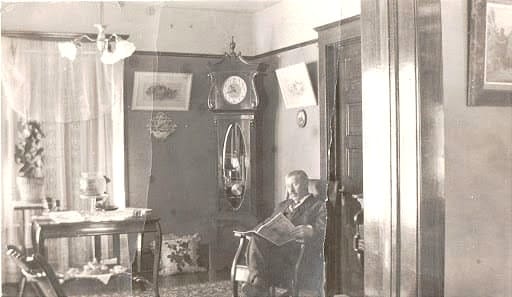
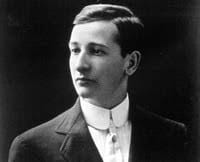
D.J. DePree
Dirk Jan (D.J.) DePree was born in 1891. His parents were Jan Dirk, a tinsmith, and Adriana Vereeke DePree. His grandparents, on his father’s side, were Dirk Cornelius and Johanna Westhoek DePree, and his great-grandparents were Jan and Aaltjen Brinkerhof DePree.
As a boy, D.J. developed a strong reading habit. Initially, he had thoughts of going into law and politics. He ended up getting a job in accounting. But, deep down, he was a philosopher.
Sometime after securing a job at the Michigan Star Furniture Co., D.J. read an article on time management in the Sunday School Times. Intrigued, D.J. began reading the work of Frederick Taylor, likely “The Principles of Scientific Management,” and other efficiency experts, who divided company personnel into two distinct classes: managers, to whom he assigned thinking, and workers, to whom he assigned doing.
In 1914, D.J. married Nellie DePree, daughter of Herman and Nellie Breen Miller. Among their seven children were Hugh, born in 1915, and Max, born in 1924.
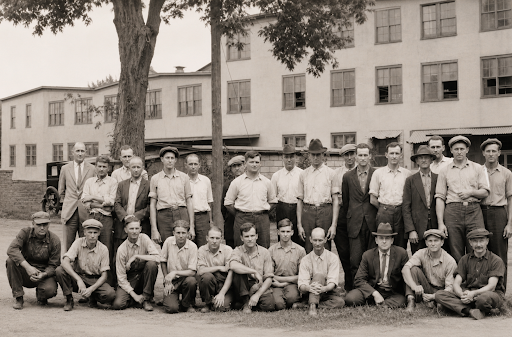
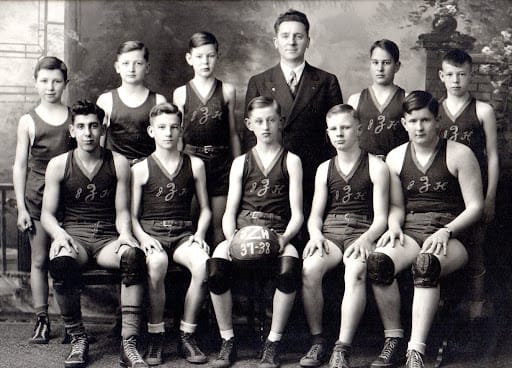
Around 1923, while D.J. was managing the Michigan Star Furniture Co., Jacob Elenbaas decided to seek his fortune by prospecting for oil. D.J. then persuaded his father-in-law, Herman Miller, and Christian Den Herder to buy out Elenbaas. (D.J.’s own father, Jan Dirk DePree, was also an investor, as were some salespeople, including a salesman named Max Bath, whom Max DePree was named after.) In hopes of enhancing the business’ credibility, D.J. renamed the business after his father-in-law, calling it the Herman Miller Furniture Co.
D.J. also showed his entrepreneurial spirit in other ways: Like his great-great-grandfather, who left the Reformed Church — albeit temporarily — D.J. went his own way by becoming a Baptist, as did Herman Miller, was among the original 18 people involved in the Bible Witness Hall, the predecessor of First Baptist Church, in 1929.
Like his father, D.J. also joined the Democratic Party, rare in a community that reliably voted Republican since the Civil War.
The Millwright and the Herman Miller Furniture Co.
The Herman Miller Furniture Co., under D.J. DePree, like the Colonial Manufacturing Co., made quality furniture, using the best materials and workmanship possible; and, like many furniture manufacturers, the Herman Miller Furniture Co. made Louis XIV, Queen Anne, Sheraton, and other classic reproductions, which the big retailers in Chicago, New York, and Philadelphia wanted to carry.
But in 1927, D.J.'s millwright, Herman Rummelt, unexpectedly died. Because, in those days, the millwright kept the fire stoked in a steam engine that, through a system of belts and pulleys, mechanized the factory, the loss of Rummelt was significant. But what D.J. learned from Rummelt had an even greater impact.
When D.J. went to the Rummelt home for the wake, he met Herman’s widow. She shared with D.J. the handcrafts, poetry and stories Herman had created. This caused D.J. to wonder: “Was he a poet who did a millwright’s work, or a millwright who wrote poetry?”
Later, upon returning home from Rummelt’s funeral, D.J. reflected on his own attitude toward his workers. He began to realize, in a conversation with God, how much he and his employees were alike.
By the time he got home, he realized that everyone mattered because God created all people in his image with complementary gifts to contribute to the whole. D.J. then concluded that all people are extraordinary and worthy of attention, a discovery that conflicted with Frederick Taylor’s view of the worker.
This insight would help propel D.J.'s company in the future. But first, he would learn from another difficult situation.
The Great Depression
In 1929, the Herman Miller Furniture Co.’s annual sales were over $300,000 ($5.8 million in 2026 dollars). In 1930, after the 1929 Stock Market Crash, they had slumped to $144,000.
As the market for ornate bedroom furniture dried up, D.J.’s company careened toward bankruptcy. According to Max DePree:
“My dad …, along with his key sales manager, Jim Eppinger, both felt the company was going to go bankrupt. They had been making some plans to deal with that. But the one thing that my dad was doing, especially, was he was praying about it. ... He was just asking for help to prevent the bankruptcy of the company. He wanted to preserve the company.”
Gilbert Rohde
Then, in July 1930, while D.J. was sitting by himself in Herman Miller’s downtown Grand Rapids showroom, D.J. received what he thought was a response to prayer. To tell the story, I rely on Bill Birchard’s eloquent description:
[Into] the Grand Rapids showroom walked a man who introduced himself as Gilbert Rohde. Rohde, a 36-year-old New York designer trained as an illustrator, was looking for work. He had shown his first furniture pieces in New York, just the year before. He had designed a series of smoking and side tables with chromed bases and DuPont-made artificial tops.
DePree had his doubts about Rohde. He figured Rohde came for a visit after striking out at selling his ideas to every other Grand Rapids furniture maker. ... [Rohde] maintained that people of the day, with smaller houses and lower ceilings, needed something other than period reproductions.
DePree heard Rohde out. DePree also knew that he did not have a lot of options: “I was grasping at straws. A drowning man will always grasp at straws.”
So, suspecting Rohde’s appearance just might be providential, he asked: “How much to design a bedroom set?”
“One thousand dollars,” Rohde replied ... [a number that was three times what D.J. was paying Grand Rapids-based designers]. “Or I’ll do it for 3 percent royalty on the goods after they’re shipped,” offered Rohde.
“Well,” DePree thought, “I can’t lose …”
Receiving Rohde’s prints later, DePree winced. Although Rohde had come back as promised with designs for two-bedroom sets, the chests of drawers looked like simple boxes, utterly plain, with no carving and no inlay. Unadorned flat veneers ran from edge to edge … headboards and footboards both looked as rectangular and plain as drafting tables.
DePree rejected the designs instantly.
Rohde wrote quickly back in a two-page letter. “Reworking his designs was not acceptable,” he said.
DePree later recalled that at this point he realized Rohde knew more than he did, and that he’d better start listening to the man.
According to Max DePree:
In the process of developing this line and introducing it to the market, the Chicago World’s Fair was about to begin. They had in their plans the idea of building six houses. ... Each was a House of Tomorrow. Rohde succeeded in getting [the Fair] to accept the proposal of Herman Miller to furnish one of those houses. That then enticed the Wanamaker Company from Philadelphia to buy this stuff.
[Later,] Jim Eppinger had to move from New York to Philadelphia to train the Wanamaker sales force because they didn’t know how to sell it. So, Rohde put the company through enormous change; design, marketing, manufacturing, everything changed. ...” The result? For doing things differently, he “was [a] persona non grata in the Grand Rapids furniture industry group.”
But D.J. continued to abandon himself to the strength of others.
According to Birchard:
And so began the signature practice of D.J. DePree: to listen to company outsiders who, as if providentially, appeared to grasp just the right way to revitalize his business.
DePree gave himself over to schooling by Rohde, and he would soon have conversations that would stick with him the rest of his life:
“You think,” said Rohde, “that period design is the most interesting thing in a residence, don’t you?”
“Yes, I do,” DePree replied.
“No,” said Rohde. “It’s the people who live in those houses who use the furniture who are the important ones.”
Rohde then elaborated: “You’re not making furniture anymore; you're making a way of living — a lifestyle.”
DePree took to Rohde’s philosophy. He liked how it played to the biblical themes of honesty and service to others. Rohde’s designs also cost less to make. ... [He] began to agree that being honest with design fit with being honest in life.
George Nelson and Charles and Ray Eames
In 1938, D.J. and Nellie’s son, Hugh, a graduate of Hope College, moved to New York City to work for Jim Eppinger and Rohde’s designers and Jim Eppinger.
In 1939, Herman Miller opened a showroom in Chicago’s Merchandise Mart; in 1941, a showroom in New York City with Eppinger’s nephew, Gene, as salesperson; in 1942, in Los Angeles, when Herman Miller launched Rohde’s Executive Office Suite.
Then, in 1944, Rohde unexpectedly died. Immediately, D.J. and Hugh began a search to fill Rohde’s immense shoes. After seeing an article about George Nelson in “Life Magazine,” they contacted him and forged a relationship. When a New York writer asked George Nelson: “How is it that you can do such wonderful work for this little company in Michigan?” He said, “They trust me.”
In 1946, Nelson created Herman Miller’s distinctive logo and brought in designers Charles and Ray Eames, who introduced Herman Miller to their uniquely designed molded plywood furniture.
Carl Frost
In 1949, D.J. and Hugh heard Dr. Carl Frost, a professor from Michigan State, speak in Grand Rapids. Frost was a follower of Douglas McGregor, who in the 1950s wrote a seminal book on business called “The Human Side of Enterprise.”
In it, he put leaders into categories. One type of leader believed he knew everything and told everybody what to do, reminiscent of Frederick Taylor’s philosophy. The other type of leader understood that everyone comes to work with certain gifts and can be trusted with those gifts, consistent with what D.J. learned when the millwright died. That insight became the basis of Participative Management, in which every person in the company gets a voice.
Frost not only introduced the DePrees to McGregor, but also to the Scanlon Plan, which integrated the theory of Participative Management with the practice of transparency, a weakness of management going back to Frederick Taylor’s Scientific Management principles.
According to Max DePree:
[To] begin with, [the Scanlon Idea] called for a recognition that everybody brings something to the game, that there are not great differences between higher management and what we call direct labor. People are similar in lots of ways and …if you treat people well, you can depend on them. But one of the reasons that not many people, besides D.J., did this in those days was that most businesspeople were not ready to share the financial information, which you have to share if you’re going to have a participative management program. ... You had to be transparent. But another really good thing about it is that everybody had to agree to be measured. And measuring performance is one of the really important elements of leadership. You have to decide what you’re going to measure, and then you measure it.

Alexander Girard and Bob Propst
In 1950, Herman Miller had sales of $1.7 million ($23.6 million in 2026 dollars).
In 1951, designer Alexander Girard joined the Herman Miller family. In the late 1950s, D.J. met designer Bob Propst in Denver. Propst became the next great innovator at Herman Miller, creating the Action Office furniture concept.
Meanwhile, D.J. kept making space for everyone and continued to integrate his Christian values into the company.
The Apostle James and the Prophet Amos
According to Max DePree:
[D.J.] used to refer to the Book of James, where it talks about how you treat people. He was an admirer of the Old Testament prophet Amos, who wrote about some of that. He believed God created all people with complementary and equally important gifts to contribute to the whole, and that is the way he treated everyone.”
In 1960, the year the Herman Miller Furniture Company became Herman Miller Inc., D.J. started Ventura Baptist Church and became a lay pastor there.
In 1962, Hugh DePree became president and D.J. became chairman of the board.
In 1969, D.J. retired from Herman Miller.
In 1970, Herman Miller became a public company.
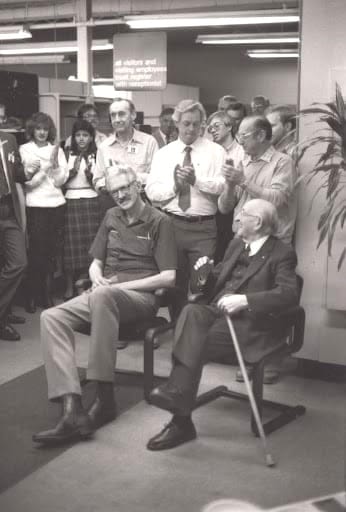
In 1980, Max became president and CEO of Herman Miller. He retired in 1987. That year Herman Miller’s sales were $573 million ($1.7 billion in 2026 dollars).
In 1989, Max DePree published his classic “Leadership is an Art.” Its first chapter is: “The Millwright Died.”
D.J. DePree died in 1990. According to Max DePree:
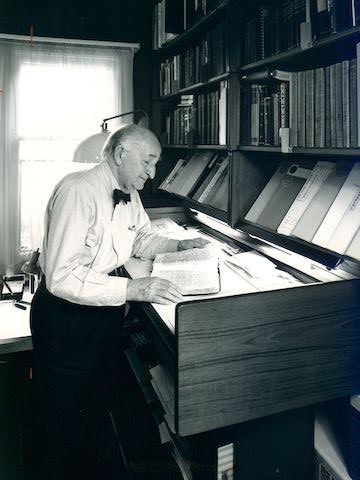
He was still teaching adult Sunday school when he was 98 years old. He only had a high school education. When he died, I had to get rid of 3,000 books. He had a great library. He had just continued his own education. He was strong.
When I watch people trying to be entrepreneurs these days and trying to start a business, and I look back at how difficult that must have been during the Depression … I’m amazed at what he did. I’m sure I never could have done it.
In 2021, with sales near $2.5 billion, Herman Miller merged with Knoll Inc. to become MillerKnoll Inc.
— Information for this story comes from Robert Swierenga’s “Holland Michigan,” Andrew Dervan’s “Colonial Clock Company, Zeeland Michigan,” First Baptist Church, Auscherman, Grawe, Ransmeier’s (eds) “Herman Miller: A Way of Living,” American National Business Hall of Fame, Robert Probst’s “The Extraordinary Man,” Zeeland Historical Society, Herman Miller, the Tobias Center, Max DePree’s “Leadership is an Art,” Bill Birchard’s “Merchants of Virtue,” and correspondence with D.J. DePree's granddaughter Jody Vanderwel.


