

The Business Next Door: How Dutch immigrants built a business empire (The DePrees I)
Jan DePree was one of the first Dutch patriarchs in Zeeland, and his descendants were among its most ethical and entrepreneurial.


Jan DePree was one of the first Dutch patriarchs in Zeeland, and his descendants were among its most ethical and entrepreneurial.
This week, I highlight two of their enterprises: DePree Hardware (second generation) and DePree Chemical (third generation).
Next week, I will highlight their greatest legacy: Herman Miller (fourth generation).
First Generation: Machinist
Jan DePree was born in 1803 in the Netherlands, in the Province of Zeeland (literally, “sea land”). He made a prosperous living as a machinist, and given his era and location, it is likely he worked on windmills, which ground grain, cut wood, and pumped water.
Jan’s first wife was Magdalena Maria Meulendijk. Together, they had 10 children, among them Peter, born 1839; Magdalena Maria, born 1840; Dirk Cornelius, born 1841; and Jacobus (James), born 1845. Unfortunately, one week after their 10th child was born in 1847, Magdalena died. She was only 33 years old.
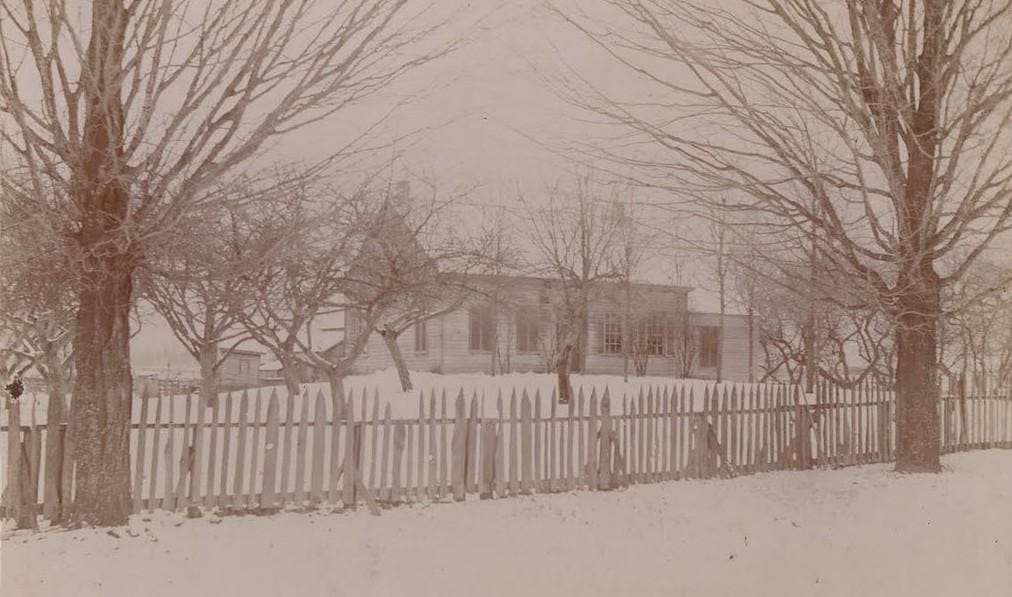
Times were difficult for the family, not only because they had lost a wife and mother, but because their spiritual community, the “Seceder Church,” was at odds with the state church and their country was reeling from the economic effects of the Great Famine (1845-1852) caused by a devastating potato blight.
Because of religious oppression and economic hardship, in April and May 1847, three bands of Zeelanders, led by Jan Vande Luyster, Jan Steketee, the Rev. Cornelius Vander Meulen, and their families and fellow congregants, boarded ships headed for America. They settled, not by the sea, but on a heavily wooded hill surrounded by swamps to which they gave the name Zeeland.
Please consider becoming a monthly donor!
Jan DePree and his family soon followed. He and his children left for America on July 8, 1949, aboard the ship Leila of Baltimore. Not only did Jan pay for passage for himself and his family, but also for members of the Seceder family.
According to an account by Jan’s son, James, the journey from the Netherlands to America took 38 days. Upon their arrival in New York City, they took a river boat to Albany, a canal boat (on the Erie Canal) to Buffalo, a ship to Detroit, and then another ship to Grand Haven, sailing around the northern tip of Michigan’s lower peninsula. Then, they took a river boat to Grandville, and, finally, an ox cart to Zeeland. They reached Zeeland on Sept. 4.
After carving out a homestead on the east side of the village, Jan married Aaljen Brinkerhoff. Together they had four children: John William, born 1852; Cornelis, born 1854; Hendrika Pieternella, born 1859, and Peter Henry, born 1865. Also, in 1865, Jan’s daughter, Magdalena Maria, married Govert Keppel, a successful miller, whose parents had immigrated to America from the Province of South Holland, Netherlands, after surviving a shipwreck off the coast of England.
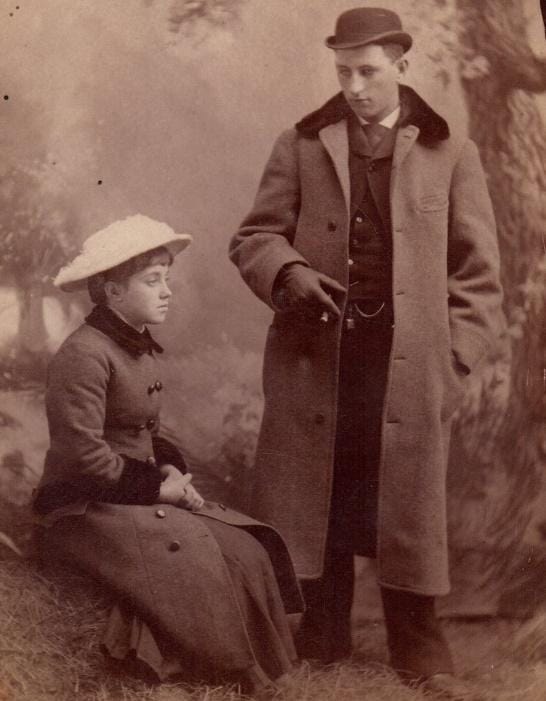
In addition to being a skilled mechanist, Jan was a gifted leader. After Zeeland Township was formed in 1851, Jan served on the board and as director to the poor.
In 1863, he broke from the Reformed Church of America, not to join the newly formed Christian Reformed Church as did many of his Seceder friends, but the Scottish Presbyterian Church.
Yet, in 1865, he helped replace First Reformed Church’s log building with a frame one. When the Presbyterian church disbanded in 1874, Jan returned to First Reformed Church. Still respected by his peers, he served as a member of its regional governing body, or classis.
Second Generation: DePree and Bro
Jan’s son, John William, married Maria Catalina Moerdyk in 1877. John William initially worked for Bolks and Bro, a store in Zeeland that sold hardware and stoves.
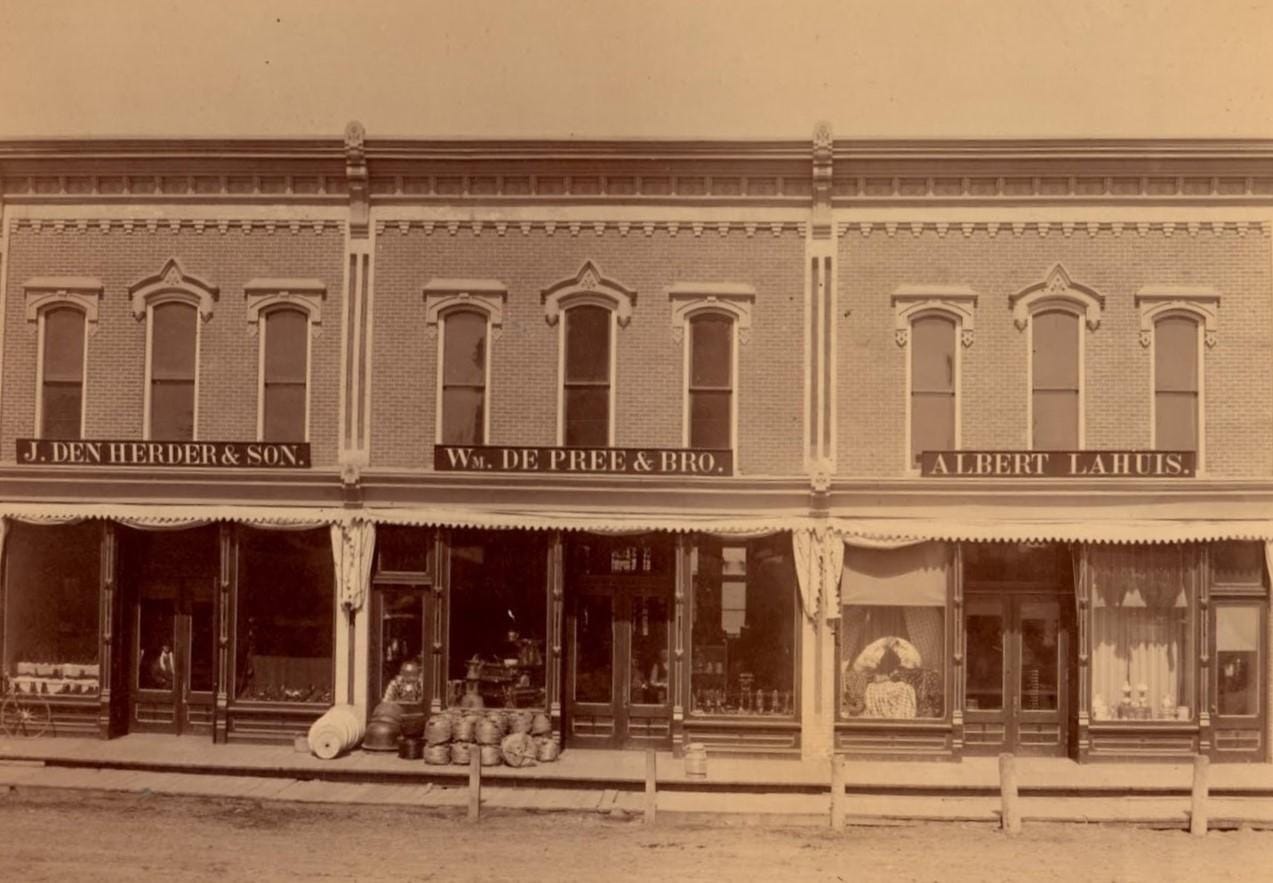
In 1878, John William purchased Bolks and Bro with his brother, Cornelius, and renamed it DePree and Bro. When Cornelius died in 1881, John William partnered with his younger brother, Peter Henry. In 1888, the DePrees purchased a one-half interest in A.G. Van Hess’ furniture and undertaking business (businesses which were frequently combined in those days). E.J. Pruim, a relative of the DePrees, purchased the other one-half interest and managed the store.
In 1889, Den Herder and Son (Jacob, founder of the Zeeland State Bank, and his son, Christian Den Herder), DePree and Bro, and Albert LaHuis (Jacob Den Herder’s son-in-law) contracted with Veneklasen Brick for brick buildings including plate glass windows, a first in Zeeland.
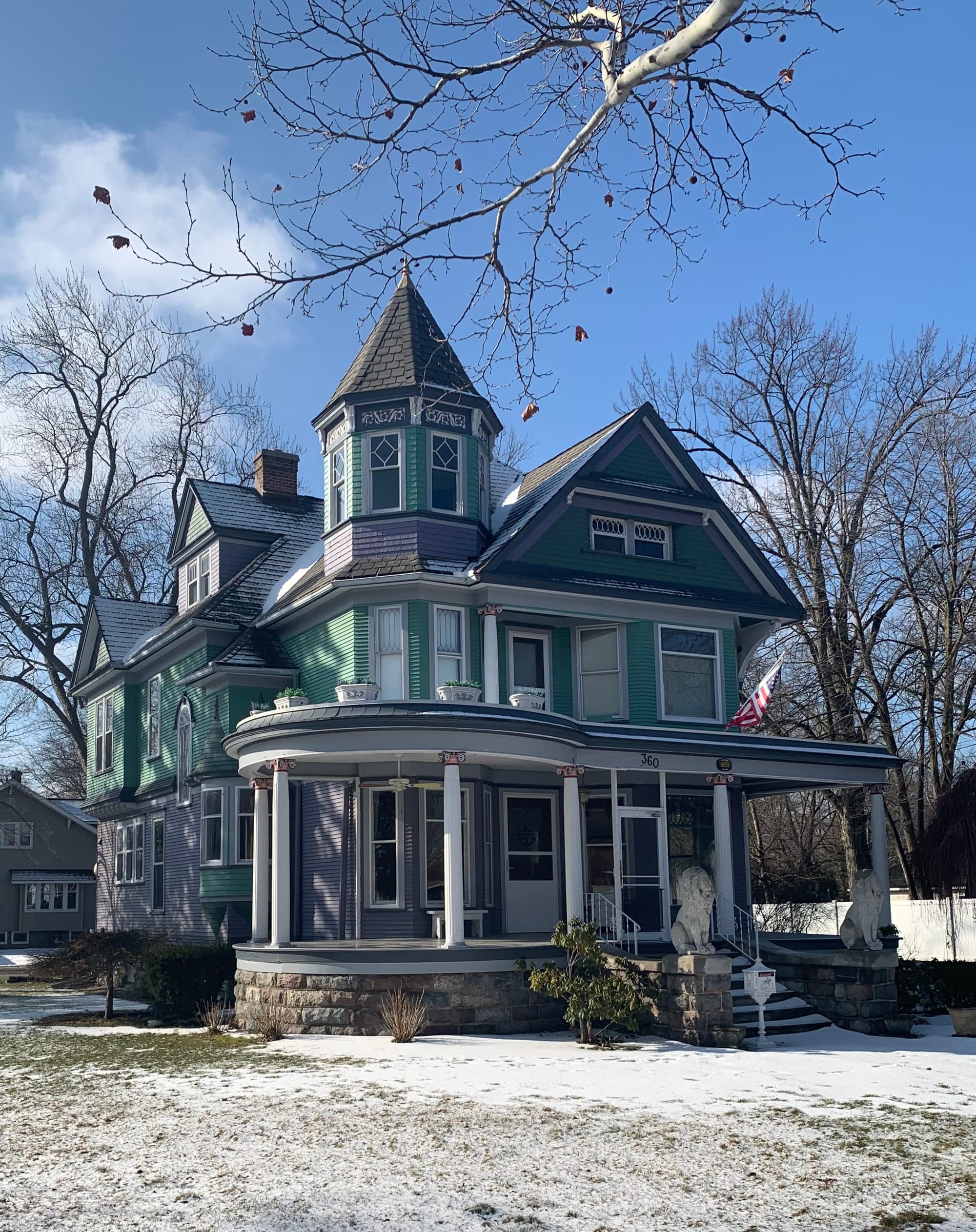
In 1899, Peter Henry built a 3,130-square-foot Queen Anne-style home at 360 E. Central Ave., later known as the “Purple Lady.” It was one of the first homes designed by Thomas Benjamin of Grand Rapids, and it became a showpiece with its white oak interior and stained and lead-glass windows.
Third Generation: DePree Hardware
In 1900, John William’s son, John Henry, began working at DePree and Bro. In 1903, John William and Peter Henry became charter members of Second Reformed Church; John William, the older brother, served as elder; Peter Henry, the younger brother, served as deacon and Sunday School Supervisor.
In 1904, Zeeland residents elected Peter Henry as village president; in 1907, he helped establish the city’s first charter and served as Zeeland’s first mayor.
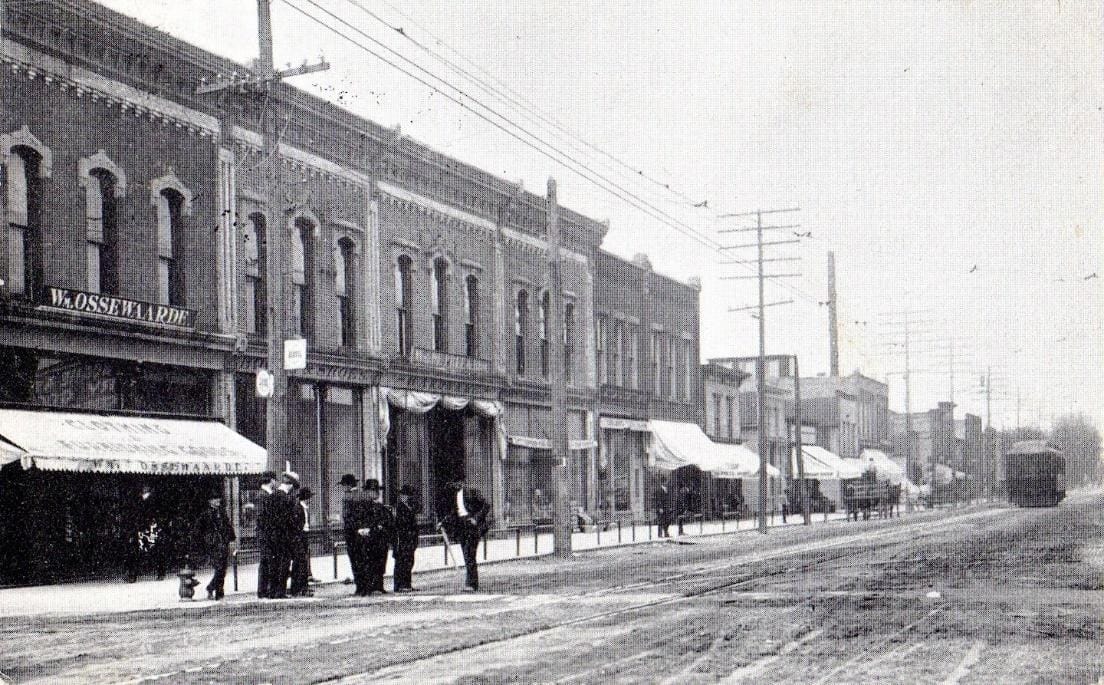
In 1908, John William, John Henry, Peter Henry, and E.J. Pruim incorporated the business as William DePree Co., contracted with John Veneklasen to build them a new building at 110 E. Main St., and consolidated their hardware and furniture lines there.
Then, in 1911, E.J. Pruim sold his share to open a music store, likely at 150 E. Main St. At the same time, the DePrees opened a branch store in Holland at 20 E. Eighth St. Then, in 1914, Peter Henry exchanged his share in the Zeeland business for ownership of the Holland business.
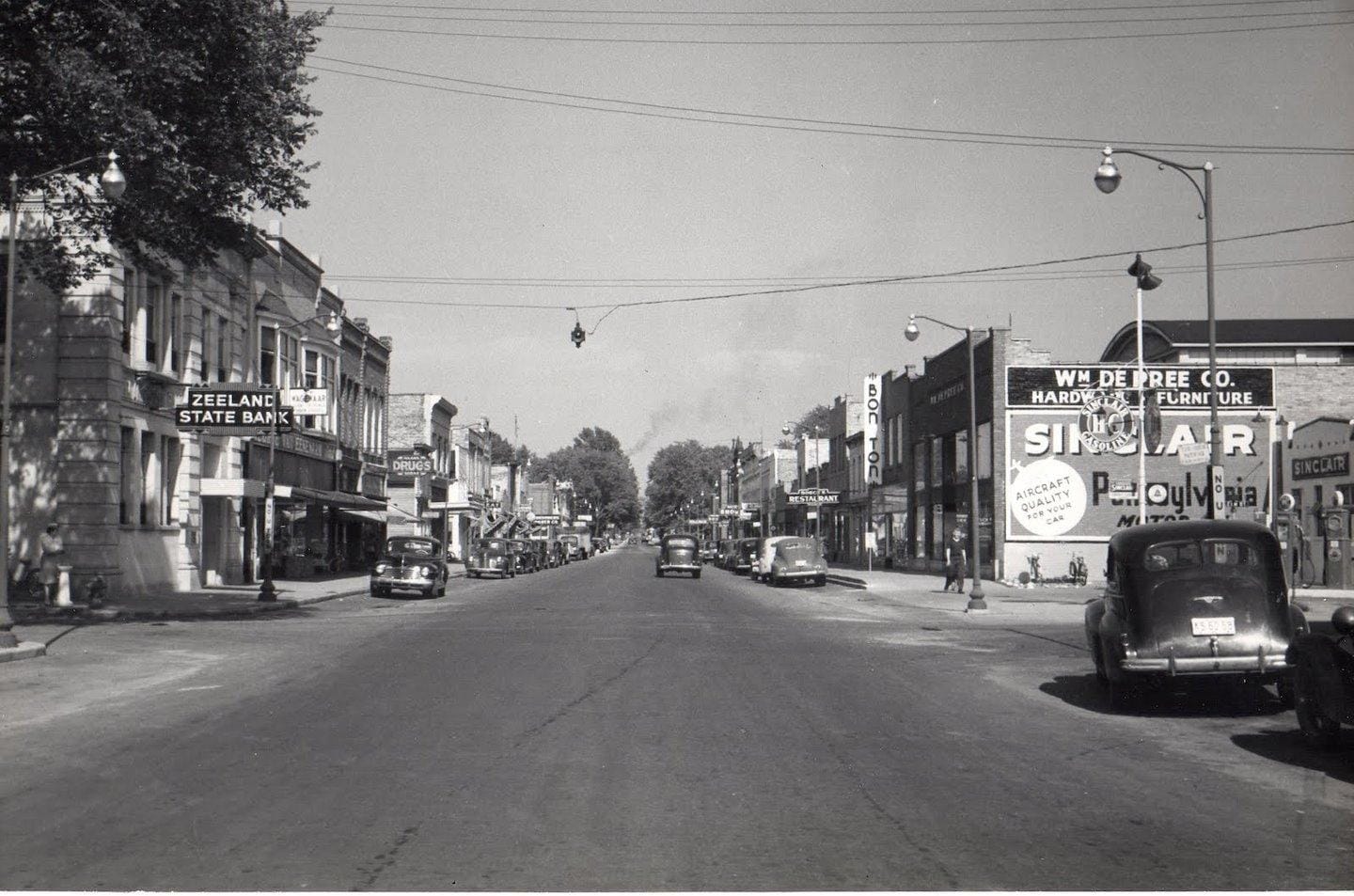
Unfortunately, in 1924, a fire destroyed the Zeeland store. In 1926, workers completed a new building at 110 E. Main St. (present-day Brummel’s Home Furnishings), modeled after the architecture of the post office John Henry had seen in St. Louis, including a dome-covered roof, windows on all sides, and a balcony on the second floor. The DePrees called their new building “The Daylight Store.”
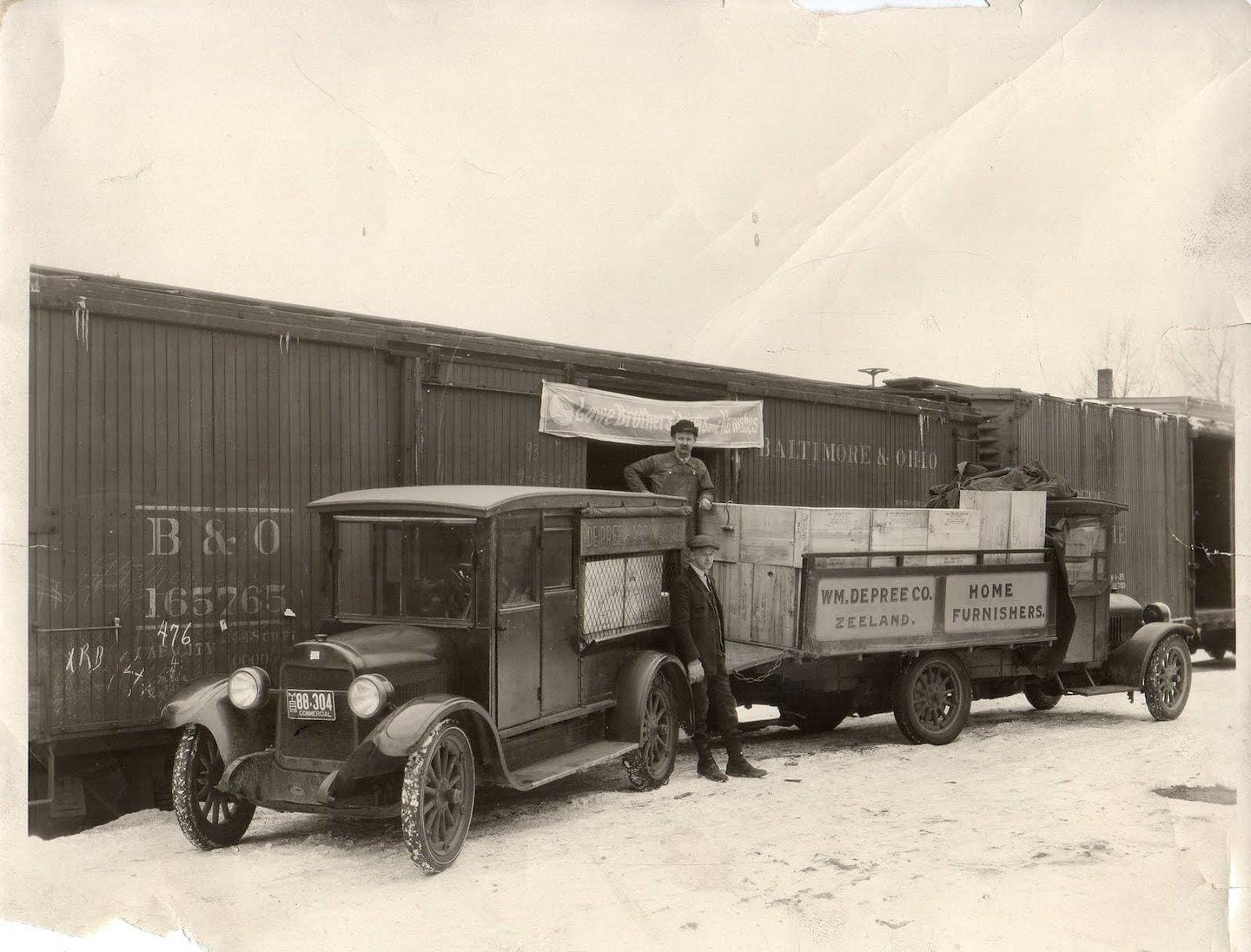
When William DePree died in 1929, he was the second-oldest hardware dealer in Michigan. After his death, his second son, James C. DePree, joined the business.
DePree Hardware in Holland lasted until about 1950; John Teerman purchased the business in 1951.
In 1963, A.C. Vanden Bosch, R. Den Herder, Nelson Van Koevering, and Randall Dekker purchased William DePree Co and renamed it DePree’s Inc.
In 1965, DePree’s Inc. leased the building to its east, formerly occupied by the Bon Ton apparel store, and used it for its hardware and paint business. In 1980, The Daylight Store became home to Brummels Home Furnishings.
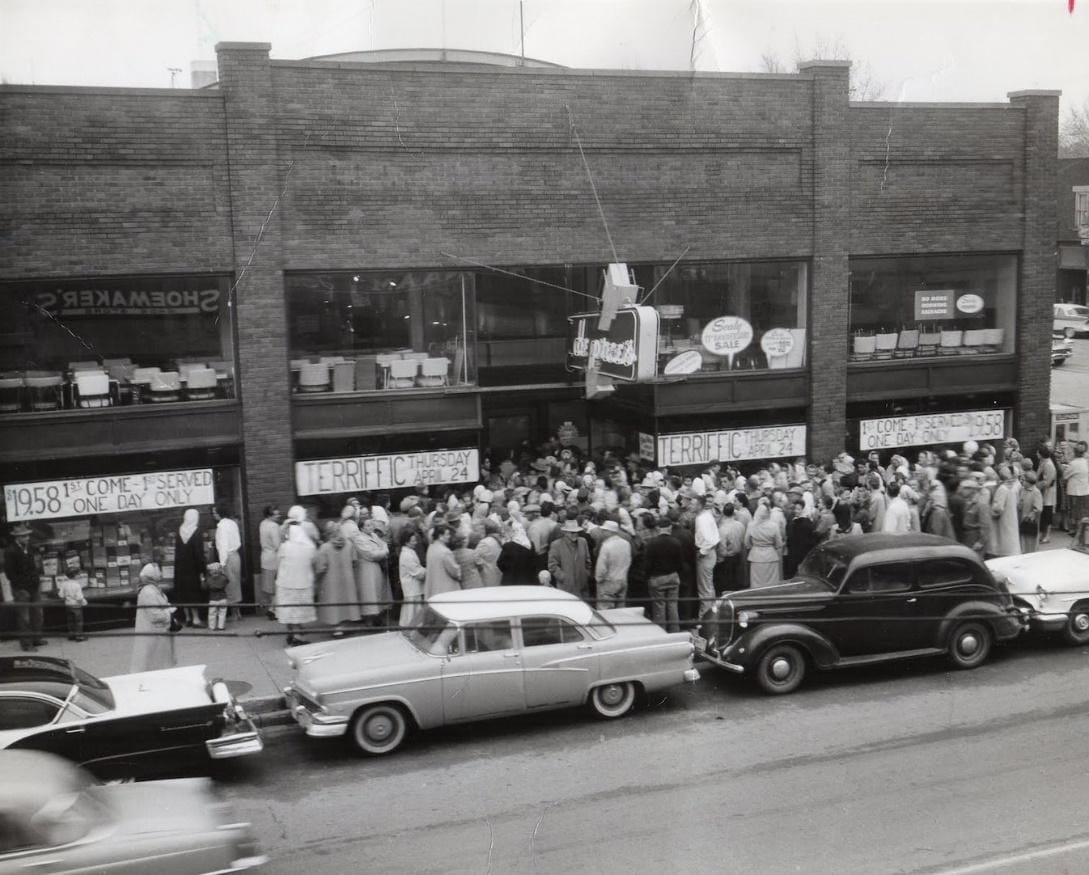
For many years, DePree’s Inc. was an extra special place to shop during the Christmas season. In the middle of the store was a very large real Christmas tree, reaching from the main floor to the ceiling.
In the basement was a Lionel train layout with tunnels and trees. There was also a Christmas fishing pond, in which kids would fish for bagged presents. What I remember most, when I was a child in the early 1960s, was the person dressed as “Frosty the Snowman” housed in an igloo-like shelter in the store.
Third Generation: DePree Chemical Co.
Meanwhile, Jan’s son Peter DePree became a minister. He married Mary Vander Meulen, who had also been born in the Netherlands. They moved to Pella, Iowa, and had two children there, including Cornelius (Con), born in 1870. Then the family moved to Vriesland, where six more children were born, including Jacob, born in 1873, and James, born in 1879.
(James’ story is noteworthy in itself: James lettered in football at the University of Michigan, then became the fifth head football coach at the University of Tennessee. He also started the school’s first basketball team and coached the baseball team.)
In 1893, Con DePree married Cornelia (“Kate”) Meeuwsen in 1893 in Grand Rapids, Michigan.
By 1900, Con DePree was working as a druggist in Holland. By 1906, he had opened his own drug store on the corner of Central Avenue and Eighth Street, where he invented a formaldehyde-based fumigator. Then, in 1907, Con recruited his brothers, Jacob and James, and his uncle Peter Henry, and Peter Henry’s son, Edward, as well as Gerrit Diekema, Holland’s most famous attorney, and Charles M. McLean, a local industrialist, to form DePree Chemical Co.
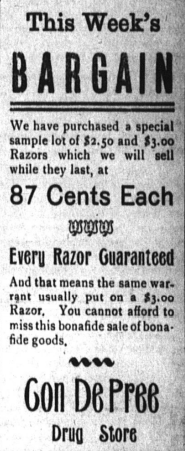
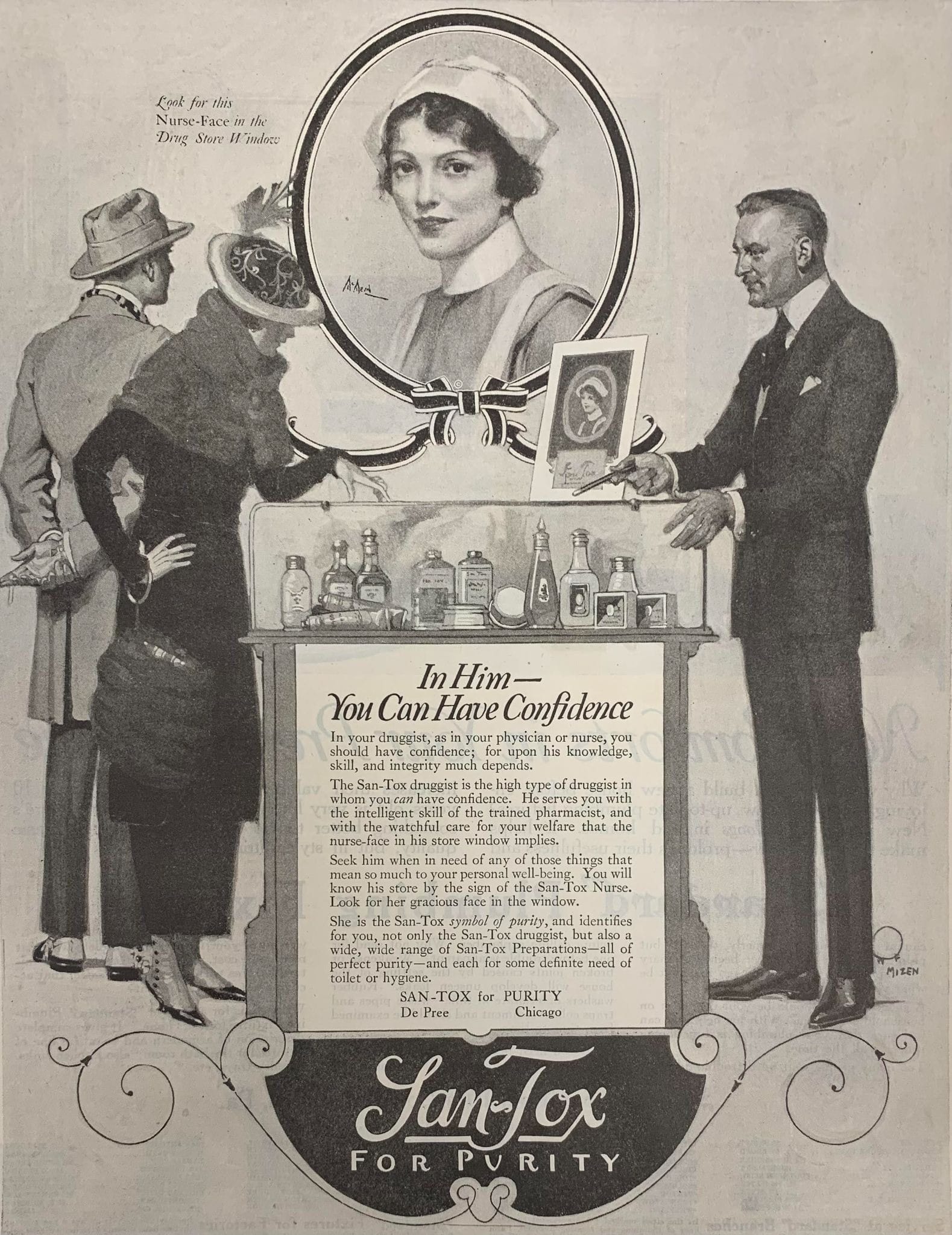
DePree Chemical Co. then built a three-story home for it on the corner of Sixth Street and Central Avenue. There, it introduced deodorizing products under the brand name San-Tox. By 1912, DePree Chemical Co. employed 15 traveling salesmen who called on druggists. It also opened a sales office in Chicago, led by Con’s brother, James.
In the 1920s, DePree Chemical Co. included a printing and paper box-making business as well as DePree Laboratories. Among DePree Laboratories chemists were James DePree and Gerrit John Van Zoeren. One of the products they experimented with was Arsphenamine, an antibody discovered during World War I to treat syphilis and other diseases. Later, James DePree developed a Vitamin B tablet made from wheat germ, which became a big seller under the brand name Wheatamin.
(Gerrit John Van Zoeren’s story is also noteworthy: In 1935, Van Zoeren co-founded, with Edward DePree, Chemical Specialties. Miles Laboratories purchased it with stock in 1947. In 1959, Van Zoeren gifted that stock — then worth $550,000 — or $6.3 million in today’s dollars — to Hope College to construct a library — present-day Van Zoeren Hall.)
In 1921, Con DePree sold land he had acquired from George Kollen — which once belonged to the C.L. King Basket Co. — to George’s widow Martha Diekema Kollen so that she could donate it to the City of Holland for a park in her husband’s honor. Today we know that land as Kollen Park.
In 1923, Con De Pree, Diekema, and others — including August Landwehr, co-founder of the Holland Furnace Co. — served on the board of the Holland Maid Company, an electric washing machine company. Initially, the company employed 200 men, ran 50 trucks, and sold through 28 branch offices. But the first machine was poorly designed and failed. So, in 1927, Holland Maid launched a new machine under a new brand name. Still, in 1929, the firm went out of business.
Con DePree was also one of the key community leaders who helped street evangelist Nellie Churchford turn her makeshift rescue ministry into a Holland institution. He did so by serving, along with August Landwehr, as a trustee when it acquired property at 178 Central Avenue. He also chaired a citizens’ committee to raise $25,000 — $480,000 in today’s dollars — toward construction of a permanent mission building, which was dedicated in 1927. Unfortunately, to complete the building, the mission took out a mortgage, which it defaulted on during the Great Depression.
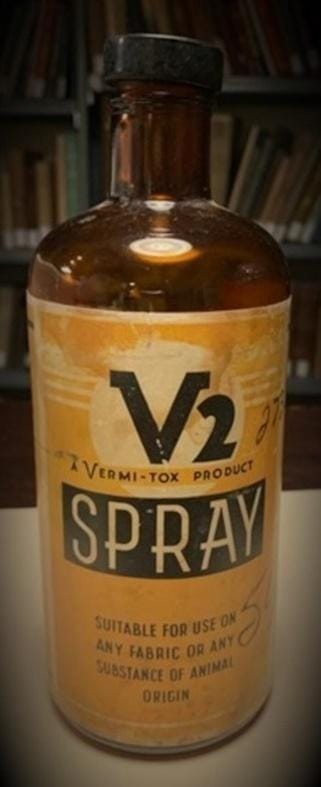
The Great Depression also brought bankruptcy in 1933 to the DePree Chemical Company. However, it re-emerged with Willis Diekema, Gerrit Diekema’s son, as president. One of its successful products was an insecticide called Vermi-Tox.
In the late 1930s, the DePree Chemical Co. reintroduced San-Tox as Nurse Brand, a line of toiletries. In the 1950s, it introduced chlorophyll, a deodorant tablet, which got a boost when Zeeland native Paul DeKruif wrote about it in "Reader's Digest."
In 1977, the Chattem Drug Co. bought the business. But the DePree Chemical Co. building still stands at 130 Central Ave.
— Information for this story comes from Robert Swierenga’s “Holland Michigan,” Adrian Van Koevering’s “Legends of the Dutch,” Randall Dekker’s “Main Street Memoir,” “The Zeelander” (May 22, 1978), “The Zeeland Record” archives, the Holland-Zeeland City Directories, the “Borculo, Michigan” blog; and “The History Project,” and Find a Grave.


