

The Business Next Door: Surviving Against the Billion-Dollar Majors: The Trendway story: Part 1
In 1973, Don Heeringa joined his family to rescue Trendway Corp, a failing office partition maker. By overcoming severe financial hurdles and acquiring a key Haworth product line, the Heeringas transformed the struggling company into a rapidly growing, highly profitable business.


In 1973, George Heeringa purchased a struggling Trendway Corp. and recruited his sons, Jim and Don, to run the company. Jim exited the business in 1995. Don continued until 2019, when Trendway was sold to Fellowes Brands.
In the 1980s and 1990s, Trendway grew at an astonishing average annual rate of 24%, and Michigan Business Magazine recognized it three times as one of the state’s “100 fastest-growing privately held businesses.” In addition, Don Heeringa was named the Michigan Small Businessperson of the Year in 1983 and was inducted into the Junior Achievement of West Michigan Business Hall of Fame in 2014.
More interesting, however, is why these results and accolades occurred.
Don’s story and the history of Trendway are documented in the book "Surviving the Billion-Dollar Majors," available at Reader’s World in downtown Holland. Here is an abridged version in three parts.
This is Part 1: The Call.
Beginnings
Seeking to build a better fire- and sound-resistant floor-to-ceiling office partition, Justin “Jud” Busscher founded Trendway Corp. After working at Chris-Craft, Holland Furniture, Modern Partitions (present-day Haworth), and Uniline, he gathered 100 investors in 1968 — many from his church — to launch his venture.
His first office was in the back of a dress shop; his second was in a house trailer. His first product, Trendwall, was made of gypsum. His first factory occupied 24,000 square feet at the southeast corner of Quincy Street and 136th Avenue, on 10 acres of land Busscher bought from his plant technician, Irwin Deur.
Unfortunately, Busscher died in 1970. In his absence, the tiny company languished.
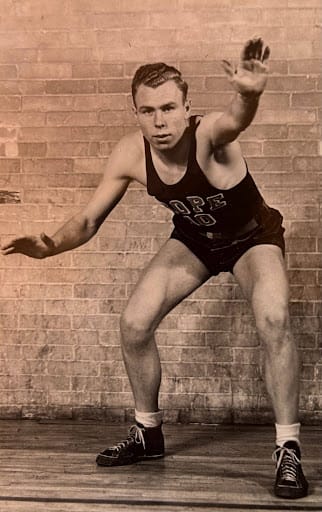
In 1973, George Heeringa, former president of Hart & Cooley and CEO of its holding company, bought Trendway with his retirement savings, even though he knew nothing about office panels and “couldn’t change a lightbulb.” He recruited his sons, Jim and Don, to join him in the newly acquired business.
Don eventually became Trendway’s president and primary owner. Here, from his perspective, is the rest of the Trendway story. But to better understand Don, we begin with his roots.
Roots
The Heeringa family tree is connected to Hope College because that is where Jim and Don’s parents, George and Lucile Ver Schure Heeringa, met.
Before enrolling at Hope, George attended Grand Rapids Junior College. At Hope, given his agility and 6-foot-3.5-inch stature, George excelled at basketball, football, and tennis.
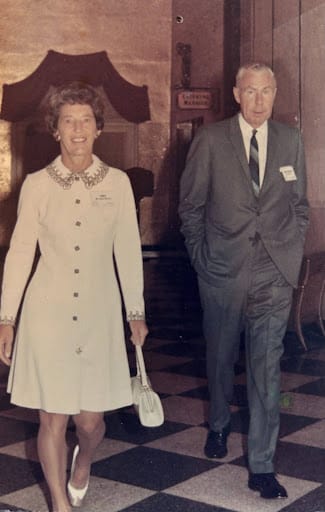
Lucile attended Hope against the wishes of her father, who thought a college education would be wasted on his daughter because of her gender. Undaunted, she walked to school. Because she attended during the Great Depression, the opportunity cost compared to the alternative — such as helping meet the family’s subsistence needs on her father’s factory salary — was significant.
After graduation, Lucile accepted a teaching job at New Groningen School, 2 miles east of Holland on the west side of Zeeland. George accepted a job as a clerk at Hart & Cooley, a maker of warm-air registers located near the eastern border of the Hope College campus.
George and Lucile married in 1939. Their first home was at 35 W. 21st St., just two-tenths of a mile from Lucile’s parents’ home. After Japan’s attack on Pearl Harbor brought America fully into World War II, many young men joined or were drafted into the military. Because Hart & Cooley had shifted into war production to make 60 mm mortar shell casings, the federal government granted George an occupational deferment.
George and Lucile’s son, Jim, was born in 1943; their son, Don, was born in 1946.
As was typical for the era, while George spent long days at Hart & Cooley, Lucile stayed home to raise the children. Because George easily connected with people, he found quick success in sales.
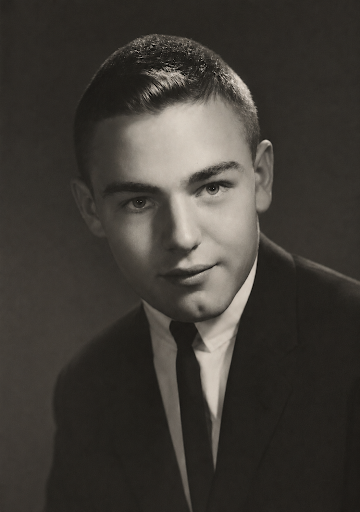
Soon the family moved to 541 Lawn Ave. on the north side of Holland, where Don attended Beechwood School on Howard Avenue, across from the former Pfizer chemical plant. Driven by his leadership skills, George continued climbing Hart & Cooley’s management ladder.
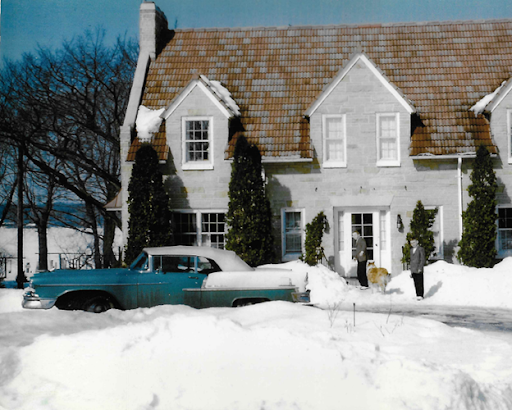
In 1956, the Heeringa family moved to 879 Southshore Drive on Lake Macatawa, and Don attended Lakeview School at the northwest corner of Lugers Road and 32nd Avenue. In 1959, George became president of Hart & Cooley and later chairman of its holding company.
Holland High School
Both Jim and Don attended E.E. Fell Junior High School (now Midtown Village) on River Avenue between 16th and 17th streets, followed by Holland High School (now Midtown Center).
While at E.E. Fell, Don often walked the half-mile to his grandparents’ house for lunch, which was their main meal of the day.
When Don entered 10th grade, his class transferred to the newly built Holland High School facility at Van Raalte Avenue and 22nd Street. By then, aware of what his father did at Hart & Cooley, Jim knew he wanted a career in sales. Don had different interests.
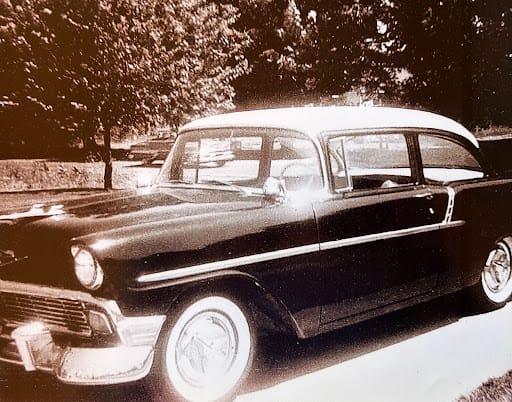
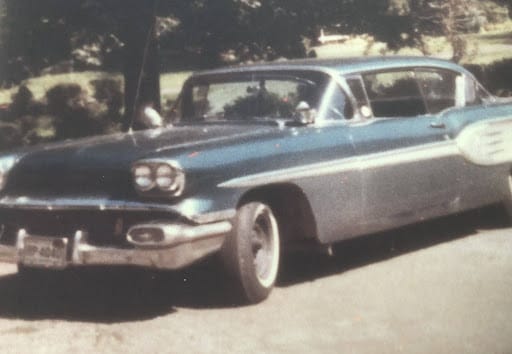
From an early age, Don was fascinated by cars. In high school, he bought a 1949 Plymouth two-door coupe, later upgrading to a 1956 Chevy with a big motor. His plan was to keep a car for a year or two before getting something else. That opportunity came when he ran into a driver at a gas station who had a 1958 Pontiac two-door hardtop.
According to Don, the driver looked at his Chevy and said:
"I'll tell you what. You drive my car tonight, and I'll take your car for the night. We'll drive them around and see if we like them. Then maybe we’ll make a deal."
Not only did Butch Tanis and Don make a deal, but they also became lifelong friends.
At Holland High School, Don played football as an offensive and defensive lineman. While Don played guard, his friend Dick Martin — who weighed 200 pounds in eighth grade — played tackle. "He was a good guy to have next to you," Don recalls. In their senior year, the team posted an 8-1 record.
Don remembers those days fondly:
"I enjoyed it. It was fun. I enjoyed physical training, and we had a great coach, Tom Carey. He was our JV coach in 10th grade, and when the head coach moved on, he took over. So we had the same coach from 10th through 12th grade."
In addition to playing football, Don and Dick wrestled. Getting the program started took work. First, they asked Holland High Athletic Director Joe Moran to launch a wrestling program. At first, Moran asked, "Is there enough interest?" The boys convinced him that students would join if he started one, and they were right: Holland High's wrestling program continues today.
Holland Hitch
Don’s first summer job was at Holland Hitch, a unionized manufacturer of fifth-wheel assemblies for semi-trailers. Don worked the night shift in maintenance and machining. At 16, one of his tasks was to pull light fixtures down from the ceiling, wash the bulbs, and push them back up. Although he got filthy doing the work, he learned a lesson during those seven years that served him throughout his life.
William Beebe, a Heeringa family friend, ran the company. Beebe’s father-in-law, Henry Geerds — a celebrated World War II veteran and entrepreneur — had bought the business after the war alongside co-owner Henry Ketel, inventor of the pintle hook mechanism for coupling trailers. Although Beebe was a sharp businessman, he stayed out of the factory floor, which earned him a reputation among union machinists.
Don recalls a conversation with one operator who said, "That Beebe, he’s an S.O.B." When Don asked, "Have you ever met him?" the veteran operator answered, "No." That experience taught Don a fundamental rule of management: If people don’t see you, they don't know you. Always manage by walking around.
Arizona and the Army
When Don graduated from Holland High School in 1964, his parents and their friends expected him to attend Hope College. Don had other ideas.
He first enrolled at Ferris State College to play football, but after a 0-9 season, his interest in both football and Ferris waned. He returned home and announced he wouldn't be going back, though he had no backup plan.
During spring break, Don visited Butch Tanis at a prep school in Scottsdale, Arizona. While there, Don toured Arizona State University (ASU). Compared to the weather in Michigan, Arizona felt like paradise. He filled out an application on the spot, and an acceptance letter arrived on his birthday after he returned home. Concluding that ASU was his destiny, Don sacrificed a semester of course credits to transfer.
While at ASU, the draft board reached out: "We'll let you finish college if you want, but be ready to go when you graduate."
Don stayed in college for five years, graduating in June 1969 with a business administration degree concentrated in industrial management. Soon after, the draft board put him on a bus to Fort Wayne in Detroit, followed by Fort Knox, Kentucky, for six weeks of basic training.
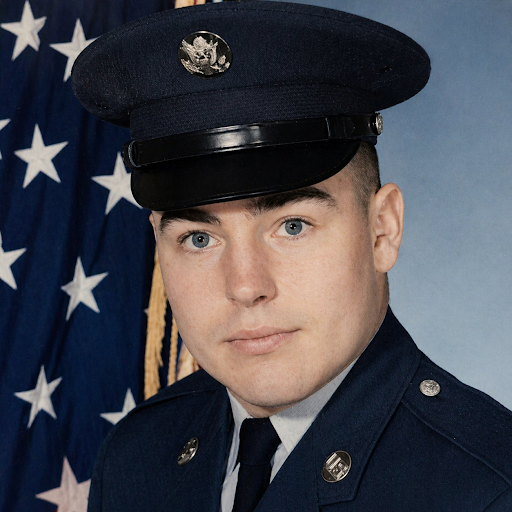
After a week of sleeping in barracks with 50 men, Don volunteered for a job he didn't particularly want because it offered a private room. One day, recruits lined up to count off as ones and twos. Don counted one. When the twos were ordered to step forward, they were welcomed into the U.S. Marine Corps. Don felt fortunate to be in the other line.
He was then transferred to Fort Eustis, Virginia, expecting to train as a helicopter mechanic. His captain had other plans.
Don recalls:
"I joined about 200 men in the early morning hours inside a big tent. Without warning, they called my name. Everyone stared as I walked forward to meet the captain. He said he was empowered to ask if I wanted to be a transport clerk instead of a helicopter mechanic. Being a car guy, I said, 'I'm not so sure.' He stood up and asked, 'Do you know where you're going?' Vietnam, I knew. Then he said, 'I f—ing guarantee it. Do you know what you’ll do when you get there?' I said, 'Fix helicopters.' He said, 'No, you'll be a door gunner for 90 days with a 31-day life expectancy. Now, what's your answer?' I responded, 'I've been waiting to be a transport clerk all my life.' He said, 'I thought you'd see the light.'"
Don was stationed in Germany for two years. After being discharged from the Army, he returned home to Holland — though not for long.
He recalls:
"After the 13th person asked me, 'What are you going to do now?' I felt like I needed an answer. I had no plans and was just happy to be out of the service. I thought, 'I have to get out of here,' so I decided to leave town."
Don returned to Arizona, enrolled in graduate school, and began looking for part-time work. Through mutual connections, he found a job in Scottsdale real estate.
An opportunity arrived when Don was assigned the next walk-in prospect. The client was ready to buy and interested in a newly listed home once owned by actor Errol Flynn. Don showed the home, the client made an acceptable offer, and the deal closed. Don earned a $17,000 commission — a massive sum at the time. Accustomed to earning $250 a month in the military, Don declared, "I’m a millionaire!" To celebrate, he took a friend and his wife to Las Vegas.
Meanwhile, Don’s brother Jim had taken a sales job in California.
Then came "the call."
Trendway
By 1970, George Heeringa was contemplating retirement. In his role as CEO of Hart & Cooley’s holding company, George served on the board of trustees for Old Kent Bank. The bank had extended loans to Trendway, which was facing default without Jud Busscher.
George wanted to buy the struggling enterprise and bring his sons back to Holland to run it. He called Don to ask for his advice on the business.
Don recalls:
"He asked me to come back and take a look. I had no business experience, and my dad was president and CEO of a large industrial company asking for my advice on buying a manufacturer! So in 1970, I returned to Holland.

But I was on my own. My father didn't ask me anything for a week, so I started asking questions. People either gave me the line or didn't know the answers. But the receptionist behind the glass seemed to know everything.
Don discovered Trendway had 13 employees, two dealers, and no active orders. When he contacted vendors, their response was simple: "Pay up!"
Don remembers what happened next: "On Friday night, I went to my parents’ house and told my father, 'Dad, this is a barrel of snakes.'" Upon learning that auditors at Seidman & Seidman had reached the same conclusion, Don assumed his job was finished and returned to Arizona.
A few days later, his father called again: "I think I’m going to buy the company. If I do, I want you and Jim to run it."
Don remembers:
"I called Jim, who was working in California as West Coast sales manager for BASF, and said, 'If I’m going to put up with this crap, so are you!'"
At age 59, George became Trendway’s president. Jim, 30, became vice president of sales, and Don, 27, became vice president of manufacturing. At the time, Trendway generated $400,000 in sales and zero profit.
After six months under new ownership, only half of the original 13 employees remained. The receptionist — Marlene Serne DeKoeyer — moved into human resources, where she stayed for 35 years.
Still, Trendway continued losing money.
Don recalls the weekly effort to meet payroll:
"During that first year, my brother and I would eat lunch on Fridays at the Holland Elks Club downtown. Afterward, we'd check our post office box for checks. If there weren't any, we'd head to the bank and borrow money to cover payroll. That went on for a year."
Don worked six days a week. Because Trendway owed money to suppliers, he spent significant time managing fires in the purchasing department.
Through it all, Don kept one of George’s favorite sayings in mind: "Keep sawing wood." Eventually, Trendway received an unexpected order, followed by a dealer inquiry. In their second year of ownership, the Heeringas broke even. In year three, they turned a profit.
That third year brought another major breakthrough. Gerry Haworth, who attended Hope Church with Don’s parents, called George with a proposal.
According to Don:
"Gerry said, 'We’re putting all our money into open offices. We have a floor-to-ceiling product line — would you like to buy it?' We thought, 'They have accounts everywhere that we don't.'"
Trendway purchased Modern Partitions’ floor-to-ceiling panel business right before Modern Partitions changed its name to Haworth.
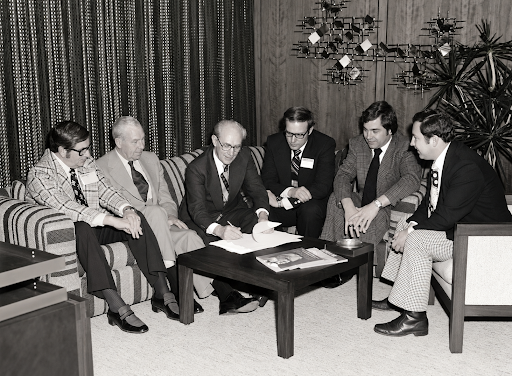
The transaction benefited both companies. Haworth received cash to finance its new ERA-1 pre-wired panel system, Living Hinge connector, and corporate rebrand. Trendway acquired a floor-to-ceiling panel line, new clients, and a backlog of orders. The terms were ideal: Haworth agreed to let Trendway pay a 2% royalty on total sales quarterly over five years. Deferred costs allowed Trendway to fund the first of many expansions at its Quincy Street plant.
In 1977, Trendway held an anniversary celebration. Don invited Jud Busscher’s widow and daughter to the dinner. As it turned out, Jud’s daughter was married to someone Don had known since grade school.
— Steve VanderVeen ("dr v") is a biographer, educator, and learner, discovering history and developing future entrepreneurs. See start-upacademeinc.com.


