

Tribal, community partnership drives affordable housing project in Holland at 2 locations
Construction is underway on a mixed-income housing project in Holland that aims to expand access for renters, including tribal citizens and their descendants.

HOLLAND — Construction is underway on a mixed-income housing project in Holland that aims to expand access for renters, including tribal citizens and their descendants.
Spread across two locations in downtown Holland, the development will total 52 units of mixed-income rental housing. The project’s Kollen Park location at 345 W. 14th St. will have 38 units, while the Hope Church development at 100 W. 10th St. will include 14 units.
A portion of the living spaces will support adults with disabilities through the 811 Voucher Program, while 11 units will be reserved for community members of the Little River Band of Ottawa Indians.
The project is a partnership between Dwelling Place, Community Action House, Hope Church, Housing Next, the City of Holland, the LRBOI, Little River Holdings and Orion Construction. Developers say they aim to honor the region’s natural beauty and heritage, as well as foster inclusive and equitable rental opportunities.
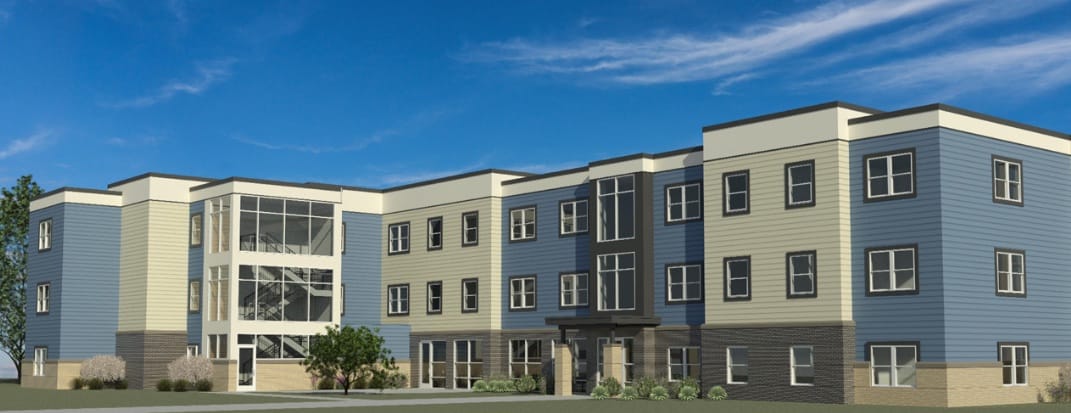
Construction on the two sites is expected in phases, with both buildings anticipated to be completed in January or February 2027. Pre-leasing is set to open this summer.
Katy Russner-Travis is the director of communications for Community Action House, a Holland-based nonprofit dedicated to ending poverty and providing essential services for West Michigan residents. Russner-Travis noted that the development is a years-long project based on a growing need for affordable housing in Ottawa County.
She said that last year, Community Action House’s Outreach & Housing Access Team provided support and case management to more than 400 unhoused individuals.
Russner-Travis explained that by collaborating with nonprofits, local government and corporate stakeholders, the project has the potential for greater long-term impact in the community. She added that the development’s footprint was able to expand through the acquisition of adjacent, city-owned property.
“The location was selected not only because land was available, but because it represented an opportunity to transform underutilized property into housing that directly responds to one of the community’s most urgent needs,” Russner-Travis said.
The project will feature units at 80% area median income and below, including levels of affordability under 60% AMI. This range was shaped through housing data and community need assessments, which project that Ottawa County will need nearly 4,000 additional rental units by 2029 to meet demand, with more than half needed at the most affordable price points.
Russner-Travis added that the development’s AMI mix reflects a housing gap that currently exists in Holland, comprising many working households employed in the healthcare, education, manufacturing, retail, hospitality and service industries.
“Many individuals and families in our community earn too much to qualify for deeply subsidized housing programs, but still cannot afford rising market-rate rents,” Russner-Travis said. “This mixed-income approach is better for residents, more sustainable for the building and well-suited to our community where a broad range of household incomes struggle with affordability.”
Across the United States, Native Americans systemically face housing challenges, and Ottawa County is no exception.
According to the National Alliance to End Homelessness, Native people experience the second-highest rate of homelessness in the U.S. due to the compounded effects of economic instability from forced displacement, housing shortages on tribal lands and the limited understanding of Indigenous cultures within shelters and social services.
Brittney Drake, senior vice president of economic development for Little River Holdings, the LRBOI’s independent, economic development arm, said housing challenges for tribal citizens in West Michigan are similar to those of other communities, but are often more acute.
“For our tribal members, there can be a geographic challenge — finding housing near employment centers, family and tribal services,” Drake said. “That’s why expanding access to quality housing in regions like Ottawa County is so important.”
By growing a portfolio of businesses and investments that create long-term economic stability for the LRBOI, Little River Holdings aims to improve the quality of life for tribal citizens and the broader community.
Little River Holdings has previously been involved in the creation of West Michigan developments with the objective of expanding tribal citizens’ housing options, while also strengthening regional relationships.

Drake said the Kollen Park-Hope development stood out to Little River Holdings because the project reflects the needs of a high-demand area and recognizes the importance of tribal participation and access in housing.
“This project really represents how we are thinking about the future, partnering regionally and investing strategically in making sure our tribal members have access to the same opportunities as the communities around them,” said Drake.
To those involved in the Kollen Park-Hope development, the collaboration has the potential to demonstrate what can be achieved by coming together for change.
“We hope this project demonstrates what’s possible when nonprofits, faith communities, developers, local government and community partners work together to address complex challenges,” said Russner-Travis.
— Contact ONN reporter Hailey Hentz at hhentz@ottawanewsnetwork.org.


