

Trump speech slammed for stoking voter fears as Ottawa County clerk assures integrity
Amid ongoing national debates over election infrastructure and foreign interference claims, Ottawa County Clerk Justin Roebuck continues to assure local residents that elections in Ottawa County and across Michigan are secure, transparent, and fair.

OTTAWA COUNTY — Amid ongoing national debates over election infrastructure and foreign interference claims, Ottawa County Clerk Justin Roebuck continues to assure local residents that elections in Ottawa County and across Michigan are secure, transparent, and fair.
Roebuck, who serves as the county's chief election official overseeing 23 cities and townships, emphasizes that rigorous safeguard protocols — including bipartisan election inspectors, paper ballots, post-election audits, and strict physical and digital security controls — ensure every legitimate vote is accurately counted.
"Fundamentally, I really believe that we are operating in a way with much the same integrity, the same rules in place, and our voters can be confident, as we move into this election cycle, that we're doing things in the same bipartisan, transparent way that we always have," Roebuck told ONN earlier this year.
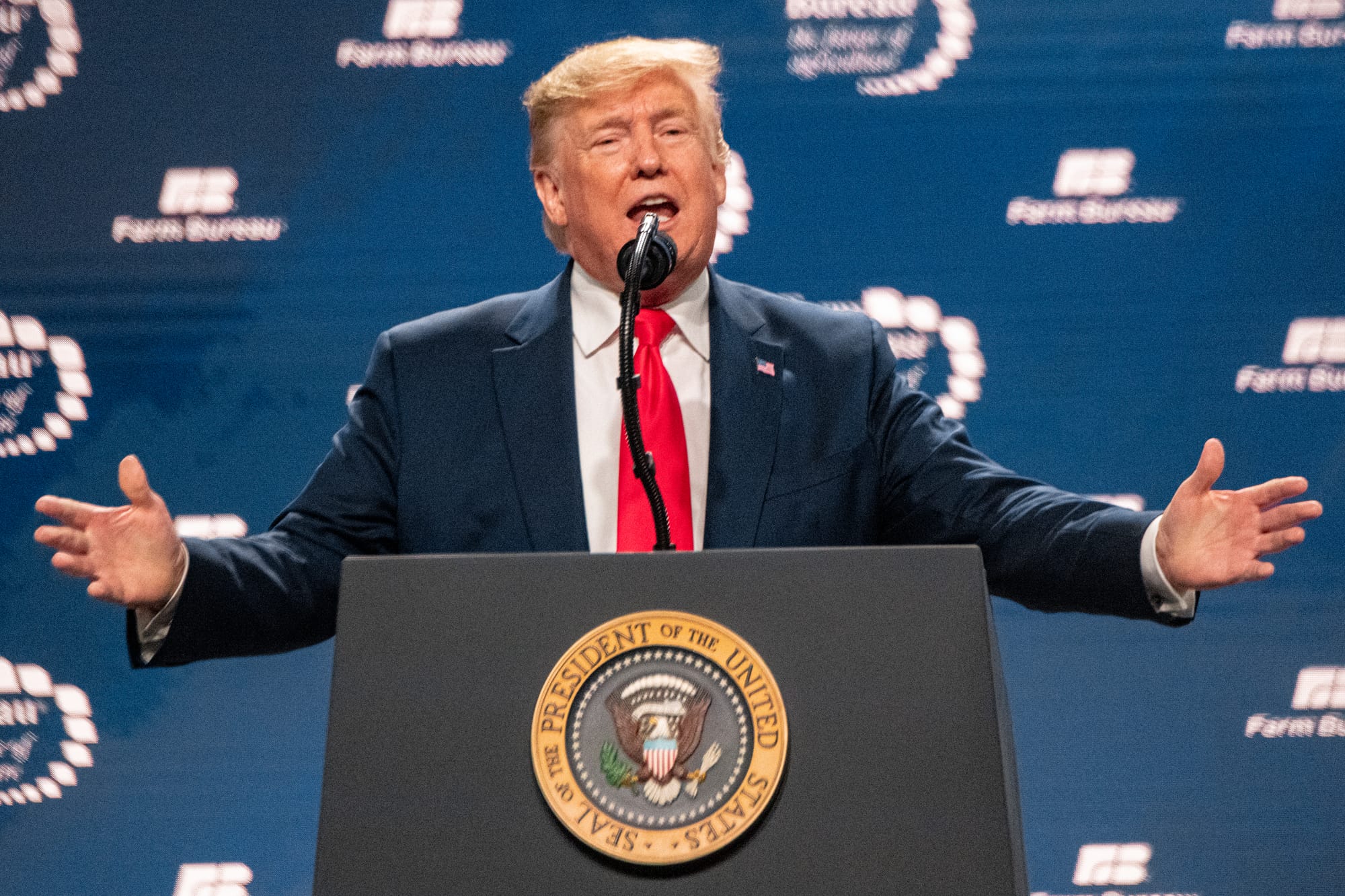
Trump questions election integrity
President Donald J. Trump on Thursday said the nation’s election infrastructure is vulnerable to cyberattacks by foreign actors during a primetime address, citing a batch of documents he declassified — but providing no proof broad interference actually occurred or affected an election outcome.
Democrats and advocates quickly criticized the remarks as another attempt by Trump to give Republicans an advantage in crucial midterm elections and sow distrust of results, following his firing of members of the Election Assistance Commission, demands by his administration for state voter rolls, an executive order limiting mail-in ballots and more.
Russia, China, Iran, North Korea and some non-state groups “have the capability to compromise U.S. election infrastructure,” Trump said, quoting one of the documents, which were compiled by White House and intelligence community staff. The document said its authors did not know if any adversaries planned to interfere in elections.
Trump claimed that voter rolls in at least 18 states were “bought, stolen, or hacked by China” ahead of the 2020 election. The attempted methods of interference, he said, ranged from influencing voters to trying to produce fake ballots in favor of Democratic nominee Joe Biden.
Standing behind a lectern at the White House, Trump said during the 2020 election, the People’s Republic of China carried out the “largest compromise of election data in history,” and said varyingly that China had illicitly accessed tens of millions or up to 220 million voters’ personal data.
“Our purpose in disclosing this information is not to weaken confidence in (elections), but to earn that confidence by confronting vulnerabilities and correcting them very, very quickly,” he said. “And that’s what we’re doing.”
Trump announced he was immediately declassifying five sets of documents that he said proved foreign interference in the election and 2018 midterms, as well as “shocking vulnerabilities in our election infrastructure.”
“Just as disturbingly, this vital information has, for many years, been covered up and hidden from you, the American people,” he said.
He claimed that the election vulnerabilities were known by members of the “deep state” who included top members of the intelligence community and worked to hide “the extent of China’s sinister election meddling,” including while he was president prior to and during the 2020 election.
He further accused Biden’s Department of Justice of killing any investigation into the matter and preventing its disclosure.
The documents were posted on whitehouse.gov July 16.
Trump also said the vulnerabilities were another reason to pass the SAVE America Act, a bill that in its various versions would restrict voter access by adding requirements to register and cast ballots, including photo IDs. The bill, which is stalled in the U.S. Senate, does not include funding for election security infrastructure.
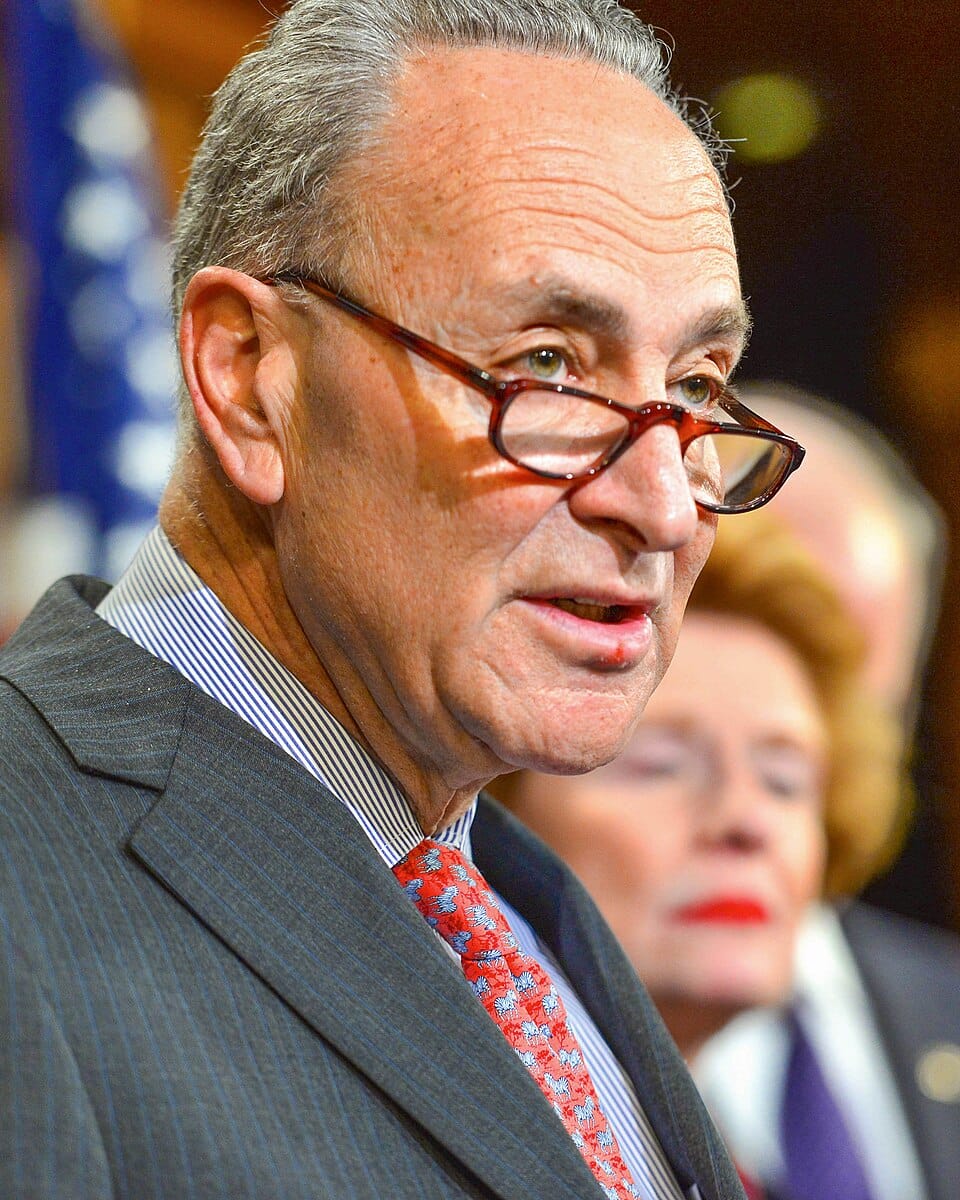
Democrats: Speech meant to undermine midterms
Many Democrats, including Senate Minority Leader Chuck Schumer, said the remarks were not about the 2020 cycle, but were ultimately meant to undermine confidence ahead of this year’s midterms.
“Trump knows he has lost American families,” Schumer said in a statement following the address. “He knows he has made their lives more expensive, endangered their friends and families with an unnecessary war, and embarrassed the country on the global stage. And rather than pivot his policies, he is working to rig the midterms before a single vote has even been cast. We won’t let him.”
Former vice president and 2024 Democratic presidential nominee Kamala Harris wrote shortly before Trump’s speech that he wanted the American people to believe their vote does not matter.
“He wants you to lose confidence in our electoral system so you stay home this November,” she wrote on X. “He knows how discontent the American people are, and he wants to make sure that you do not vote.”
Election forecasters say the most likely result of the midterms is that the GOP retains control of the U.S. Senate and Democrats gain a majority in the House.
Michigan officials also downplayed Trump's speech, saying questioning election integrity is a strategy to discourage voters from casting ballots.
“The president has now spent an entire decade trying to convince you that our elections are unsecure and illegitimate. He is now just doing it from the most visible stage in the world: the White House," said Michigan Attorney General Dana Nessel. "He once again wants to distract you from his low approval ratings, skyrocketing costs and forever war with Iran by asking you to ignore the fact that he won in 2024 and focus solely on the 2020 election that he still refuses to admit he lost."
“Whether it’s unlawful executive orders, baseless demand letters for private voter information or the President’s continuous misinformation campaign, my office stands ready to fight back against this administration’s attempt to strip states of their constitutional right to administer our elections," Nessel said.
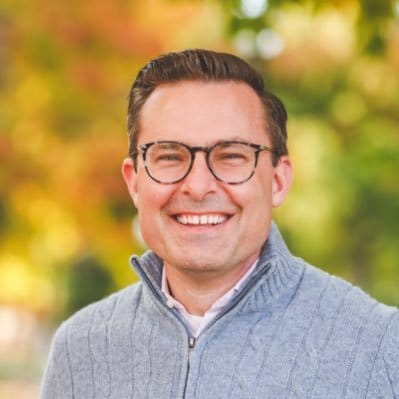
Roebuck: Local elections are secure
Closer to home, Roebuck said he and his staff don't get caught up in the national posturing.
"I'm not worried about the rhetoric — there's always going to be some," he said. "There's always going to be ways we can improve, and we want to be seeking that out and looking for that and working toward that. But I think there's also elements of our politics right now where politicians stand to gain from causing people to fear, and we're in that cycle of rhetoric right now, and I'm not worried about it."
Roebuck said his department continuously trains for all eventualities.
"It's important to talk about how elections are run by professionals," he said. "We actually don't wake up on the morning of Election Day and say, 'Let's have an election.' There are multiple layers of training, whether that looks like five-plus hours of training that volunteers take, not volunteers technically, because they are paid."
That training is ongoing year-round, whether it's to keep up with new federal or state legislation or to familiarize new staff with evolving best practices.
"We work really hard and care incredibly about getting this right, and I think that's hopefully something that can give our voters confidence in the process," Roebuck said.
That doesn't mean that problems don't arise from time to time.
"I think we always are going to have challenges ... there's a lot of uncertainty and a lot of rhetoric happening, particularly at the national level, whether it's citizenship voting or the continued rhetoric of elections not being well-run, and conversations about the federal government overstepping its bounds," Roebuck said.
Despite those challenges, however, Roebuck assured county residents that Ottawa elections are secure.
"I really am confident that we're going to continue moving forward with what we've been doing and do it successfully," he said. "I'm really positive. ... I really want to make sure that we're getting effective communication to our voters, that people can feel confident about what we're doing and how we're doing it, and making sure we're going to be really transparent."
Early voting center expanded
Roebuck and his staff also have been hard at work implementing in-person early voting, which was approved by voters in 2022 with Proposal 2, a constitutional amendment that guarantees a minimum requirement of nine consecutive days of early voting before statewide and federal elections.
The first election that enacted early voting was Feb. 27, 2024, which helped the county clerk's office learn what local voters needed.
"Right after the election cycle ended in 2024, as we looked at the data and we looked at the lines in November at the four early voting sites, we kind of recognized the fact that we ultimately need to open up more early voting options for more people," Roebuck said.
That evolution of planning has expanded the county's number of early voting sites from four in 2024 to 16 in 2026, with collaborative agreements between the county and local units of government.
"We ultimately looked at the data and recognized that in counties where the sites were administered by the local clerks and were more in the communities and more community-centric, the turnout was better by percentage by far," Roebuck said.
Another challenge that having more sites solved was reducing the wait time for voters to cast their ballots.
"So, even though we ran almost 34,000 voters through early voting sites in November 2024, and it was great, we also had lines. We had significant lines every day," Roebuck said. "We were ultimately inhibiting some of that turnout because our sites just couldn't handle the lines, and our voters were amazing — almost all very positive as they're standing in line — but ... I don't want to stand in the way."
It also was cost-effective for the county to partner with local government, he said.
"As we looked at that data, we recognized that the alternative would be for the county to continue trying to manage this, and then hiring additional staff to manage additional sites, and then charging locals more — or just letting locals do what they do really well, which is manage Election Day. They know what they're doing," Roebuck said.
@ottawacountymi Ottawa Out Loud Ep. 23: Democracy in Action with Elections FULL EPISODE We're joined once again by our Clerk/Register of Deeds Justin Roebuck and Election Supervisor Katie Bard for a great conversation on the upcoming midterm primary (August 4th) and general election (November 3rd). We talk all about: •Why Michigan has such a late primary compared to other states •The absentee voting process and what to do if you've already cast a ballot for a candidate who drops out of the race •Changes to early voting this year •The merit of speaking Minionese •Who makes a better Dark Lord-- Sauron or Voldemort and much, much more! Visit miOttawa.org/elections to learn more about how the democratic process is carried out at the county level, and contact our office at elections@miottawa.org for any additional questions. #podcast #election #government #ottawacounty ♬ original sound - Ottawa County, MI
Questions, concerns are normal
One thing Roebuck wanted to stress to residents is that it's natural to have questions about how elections work, especially in a time when so much of the process is being updated or criticized.
"Elections are a human process, and that means that we have to have checks and balances in place. Multiple layers of checks and balances are so critical because it's not that we're never going to make a mistake; it's that we're going to have the processes in place to catch mistakes and ensure accuracy and integrity," he said. "Ultimately, that looks like transparency. That means every time any ballot is being counted or processed, it's happening in an open environment."
Roebuck said residents have opportunities to be part of that transparency.
"People can watch the physical processing of votes, whether that's absentee ballots or Election Day — it's open to the public. People can watch," he said. "You can sit there and actually see what happens, whether that's certification of the election or watching post-election audits — it's open to the public. You can watch us hand-count ballots and verify the accuracy of election night results — that's a big one."
How to update (or "spoil") your ballot
Many Michigan voters may want to update their ballots after Democratic Senate candidate Mallory McMorrow and Republican gubernatorial candidate Mike Cox both suspended their campaigns.
Michigan law gives you the right to cancel (otherwise known as "spoil") your ballot and cast a new one. You don’t even need to give a reason why — so it doesn’t matter if it’s because your candidate dropped out or because you realized too late there was some other problem with your ballot.
How to spoil your ballot depends on whether you’ve already submitted it.
If so, you’ll need to sign and submit a written request to your township or city clerk (not your county clerk!) by the end of the day on Friday, July 24. That’s the day your request needs to be received by the clerk — not the day it needs to be postmarked.
That date may seem kind of early, but it makes sense when you consider other parts of Michigan election law. Statewide early voting begins Saturday, July 25. And communities with more than 5,000 people are allowed to start preprocessing absentee ballots eight days before the election, which for the primary is Monday, July 27. Preprocessing allows for everything but the actual counting of the votes — taking in the ballots, verifying signatures, opening the envelopes, and even putting ballots in the tabulator, which will eventually scan and count them.
As soon as your absentee ballot is removed from its envelope, it is no longer tied to you, so it can’t be taken back or changed. Clerks largely appreciate the option to process ballots before Election Day, because it means faster results, but it does limit your window to request a new ballot.
If you’ve already filled out your ballot but not yet turned it in, you have a few more options. You can go in person to an early voting location or to your polling place on Election Day and surrender your absentee ballot, at which point election workers will spoil it and give you a new one to vote there and then.
Alternatively, you can go to your local clerk’s office and fill out the same written, signed request to spoil your unsubmitted absentee ballot and get a new one.
And if you want to vote in person, either early or on Election Day, an absentee ballot can be spoiled and a replacement vote can be cast in-person.
Another way to ensure election integrity is to have equal representation from both major political parties oversee the counting of ballots in each election.
"Every time a ballot is being processed, by law we have to have at least one person representing each major political party there, so we are there to keep each other in check and keep each other accountable," Roebuck said. "And the system is built on accountability, and that's what matters."
Roebuck said that if a citizen sees something that they're not sure is legal regarding voting or the election process, it's better to be safe than sorry.
- A) If it's a violation of a law, the concern can immediately be reported to law enforcement.
- B) If you're not sure or have real concerns and don't know exactly where to go, call the county clerk's office or your local city or township clerk and talk through the process with them to get a full understanding.
"This process belongs to us as Americans and as voters," Roebuck said.
Roebuck encouraged concerned residents not to be quick to call the election process into question without fully understanding the process or seeking more information to alleviate their concerns.
"I'm not concerned with people that have questions, because there's so many people who have legitimate questions about how this works and whether we can trust it, but I think the biggest thing that we all have to remember is we do have a responsibility as citizens to get information accurate before we share it," he said. "I want to make sure this is right before I hit the share button on this article, or before I say something that I overheard. We all should be fact-checking things, and we want to be accessible and available for people to ask those questions."

On the national level, Roebuck said the federal government could alleviate voter concerns if commonsense legislation were considered to fortify election integrity — rather than officials and pundits pointing fingers each election cycle.
"If Congress truly cares about this issue, I think we do need to take a serious look at the data collection from the federal level and data validation from the federal level in order to ensure we have accurate citizenship. That is a great goal," Roebuck said. "There's really virtually no modern democracy outside of the US that doesn't have some form of citizenship verification."
However, that process shouldn't impose further roadblocks to voters who have followed the law for decades.
"I just think, to place the burden on our 85-year-old grandmas to find their birth records and marriage licenses when they've been voting for 20 years like that is impractical," he said. "I think we need to look at ways that we invest in good data from the state and federal level and make sure that the state and federal government are doing their job and doing that verification piece."
Even with the challenges his job brings, Roebuck said he loves his work and believes that free and fair elections are the cornerstone to American democracy.
"Even though there's a lot of challenge in the space of elections and certainly a lot of national rhetoric about it, I have not lost the joy of doing this," he said. "This is fun work, this is hard work, but it's really cool to be able to see people participate like this.
"We're just looking forward to an exciting year, because there's a lot of stuff on the ballot that people are going to have the choice to vote on, and we want to help them do that."
Learn more about the clerk's office and its work on election integrity at the Ottawa County elections website.
The clerk's office also maintains a robust Facebook page and X account. To subscribe to the clerk's office newsletter for regular updates, click here.
— Sarah Leach is the executive editor of the Ottawa News Network. Contact her at sleach@ottawanewsnetwork.org. Follow her on Twitter @ONNLeach. Jacob Fischler and Sam Gauntt of Michigan Advance contributed to this report.


