

Bill Dalton: The Road
"Scholars argue it’s actually a wry commentary on how we tell our own stories, and a “self-mythologizing” tendency to frame ordinary choices as life-defining," columnist Bill Dalton writes on Robert Frost's seminal poem.

EDITOR'S NOTE: The views and opinions expressed are those of the writer and not of Ottawa News Network.
“Two roads diverged in a wood,
and I — I took the one less traveled by,
And that has made all the difference.”
~ Robert Frost
Frost’s famous poem, “The Road Not Taken,” is often misinterpreted. It’s not really about following your own path.
Scholars argue it’s actually a wry commentary on how we tell our own stories, and a “self-mythologizing” tendency to frame ordinary choices as life-defining.
What follows may be self-mythologizing. But it’s a true story about a road known as M-89 that unexpectedly came to define my life and intersected with others in extraordinary ways.
Roughly 61 miles long, M-89 begins near the shoreline of Lake Michigan and travels east through my small hometown of Fennville before ending in Battle Creek.
At the western terminus near the lake lived Linda Baker. A few houses up the road lived Leslie Winne. A few miles further east lived Becky Crane. A little further down the road lived Sally Van Voorhees. A few miles further east is where I grew up on a fruit farm, just like Becky and Sally, on a dead-end dirt road a half mile off M-89.
I’d never thought about it until now, but if you draw a line from my childhood home six miles due west, it intersects with the former home of Judy Gee, who also lived about a half mile north of M-89.
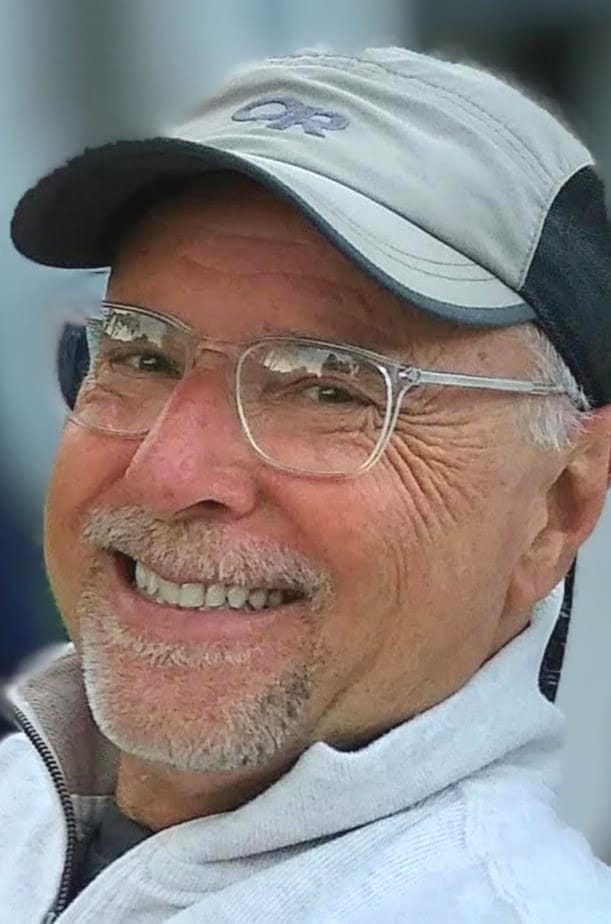
We’ve been married 55 years — but that’s a different story.
None of us growing up along M-89 really became friends until high school, with all of us graduating in 1969, except for Becky, who’s a few years younger.
After high school, we naturally followed different paths, but none of us ever really left home or lost touch with one another.
Leslie joined me at the University of Michigan after a year at the University of Chicago. Linda and Judy roomed together at Western Michigan University, becoming best friends for life.
When Judy and I married, Leslie was the best man at our wedding. It was held in a church only 200 yards from where I, and most of the others, were born in an old Victorian house that served as a community hospital; Linda was maid of honor, Sally a bridesmaid.
As the years passed, we continued along our separate paths, but they’d cross again. As we know too well, life’s paths take many twists and turns. Some happy. Some sad.
For Leslie, his interest eventually led to an interest in botany. Not long after graduating from the U-M, in his mid-20s, he landed a dream job working at the world-renowned botanical garden at the University of California, Berkeley.
But it quickly turned nightmarish.
Only days before starting work, he celebrated with others in the Pacific Ocean, whose waves were far more powerful than anything he’d experienced swimming in Lake Michigan.
One of those waves violently slammed him into the ocean’s floor, breaking his neck. He nearly died. It was his life-defining moment. An unexpected fork in the road.
Still, he was fortunate. He survived, switching careers from working with living things to working with computers for Hewlett-Packard. He married and his three daughters grew up near Atlanta. Life was good for a long time, until it wasn’t.
Eventually, the canes and braces he used to walk were replaced by a motorized wheelchair. His marriage ended. He returned to West Michigan, where he bumped into Becky, also divorced, still working on the family farm along M-89.
Surprisingly, they married and lived “happily ever after,” with each considering the other the love of their lives. But happily ever after is only in fairy tales. In real life, Becky endured serious health issues. Leslie was diagnosed with prostate cancer.
Linda — who’d moved all over the country with her husband, Walt — also eventually returned to West Michigan, settling near her childhood home on M-89. As part of her journey, she’d fought cancer for 30 years, finally succumbing this February.
Sally, who’d moved away after graduating from Michigan State University, returned to her childhood home on M-89 following a divorce, and experienced a cancer scare of her own.
But Leslie’s cancer, a type that progressed slowly, recently sped up. He died in hospice care on June 15, his birthday, in Becky’s family home — only a few feet from M-89.
Les was a remarkably kind, funny, and cerebral person who'd never quit, regardless of the obstacles in his way. He even golfed until he was 70, although it required the agility of a Cirque de Soleil performer.
He was my age, 75 ... our birthdays just two days apart.
My wife and I feel incredibly lucky to have friends like Les and all the others who lived along M-89.
We also feel incredibly guilty. We haven’t suffered any serious illnesses or the loss of a soulmate. But we know our day is coming. So we live, and love, and wait.
We all walk different paths in life, knowing that the ones we choose often can make all the difference, as Frost’s poem suggests.
But in our hearts, and our darker moments, we suspect life is far more random.
We all live along the same road. One that ends at the same destination.
Where we began.
— Bill Dalton is a former reporter and editor for The Kansas City Star and worked for several Michigan newspapers. He spends summers on the family farm near Fennville. His novel “The Bank Game” — a crime thriller — is available from Amazon along with “Dalton’s Bend.”
How to submit an opinion
Ottawa News Network accepts columns and letters to the editor from everyone. Letters should be about 300 words and columns should not exceed 1,000 words. ONN reserves the right to fact-check submissions as well as edit for length, clarity and grammar. Please send submissions to newsroom@ottawanewsnetwork.org.


