

Dana Nessel plans to intervene as Consumers Energy requests $456M electrical rate increase
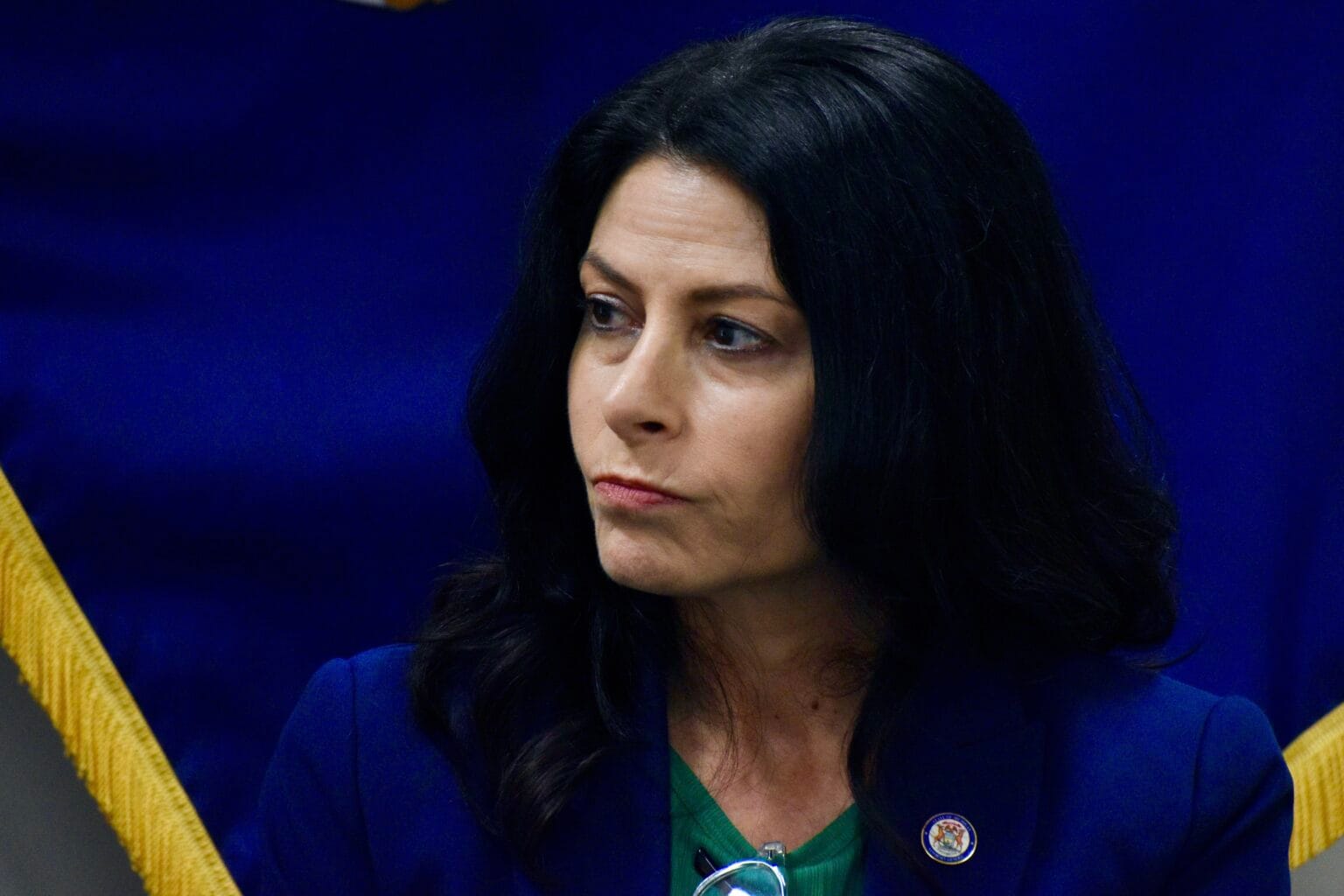
As one of Michigan’s largest energy companies filed paperwork this week to seek another increase in its electrical rates, Michigan’s Attorney General Dana Nessel has once again committed to intervening on ratepayers’ behalf.

EDITOR'S NOTE: The following story has been republished with permission from Michigan Advance. It has been localized by Ottawa News Network.
By Kyle Davidson
Michigan Advance
LANSING — As one of Michigan’s largest energy companies filed paperwork this week to seek another increase in its electrical rates, Michigan’s Attorney General Dana Nessel has once again committed to intervening on ratepayers’ behalf.
Nessel’s announcement also saw the attorney general raise concerns about the state’s system for regulating energy costs.
On Monday, Consumers Energy submitted an application for a $456 million rate increase to the Michigan Public Service Commission. The company is also requesting approval of a 12-month surcharge totaling $25 million to cover additional spending on energy distribution that was not accounted for in its rates between March 1, 2025 and February 28, 2026.
Consumers Energy has requested an additional $52 million spread across three years to cover storm restoration expenses brought on by a series of ice storms in March and April of 2025.
In a statement released ahead of the filing, the company said the increased rates would allow the company to better manage outages.
“We want our customers to experience fewer outages — and when the power does go out, we’re focused on restoring it as quickly as possible,” said Greg Salisbury, Consumers Energy’s senior vice president of electric distribution, in a statement. “Our 2027 Reliability Action Plan is about making smart investments in the electric grid to deliver more reliable service for the people we serve. We know costs are top of mind, and we’re working every day to keep energy affordable while making the upgrades to reduce outages over time.”
Nessel, however, was critical of the company’s request for what amounts to a 9.8% rate increase, noting that the Michigan Public Service Commission approved a $276 million rate increase for the company at the end of March.
“My office will intervene in this case as we always do, but we already know the predictable pattern likely to play out: Consumers Energy loads its rate hike request with completely unsupported, inflated costs, and the MPSC simply splits the difference,” Nessel said in a statement. “Michiganders are facing an affordability crisis, and our utility companies are recording record profits.”
According to the Michigan Public Service Commission, Consumers Energy has improved its reliability, reducing the amount of time the average amount of outage per customer by 52.6 minutes between 2019 and 2024.
That said, Citizens Utility Board of Michigan, a consumer advocacy group, found that Michigan had the second-highest number of outage minutes per customer of any state in the nation, noting that this was largely driven by Michigan’s major energy companies: Consumers and DTE Energy.
The Michigan League of Conservation Voters similarly shared concerns about the latest Consumers’ rate hike request, saying it was the company’s largest request in 20 years.
“While we pay more and more on our energy bills, monopoly utility companies, like Consumers Energy, make billions in profits,” Alex Kellogg, the league’s energy accountability manager said in a statement. “Our bills are too damn high already. To stop these endless rate hikes, it’s time for leaders in Lansing to pass a Ratepayer Bill of Rights to rein in rising energy costs and out-of-control utility greed.”
Lawmakers introduced pieces of a ratepayer bill of rights package in September, including policies to tie companies’ rate increases to their performance, bar utilities from donating to state lawmakers, ensure fair compensation for long-term outages and instate protections to ensure customers do not pay for CEO bonuses and other perks.
Read More: Over 562K signatures filed for proposal to ban campaign spending by utilities, state contractors
Consumers’ requested increase also drew criticism from the Michiganders for Money Out of Politics ballot committee, who are behind an effort to ban utility companies and state contractors from making campaign contributions due to concerns about their influence in state government.
“If this nearly half-a-billion-dollar rate hike request isn’t a clear sign that utilities like Consumers Energy need to stop buying our politicians, then I don’t know what is,” Sean McBrearty, a co-chair of the group’s steering committee, said in a statement. “Michigan’s pay-to-play political system only emboldens powerful corporations, and Michiganders overwhelmingly agree that our government should work for the people, not corporations.”
Campbell continues to operate at a loss
The rate increase request comes shortly after Consumers marked one year since U.S. Energy Secretary Chris Wright issued a federal order forcing the utility to keep the J.H. Campbell plant open for 90 days.
Wright leveraged Section 202(c) of the Federal Power Act, which was enacted by Congress in 1935, to protect the national grid in anticipation of — and response to — wartime electricity issues.
Read More: 'Crying wolf': Nessel says feds created energy 'emergency' to keep Campbell coal plant open
In May, Wright issued a fifth extension of the order, citing a nationwide energy emergency that Nessel and environmental groups say was contrived by the Trump Administration to prop up the coal industry.
President Donald Trump signaled Wednesday, June 3, that he planned to announce nearly $700 million in new federal support for coal-fired power and coal exports Thursday.
Nessel's office has challenged Wright's first four DOE orders in the federal courts, the first of which was heard bythe U.S. Court of Appeals for the District of Columbia Circuit on Friday, May 15.
The states of Illinois and Minnesota, as well as several environmental groups, have also joined the lawsuit.
The aging plant — located in Ottawa County's Port Sheldon Township and operating since 1962 — was originally approved by state regulators for a full, cost-saving retirement on May 31, 2025.
When it announced the intended 2025 closure of the Campbell in 2021, Consumers said the move was expected to save working families and businesses $600 million by 2040.
Consumers originally accelerated its retirement plan for the Campbell — its last and largest coal plant — by 15 years as part of a state-approved strategy to reach carbon neutrality.
Consumers has said the cost of keeping the plant open is $615,000 a day and reported at least $135 million in costs associated with the Campbell plant past the scheduled retirement date, not including ongoing costs of running the plant from Dec. 31 to the present.
"Consumers Energy estimates that it costs them $615,385 each and every day just to keep this plant operating," Nessel said.
Consumers Energy is not challenging Wright's use of emergency powers, but intervened in the case to ensure it could collect payments from other states on the MISO grid to pay for the cost of generating electricity at Campbell, which runs at a loss.
After selling the power it generated since May, Consumers racked up an outstanding bill of $180 million through the end of March, the company said in federal financial filings.
Zachary C. Schauf, who represented Consumers at the May 18 hearing, said the company "intervened" in the lawsuit — where a third party, not originally part of a lawsuit, joins ongoing litigation to protect their own interests — to have assurance that they will recover their losses of continuing to operate the plant through the Federal Regulatory Energy Commission.
"Our limited purpose here is really just to ensure that nothing in this case undermines our ability to recover the roughly $43 million in net costs we incurred under this order, and we're seeking to recover those costs by the other track of Section 202(c)'s track scheme, which vests emergency authority in DOE, and then cost recovery issues in FERC," Schauf said.
The Federal Energy Regulatory Commission, or FERC, recently granted Consumers permission to allocate overage costs across the north and central regions of the Midcontinent Independent System Operator, the energy grid in which Michigan sits.
The north and central regions account for 11 of the 15 states within the MISO grid, as well as one Canadian province. Nessel is currently litigating before FERC to challenge the accuracy and fairness of these multi-state cost allocations.
"It's not the federal administration that's footing that bill," Nessel said. "It's the 1.9 million Michiganders who buy their energy from Consumers Energy and the 42 million other energy customers that are spread across our entire energy region."
Meanwhile, the federal appeals court could take up to three months to issue its ruling. The case referral number is: 25-1159 People of the State of Michigan v. DOE.
— Michigan Advance is part of States Newsroom, a nonprofit news network supported by grants and a coalition of donors as a 501c(3) public charity. Michigan Advance maintains editorial independence. Contact Editor Jon King for questions: info@michiganadvance.com.


