

'Crying wolf': Nessel says feds created energy 'emergency' to keep Campbell coal plant open
Nessel spoke at a press conference on Thursday, which marked one year since U.S. Energy Secretary Chris Wright issued a federal order forcing Consumers Energy to keep the plant open for 90 days.

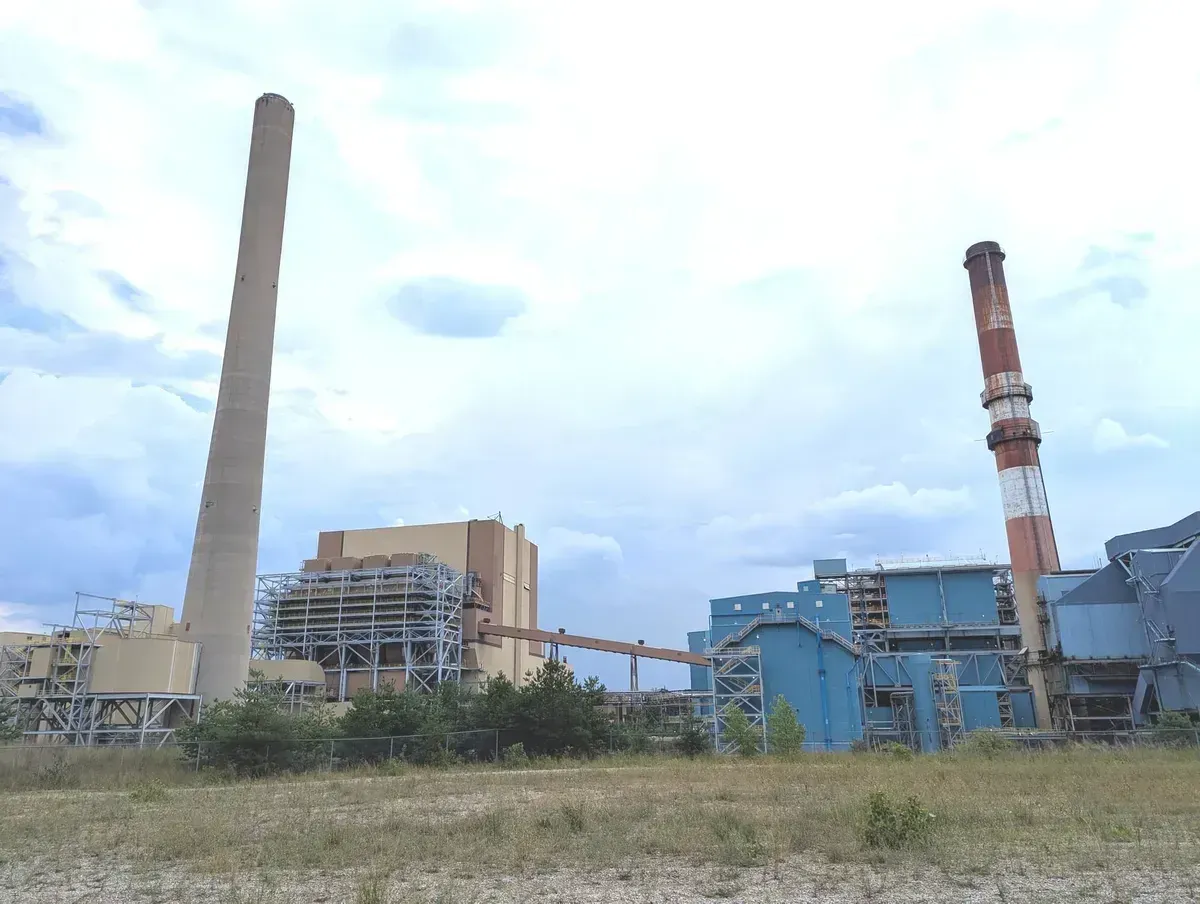
PORT SHELDON TWP. — In the shadow of the J.H. Campbell plant on Thursday, May 21, Michigan Attorney General Dana Nessel said the continued forced operations of the coal plant by the Trump Administration need to stop.
"The Trump Administration is crying wolf over a non-existent energy emergency, while at the same time undermining every effort made to increase the efficiency, affordability, and reliability of domestic energy markets," Nessel said.
Nessel spoke at a press conference on Thursday, which marked one year since U.S. Energy Secretary Chris Wright issued a federal order forcing Consumers Energy to keep the plant open for 90 days.
Wright leveraged Section 202(c) of the Federal Power Act, which was enacted by Congress in 1935, to protect the national grid in anticipation of — and response to — wartime electricity issues.
On Monday, Wright issued a fifth extension of the order, citing a nationwide energy emergency that Nessel and environmental groups say was contrived by the Trump Administration to prop up the coal industry.
“Let's be clear, U.S. energy production remains at an all-time high, and major energy companies have stated that they do not plan to increase output because of this nonsensical order," Nessel said. "The Trump Administration wants you to believe that we are suffering from an unprecedented energy emergency, but their actions tell a much different story."
The latest order requires Consumers to keep the facility running until Aug. 16.

Fight in the courts
Nessel's office has challenged Wright's first four DOE orders in the federal courts, the first of which was heard by the U.S. Court of Appeals for the District of Columbia Circuit on Friday, May 15.
The states of Illinois and Minnesota, as well as several environmental groups, have also joined the lawsuit.
Nessel said in a Wednesday news release that she plans to file a fifth request for a rehearing with the DOE, continuing a high-stakes legal battle over the Campbell coal-fired power plant.
"Over the last year and change, my office has filed more than 50 lawsuits against the federal government," Nessel said. "But more than that, each of these cases is an example of the Trump Administration sabotaging the federal government's previous commitments to drive down energy costs and to combat the effects of climate change."
Those orders also face challenges from states and advocacy groups who want to see the plants shut down as scheduled.
Trump has made rescuing coal a top priority in his second term, something he promised and failed to do during his first term. The administration is approving mining leases, fast-tracking permits for mines, and forcing some coal-fired power plants to remain open while exempting others from EPA rules.
Since the Obama Administration, more than 300 power plants — the primary destination for U.S. coal — have stopped burning coal, while coal production has fallen by half since 2006.
Critics say the forced continuations to operate are actually causing additional costs for Michigan residents rather than avoiding them.
The cost of staying open
The aging plant — located in Ottawa County's Port Sheldon Township and operating since 1962 — was originally approved by state regulators for a full, cost-saving retirement on May 31, 2025.
When it announced the intended 2025 closure of the Campbell in 2021, Consumers said the move was expected to save working families and businesses $600 million by 2040.
Consumers originally accelerated its retirement plan for the Campbell — its last and largest coal plant — by 15 years as part of a state-approved strategy to reach carbon neutrality.
Consumers has said the cost of keeping the plant open is $615,000 a day and reported at least $135 million in costs associated with the Campbell plant past the scheduled retirement date, not including ongoing costs of running the plant from Dec. 31 to the present.
"Consumers Energy estimates that it costs them $615,385 each and every day just to keep this plant operating," Nessel said.
Consumers Energy is not challenging Wright's use of emergency powers, but intervened in the case to ensure it could collect payments from other states on the MISO grid to pay for the cost of generating electricity at Campbell, which runs at a loss.
After selling the power it generated since May, Consumers racked up an outstanding bill of $180 million through the end of March, the company said in federal financial filings.
Zachary C. Schauf, who represented Consumers at the May 18 hearing, said the company "intervened" in the lawsuit — where a third party, not originally part of a lawsuit, joins ongoing litigation to protect their own interests — to have assurance that they will recover their losses of continuing to operate the plant through the Federal Regulatory Energy Commission.
"Our limited purpose here is really just to ensure that nothing in this case undermines our ability to recover the roughly $43 million in net costs we incurred under this order, and we're seeking to recover those costs by the other track of Section 202(c)'s track scheme, which vests emergency authority in DOE, and then cost recovery issues in FERC," Schauf said.
Please consider becoming a monthly donor!
The Federal Energy Regulatory Commission, or FERC, recently granted Consumers permission to allocate overage costs across the north and central regions of the Midcontinent Independent System Operator, the energy grid in which Michigan sits.
The north and central regions account for 11 of the 15 states within the MISO grid, as well as one Canadian province. Nessel is currently litigating before FERC to challenge the accuracy and fairness of these multi-state cost allocations.
"It's not the federal administration that's footing that bill," Nessel said. "It's the 1.9 million Michiganders who buy their energy from Consumers Energy and the 42 million other energy customers that are spread across our entire energy region."
Meanwhile, the federal appeals court could take up to three months to issue its ruling. The case referral number is: 25-1159 People of the State of Michigan v. DOE.
— Sarah Leach is the executive editor of the Ottawa News Network. Contact her at sleach@ottawanewsnetwork.org. Follow her on Twitter @ONNLeach. Photographer Cathy Seaver contributed to this article.


