

‘Disagreement is essential’: Critics warn proposed county ethics policy limits free speech
A review of proposed governance guidelines led to extended debate over free speech, political dissent, and local policy during the Ottawa County Board of Commissioners Planning & Policy Committee meeting on Tuesday, Sept. 15.

OTTAWA COUNTY — A review of proposed governance guidelines led to extended debate over free speech, political dissent and local policy during the Ottawa County Board of Commissioners Planning & Policy Committee meeting on Tuesday, Sept. 15.
At the center of the discussion was a newly drafted Code of Ethical Conduct for the Board of Commissioners.
Modeled after a policy recently adopted by the county road commission, the document was presented by administration as part of the county’s strategic plan to enhance public trust and ethical governance. However, the proposal drew pushback from both public speakers and members of the board regarding its specific language and reporting structures.
A chilling effect on speech?
The morning set an adversarial tone early during the initial public comment period.
Opponents rallied against provisions in the draft requiring commissioners to "establish consensus" and "respect and adhere to the result of board votes."
District 3 Commissioner Doug Zylstra, the board's lone Democratic, took the podium during public comment — he doesn't sit on the seven-member committee — to denounce the policy, emphasizing the fundamental duty of elected representatives.
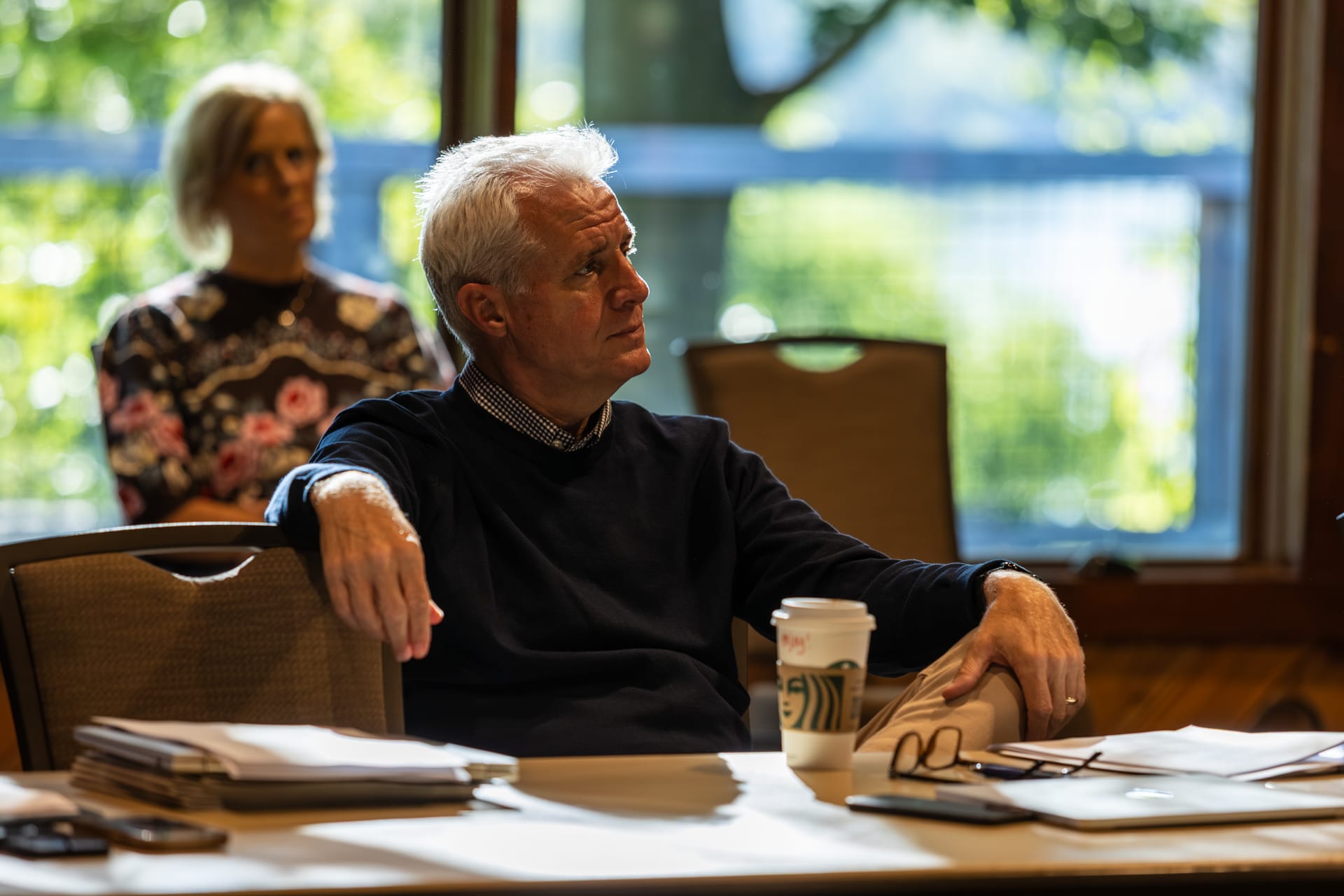
"On Nov. 5, 2024, 179,858 Ottawa County residents voted to elect the current board of commissioners," Zylstra said. "Eleven different commissioners from 11 different districts elected to represent their constituents in their own unique way. I say this because, frankly, the code of ethical conduct in front of you today attempts to deny that basic fact.
"I don't believe disagreement is an ethical problem. I believe disagreement is an essential part of representative government," he said.
Allendale Township resident Becky Patrick echoed those concerns during public comment, warning that the draft language effectively threatened to chill constitutionally protected free speech under the First Amendment and the Michigan Constitution.
"Why do you want to use an ethics policy to prohibit actions that are in fact ethical, positive, and protected in the U.S. and Michigan constitutions? The policy requires commissioners to 'establish' and 'work toward consensus,'" she said. "It frankly astounds me that I need to say this, but when commissioners don't 'establish' or 'work toward consensus,' you should welcome and encourage it, not require it and threaten to discipline it.
"It's called representative government. It's a healthy, normal, essential part of legislating — unless you live in Russia, China or North Korea."
Port Sheldon resident Dan Zimmer also highlighted procedural flaws, criticizing a clause that restricted the filing of ethics complaints exclusively to county commissioners — effectively barring county staff and members of the public from directly reporting misconduct.
Zimmer argued the policy established a self-policing dynamic where the board acted as its own gatekeeper.
"Sole responsibility establishes the board as gatekeeper to reporting. The public are excluded. Ottawa County staff are excluded. ... Ethical integrity has no need of rules. However, the lack of ethics does.
"To exempt the public from reporting questionable conduct does not meet the goal of build trust and confidence in Ottawa County or demonstrate the objective of accountability and ethical governance," Zimmer said.
Revising the code
County Administrator Patrick Waterman presented the background, noting it was drawn from Goal 3, Objective 3 of the strategic plan and modeled on the county road commission's policy.
He sought to clarify the administrative intent behind the draft's controversial phrasing.
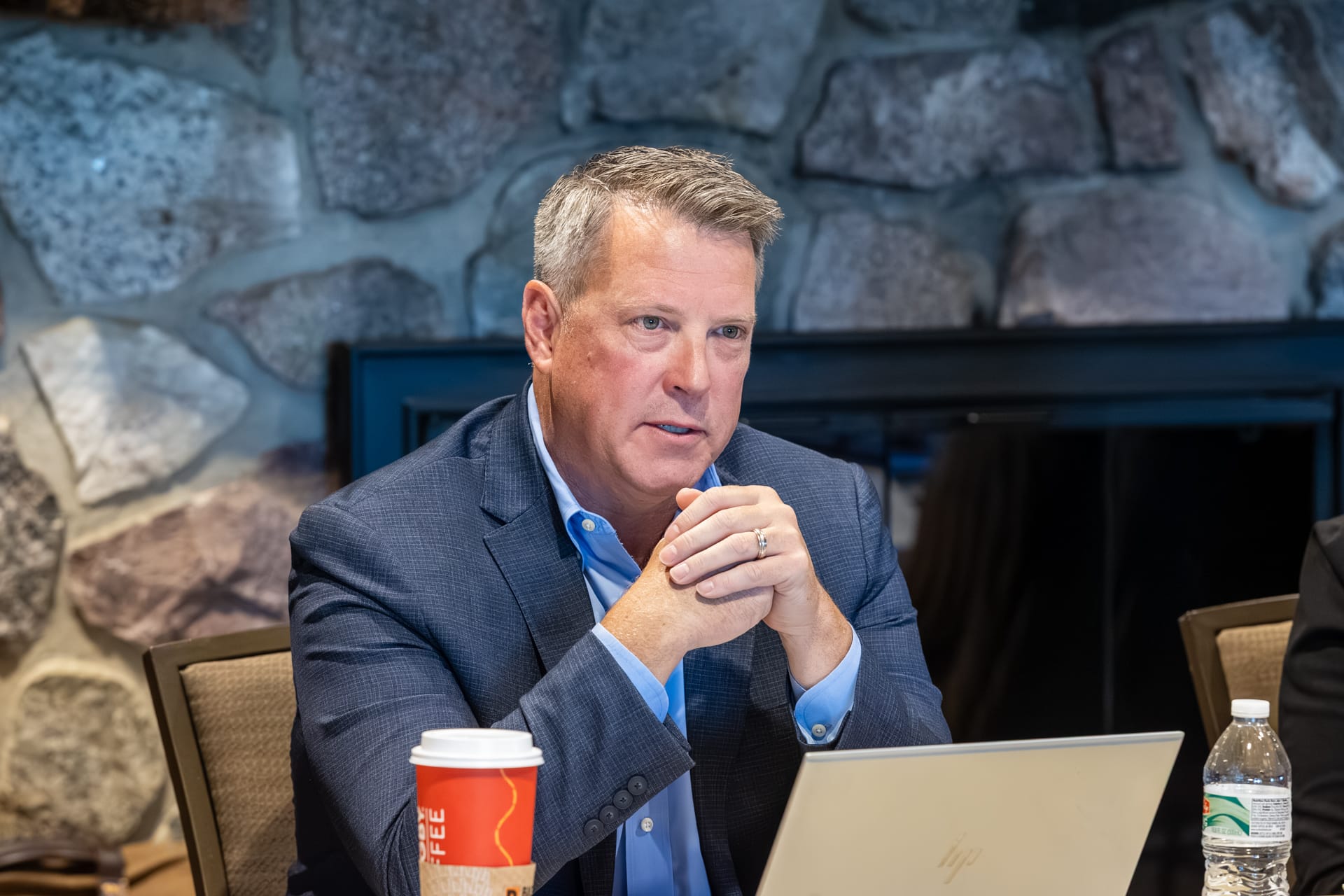
"Establishing consensus does not infer unanimity. It does not mean that everybody has to be in agreement," Waterman said. "To me, it means that you're working proactively through the process of deliberation and debate to achieve the best possible outcomes as a board.
"The second concern that the policy exclude members of the public from submitting concerns — I don't believe it does. It simply states that a commissioner must be the vehicle for reporting concerns, whether they are of their own concern or they're from somebody from the outside."
Committee members responded with potential amendments to address public pushback.
Commissioner John Teeples acknowledged that the prior policy "was simply not workable," suggesting targeted wording adjustments.
"If it means to 'seek to build consensus,' it's a simple change."
He also addressed the reporting structure, arguing that routing complaints through elected officials mirrors state and federal legislative bodies.
"We can't have, in my opinion, just every time some [in the] public wants to raise a complaint against a commissioner, that shouldn't be the automatic basis ... as representative officials of the public, if some constituent came to any one of us and we thought that was legitimate, then the commissioner brings it forward."
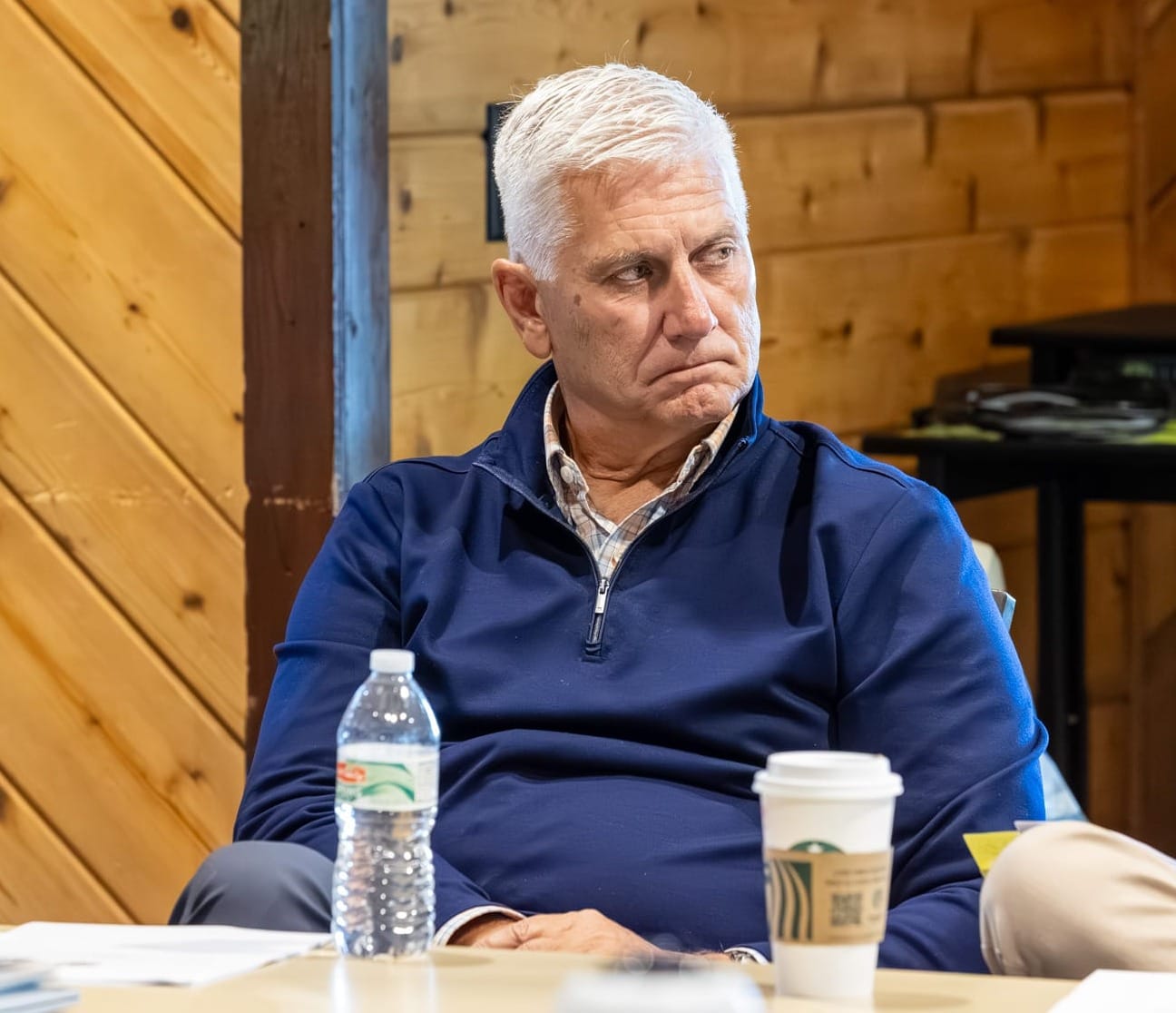
Commissioner Allison Miedema, a member of far-right group Ottawa Impact, proposed specific substitute language under Section A ("Act in the Public Interest") to eliminate friction over the word "consensus."
"In determining the public interest, the board shall consider many viewpoints and information from a broad spectrum of concerns and seek to reach decisions that are informed, principled, and in the best interests of the public," she said.
A discussion followed regarding whether the term "consensus" was inherently problematic.
Commissioner Jordan Jorritsma noted that "a cursory Google of the definition ... says 'a shared opinion, belief, or position held by most members,' ... which would logically imply that we are always achieving consensus when we vote on something because the majority of members share the opinion."
However, Teeples noted the pragmatic value of adopting Miedema's phrasing.
"By adopting her language, we avoid a conflict. ... If we can find the language that almost all of us agree on, then we've got a good policy."
The policy revision comes nine months after OI Commissioner Joe Moss and then-vice chair Josh Brugger faced separate ethics complaints in December 2025. Because the county's Code of Ethics currently requires a strict three-fourths majority (9 out of 11 votes) to form an investigative committee, the efforts stalled.
Teeples, who was chair of the board at the time, said he preferred to "put the past behind us."
Recognizing the need for a comprehensive overhaul rather than piecemeal edits during the meeting, the committee voted to table the motion. A new draft for is expected in November.
The irony of consensus
Before the meeting adjourned, Zimmer returned to the podium for final public comments, reiterating his request for an independent, multi-disciplinary ethics panel consisting of legal professionals and ethics specialists to prevent conflicts of interest.
"An ethics panel should consist of a diverse multi-disciplinary group of individuals to ensure balanced, unbiased and comprehensive decision-making. ... The proposed code of ethics conduct policy reads more like an aspirational team-building memo than a viable document that builds trust and confidence."
In a poignant closing observation, resident Dave Barnosky remarked on the meta-narrative playing out in the room.
"I wanted to point out that the two people who had a problem with the word consensus of your vote of your commissioners are often minority voices, and the fact that you're setting aside the language of consensus and you're going to look at other language so that you can have broader support for the final language is, in fact, an effort to seek consensus so that you don't have to enforce consensus. That's what it should be," he said.
Other business
CMH Authority update
In his final official report before the county's Department of Community Mental Health transitions to an independent authority on Oct. 1, CMH CEO Dr. Michael Brashears delivered a robust update on the department's fiscal standing and future outlook.
"So, as an official county department, this is the last report that I'll be making to this group. I intend to continue to provide regular updates to the county commissioners as an authority. ... I guess what I'm saying is just because we're transferring to an authority does not mean that CH is not a major county partner. I would argue it strengthens our relationship in many ways."
CMH CEO Dr. Michael Brashears addressed the underfunding of Medicaid while highlighting local fiscal discipline.
"Ottawa County CH is either in budget or below budget. We withheld $1.8 million in staffing expenditures last year."
He also shared positive revenue developments, including a potential 8% Medicaid revenue increase — which he noted would be "meaningful" by closing nearly $4 million of their projected deficit — and a major federal award.
"Next month I'll come back and I will present to you that we were the recipient of a $3 million SAMHSA (Substance Abuse and Mental Health Services Administration) grant that will strengthen our ability to offer services in the jail, coordinate with the police and other services related to crisis services ... a $3 million grant over five years."
Veterans Services
Veterans Services Officer Duane Eversole also provided an update on behalf of the department.
Reflecting on the annual Veterans Standdown Resource Fair, he noted that despite a slightly lower turnout of 122 veterans and 75 vendors, "the venue was great ... and everything was covered through either the VA grant or donations from community members."
Eversole detailed the financial impact delivered directly to local veterans.
"This year, for lump sum compensation for veterans that's awarded once they are rated through the VA, ... we awarded $771,000," Eversole said. "But the bigger sum is the $303,000 that we get monthly for veterans. And that's 136 veterans that have been rated for the fiscal year."
He added that emergency and burial assistance awarded $48,000 to nine veterans through state funds and $18,000 to 19 veterans (and 33 household members) through county funds, noting an influx of Vietnam-era veterans seeking ratings for Agent Orange exposure.
Committee Chair Jim Barry added that regional transit access would soon improve for veterans, as the Macatawa Area Express in Holland is considering extending daily service out to the Fillmore Complex to connect with Grand Haven's Harbor Transit public transportation system.
Public health
Turning to action items, the committee approved resolutions appointing Dr. Amanda Fisher-Hubbard as chief medical examiner and Dr. Nicolas Kostalecky as deputy chief medical examiner for four-year terms.
Parks
Park infrastructure also saw significant forward movement as the committee accepted a $400,000 Michigan DNR Development Grant toward Phase One improvements at the 127-acre Rosie Mound expansion.
Parks Director Jason Shamblin explained that the $1.2 million project includes a driveway, 50-spot parking area, a 0.85-mile loop trail, natural surface connections, and a vault toilet, funded in part by coastal zone grants and the parks foundation.

Additionally, the committee awarded an $80,780 contract to NextG Construction to replace over 250 feet of 25-year-old retaining walls along historic Ottawa Beach dune boardwalks before Memorial Day.
For the Bend Area acquisition in Georgetown Township, commissioners approved a $13,677 contract with Veridis Design Group for a year-long master planning update, with Shamblin announcing an Oct. 14 dedication ceremony for the site, envisioned as a 700-acre regional park along the Grand River.
Rounding out administrative business, the committee executed a five-year master agreement with MDOT alongside an authorizing resolution allowing Ottawa County to serve as a fiduciary pass-through for state transportation funds to local providers like Georgetown Transportation.
Finally, commissioners approved language revisions to the Reemployment of Retirees policy for first and second reading, with HR representative Sarah Allen clarifying that the redlines contain "no functional changes" and merely align county policy wording with Municipal Employees' Retirement System (MERS) rules for returning retirees.
The next Planning & Policy meeting is scheduled for 10:30 a.m. Oct. 13 at the Fillmore Complex, 12220 Fillmore St., West Olive.
— Sarah Leach is the executive editor of the Ottawa News Network. Contact her at sleach@ottawanewsnetwork.org. Follow her on Twitter @ONNLeach.


