


Lawsuit challenges Ottawa County's refusal to release license plate reader data under FOIA
An Ottawa County resident has filed a lawsuit against Ottawa County and the Ottawa County Sheriff’s Office, alleging officials unlawfully denied his public records request for images and tracking data captured of his own vehicles by the county’s automated license plate reader network.

OTTAWA COUNTY — An Ottawa County resident has filed a lawsuit against Ottawa County and the Ottawa County Sheriff’s Office, alleging officials unlawfully denied his public records request for images and tracking data captured of his own vehicles by the county’s automated license plate reader network.
The 16-page complaint, filed Nov. 19 in Ottawa County’s 20th Circuit Court by Hemlock-based attorneys Philip L. Ellison and Thomas J. Lambert on behalf of resident Lynn Janson, contends that county officials offered shifting and contradictory excuses to withhold data generated by cameras supplied by Flock Safety.
The Hill-Sanner lawsuit
The lawsuit marks a notable role reversal for Janson in Ottawa County’s ongoing public records disputes.
In December 2023, the then-Ottawa Impact-led Board of Commissioners appointed Janson to the Ottawa County Officers’ Compensation Commission. During his tenure on that panel in 2024, Janson’s own text messages and emails became the subject of a high-profile FOIA lawsuit filed against the county, where a resident sought communications sent during controversial compensation commission meetings.
Read More: County commissioner: Ex-board chair Moss 'misled' colleagues to secure buyout to avoid probe
The filer of that FOIA request, Adrea Hill, joined fellow resident Luke Sanner to file a lawsuit against the county, alleging that the county didn’t properly handle public records requests.
On Oct. 30, 2024, plaintiffs Hill and Sanner sued in Ottawa County’s 20th Circuit Court, claiming Freedom of Information Act requests they filed separately were not fulfilled adequately to what state law requires.
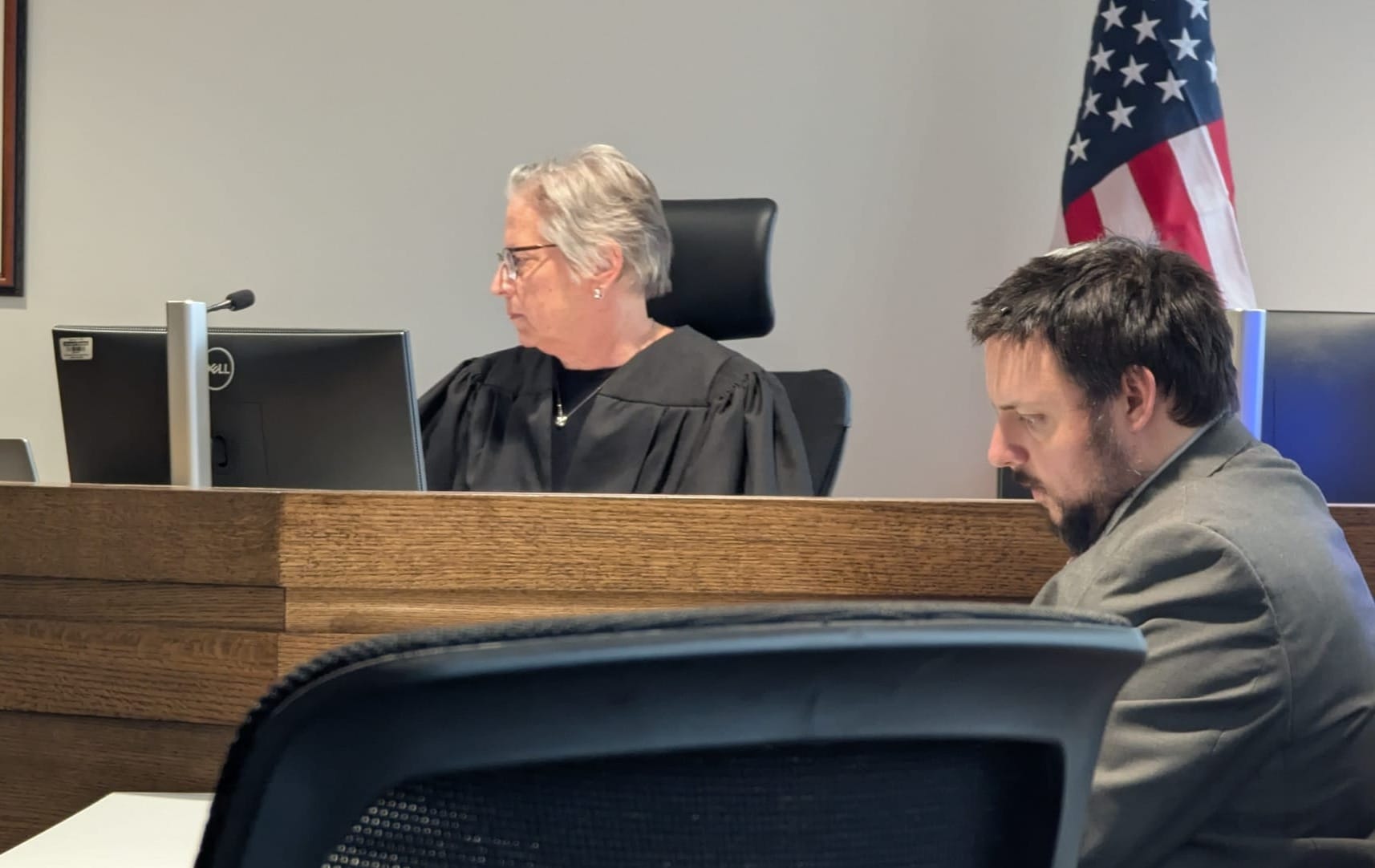
Hill asked for Janson's emails and text messages during a compensation commission. Sanner asked for digital communications between six OI-aligned county commissioners from a two-day window in 2023.
The county denied both FOIA requests, saying the county didn’t have the authority or obligation to search commissioners’ private devices for text messages that may have discussed public business.
In February 2025, Allegan County Circuit Court Judge Margaret Bakker ruled that the compensation commission and the Ottawa County board are both “public bodies”; however, she said individual members of those bodies are not required to comply with records requests unless the record is "used" by the body to perform a public function — a legal interpretation that could have far-reaching legal repercussions on how public bodies answer FOIA requests.
Read More: Judge orders county to pursue records, but says local electeds not subject to disclosure
Bakker then ordered that the county’s FOIA officer had 14 days to contact the officials and ex-officials — including Janson — who still could have had pertinent records. She also gave the county 28 days to show evidence that the FOIA coordinator complied with the instructions, that the officials had acknowledged the requests and responded to them, and that “responsive material” had been identified and turned over to the county for review.
At a Sept. 15, 2025, hearing, Bakker ruled in favor of the plaintiffs, saying: "We have a situation where, as I've indicated, to some extent, both sides have it wrong in regards to the individual, who was on the Compensation Commission,” Bakker said. “The response by the county was that, since he wasn't a county employee, they basically didn't have to respond to that, and they didn't have anything in their possession.”
Regarding Hill’s request, Bakker said the commissioners had county-issued cellphones, but also personal ones.
“There's really no debate that the county did not have the cellphones in their possession, so they couldn't provide anything from those. My understanding is that those are all personal cellphones,” she said.
The question, Bakker said, came down to whether the county put forth a good faith effort to try to secure messages that could have existed to satisfy the public inquiries when they were filed two years ago, as well as after the judge’s February order.
“Should the county have taken that next step without the court ordering it to inquire of those prior commissioners or current commissioners as to any cellphone communications? … They did respond, but did they respond as fully as they should have? I guess that’s where this court ends up in regards to analysis and so to a certain extent, the plaintiffs are granted summary disposition,” Bakker said.
Despite winning a summary judgment, Bakker stopped short of awarding Hill and Sanner attorney’s fees when issuing her ruling.
“Because of the complexity of the situation, regardless of the law and the facts, the court does not believe attorney fees, costs or damages should be awarded,” Bakker said. “This is a complex situation that is not clear to the court as to the level of response by the county. … I do believe the county should have gone a step further, and I do believe that in this particular case, the summary position is in favor of the plaintiffs …
“But I don't believe, because the lack of supporting case law, the complexity of the case in regards to the decisions about public bodies and non-public bodies, and the overall situation here … I do not feel it is a situation where the court should award attorney fees.”
Howard said Bakker’s finding on the fees isn’t in compliance with current law.
“It's completely wrong under the law. If I win summary disposition, I get attorneys' fees,” Howard said shortly after the Sept. 15 hearing.
The Michigan Supreme Court ruled in 2023 that “if a person asserting the right to inspect, copy, or receive a copy of all or a portion of a public record prevails in an action commenced under this section, the court shall award reasonable attorneys’ fees, costs, and disbursements. If the person or public body prevails in part, the court may, in its discretion, award all or an appropriate portion of reasonable attorneys’ fees, costs, and disbursements.
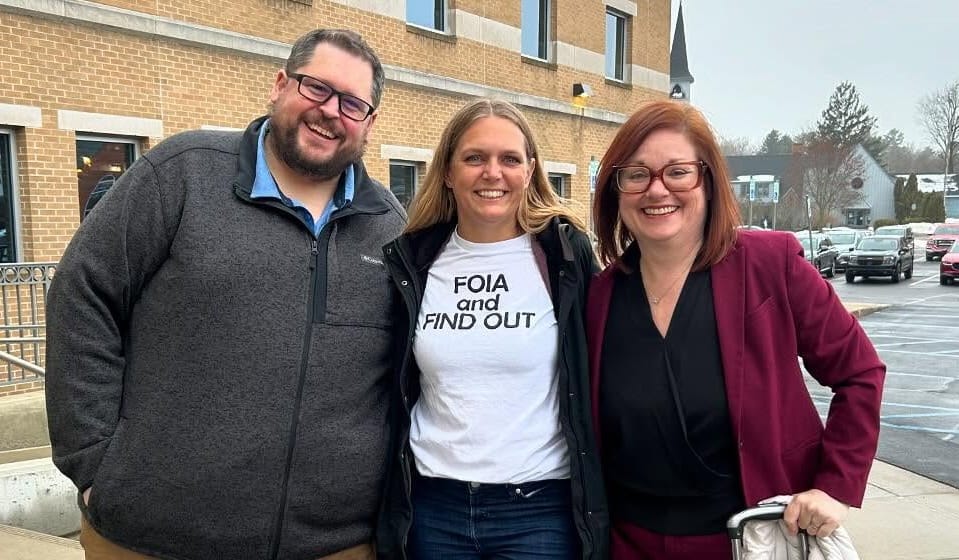
Howard said summary judgment in her client’s favor is a full win, not a partial one.
“It is clear error that I should have gotten attorney's fees,” she said, “so that is a really good position to go to the Court of Appeals with; however, we made a settlement offer to the defendants last week.”
A settlement offer approved by the county board of commissioners on September 23, 2025, included:
- The county’s payment of $21,000 in attorney fees and costs.
- The county’s acknowledgement that it should have inquired about the existence of potentially responsive documents in personal accounts per the court's ruling back when the FOIA requests came in (or negotiable language to that effect).
Howard said her fees have totaled more than $34,000 in fees and costs in the case, not including Monday’s hearing, concluding to the county “we are proposing a significant discount.”
“This is the best offer of a discount that I can make on the fees and costs in this matter,” she said.
Howard said if the board hadn’t approved the deal, she and her clients were prepared to “go the distance through the appeal process if we are unable to reach a settlement. We consider the FOIA issues to be sufficiently important to continue litigating. We also believe that the court granting judgment to us, but denying us attorney fees and costs, clearly violates FOIA on its face and provides us with a solid appealable issue,” she wrote to Bogren, who is representing the county in the case.
“But we recognize the value to everyone, particularly the county’s taxpayers, in ending it now prior to the appeal, given the way in which the appeal will escalate attorney fees and costs,” Howard wrote to the county.
Despite the county's corporation counsel’s recommendation to reject the settlement offer, commissioners voted 7-4 Tuesday night to accept the deal.
After Commissioner Joe Moss — who led the Ottawa Impact majority in 2023 and 2024 — made a motion to reject the settlement agreement, Vice Chair Josh Brugger seconded the move, then immediately made a motion to amend the resolution to accept the agreement.
"This one, by accepting, we settle and we save the county money by avoiding further litigation," Brugger said. "So, I am in favor of wrapping up as many lawsuits today as possible. This would be number three in 48 hours, and I would be thrilled."
Brugger's move to accept the deal seemingly surprised the four OI members on the board, and it quickly moved to a vote, which also fell along party lines: 7-4.
"You do realize what you're accepting, right? You understand the case before you?" asked OI Commissioner Allison Miedema.
"You understand that there was nothing that gives this person any authority to receive a dime from Ottawa County? This is about as clear-cut of a case as you can possibly get, and you are awarding her how much money?" she said, referring to Howard.
"I do," said Board Chair John Teeples, a practicing attorney. "We also know that if this goes on to appeal, I've been advised by counsel, it will cost more than the $21,000. We're saving the county litigation costs going forward. That's what this is all about. This is ending a matter of a lawsuit and shutting off the spigot."
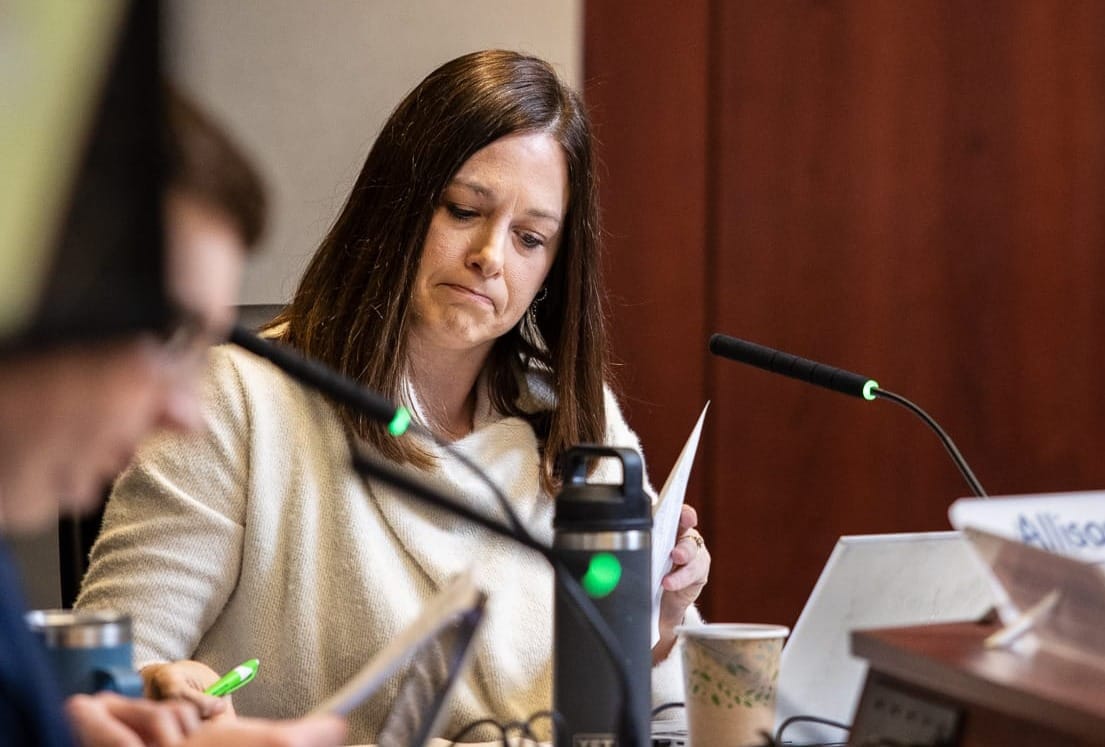
Miedema said the move to accept the deal felt personal.
"It almost feels like an in-your-face. And this is being very irresponsible with the constituents' money of Ottawa County, as well as setting our county up for success for the future," she said.
What's happening now
In his new lawsuit, Janson is now the one challenging the county’s narrow interpretation of what constitutes a public record.
According to the complaint, Janson regularly drives past at least one of the sheriff's office's Flock cameras on Chicago Drive east of Waverly Road and wanted to see what information the surveillance system collects about him.
On Oct. 16, Janson submitted a Freedom of Information Act request seeking all images and associated metadata — such as timestamps, camera locations, direction of travel and vehicle characteristics — recorded for four Michigan license plates registered to vehicles he owns or operates.
On Oct. 27, the sheriff's office denied the request by issuing a "Certificate of Non-Existence of Record," stating it was unable to locate responsive records. After Janson followed up in November to question how no records existed given his daily commute past the cameras, an information services office manager explained that FOIA does not require the agency to conduct a "new inquiry" through Flock’s cloud-based system or create a new record.
The lawsuit points to a sharp contradiction between those denials and public statements made by Sheriff Eric DeBoer.
During a Sept. 18 work session with the Ottawa County Board of Commissioners, DeBoer repeatedly stated that "100% of the data is owned by the Ottawa County Sheriff's Office," and submitted a written report confirming that all camera footage belongs solely to the agency under its county-approved contract with Flock.
Read More: Surveillance vs. rights: Inside Ottawa County’s debate over Flock Safety camera use
In that same report, however, DeBoer acknowledged that the sheriff's office routinely denies FOIA requests for license plate reader data on the grounds that the files reside on Flock’s external servers rather than in the county's physical possession.
Under Michigan’s Freedom of Information Act, a public record includes any writing or electronic database owned, used or retained by a public body in the performance of an official function, regardless of where it is physically stored.
When Janson appealed the denial to the Board of Commissioners on Nov. 17, Board Chair Josh Brugger issued a denial letter the same day without a vote or deliberation by the full board, according to the lawsuit.
ONN has filed a FOIA for Janson's initial request as well as the denial letter.

In the letter, Brugger asserted that Flock owns the data until the county pulls it — comparing the vendor to a wedding photographer who holds photos for 30 days until a client pays for them. Brugger also argued that compiling the records would overwhelm the FOIA office and that releasing the data would invade Janson’s personal privacy.
Janson’s attorneys argue that invoking a requester’s own privacy to deny him records about his own vehicles is baseless, particularly since DeBoer’s September report asserted that motorists have no reasonable expectation of privacy on public roads. The lawsuit also challenges Ottawa County’s internal FOIA appeal policy, asking the court to declare that Brugger lacked legal authority to decide the appeal alone in place of the full Board of Commissioners.
Janson is asking the court to expedite the case as required under state law, order the county to turn over the requested electronic records, and impose statutory civil fines, punitive damages and attorney fees against the defendants.
The county has until Friday, Dec. 19, to respond to the lawsuit.
Brugger said Tuesday that he signed the appeal letter on Nov. 17 and provided a copy to County Corporation Counsel Doug Van Essen.
"I can’t comment on the legal aspects of the case, but ALPRs were designed to be used by law enforcement to assist victims and the families of victims in solving crime," Brugger said. "As I understand it, Mr. Janson has not filed a report requesting assistance from our public safety officials in the recovery of stolen property or a missing person."
Beyond the intended purpose of the technology, Brugger raised concerns about the financial and operational toll the litigation could take on the county.
"While I leave it to the judicial system to address concerns in his lawsuits against the sheriff and the county, one of my present concerns is for the taxpayer dollars that will be used to litigate Mr. Janson's lawsuit and the amount of time public safety officials will spend not being able to solve crimes for victims or their families while this plays out in court," Brugger said.
He also questioned the necessity of fighting the legal battle locally, pointing to an ongoing case raising similar public records questions on the other side of the state.
"As there is a similar case that was filed in Genesee County in August, it seems a waste of Ottawa County taxpayer dollars to litigate something that is already being litigated elsewhere in Michigan," he said.
Van Essen did not respond to a request for comment sent Tuesday, Nov. 24.
— Sarah Leach is the executive editor of the Ottawa News Network. Contact her at sleach@ottawanewsnetwork.org. Follow her on Twitter @ONNLeach.


