

The Business Next Door: How the Essenburgs became the Chick-fil-A of the car wash industry
It is difficult to imagine a more entrepreneurial family than the Essenburgs.

It is difficult to imagine a more entrepreneurial family than the Essenburgs.
The first generation immigrated to the United States.
The second generation provided building services, sold lumber and supplies, marketed produce, and engaged in real estate development.
The third generation built a bowling alley before venturing into gas stations and car washes.
The fourth generation reimagined and innovated the car wash industry.
The fifth generation leads that industry, manages car washes, and markets car wash systems and affiliated products to the world.
It is an amazing story. It starts with Jake Essenburg and Lena Kammeraad.
Jake Essenburg was born in 1852 in the Province of Gelderland, Netherlands. His ancestors worked at “Essen Castle” during the time of Napoleon, from which they got their surname. Jake immigrated to Holland, Michigan, when he was 13 years old. In 1872, he married Lena Kammeraad, who was the same age as Jake but from the Province of South Holland. They raised a family in Park Township. Among their children were Frank, born in 1882, and Jacob, born in 1896.
Frank began building houses in 1900. When Jacob was old enough to help, he joined him. Business was good because Holland was growing. Between 1890 and 1900, its population had doubled — from 3,945 to 7,790 — with the arrival of immigrants and launch of businesses.
For example, in 1897, H.J. Heinz of Pittsburgh, Pennsylvania, opened a pickle-processing plant on the south side of Holland. In 1904, John Kolla and August Landwehr arrived from Ohio and launched the Holland Furnace Co. two years later. In 1905, Walter Lane came from Chicago with 60 members of his workforce to open a piano factory.
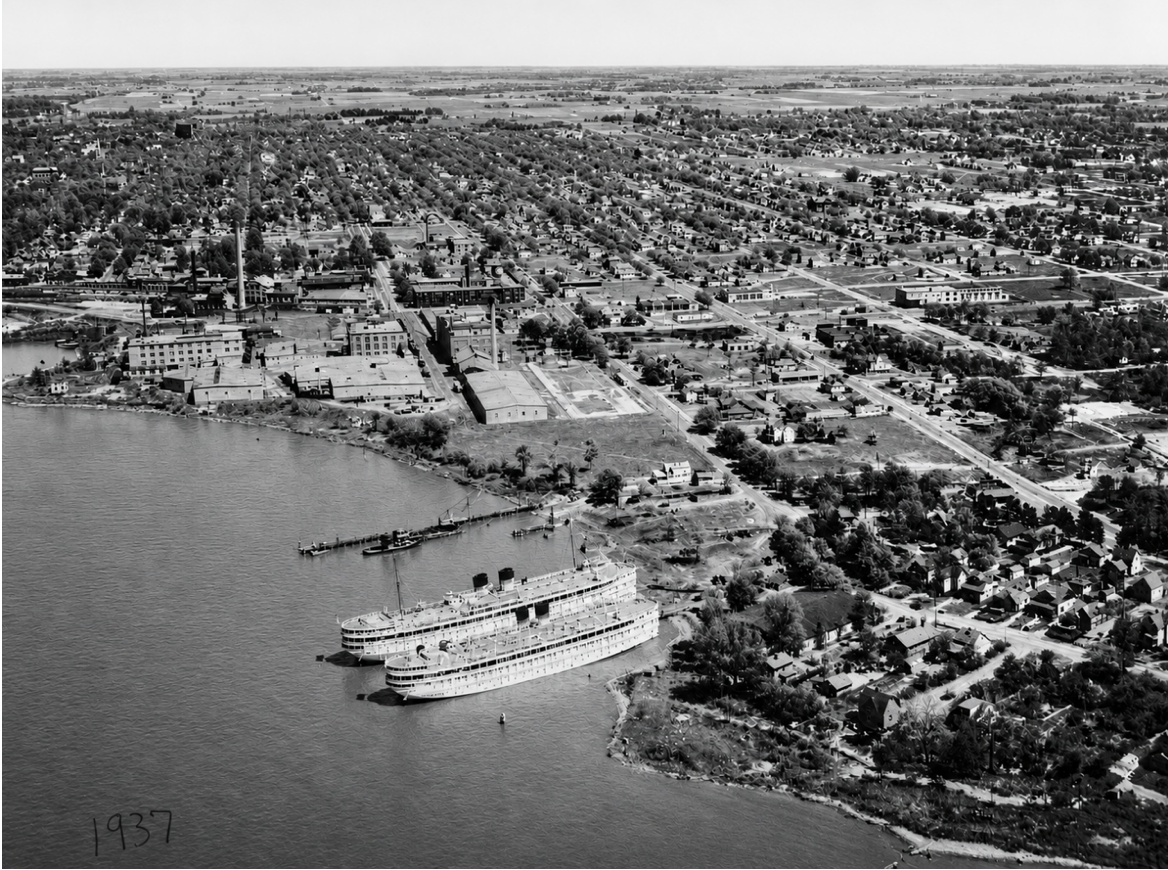
To make room for the influx of newcomers and to profit from their migration, Holland’s leaders developed residential, commercial and industrial areas in Holland, such as the residential area and industrial sites of Prospect Park for the Holland Furnace Co. and the Bush and Lane Piano Factory. They also sold houses and vacant lots on credit.
For example, John C. Post sold new homes for $100 down and $8 per month; Philip McBride, Gerrit Diekema and William Beach sold lots between 20th and 22nd streets for $150 and offered no-interest mortgages for as low as $4. Holland got an additional boost from the Holland and Lake Michigan Railway (“Interurban”), which came to Holland in 1898, connecting Grand Rapids to Holland and Holland to Saugatuck in 1899. In the 1920s, its westernmost line out of Holland became Southshore Drive.
By 1921, Frank had joined Frank Bolhuis Lumber and Manufacturing as manager of its building division. Bolhuis was located on East 18th Street and the Pere Marquette Railroad tracks, but also had branch offices in Muskegon and Grand Rapids. Bolhuis’ main competition in Holland was the Scott-Lugers Lumber Co., located next to the railroad spur on River Avenue and Sixth Street, on land that then had direct water access.
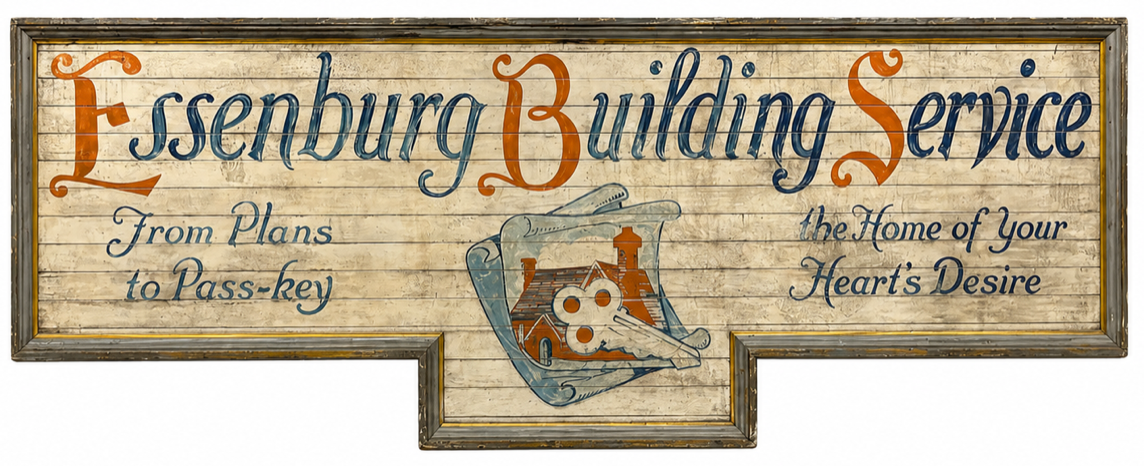
In 1926, Frank Essenburg left Bolhuis to launch Essenburg Building Service to serve homebuilders in the Holland area with a network of designers, contractors and craftsmen. Frank’s motto was “From Plans to Pass Key” and “The Home of Your Heart’s Desire.” By 1927, the Holland City Directory listed him as president, treasurer and manager of Essenburg Building and Lumber Co., located at the corner of 17th Street and Ottawa Avenue, at the foot of Southshore Drive.
Jacob was more than one of Frank’s employees; by 1929, the Holland City Directory listed Jacob as treasurer of Essenburg Building and Lumber. As the "Roaring '20s" ended, Essenburg Lumber was doing well — so well that Jacob had moved his family to a new house on South Shore Drive, near the curve before Central Park.

But the Great Depression hit the building industry hard, and Essenburg Lumber was not immune. Frank and Jacob lost the houses they had built on speculation along South Shore Drive, including Jacob’s house.
Things got so bad that Jacob had to find other work to feed his family: his wife Rose (Vander Schaaf) Essenburg, his young daughters — Elberdine (born in 1920), Lillian (born in 1922), and Mae Rose (born in 1924) — and his sons, Julius “Sonny” (born in 1928) and Jacob "Jun" Jr. (born in 1931). To find a place they could afford, the family moved to a small house on Vander Veen Avenue on the north side of Holland. The three girls shared a bedroom, and the two boys another. Somehow, they managed to keep a pony.
To make ends meet, everyone did their part. One of the girls worked for Kiefer’s Restaurant in downtown Holland and was paid with a kettle of soup or mashed potatoes. The girls babysat for other families and were also paid with a kettle of soup. Rose would clean the pots, making them spotless and shiny, which was always appreciated. Her secret cleaning formula was putting a pinch of beach sand in her soap.
For his part, Jacob got a job with the Holland Furnace Co., working in the foundry. But when the leaders of the company discovered his personality, they promoted him to salesman and put him on the road. When he could, Jacob also dabbled in real estate. Then his life changed when a man asked if he could buy Alberdine’s pony. The Essenburgs traded it for five acres of land near Riley Street and 136th Avenue. On that land, they made a big garden. Sonny and Jun then tended that garden and went door-to-door selling its produce. That seems to have given Jacob an idea.
During World War II, Jacob worked as a factory worker for Holland Hitch. But by the late 1940s, he had purchased land at 137 N. River Ave., opened Essenburg Produce, and supplied it with fruits and vegetables from markets in Grand Rapids and Chicago.
Initially, all the family worked at Essenburg Produce. Then, Jun and Sonny bought an old GMC truck — “a hunk of junk” with a 16-foot box — and started their own delivery business.
In downtown Holland, their stops included Kiefer’s, Cumerford’s, and Van’s Supermarket. On the south side of Lake Macatawa, their stops included Central Park Grocery, the Macatawa Hotel, the Castle, and grocery stores and restaurants as far south as Saugatuck, South Haven, and Fennville. On the north side of Lake Macatawa, their stops included the Waukazoo Hotel and Hotel Ottawa.
From their vantage point, they could see the north side of Holland was experiencing a population boom. Between 1940 and 1960, Holland Charter Township grew from 4,000 to almost 29,000 inhabitants! To take advantage of Holland’s north side development, Warner DeLeeuw opened DeLeeuw and Sons Lumber Co., the “Leaders in Better Building,” at 177 North River Ave. in 1947. In 1952, presumably for the same reason, Frank relocated Essenburg Lumber and Supply to 181 Douglas Ave.
Seeing the opportunity, in the 1950s Jacob developed subdivisions, among them Rose Park, for which he bought 40 acres of land, converted it into 96 lots, and named it after his wife. His other developments included Maywood, Oak Park off Beeline Road and Lake Breeze near Ottawa Beach State Park. Jacob also developed commercial properties. Jun remembers that he and Sonny helped construct buildings for a dry cleaner, bakery, carpet store, the Eten House restaurant, the Bimbo Restaurant and Dykstra Drug Store. Jun also remembers that in the subdivisions Jacob would donate land for churches.
Meanwhile, Sonny and Jun continued operating their produce business. Ken VanderVeen, my father, then in high school, remembers packing bags of apples in Sonny’s garage.
However, because payment from Sonny and Jun’s customers was slow, the brothers started looking for “cash” business opportunities. In 1956, with their sisters Elberdine, Lillian and Mae Rose, Sonny and Jun built and opened Northland Lanes, a 16-lane bowling center, at 310 N. River Ave. Business was so good that in 1957 they added eight more lanes.
After a smoldering cigarette started a fire that burned the business to the ground in 1962, the Essenburgs rebuilt the bowling alley and expanded it to 24 lanes.
Among bowling establishments, Northland Lanes was unique. First, the Essenburgs put the entrance to the bowling alley near the center of the building, versus in a corner, to improve traffic flow.
Second, they closed the bowling alley on Sundays and chose not to sell alcohol. Even so, Northland Lanes became the busiest bowling alley in Ottawa County. Jun says it was because Elberdine was a superior salesperson, who spent her summer contacting the women in the neighborhood to sign up for the fall season.
Third, the Essenburgs kept the bowling alley spotless such that a supplier told them it was the cleanest in Michigan!
By this time, Sonny and Jun had gotten married and had families of their own. Sonny and Donajean Johnson Essenburg had four children: Jack, Carol, Gail and Jim. Jun and Beth Smith Essenburg had four children as well: Tom, Mary, Marcia and Myra.
Given the success of the bowling alley, in the late 1960s, Sonny and Jun were looking for other “cash” business opportunities. So, they purchased a building formerly home to a grocery store and decided to transform it into a laundromat. A mechanical service installer for Bernie Lemmon suggested a car wash business might be better.
So, they started looking around.
When they saw the car wash on South Division and 28th Street in Grand Rapids, they were sold on the idea. In 1969, Sonny and Jun opened a Texaco gas station and car wash at 523 W. 17th St. in Holland. To get approval to build the car wash, they needed a permit from the City of Holland. They got the permit when they agreed to let the city put a drainage line under the site. To entice customers, they gave customers a free car wash with a fill-up of gas.
In 1971, Sonny and Jun added a car wash at Sixth Street and River Avenue (later donated to the Holland Rescue Mission), a site they acquired when the previous owner gave them the business in exchange for paying his debts at First National Bank and Standard Oil Co.
At first, Sonny and Jun’s car washes utilized a “dual rollover” system, in which the car would remain stationary and the machine would move around the car. Then someone suggested they look at a car wash system in which the machines were stationary and cars moved in an assembly-line fashion, thus increasing the car wash’s capacity.
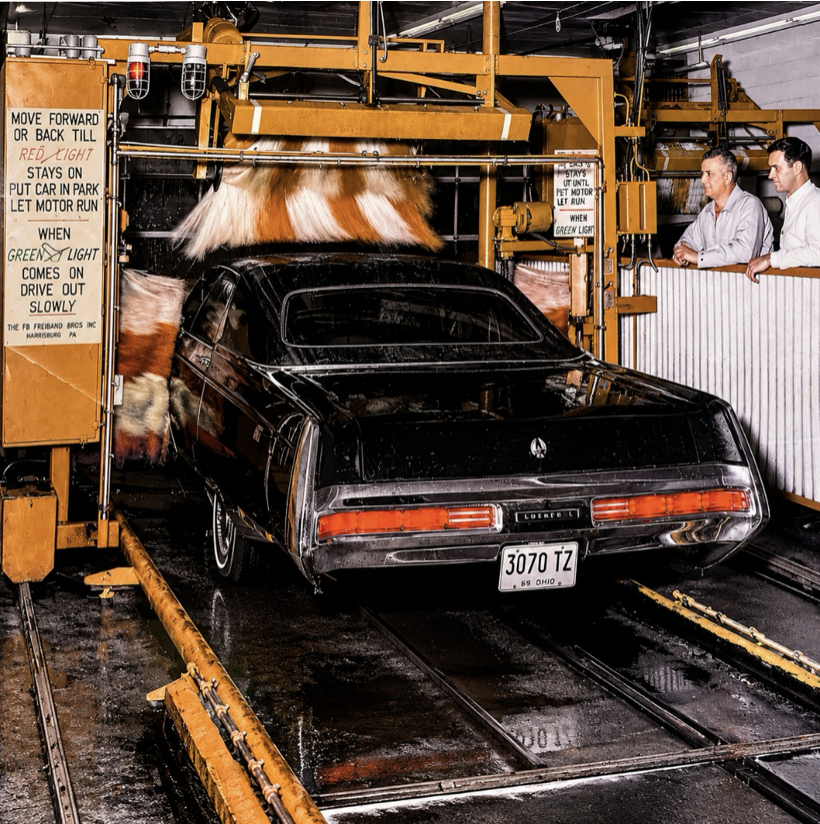
In 1972, Jun and Sonny opened a tunnel-style car wash and gas station at 499 E. Eighth St. (East Town), which for decades held the record for washing 2,500 cars per day on two consecutive days. Even so, the Essenburgs considered it a less-than-ideal location because of the street’s limited traffic volume. Thus, in 1980, Jun and Sonny built and opened a 180-foot tunnel-style car wash and gas convenience store at 2667 28th Street in Grand Rapids. Sonny’s son, Jim, is still involved with that car wash.
In 1981, to have more control over the supply of fuel, they bought the 20-acre Holland Terminal tank farm from Texaco at 630 Ottawa Ave. That year, they also opened a car wash and gas station on the southeast side of Grand Rapids (Cutlerville). This was the first site to incorporate their “Integrated Flight Deck System,” where operators stand on an elevated deck so they can see all aspects of the tunnel at once. Sonny’s daughter, Gail, ran that car wash, while Sonny’s daughter Carol, married to Randy Bowerman, purchased Bowerman’s Blueberries and later opened Bowerman’s on Eighth Street in Holland with her children.
In 1986, Sonny and Jun and their three sisters sold the bowling alley.
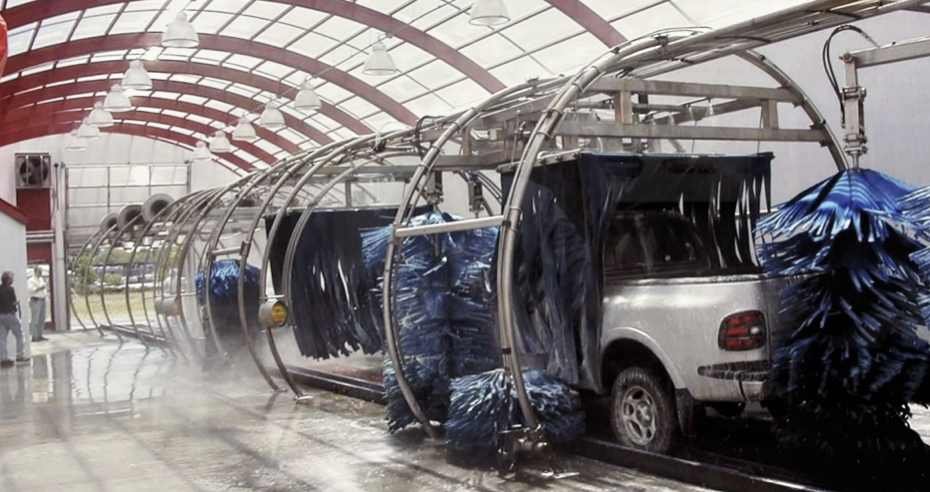
In 1988, Sonny and Jun purchased a station and tunnel-style car wash at River Avenue and Lakewood Boulevard from Warren Walters. In 1990, they opened a 180-foot tunnel-style car wash and gas station at 809 S. Washington Ave., which, at peak performance, could wash up to 205 cars per hour. By then, Jun’s son Tom, an artist at heart, joined the business and was introducing new car wash designs.
Given Tom’s influence, car washes began to include such innovations as an awning at the beginning and end of the car wash tunnel to help customers adjust to changes in light, and carbonate roofs and glass sides on the tunnel to bring in more outside light. Car washes also began to include a downhill slope into the tunnel so that customers could better see what was ahead of them, and a downhill slope at the end of the tunnel to ensure the cars would safely roll out. Tom’s goal was to redesign car washes, making them appear less industrial and upscale, the way Tommy Bahama and Tommy Hilfiger changed the perceived quality of clothing. In essence, he turned square buildings with square corners into round ones.
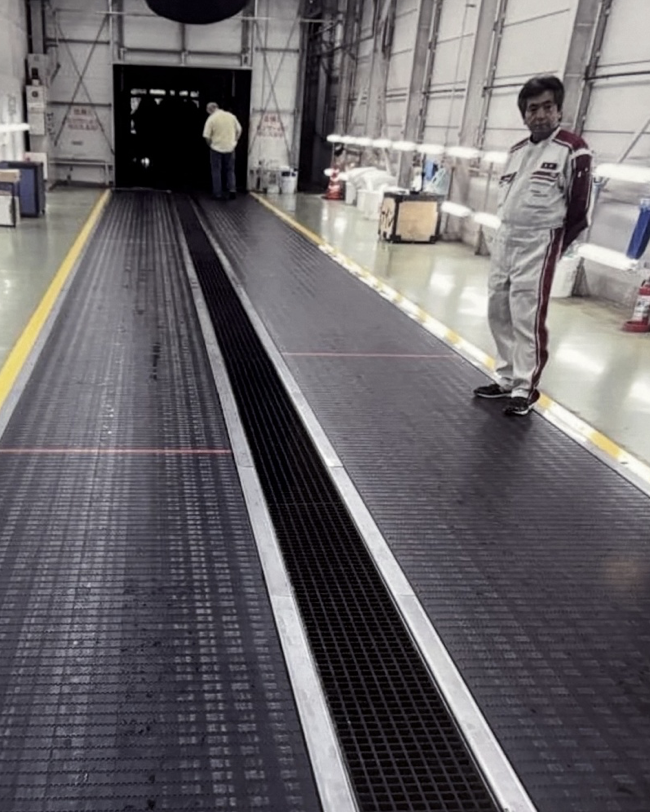
In 2001, Tom Essenburg launched Tommy Car Wash Systems, a manufacturer of car wash equipment. The innovations continued with the tunnel belt conveyor, which replaced the metal "chain and roller" tracks with a rubberized moving floor. In 2002, Tom’s son Ryan became president of Tommy’s Car Wash Systems.
In 2008, Tommy Car Wash Systems went global with an equipment demonstration in Frankfurt, Germany. In 2011, Tommy Car Wash Systems completed its first freestanding “Totally Tommy Express” site design in Tulsa, Oklahoma. Locally, the Essenburgs opened a Totally Tommy Express system on Chicago Drive and Waverly Road featuring a Tommy Transporter Belt Conveyor, which processed 419,000 vehicles in its inaugural year. In 2017, Tommy’s Car Wash Systems even installed a Tommy Transporter Belt Conveyor at a Toyota factory in Tokyo.
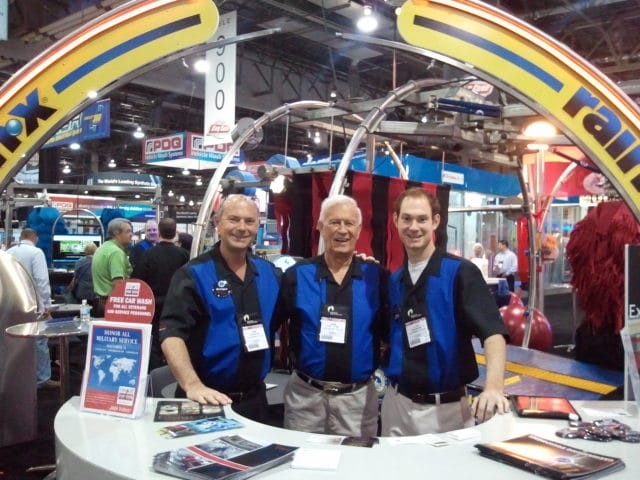
Concurrently, Jun’s daughter Mary got involved in car racing with her husband Vern Slagh, Jun’s daughter Marcia became the owner and operator of Graphix Signs and Embroidery in Holland, and Jun’s daughter Myra, married to Tom Tasker, began working with Jun at Essenburg Investment Co. and became the owner and operator of Clover Commercial Office Center in Holland.
In 2016, Tom’s son Ryan launched the Tommy's Express franchise business, which, by 2018, had franchisees operating in six locations across the United States: Joplin, Missouri; San Antonio, Texas; Jenison, Michigan; Menifee, California; Omaha, Nebraska, and Sarasota, Florida.
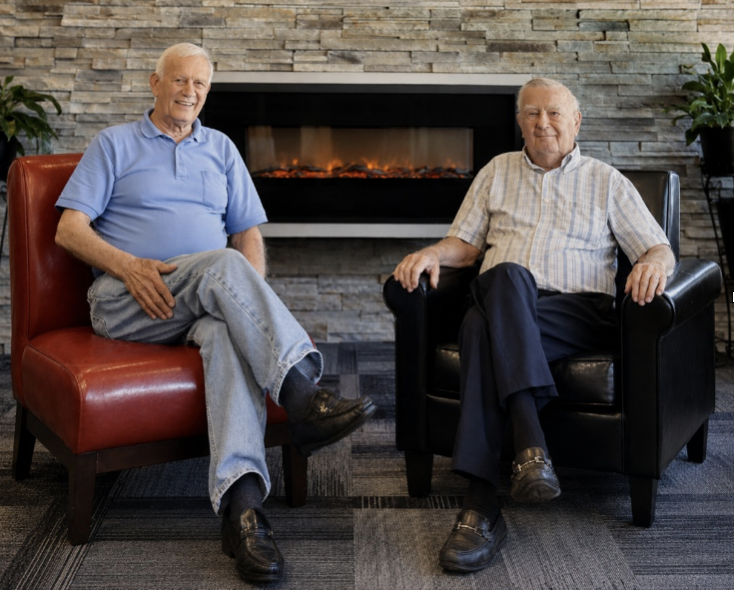
By 2019, the year Tom Essenburg was inducted into the International Car Wash Association Hall of Fame, Tommy’s Express had 33 franchisees operating across the country. By 2021, Tommy's Express was one of the fastest-growing franchises in the United States.
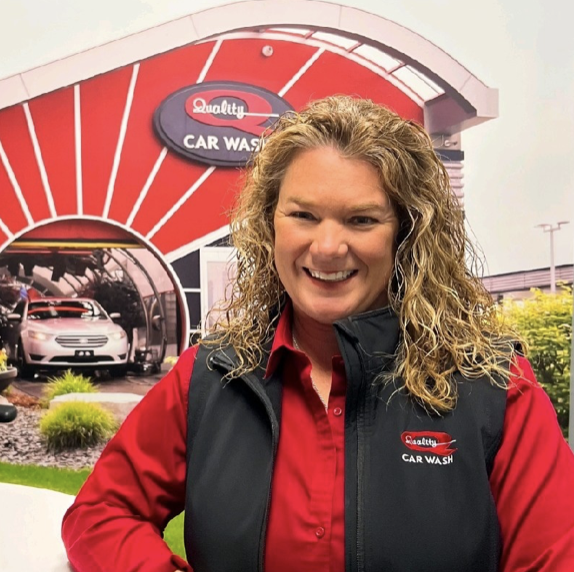
Meanwhile, Tom’s daughter, Mandi Brower, joined Quality Car Wash, the legacy car wash brand, as its chief operating officer in 2005. She is now president of Quality Car Wash, the corporate owner of 12 Quality Car Wash locations in West Michigan, and the first woman to serve as president of the ICA.
In 2024, Tommy’s Express (“Tommy’s”) moved into its new headquarters at 648 Point Ridge in Holland, along with Tommy’s Car Wash Systems. Quality Car Wash opened its headquarters at 661 E. Lakewood Blvd. and a car wash with interior cleaning at 187 N. River Ave., and additional locations in Muskegon, Zeeland, Hudsonville and Byron Center.
Today, half of the revenues for the parent company of Tommy’s Express, Tommy’s Car Wash Systems, and Quality Car Wash come from washing cars, and half from supplying car wash equipment. Tommy’s Car Wash Systems now manufactures equipment for markets in Australia, Europe, the Middle East, and North America. It holds multiple patents on buildings and equipment products. Tommy’s Express has more than 280 franchise locations in the USA and over 200 under development worldwide. The goal: To become the Chick-fil-A of the car wash industry!
And the next generation of Essenburg is involved. Mandi’s sons, Jakob, Ethan and Aiden have been helping at Quality, and Ryan’s daughters, Lexy and Mercy, opened Tiny T’s Daycare on the Tommy’s campus.
— Information for this story comes from Robert Swierenga’s "Holland, Michigan," Holland-Zeeland city directories, the Tommy’s Express Car Wash blog, and conversations and correspondence with Jun Essenburg, Tom Essenburg, Marcia Essenburg, Myra Tasker, Mandi Brower and Ryan Essenburg.
— Steve VanderVeen ("dr v") is a biographer, educator, and learner, discovering entrepreneurial leaders and sharing their stories and wisdom. You can find his articles at start-upacademeinc.com.


