

The Business Next Door: The Holland Sugar Company's location has a sweet story
The success of the Michigan Pioneer Sugar Co., not to mention the success of the Heinz pickle processing plant in Holland, encouraged local business leaders to launch the Holland Sugar Co. in 1899.

Once, I watched a movie where the place stayed the same, but the people changed over time. It seemed like a good way to study history, so I decided to try that approach here.
Before the Dutch immigrated to Ottawa County in the mid-19th century, the Odawa and Potawatomi had lived, traveled, recreated and traded along its waterways. Among them were Chief Wakazoo’s Odawa band, who spent their summers in the areas we know today as Kollen Park and Waukazoo Woods.
Like the Ottawa and Potawatomi before them, the Dutch who settled in the area used the region’s navigable rivers and lakes for transportation to connect them with supplies and customers across the region.
But unlike the indigenous peoples, the Dutch and their European counterparts bought waterfront properties for industrial use, which became more valuable with the expansion of the American railroad, and less desirable as places to live, given the factories’ discharge of smoke into the air and raw sewage into the water.
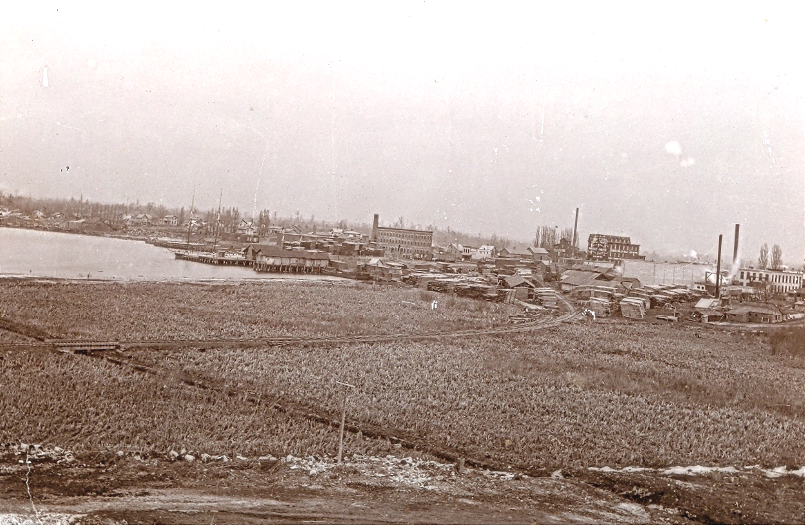
Thus, at the beginning of the 20th century, the Holland/Lake Macatawa shoreline hosted the following entrepreneurs and their factories (with their founding dates in parentheses):
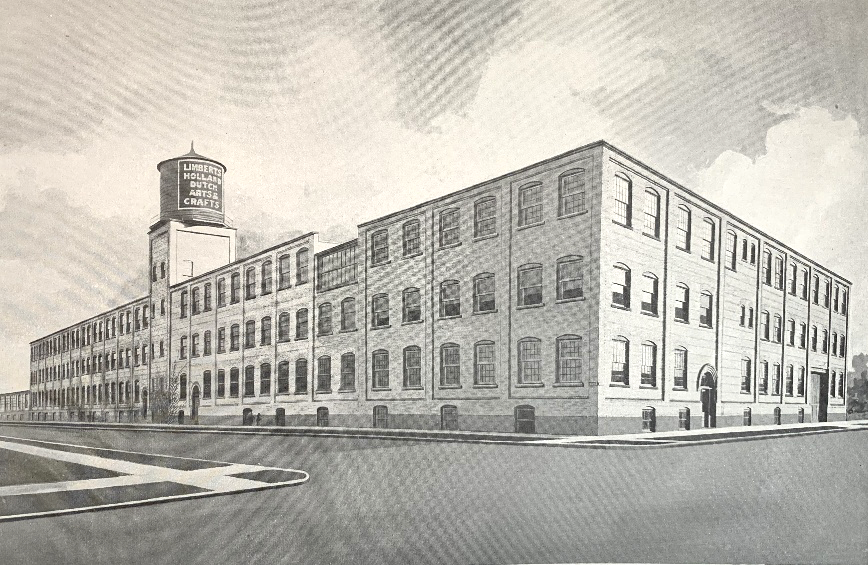
- East of Columbia Avenue, between East Sixth and Seventh streets (present site of Freedom Village), Charles Limbert and the Charles Limbert Furniture Co. (1906)
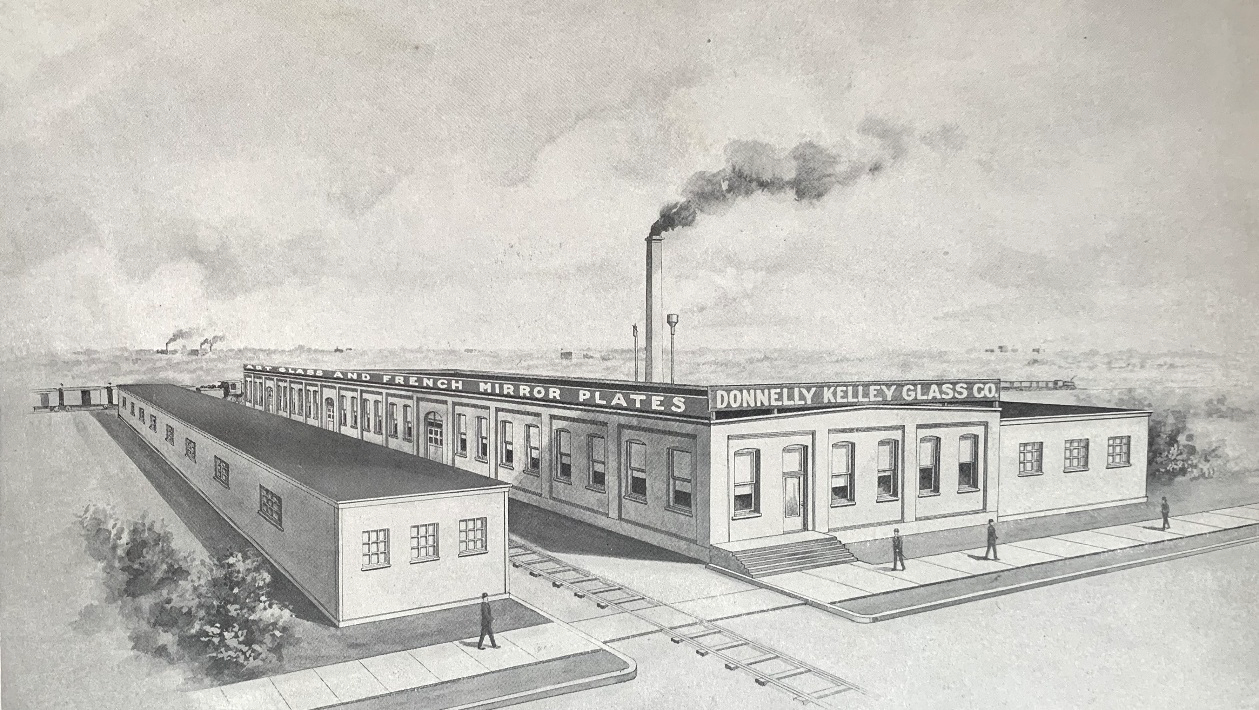
- On the west side of River Avenue, between Second and Third streets, Bernard Donnelly and John Kelley and the Holland branch of Chicago’s Kinsella Glass Co. (1905)
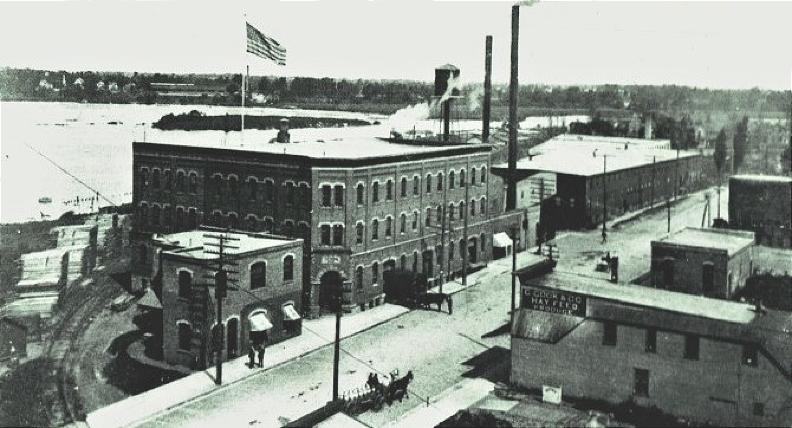
- On the west side of River Avenue, between W. Third and Fourth Streets (present site of Devroomen Garden Products and Scrapyard Climbing Collective), a group of investors — Abel Brink, J. Metz, Gradus VanArk, Jack (“Black Jack”) Van Putten, Cornelius VerSchure (Van Putten’s brother-in-law), James Huntley, Bert Slag — and the Ottawa Furniture Co. (1887)
- On the east side of River Avenue, on the north side of Fourth Street, Peter De Spelder, Henry Takken, J. Lafayette, and Cornelius Cook, and Lakeside Furniture Co. (1889)
- On the west side of River Avenue, between West Fourth and West Fifth streets, Benjamin Scott and Luke Lugers and the Scott-Lugers Lumber Co. (1888)
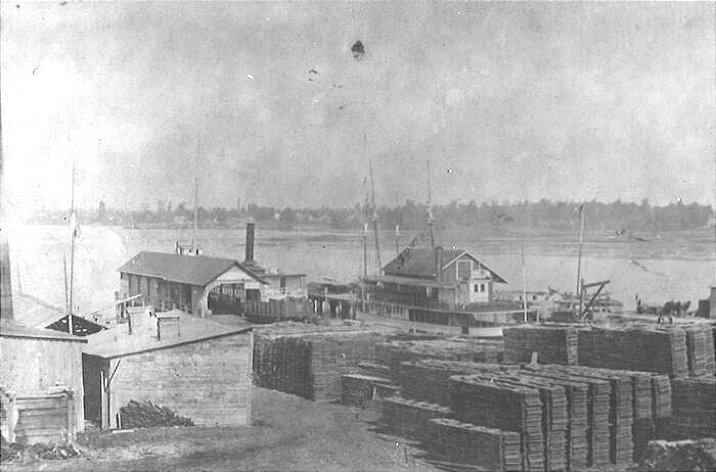
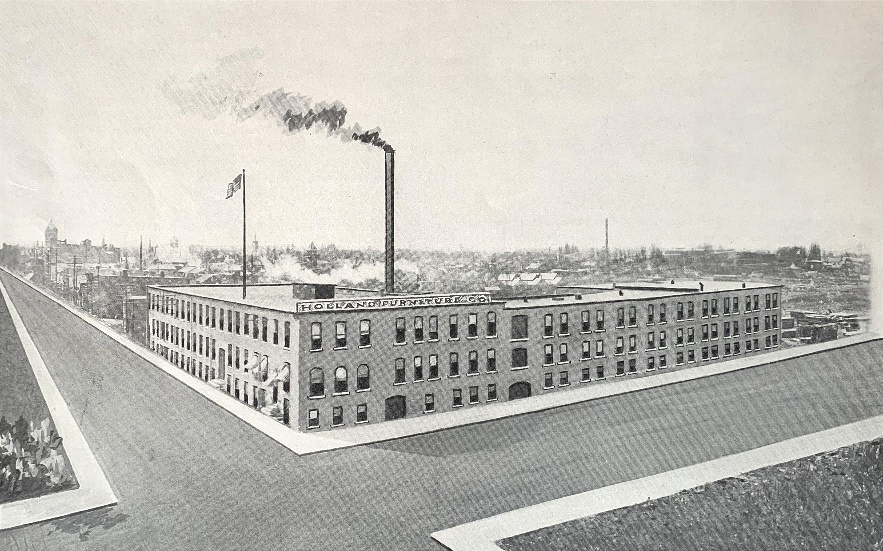
- On the west side of River Avenue (before the Pine Avenue extension), between West Sixth and West Seventh streets (present site of Scrapyard Lofts), Gradus Van Ark and his sons Henry and Frank and John VanderVeen (no relation to the author) and the Holland Furniture Co. (1893).
- On the north side of Eighth Street, where it intersects with Maple Avenue (present site of Louis Padnos Iron and Metal), Frank W. Hadden, Frederick Metz, and George Hummer and the West Michigan Furniture Co. (1889).
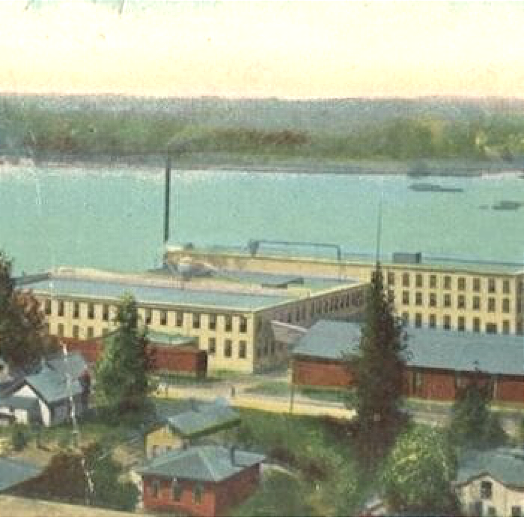
- Between Pine and Maple Avenues and West Ninth and West 10th streets (present site of the Holland Civic Center Place), Isaac Cappon and John Bertsch and the Cappon and Bersch Leather Co. (1856)
- On the north side of West Eighth Street, before it merges with West Ninth Street, Wendell Buss and George Hummer and the Buss Machine Works. (1895)
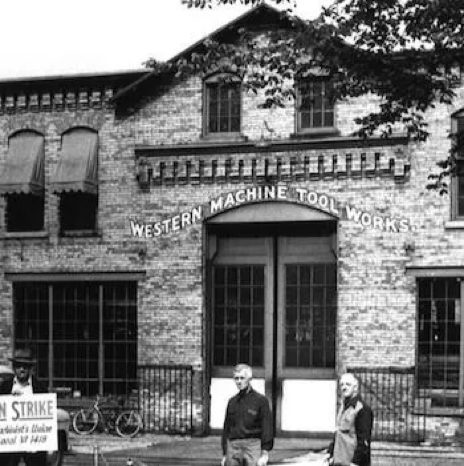
- On the north side of West Eighth Street, where it merges with West Ninth Street, Nicodemus Bosch and John Boda and Western Machine Tool Works. (1905)
- At the north side of Van Raalte Avenue (present site of Kollen Park), Charles King and the C.L. King Basket Co. (1892)
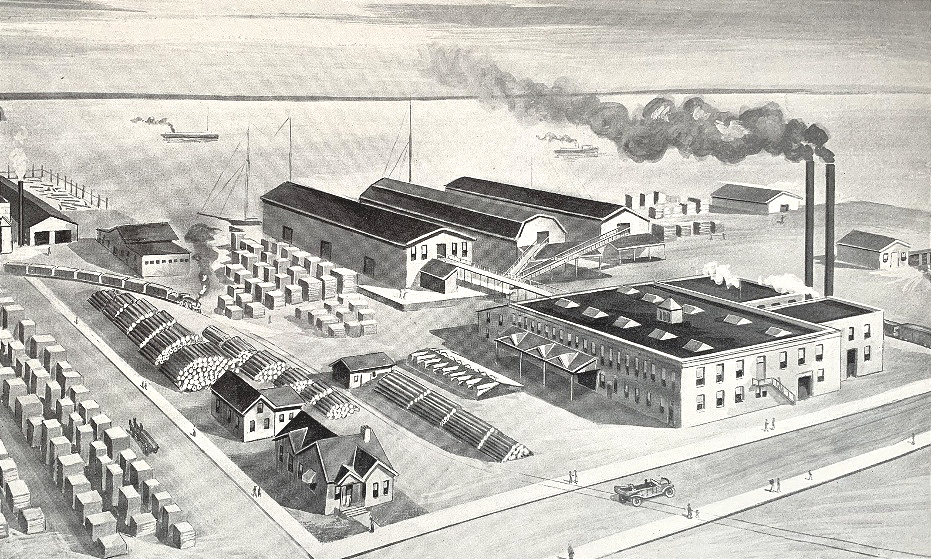
- Between Cleveland (which then ran into Macatawa Bay) and Ottawa Avenues, on the south side of 14th Street, Gradus Van Ark and the Bay View Furniture Co. (1902)
- On the west side of Ottawa Avenue and the north side of 16th Street, the H.J. Heinz Co. of Pittsburgh, Pennsylvania. (1897)
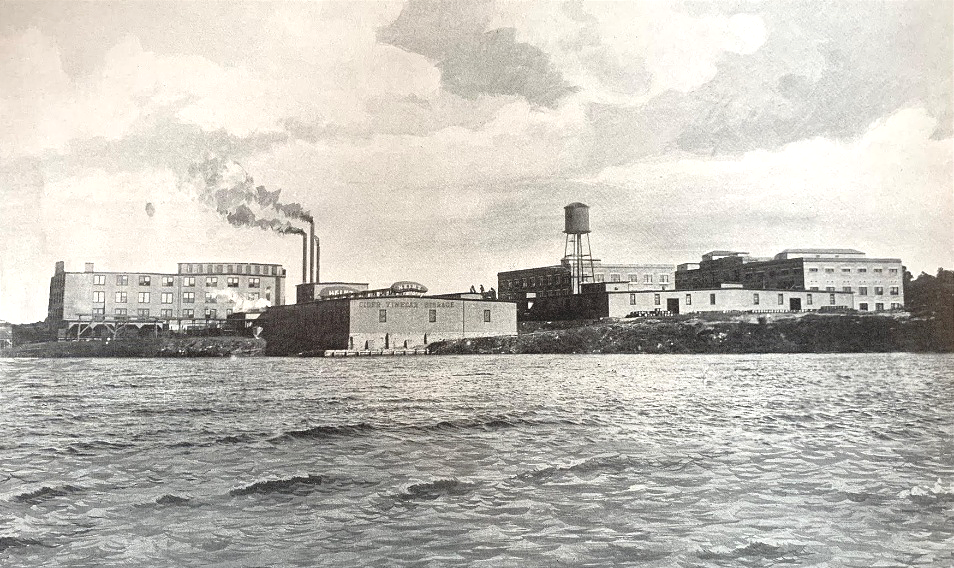
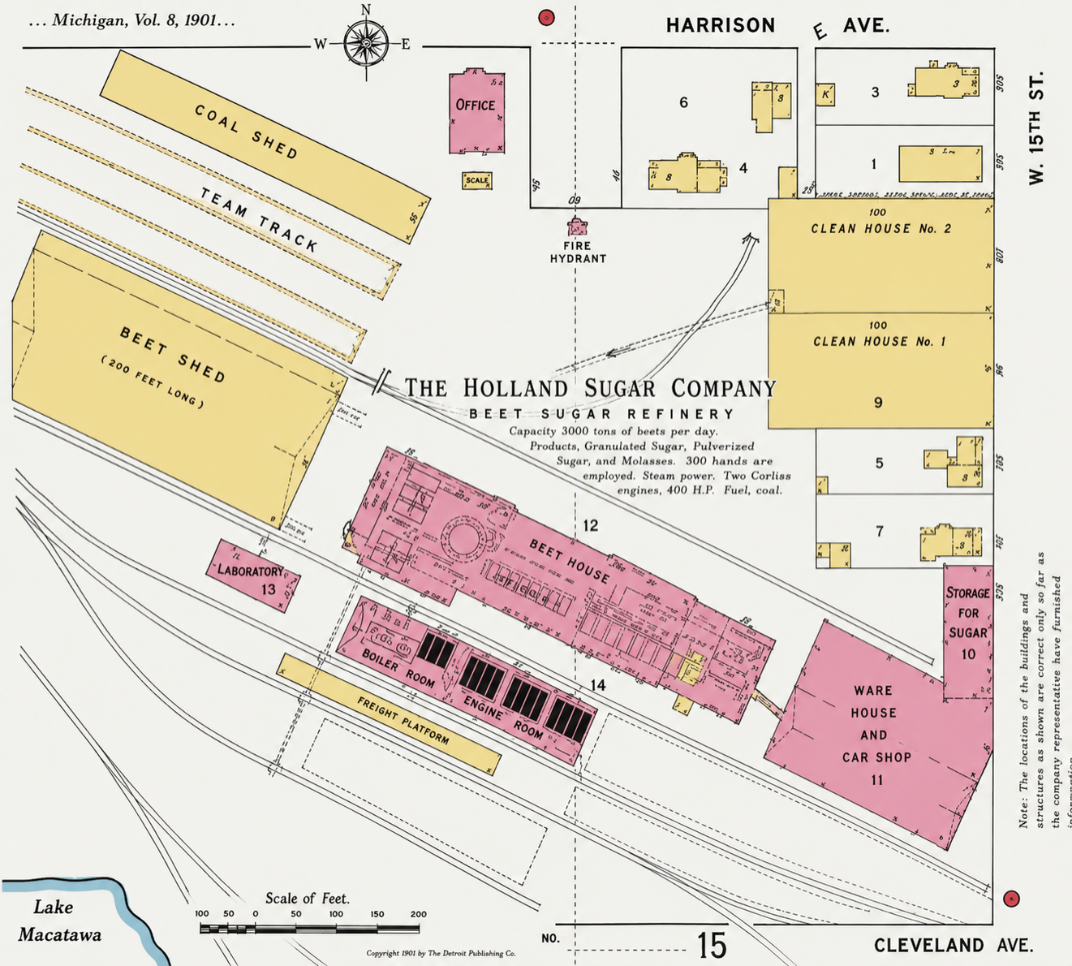
- Between Harrison and Cleveland Avenues and 14th and 15th streets, Isaac Cappon, Christian Den Herder, Hendrik DeKruif, Cornelius De Roo, George Hummer, Albert LaHuis, Charles McLean, John C. Post, Arend Visscher, Heber Walsh, among others, and the Holland Sugar Co. (1899).
This last property is the one I wish to focus on in this article.
The Holland Sugar Co.
As with the processing of pickles, the technology for processing sugar beets was not native to Holland. Neither was the production of sugar beets.
In 1839, potato grower Lucius Lyon introduced the sugar beet to Michigan’s Saginaw Valley. But the plant didn't initially take root until 1884, when Joseph Seemann, a Saginaw printer, visited Germany and brought seeds back with him, and put them into the hands of a scientist.
The scientist’s name was Dr. Robert Kedzie, a chemist at Michigan Agricultural College (present-day Michigan State University). While three entrepreneurs — Harry Wickes, Thomas Harvey and George Morley — raised money for beet-growing tests, Kedzie imported 1,500 pounds of seeds from France and then discovered a process for growing beets and extracting sugar.
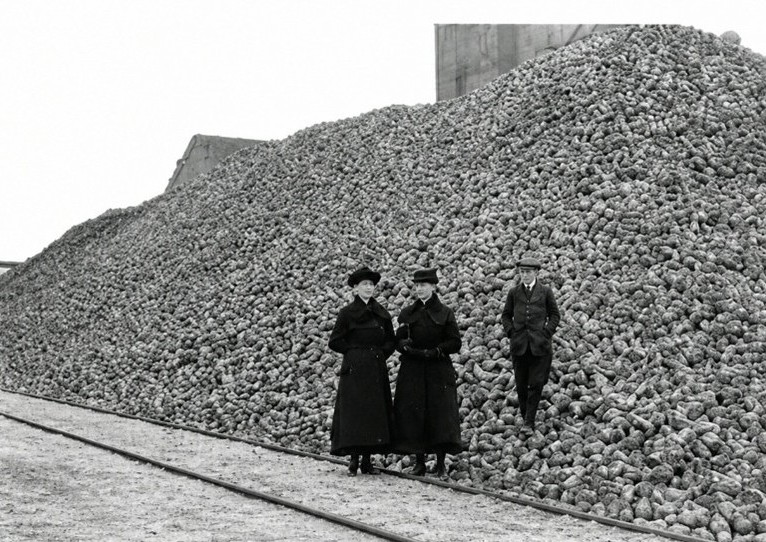
The infant sugar beet processing industry then got a lift from an unlikely source. In 1897, the Michigan Legislature passed a bill that promised to pay sugar beet processors a bonus of 1 cent per pound if they paid Michigan farmers at least $4 per ton (two-tenths of 1 cent per pound) for beets having at least 12% sugar. This act helped launch the Michigan Pioneer Sugar Co. in Bay City.
The success of the Michigan Pioneer Sugar Co., not to mention the success of the Heinz pickle processing plant in Holland, encouraged the above-mentioned business leaders to launch the Holland Sugar Co. in 1899.
The plant — consisting of a boiler house, lime kiln, pump, machine shop, warehouse and two large beet sheds — almost took up an entire city block. Charles McLean was the first manager of the plant; Douwe Yntema, a professor at Hope College, was its chemist.
In the Holland Sugar Co.’s first year, local farmers allocated 1,500 acres for beets and the factory made 2.4 million pounds of sugar. After the state gave Holland Sugar Co. its bonus ($24,000), the company gave shareholders a 7% dividend.
Unfortunately, in the following year, the Michigan Supreme Court ruled the bonus plan unconstitutional. Still, in the following years, farmers raised 22,000 to 30,000 tons of beets, the factory made 5-9 million pounds of sugar, and the company paid shareholders 4-10% dividends.
But the profits came at a cost unforeseen and unrealized in the short term: The company was a significant polluter, especially during the late fall and winter, its peak processing season. Then it pumped millions of gallons of water out of the lake to wash and process the beets and discharged the untreated wastewater back into the lake. The problem was that the water was filled with organic beet pulp, which when broken down by bacteria, consumed the dissolved oxygen in the water, resulting in fish kills, causing foul odors and a public health hazard.
Coupled with the waste generated from the Cappon and Bertsch Leather Co., toxic blue-green algal blooms were common, which left a thick layer of organic muck on the bottom of the lake over time.
The Holland-St. Louis Sugar Co.
Emboldened by its success, in 1911, the Holland Sugar Co. bought Michigan’s St. Louis Sugar Co. That year, Charles McLean’s sons, Charles and Sears, joined the company. In 1912, the Holland-St. Louis Sugar Co. added a plant in Decatur, Indiana.
When World War I broke out in 1914, sugar prices skyrocketed. Unfortunately for the shareholders of the Holland-St. Louis Sugar Co., the British naval blockade hindered the importation of seeds, and the U.S.’s introduction of price controls and acquisition of sugar from Cuba limited profits. In addition, the draft and shift into war production caused labor shortages, until the industry discovered it could replace locals with migrant workers.
Thus, after the war, to help local farmers weed fields and harvest beets, Sears McLean, Holland-St. Louis Sugar Co.’s superintendent, traveled to San Antonio to recruit temporary workers. In 1923, 100 Hispanic laborers arrived in Holland via three train cars. In 1926, 500 workers arrived on 15 buses.
Unfortunately, the people of Holland did not welcome their new neighbors with open arms, forcing McLean to assure the locals that the people from San Antonio were good-natured and hard-working, and would return home at the end of the season.
But even with the influx of migrant workers, the Holland-St. Louis Sugar Co. struggled to be profitable. This was because less expensive cane sugar was flooding the market. As a result, the Holland-St. Louis Sugar Co. sold out to the Continental Sugar Co. of Toledo, Ohio, which closed the Holland plant.
(In 1927, the City of Holland began installing a wastewater treatment system, but it didn’t include the factories along the lake for several decades.)
In 1933, during the Great Depression, locals William and John Vandenberg reopened the Holland factory as the Lakeshore Sugar Co. Supported by Franklin Roosevelt’s New Deal reclassification of sugar beets as a basic commodity — which put a floor on what farmers got paid — and restrictions on imported cane sugar, in 1935, the plant processed 19,000 tons of beets; in 1936, 28,000 tons.
When World War II began, sugar prices soared, but again the sugar beet industry had difficulty obtaining seeds.
In addition, fuel rationing kept migrant laborers at home, and the draft reduced the supply of local men to work in the factory. But local women stepped in, processing 60,000 tons of beets yielding 15 million pounds of sugar.
That made Lakeshore Sugar Co. a sweet target.
In 1942, the Doughnut Corp. of America bought Lakeshore Sugar and other sugar beet processing companies to get around sugar rationing.
The Donut Company of America
In 1920, Adolph Levitt, a Jewish emigrant from Eastern Europe, invented the "Wonderful Almost Human Automatic Donut Machine" in his Harlem neighborhood bakery in New York City.
A compact contraption, the machine fit in the window of his bakery and produced 80 dozen perfectly cut donuts every hour. Next, he founded the Donut Company of America (DCA) to manufacture his automated machines and “Downyflake” flour mixes, which he sold to bakeries across the country.
But to make his mixes, he needed sugar. Thus, he needed the Lakeshore Sugar Co.
Unfortunately, given the war-induced labor and supply shortages, he couldn’t make the business model work. So, in 1943, DCA shuttered Holland’s plant and began liquidating the property.
Various new owners, over many years, used the old sugar company buildings for industrial storage. Eventually, they were torn down, except for the office building at 345 W. 14th St.
Community Action House
Meanwhile, in the 1960s, three women — Lupita Reyes, Maria Gaitan and Frances Gamez — spearheaded the creation of the Latin American Society, the predecessor of Latin Americans United for Progress (LAUP), to meet the needs of migrant families who had permanently settled in Holland.
Following their lead, in 1969, three churches — Hope Reformed, Third Reformed and First Presbyterian — formed Community Action House (CAH). Then other churches — Christian Reformed, Methodist, and Roman Catholic — joined the effort, as well as the American Association for University Women, and social service agencies. CAH’s motto was “Helping People Find Help,” and it relied on volunteers to connect with the impoverished and homeless.
But CAH struggled to stay afloat. It was saved in 1978 when it was adopted as a United Way agency. That year, it bought the original office building of the Holland Sugar Co. Over time, in addition to serving as CAH’s offices, that location housed a food pantry and clothing distribution center.

The Kollen Park and Hope Apartments
In 2021, when Community Action House transitioned to its new "Food Club & Opportunity Hub" on Paw Paw Drive, it decided, in partnership with The Dwelling Place, Hope Church, the City of Holland, and others, to convert the old Holland Sugar Co. property into a 52-unit affordable rental housing development, the Kollen Park and Hope Apartments.
The housing units will be available in fall 2026.
As factories have left the waterfront, and local nonprofits such as Project Clarity — ODC Network (formed in 2013) continue to lead efforts to restore water quality — Holland’s waterfront is being restored as a place for community recreation and residence.
— Steve VanderVeen, or "Dr. V," is a local biographer, educator, and learner. His passion is discovering entrepreneurial leaders and local business history.
Information for this article comes from the Holland Board of Public Works, the University of Delaware's Water Resources Center, the Emeryville Historical Society, the Michigan Sugar Co., Restaurant-ing Through History, The Holland Sentinel, “Holland Michigan: From Dutch Colony to Dynamic City” by Robert Swierenga (2014, Van Raalte Press).


