

The Business Next Door: Howard Miller: The man and his namesake company
The Howard Miller Co., known as the world’s largest manufacturer of grandfather clocks and maker of fine chiming mantel and wall clocks, curio cabinets, and home furniture, recently closed its doors. Thankfully, a private firm is resurrecting its name. Here is why that name has value.

ZEELAND — The Howard Miller Co., known as the world’s largest manufacturer of grandfather clocks and maker of fine chiming mantel and wall clocks, curio cabinets, and home furniture, recently closed its doors.
Thankfully, a private firm is resurrecting its name. Here is why that name has value.
Howard C. Miller was born in 1905 in Grand Rapids, Michigan, the fourth of six children to Herman and Nellie Breen Miller.

Herman Miller was born Herman Mulder in 1868. In 1882, he immigrated with his parents, Harm and Stientje Smit Mulder, from Groningen, Netherlands, to the United States.
They settled in Grand Rapids, Michigan. In 1889, Herman became a U.S. citizen and, when doing so, changed his last name from Mulder (which means “miller” in English) to the more American-sounding Miller. Then he married Breen.
Nellie Breen was born in Graafschap, Michigan, in 1871 to Kryn Breen and Nellie Visser Breen, who immigrated to America from Noord Holland, Netherlands, in 1867.
In Grand Rapids, Herman Miller worked for the Royal Manufacturing Co. He was an effective manager; by 1891, the company promoted Herman to foreman and later to superintendent.
In 1905, the year Howard was born, Herman invested in Jacob Elenbaas’ startup Michigan Star Furniture Co., located in Zeeland. Inhabiting an old canning plant at 51 W. Washington Ave., Elenbaas’ factory manufactured bedroom furniture.
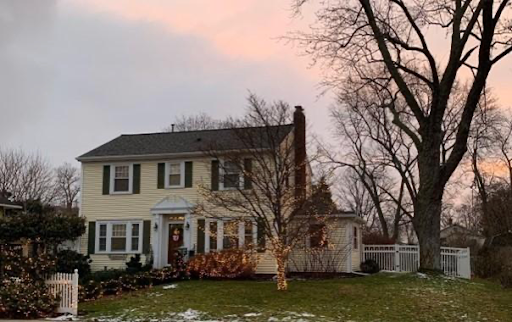
In 1913, when Howard was 4 years old, the Millers moved to Zeeland, into the grand home at 214 E. Central Ave. (present-day Parkview Home) once owned by businessman Hendrik DeKruif (the father of author Paul DeKruif).
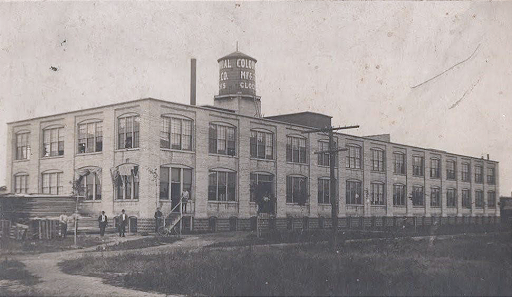
In Zeeland, Herman worked as manager of the Colonial Clock Co., also located on West Washington Street.
That year, at the Michigan Star Furniture Co., an 18-year-old named Dirk Jan (DJ) DePree accepted a job as clerk. One year later, in 1914, he married Howard’s sister, Nellie Miller. By 1919, DJ was president of Michigan Star.
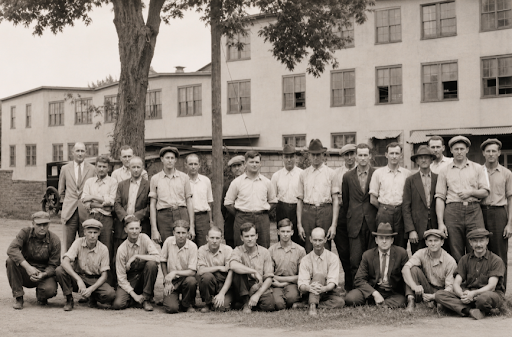
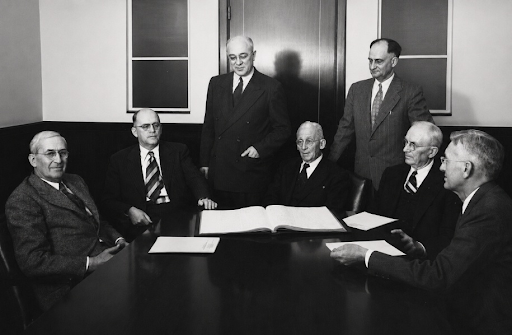
In 1923, when Howard was in high school, Jacob Elenbaas wanted to exit Michigan Star to participate in the oil boom in Texas, and even though Herman Miller didn’t think DJ had the temperament to be a successful manager, he let DJ convince him to buy out Elenbaas. (Another prominent shareholder was Christian DenHerder, the son of Zeeland State Bank’s founder, Jacob Den Herder.)
Then, to honor his father-in-law and to take advantage of the goodwill in his name, DJ renamed the enterprise the Herman Miller Furniture Co. Howard then joined DJ at Herman Miller.
Howard’s job may have interfered with his studies because he never completed high school. However, he did take classes at Grand Rapids College and Telegraphic Institute (present-day Davenport College). Then, in 1925, he became distracted by another interest.
Her name was Martha Muller, daughter of Iete Muller, the founder of Standard Grocery and Milling in Holland, Michigan. When Howard discovered Martha and her sister, Dena, were boarding a ship bound for the Mediterranean, Howard decided to surprise her: He bought a ticket and boarded the ship! He didn’t, however, make the return voyage home. Instead, he stayed in Germany and did an apprenticeship at Mauthe, a clock-making company in Schwenningen.
When Howard returned to America in 1926, he helped form a new company with DJ DePree: the Herman Miller Clock Co., which they located at 31 W. Washington Ave. (on the northeast corner of State Street and Washington Avenue), in the former Wolverine Furniture Co. building.
At first, the Herman Miller Clock Co. manufactured chiming wall and mantel clocks, importing the clock movements from Germany. To avoid tariffs on fully assembled clock movements, Herman Miller formed the Herman Miller Movement Co. with Haans Winterhalder, of Germany, to import the separate parts.
In 1928, Howard Miller and Martha Muller (which also means “miller” in English) were married. By that time, Martha’s father, Iete, had passed away, and she and her Dena were busy operating Standard Grocery, which became a wholesaler for Independent Grocery Alliance (IGA) stores.
Martha, however, would soon have other duties: Jack H. Miller was born in 1932, followed by Connie, and then Philip Dean (named after Martha’s sister Dena) in 1943.
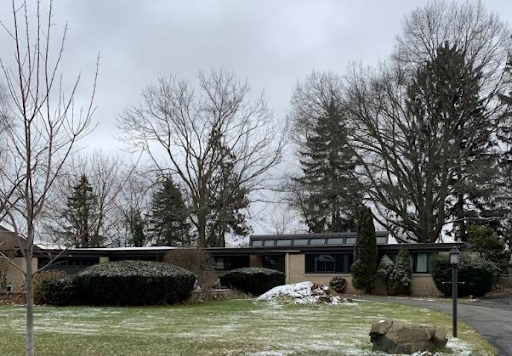
At first, the Howard and Martha Miller family lived in a colonial-style home at 27 Wall St. in Zeeland; later, they moved to a modest, modern home at 424 W. Lawrence Ave.
In the Depression years that followed, both the Herman Miller Clock Co. and the Herman Miller Furniture Co. struggled. Even though both companies incorporated the designs of Gilbert Rohde — the furniture company with modern modular seating and bedroom furniture and the clock company with battery-operated glass and chrome clocks — and both companies displayed them at the Century of Progress Exhibition in Chicago in 1933, Rohde’s designs saved only the furniture company.
Still, Howard would not give up. Despite Martha’s suggestion that he find a more stable job, such as working at the post office, Howard borrowed the $5,000 accumulated in his life insurance policy and bought back some of the assets of his old company.
Because H.L. Hubbell of Grand Rapids had purchased the facility at 31 W. Washington Ave., Howard rented the southwest portion of the closed Sligh Furniture factory at 112 W. Washington Ave. — the “west” building — because Sligh had moved to the former Dutch Woodcraft Co. (formerly Zeeland Furniture) building at 361 Main St. (present-day Sligh Apartments and Townhomes).
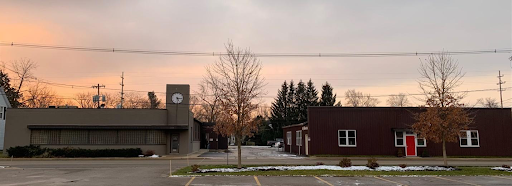
Howard’s company continued to struggle. But during World War II, it got a boost by producing anti-aircraft covers and glider parts for Ford Motor Co.
In 1945, Howard and Martha incorporated his business as the Howard Miller Clock Co.
In 1947, Howard introduced the George Nelson-designed Ball and Spoke Clock, which, with its painted wooden balls and metal rods that resembled a molecule, became an icon of the Atomic Age, which would typify the Mid-Century Modern movement's retro-futuristic style from the 1940s to the 1960s.
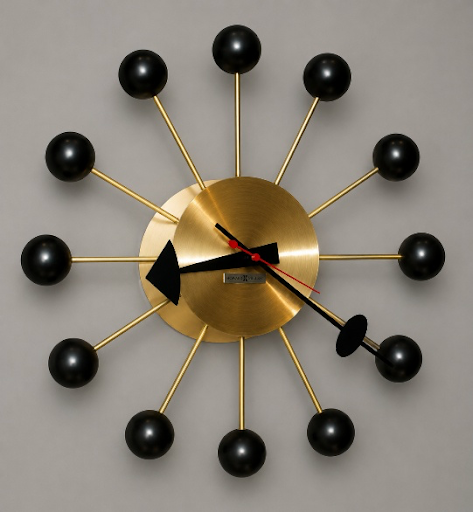
(Nelson's firm also designed the Howard Miller Clock Co.'s hourglass-shaped logo.)
That success encouraged Howard, in 1948, to build the brick-fronted “east” building at 110 W. Washington Avenue, and then a brick warehouse behind it.

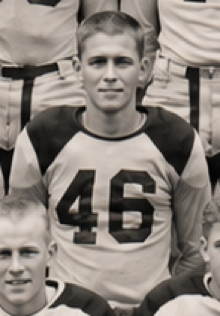
Meanwhile, Howard’s son Jack was busy at Zeeland High School as a member of its 1949-1950 undefeated football team! In 1954, after graduating from Hope College, Jack joined the Howard Miller Clock Co. full-time, becoming one of its 35-40 employees.
Under Jack’s influence, the Howard Miller Clock Co. began manufacturing floor-standing clocks, including grandfather clocks, on a contract basis. Finding success, it then manufactured and sold grandfather clocks under its own brand name.
Jack’s brother, Phil, had memories of that era. One was his mother, Martha, lobbying Zeeland High School’s administration to allow his class to have a dance. Another was working for his father: carrying wooden clock cases from the “east” building to the “west” building where their movements were attached, and cleaning sawdust out of the troughs in the middle of the floor in the east building.

Needing space, in 1965, the Howard Miller Clock Co. built a new facility on 15 acres of property on the southeast corner of East Main Street and Fairview Road, across from Herman Miller’s new plant.
In 1966, after graduating from Hope College and earning an MBA from the University of Michigan, Phil joined the company full-time.
Partly because of grandfather clocks, in 1969, 1972 and 1975, the company expanded its production capacity. It also grew when it bought Grand Prix Lumiere, a maker of lighting fixtures and lamps.
In 1974, Jack became president and CEO and Phil executive vice president. While Jack focused on operations, Phil focused on marketing and sales, which included calling on retailers.
In 1981, the company launched its “Hourglass Award” to commemorate being in business for 55 years and create a collector’s item. Recipients — individuals “who contributed significantly to society by productive use of their time” — received limited-edition Howard Miller clocks of heirloom quality.
Awardees included comedian Bob Hope, former Secretary of State Dr. Henry Kissinger, professional football coach Tom Landry, violinist Issac Stern, journalist William F. Buckley and actor James Stewart.
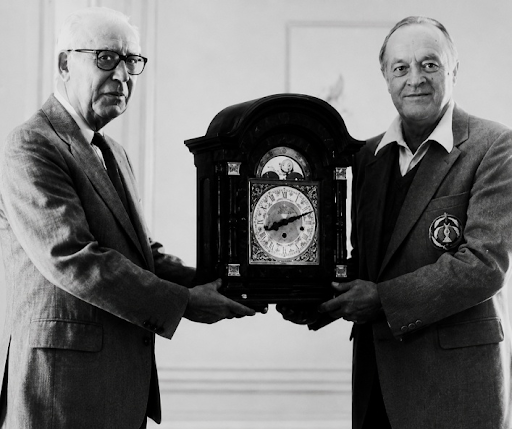
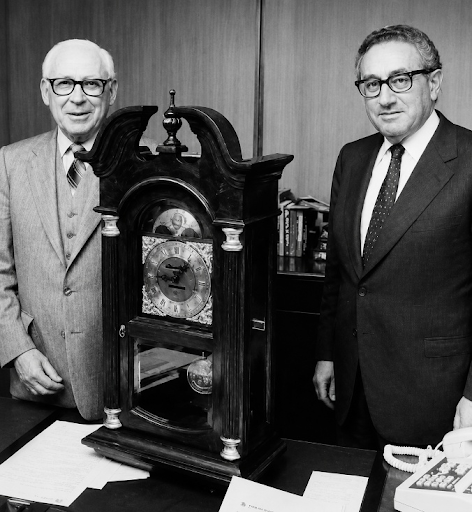
Left: Howard Miller presents Bob Hope with the “Hourglass Award” in 1981. Right: Howard Miller presents Dr. Henry Kissinger with the “Hourglass Award” in the same year 1981. [Courtesy photos/Zeeland Historical Society (ChatGPT enhanced)]
By 1983, Howard Miller Co. changed its name because, with the purchase of Hekman Furniture, it had expanded beyond clocks.
Henry, John and Jelle Hekman and James Boonstra founded Hekman Furniture in 1922, which became known for crafting high-quality tables reflecting 18th- and 19th-century English design and later bedroom, dining room and home office furniture.
With capital from Howard Miller Co., Hekman expanded into the entertainment and home office markets. Also, in 1983, Howard Miller Co. bought Alexis Furniture.
Ivan and Norman Alexis founded Alexis Furniture in 1946, which became known for high-quality wood seating and components. Also, in 1983, Howard Miller built its iconic administration building on its E. Main Street property.
In 1986, Howard Miller stated that Howard Miller Co.’s objectives were to encourage creativity, innovation and excellence in product design, provide product value and reliable service, develop distinguished products of quality materials and expert craftsmanship, maintain high technical competence and standards of productivity, and develop new and improved products for convenient living.

In a move to develop new and improved products for convenient living, in 1989, the Howard Miller Co. began building hardwood and glass-fronted collector cabinets, while keeping its emphasis on tradition and quality.
Howard Miller retired as chairman in 1990. In 1993, the company, through its Hekman Furniture division, bought Woodmark Upholstery of High Point, North Carolina. Founded in the late 1960s by Elliott and Mary Webb Wood, the company was known for high-quality, historically inspired, upholstery and residential seating.
The Howard Miller Co. also bought the Brookley Furniture Co. in Mobile, Alabama, a maker of hardwood cabinetry and wood casings, and Kieninger Uhrenfabrick, a German clockworks maker since 1922.
At its peak, Howard Miller Company employed 1,000 people.

In 1994, Howard Miller Co. bought Dimensional Products, a maker of curio cabinets. Later, it bought Newcastle Furniture in Shanghai, China, a maker of humidor, jewelry, and watch boxes, picture frames, and other wooden products. Howard Miller also expanded its local plant in Zeeland.
By 2001, the company had made 15 million clocks. In 2003, it manufactured its 2 millionth grandfather clock!
By that time, Jack had retired, Phil had moved into the CEO position, and Jack’s son, Howard J. “Buzz” Miller, had become president and chief operating officer. Phil retired from the company in 2008.

In the summer of 2025, the company announced it was closing its doors due to a confluence of market forces: tariffs on parts for clocks being shipped into the U.S. from overseas, weakness in the housing market, inflation and weakness in the furniture industry.
However, hopes were renewed in spring 2026 when the Huizenga Group announced that long-time Howard Miller Co. officials Jim O’Keefe, vice president of sales and marketing, and Andrew Christmann, director of marketing, and investors JC Huizenga, Bill McKendry and Phil Poel, with Howard Miller family members serving as advisors, would restart operations.
News reports say the group intends to offer Howard Miller’s most recognized designs and new and updated collections by the end of the year.
If successful, the restart would not be the first or second time a Miller clock-making company rose from the ashes. If it leads with innovative design, quality, precision, productivity and tradition, it will continue Howard Miller’s legacy.
— Steve VanderVeen is a local biographer, educator, and learner. His passion is discovering entrepreneurial leaders.
Information for this article comes from Robert Swierenga’s "Holland, Michigan," Phaidon’s "Herman Miller: A Way of Living"; Lena Williams of the New York Times, Clock Repair Studio, Hekman, Premier Clocks, the Zeeland Historical Society’s Timeline, The Zeeland Record, and conversations with the late Phil Miller.


