

The Business Next Door: The rise, the transition, and fall of the Holland Furnace Company II
From 1906 to 1928, the Holland Furnace Co. grew from an idea to a manufacturing powerhouse, making 46,000 furnaces. However, the world was on the verge of experiencing an economic depression and the Kolla and Landwehr families a devastating tragedy.


EDITOR'S NOTE: This is the second in a three-part series delving into the history of the Holland Furnace Co.
Part II: The Transition of the Holland Furnace Company
In 22 years — from 1906 to 1928 — the Holland Furnace Co. had grown from an idea to a manufacturing powerhouse, making 46,000 furnaces and selling them through more than 500 branch offices throughout the northern United States.
As a result, in 1928, the company earned $2 million in profits on $18 million of sales ($365 million in 2026 dollars), and its stock was listed on the New York Stock Exchange, opening at $47 per share.
However, the world was on the verge of experiencing an economic depression and the Kolla and Landwehr families a devastating and debilitating tragedy.
Read More: Read Part I of the Holland Furnace Company
The boating accident
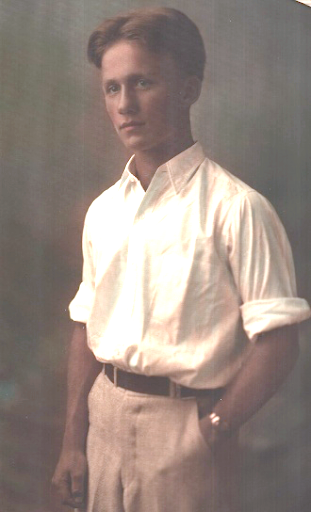
August and Louise’s son, Paul Landwehr, was an adventurer and a bit of a daredevil.
After graduating from Holland High School, he studied engineering at the University of Southern California. There, he met George Lyle. Through the Landwehrs, George met Otto Szekely of the Szekely Aircraft and Engine Co., who hired him to be a test pilot in Holland. Paul Landwehr also flew, and he loved going fast in his speedboat.
On Friday, July 27, 1928, at the Hazelbank Estate — for the Kolla, Landwehr and Nystrom families on Lake Macatawa’s Pine Creek Bay — Paul Landwehr invited George Lyle for a ride. He also invited his cousin, John Nystrom; brother-in-law, Roberto Medrano (married to Donna Landwehr); friends, Earl Van Lent and John Arens; and P.T. Cheff. (Cheff, however, declined due to an earache.)
The weather that day was a pleasant 75 degrees, but there was enough wind to cause waves on the lake. With Paul at the wheel, the custom-built powerboat sped out from the Hazelbank docks toward Lake Michigan. On its return, it encountered the “City of Holland,” a Graham and Morton-owned side-wheel steamer bound for Chicago as it was near the narrows of Marigold Point.
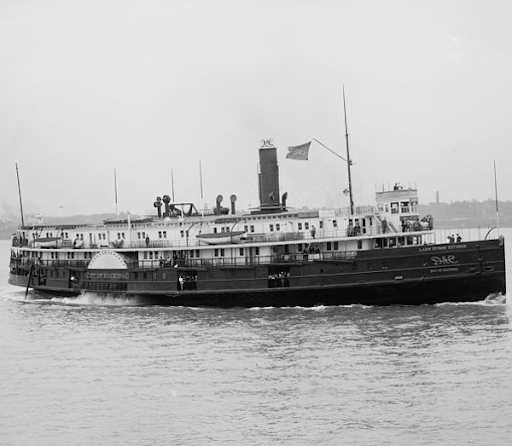
For fun, Paul drove aggressively toward the steamer at a high rate of speed, then swerved and made a tight circle around it before heading back toward Hazelbank. Then, Paul returned for an encore. Unfortunately, this time Paul’s boat got sucked under one of the steamer’s sidewheels.
Here’s the post-mortem account from the Saturday, July 28, 1928, edition of The Holland Sentinel:
The lives of four Holland young men were snuffed out last night (Friday) when the speedboat of Paul H. Landwehr collided with the Goodrich steamer “City of Holland” bound for Chicago. According to the survivors, Paul Landwehr was at the wheel of his 30-foot, $4,000 Chris-Craft speedboat. The six people in the boat were heading toward Holland, meeting the steamer headed for Chicago at a point off Marigold Point, or old Point Superior.
The speedboat circled once and ran toward Pine Lodge, near the Landwehr home at Hazelbank, then returned to the large boat at a speed of 40 miles per hour, according to the survivors.
Landwehr attempted to turn the craft away from the boat when within a few feet of it and survivors say they could feel the rudder was failing to control the craft. The two boats went side by side a moment near the right sidewheel and suddenly the smaller boat seemed to be sucked into the wheel. The first slash cut off the bow of the boat like a huge knife, the boat overturned under the wheel and the four missing men were killed.
Initially, after the accident, August Landwehr consoled the families. Later, he was inconsolable, stating that if he had not been rich, his son would still have been alive.
He never recovered from his deep depression.
In her grief, Katherine Kolla Nystrom moved to Beverly Hills, California, where the Landwehrs had a home.
P.T. Cheff followed her there, and while there, met and played polo with celebrities that included Will Rogers, Clark Gable and Spencer Tracy.
That same year, Holland Furnace Co.’s stock began trading on the New York Stock Exchange.
From the outside, the company’s prospects appeared to be bright, thanks to its profits, bolstered by Oscar Nystrom’s invention of the Aire-U-Well, a propeller-like device that forced air from the furnace into its ducts, and its many employees.
Locally, the Holland Furnace Company employed 400 people; outside of Holland, it employed 5,000, mostly in its 500 sales branches.
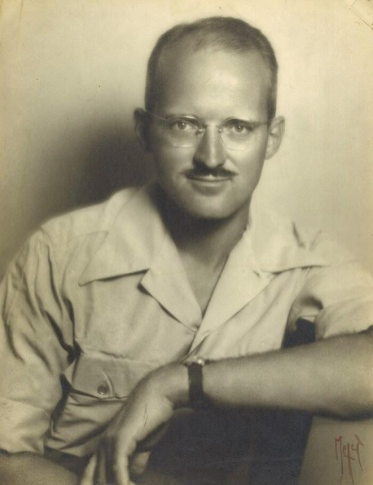
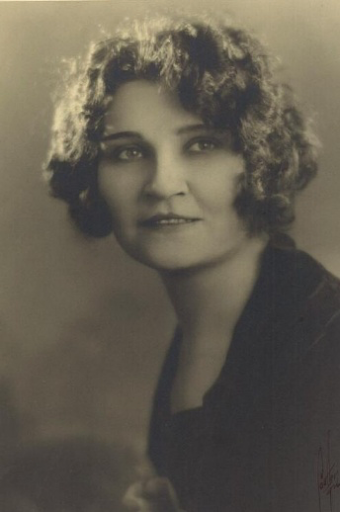
P.T. Cheff (left) wed Katherine Kolla Nystrom (right) in November 1931. [Courtesy/Holland Museum]
But on the inside, all was not well. A fissure began to form due to the following events:
- The 1929 Stock Market Crash and the Great Depression that followed, which slowed the sale of furnaces.
- The announcement in 1930 that the Holland Furnace Co. would construct a three-story, 44,320-square-foot office building on Columbia Avenue between 20th and 21st streets.
- The November 1931 ceremony in August and Louise Landwehr’s winter home in Beverly Hills, California, in which P.T. Cheff, age 42, and Katherine Kolla Nystrom, age 26, were united in marriage.
- John Kolla’s formation of Hazelbank United Interests, a family trust meant to consolidate his family’s wealth, control its future distribution, and exert a lasting influence on the Holland Furnace Co. Into that trust he placed his Holland Furnace Co. stock and stipulated his fortune be divided equally between his wife Caroline and his daughters, Katherine Kolla Nystrom and Louise Landwehr, and between Katherine and Louise upon the death of Caroline.
- August Landwehr’s deteriorating mental health. At first, the family confined him to a room at Hazelbank. But he caused so much commotion that the family moved him to a private, medically supervised room in Battle Creek, Michigan, and then to other institutions.
- The court’s declaration in 1932 that August Landwehr was mentally incompetent. In response to his condition, the board of the Holland Furnace Co. named August’s brothers, Charles and Edgar, president and general manager, and vice president, respectively.
- In 1933, the Holland Furnace Co.’s stock price broke below $4 per share.
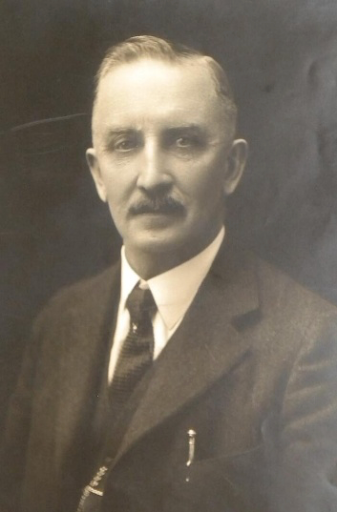
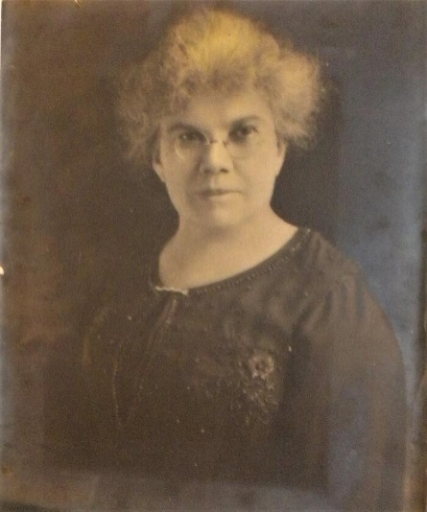
John Kolla (left) formed Hazelbank United Interests, a family trust meant to consolidate his family’s wealth, control its future distribution, and exert a lasting influence on the Holland Furnace Co. Into that trust he placed his Holland Furnace Co. stock and stipulated his fortune be divided equally between his wife Caroline (right) and his daughters, Katherine Kolla Nystrom and Louise Landwehr, and between Katherine and Louise upon the death of Caroline. [Courtesy/Holland Museum]
The building, board shakeup
Apparently, it was not John Kolla’s idea to construct a large, lavish office building for the Holland Furnace Co. He saw another opportunity.
Although the company had invested in developing a spray air-conditioning system in which air was forced through water sprayers before passing through the furnace pipes, the system didn’t work very well, especially when the water temperature was above the dew point.
Thus, instead of spending the company’s money on a new office building, Kolla wanted the Holland Furnace Co. to merge with either the Payne Heating Co. or the Carrier Heating Co., both of which were struggling financially after the 1929 Stock Market Crash. But the leaders of the Holland Furnace Co. did not grant his wish.
Then, in 1933, John Kolla died. But before he did, he asked his wife and daughters to help him reshape the board and management of the company. They honored his request.
By that time, in addition to Louise Kolla Landwehr and Katherine Kolla Nystrom Cheff, the board consisted of Thomas Marsilje, Dirk Van Raalte (grandson of Holland’s founder A.C. Van Raalte), Edward Muehlenbrock, and Charles J. McLean (son of original board member Charles M. McLean), H.W. Thorne (of New Canaan, Connecticut), and P.T. Cheff.
But together, with their united stock interests, Louise and Katherine were able to influence the board and pressure executives Charles and Edgar Landwehr to resign and replaced them with Thorne as president and treasurer and P.T. Cheff as vice president and production manager.
There were other resignations. Christian Becker, the manager of Holland Furnace’s Grand Rapids sales branch, left to take the helm of a rival, the Home Furnace Company. Also resigning were Albah Fitzgerald, purchasing agent; Charles Bennet, sales manager; and H.O. Ingram, auditor.
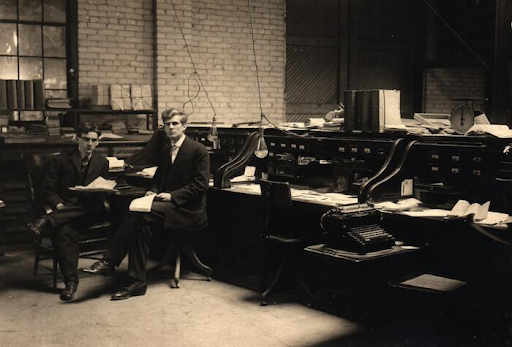
In 1934, the board promoted P.T. Cheff to general manager.
In 1936, Larry Kolb married Helena Leona Nystrom, daughter of Oscar Nystrom and Katherine Kolla Nystrom Cheff, and was named manager of Hazelbank United Interests.
In 1937, both August Landwehr and Caroline Mediger Kolla passed away. Not long thereafter, Thomas Marsilje and Edward Muehlenbrock were voted off the board, as was Charles Kirchen, a Holland industrialist.
Outward success
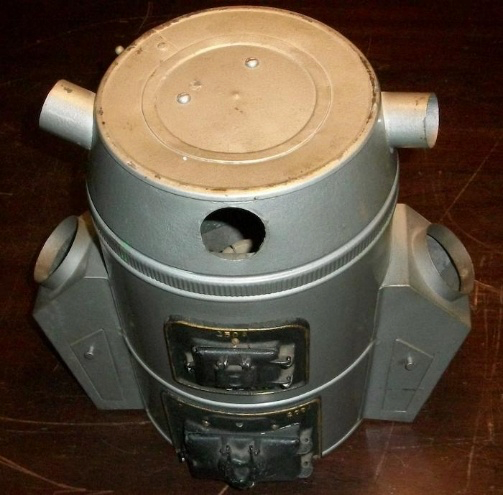
Then, as the country came out of the Great Depression, the Holland Furnace Co.’s sales and profits rebounded, enhanced when the company introduced an exhaust gas testing service, which opened more prospective customers’ doors.
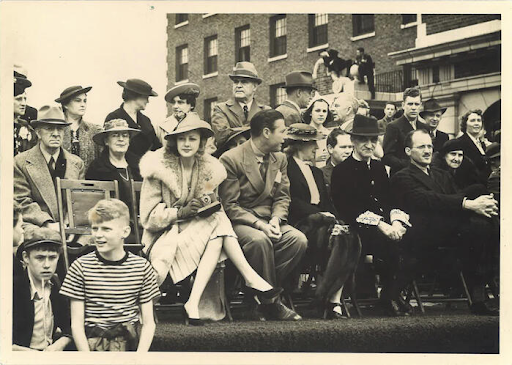
Locally, in the late 1930s and early 1940s, the P.T. Cheff and the Holland Furnace Co. were the talk of the town. For Tulip Time, Cheff invited movie stars such as Richard Arlen, Mary Brian, Virginia Grey, Dorothy Lamour, Edmund Lowe, Professor Quiz, George Raft, and Fay Wray to stay at the Warm Friend Tavern and take part in parades and other festivities.
In addition, the Holland Furnace Co. began hosting company picnics at its newly acquired Leisure Acres property on Lakewood Boulevard near Tunnel Park.
And the Holland Furnace Co.’s owners were happy, as stock price rose above $50 per share.
But below the surface, defalcation was lurking ...
— Steve VanderVeen ("dr v") is a biographer, educator, and learner, discovering history and developing future entrepreneurs. See start-upacademeinc.com.


