


Defying federal court ruling, DEO orders Campbell coal plant to stay open through at least February
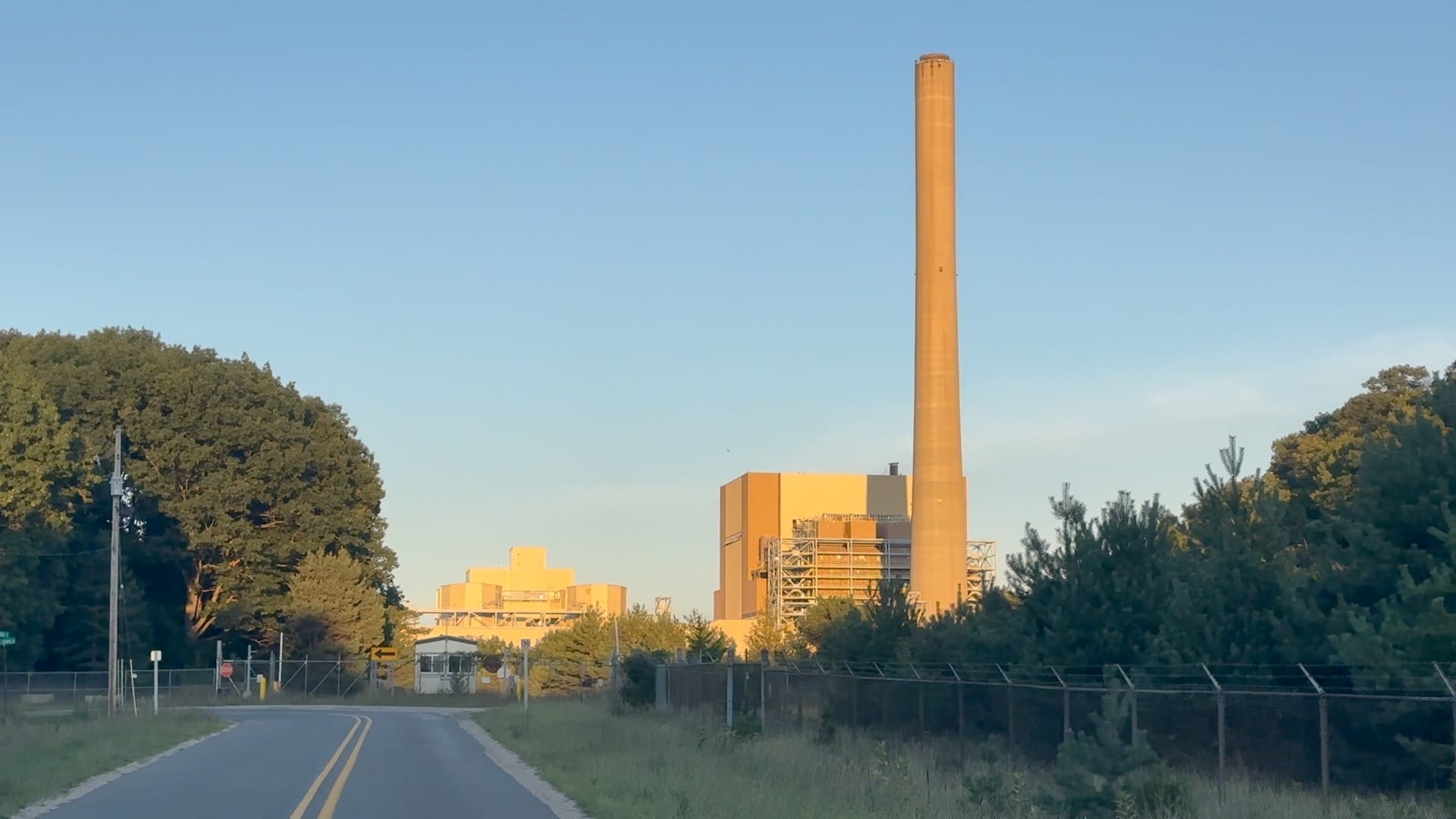
The U.S. Department of Energy has issued a seventh consecutive 90-day emergency order keeping the coal-fired J.H. Campbell plant in Port Sheldon Township available to operate through mid-February — despite a recent federal appeals court ruling striking down the original directive.

PORT SHELDON TWP. — The U.S. Department of Energy has issued a seventh consecutive 90-day emergency order keeping the coal-fired J.H. Campbell plant in Port Sheldon Township available to operate through mid-February — despite a recent federal appeals court ruling striking down the original directive.
The new order, issued late Friday, Nov. 13, took effect Sunday, Nov. 15, and runs through Feb. 12, 2027. It instructs the Midcontinent Independent System Operator, or MISO, and Consumers Energy to maintain the 1,420-megawatt facility's operational readiness for emergency grid needs while using economic dispatch to limit ratepayer costs.
Operating along the Lake Michigan shoreline since 1962, the 64-year-old plant had been slated to burn its final ton of coal on May 31, 2025 — roughly 15 years ahead of the end of its scheduled design life — under a 2022 state-approved clean energy transition plan expected to save ratepayers roughly $600 million by 2040.
Instead, just eight days before decommissioning, federal officials intervened with the first of several 90-day mandates. Keeping the aging facility running past its planned closure has added roughly $640,000 to $1 million per day in unbudgeted coal deliveries, maintenance and compliance costs, accumulating between $259 million and $295 million in extra expenses as of September 2026, according to federal court filings and estimates from state officials.
Read More: Cost of the Campbell: How a West Michigan coal plant became the epicenter for a U.S. energy war
U.S. Energy Secretary Chris Wright said in the latest order that keeping dispatchable coal generation active remains necessary to prevent winter blackouts across the region.
"President Trump and the Energy Department remain committed to doing everything in our power to stop power outages for American families and businesses," Wright said. "Ensuring coal plants such as the Campbell Plant are available to operate has prevented blackouts and likely saved lives. Americans deserve access to affordable, reliable, and secure electricity regardless of whether the wind is blowing or the sun is shining."
According to the DOE, ongoing reliability strains mirror events observed earlier this year. Officials pointed to a joint report from the Federal Energy Regulatory Commission and the North American Electric Reliability Corporation analyzing the Winter 2026 Arctic Cold Period — including Winter Storm Fern, during which MISO declared energy emergency alerts and Campbell generated more than 201,000 megawatt-hours of electricity.
Local political backdrop, community protests
Before federal officials intervened in May 2025, the debate over the plant's future played out inside the Ottawa County Board of Commissioners' boardroom, exposing local political divides over grid reliability and environmental impacts.
As reported by the Ottawa News Network, far-right Ottawa Impact commissioners pushed in early 2025 for the county to sue Consumers Energy to halt the shutdown — and some community members floated having the county take over the facility as a public utility.
While the full board rejected a lawsuit 7-4, commissioners voted 9-1 in February 2025 to approve a nonbinding resolution authored by then-Vice Chair Josh Brugger urging state regulators and the utility to pause the closure and review grid conditions.
“There was a concern by some constituents that the plant was going to close and they wanted it to stay open. There were also concerns by other members of the community who were concerned that it might stay open, and they wanted it to be closed for environmental issues among other things, so that came to the fore very quickly in 2025,” Brugger, who is now the board's chair, told ONN earlier this year.
Reflecting on the board's decision to weigh in on state and federal energy policy, Brugger added: “We felt, in the end, that we were kind of closest to the area of concern and so perhaps we had a different perspective. In hindsight, I'm not sure that we did, but that's what we felt, and we felt we had an obligation to do that.”
Once the federal mandates took effect, frustration across Ottawa County spilled out of meeting rooms and into the streets through a series of rallies and demonstrations.
Ahead of the first 90-day order's expiration, environmental advocates, medical professionals and local residents — organized by the Michigan League of Conservation Voters and the Sierra Club Michigan Chapter — gathered outside the gates of the Port Sheldon Township facility on Aug. 12, 2025, alongside state Rep. Stephen Wooden, D-Grand Rapids, and former Ottawa County Commissioner Chris Kleinjans.
Read More: Activists, officials call for closure of Campbell coal plant as utility looks to recover costs
Read More: Protestors rally in Holland, call for Campbell coal plant to close
Speakers warned about respiratory health risks from sulfur dioxide and particulate emissions, with Grand Haven-area resident Jeffrey Miller telling local media that keeping the plant open made no sense "financially, politically, economically, environmentally."
Three days later, on Aug. 15, 2025, roughly 100 residents and youth activists assembled at Memorial Park and Window on the Waterfront in downtown Holland, marching to U.S. Rep. Bill Huizenga’s district office to demand an end to the federal coal mandate and criticize rising utility costs.
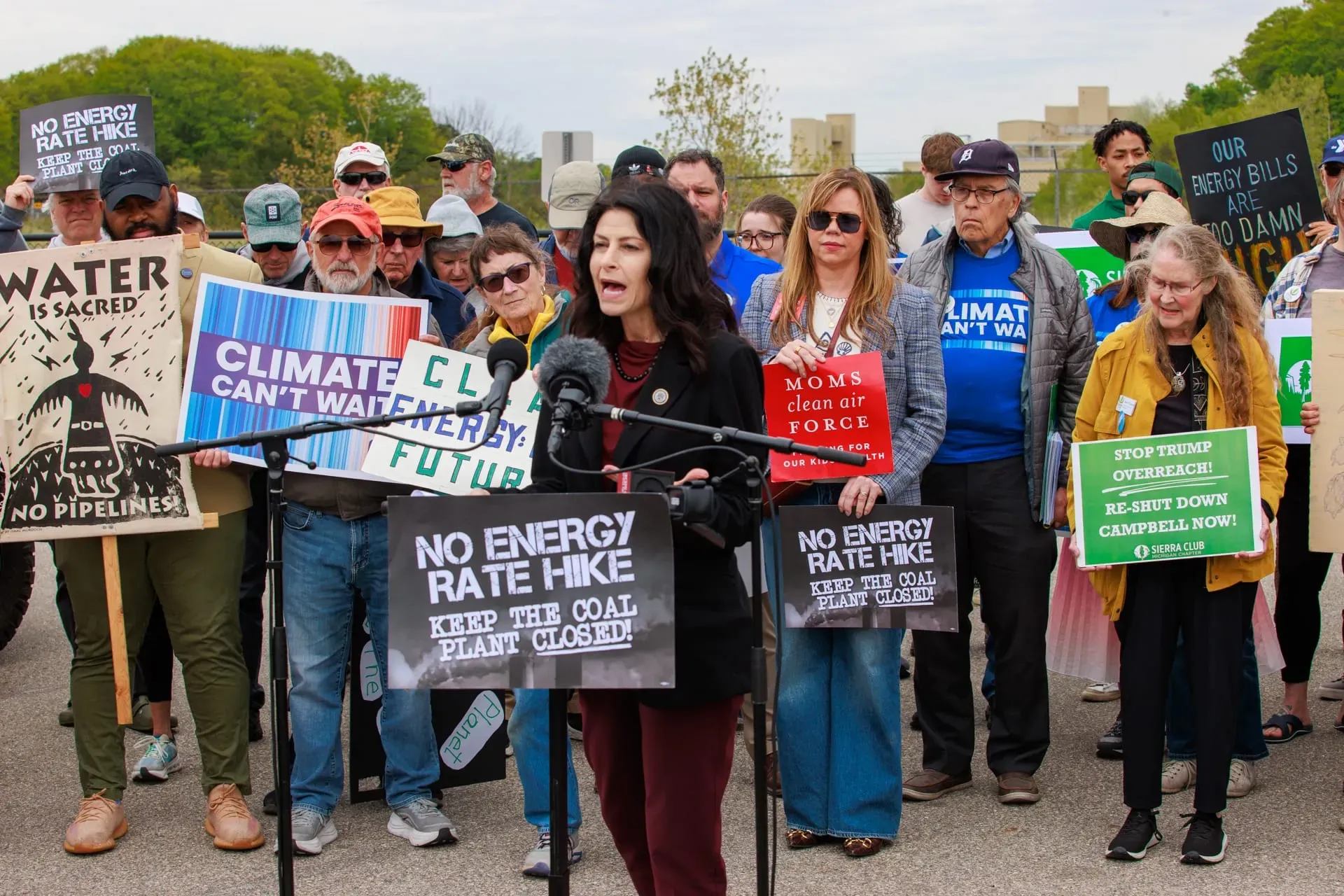
On May 21, 2026 — marking one year since Wright issued the initial emergency order — Michigan Attorney General Dana Nessel held a press conference directly outside the Campbell plant to condemn the continued extensions and highlight mounting costs passed on to ratepayers.
Legal challenges, environmental concerns
The latest federal directive arrives two months after a unanimous panel of the U.S. Court of Appeals for the D.C. Circuit ruled on Sept. 11 that the DOE overstepped its statutory authority under Section 202(c) of the Federal Power Act when it blocked the plant's May 2025 retirement.
Writing for the court, Circuit Judge Cornelia Pillard held that Section 202(c) emergency powers apply only when the agency identifies "a risk of substantial harm from inadequate electricity supply that calls for immediate action by DOE in particular," rather than long-term resource adequacy concerns managed through state and regional planning.
"Permitting DOE to compel generation in a situation that can be resolved through the ordinary resource adequacy planning mechanisms ... would render meaningless the constraints on federal power that Congress imposed throughout the Act," the court wrote, warning that the department's interpretation "would empower it to pick its preferred power sources in Michigan — or, presumably, any other state — and order them to operate" and "invites frequent federal interventions that are unsupported by the statute and threaten the stability of the energy market."
In its Nov. 13 order, the Energy Department noted it has petitioned the D.C. Circuit for a full-court rehearing and continues to invoke its emergency authority.
Michigan officials, health professionals and environmental advocates have sharply criticized the repeated extensions, arguing the orders unlawfully override state regulatory planning while driving up electricity bills and prolonging air and water pollution along the Lake Michigan shoreline. Continued coal combustion emits sulfur dioxide, nitrous oxides and air particulates while adding to coal ash ponds and wastewater discharges that local residents worry threaten groundwater and Lake Michigan.
Nessel, who led the multistate legal challenge alongside environmental groups including the Environmental Law & Policy Center and the Natural Resources Defense Council, said in September that keeping the aging facility open had already cost $295 million.
“By forcing its continued operation, DOE tried a never-before-used tactic to illegally prop up the aging J.H. Campbell coal plant that nobody asked to keep, sticking ratepayers with a bill for a facility that should have been retired more than a year ago,” Nessel said in a statement challenging the federal orders.
Following September's appellate victory, Environmental Law & Policy Center leaders emphasized that state regulators and utilities had already planned for reliable replacement power.
“No community should be forced to keep dirty, uneconomic coal power plants open when affordable clean energy solutions are readily available,” the group stated, adding that Michigan had already committed to a clean energy transition and that federal agencies should not interfere with state-approved resource plans.

Utility response, ratepayer impact
Consumers Energy — which did not request the emergency orders and has added 1,200 megawatts of generating capacity elsewhere in West Michigan to offset the planned retirement — confirmed it will continue complying with the federal mandate while seeking regional cost recovery so Michigan customers do not shoulder the entire expense alone.
Because the plant operates under a federal mandate rather than standard market economics, net operating losses — which Consumers Energy reported exceeded $135 million in net excess operational costs earlier this year out of nearly $260 million to $295 million in total gross operating and compliance expenses — are passed on to ratepayers across MISO's 15-state regional grid footprint.
"Consumers Energy will continue to follow the law and operate our Campbell plant in West Michigan, complying with the seventh 90-day emergency order from the U.S. Department of Energy," the utility said in a statement to WZZM-13 on Saturday, Nov. 14. "Consistent with these emergency orders, we will work to ensure that everyone who benefits from power from the Campbell plant across the Midwest pays their fair share."
Once federal mandates expire and decommissioning formally begins, Consumers Energy expects the remediation and restoration process at the Port Sheldon Township site to take roughly five years.
— Sarah Leach is the executive editor of the Ottawa News Network. Contact her at sleach@ottawanewsnetwork.org. Follow her on Twitter @ONNLeach.


