

Expert: Proposed zero funding for Great Lakes could cause 'cascade of breakdowns'
For the second consecutive year, the federal budget has targeted the electronic nervous system of the Great Lakes for elimination, setting up a high-stakes standoff between the White House and a bipartisan coalition of regional lawmakers.

OTTAWA COUNTY— For the second consecutive year, the federal budget has targeted the electronic nervous system of the Great Lakes for elimination, setting up a high-stakes standoff between the White House and a bipartisan coalition of regional lawmakers.
The fiscal year 2027 budget proposal from the National Oceanic and Atmospheric Administration seeks to zero out funding for the Integrated Ocean Observing System Regional Observations, according to a news release.
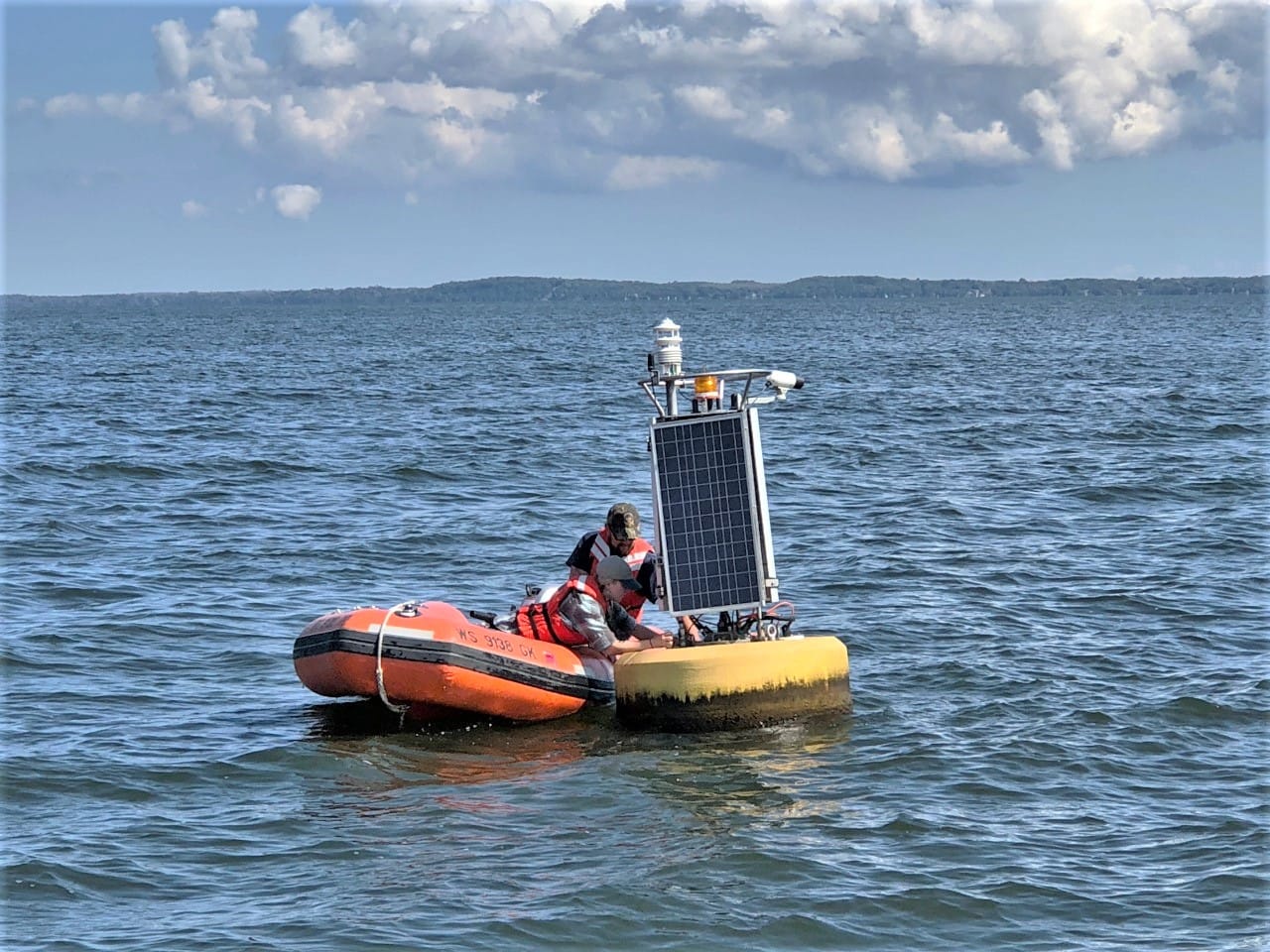
The move would effectively dismantle the Great Lakes Observing System, the nonprofit clearinghouse that manages the network of high-tech buoys, underwater gliders, and sensors used by the maritime industry, search-and-rescue teams, and municipal water managers, GLOS officials stated.
Last year, Congress rejected a similar proposal on a bipartisan basis, ultimately increasing funding for the program in the final appropriations bill.
Jennifer Boehme, GLOS CEO, warned that a renewed attempt to defund the system threatens a "Day Zero" scenario for regional water data.

"Day Zero is more a cascade of breakdowns that begin when funding stops," Boehme said.
"GLOS buoys don't get pulled overnight, but the observing system degrades when funding stops. Sensor maintenance contracts lapse, then data transmission and cloud fees go unpaid. Then partner organizations (universities, private sector and nonprofits) lose the GLOS grants that keep their equipment in the water. Within one season, the network fragments."
According to Boehme, the damage would be difficult to reverse.
"Rebuilding takes years, not months — because the institutional trust, data quality certifications, and partner relationships that make the network function cannot be switched back on with a single appropriation," she said.
Economic stakes
The proposal arrives as the Great Lakes face record-low ice cover and erratic water levels, conditions that make real-time data a prerequisite for commercial shipping, she said.
Great Lakes freighters rely on GLOS data to calculate under-keel clearance — the critical margin between a ship's hull and the lakebed. Without real-time updates on water levels and wave action, captains are often forced to carry lighter loads to avoid the risk of grounding.
"Every inch of lost draft can represent up to 300 tons of lost payload," Boehme said. "The cumulative economic cost of operating without reliable real-time data — through conservative load decisions, delayed departures, and grounding risk — runs into millions of dollars per shipping season."
Public safety, national security
The impact of a shutdown extends to the shoreline. GLOS is currently integrating its data with SwimSmart, an automated hazard detection system for public beaches.
The Great Lakes average roughly 100 drownings per year, with the vast majority of victims being young males caught by rapidly changing conditions. Ottawa County has had its share of drownings over the years, with 36 drownings in Lake Michigan alone in 2025, according to the Great Lakes Surf Rescue Project.
Read More: 'Extremely challenging': Ottawa County beaches unlikely to see return of lifeguards, citing costs
Boehme noted that the current integration automates warnings before conditions become dangerous, a significant upgrade over manual flag systems. The U.S. Coast Guard also utilizes the network's high-frequency radar and buoy data for search-and-rescue operations.
"The U.S. Coast Guard depends on real-time GLOS buoy data and high-frequency radar for search-and-rescue operations," Boehme said. "Knowing current drift patterns support the success of recovery and rescue operations. Satellite imagery provides broad atmospheric context, but for now does not replace in-water, real-time data at the resolution needed for rescue operations, vessel routing, or drinking water protection."
A policy paradox
The budget proposal has created what some experts call a “policy paradox.”
While the administration continues to fund uncrewed surface vessels — such as the SeaTrac vessel scheduled to survey Lake Erie this spring — it is simultaneously proposing to cut the regional data infrastructure that makes those autonomous missions effective.
"The SeaTrac uncrewed surface vessel is designed to operate within a data ecosystem," Boehme said. "Without the regional observing network, the SeaTrac can still move through the water, but its survey value drops sharply. This approach simultaneously proposes to fund uncrewed systems while eliminating the regional data infrastructure that makes those systems operationally useful."
Boehme also addressed whether state agencies could fill the void. She argued that the value of the IOOS network stems from its integration and federal certification, which allows data to be used by the National Weather Service, the EPA and the Coast Guard.
"The IOOS network's value stems from its integration, whereas alternative options offer a fragmented approach," Boehme said. "GLOS coordinates partner organizations and certifies data quality to federal IOOS standards... replicating what IOOS funds and certifies at a regional scale is difficult."
As the budget moves to the Capitol, regional stakeholders are looking to the Great Lakes congressional delegation to intervene once again, she said.
For now, the network remains operational, but Boehme warned that the repeated threat of cuts "can freeze planning, seasonal deployments, and force regional organizations like GLOS to operate under funding uncertainty."
— Heather VanDyke covers northern Ottawa County for the Ottawa News Network. Contact her at hvandyke@ottawanewsnetwork.org.


