

Gov. Whitmer's proposed budget for new fiscal year would mean less money for counties, cities
The proposed state spending plan from Gov. Gretchen Whitmer for fiscal year 2027 would result essentially in a decrease of funding the state shares with its counties, cities and townships.

OTTAWA COUNTY — The proposed state spending plan from Gov. Gretchen Whitmer for fiscal year 2027 would result essentially in a decrease of funding the state shares with its counties, cities and townships.
The proposed budget, presented by State Budget Director Jen Flood on Feb. 11, is the eighth and final budget of Whitmer’s term, which ends at the end of 2026.
Whitmer said her budget, which includes $13.6 billion for the state general fund, is based on "kitchen-table issues" while navigating a projected $1.8 billion funding gap caused by expiring federal aid and rising costs.
“Michigan is open for business and on the move, and this budget will deliver on the kitchen-table issues that make a real difference in people’s lives,” Whitmer said in a Feb. 11 press release. “My balanced budget proposal will build on our strong record of bipartisan success. It doubles down on shared, long-term priorities to create good-paying jobs, fix roads, save Michiganders money and ensure every child can read, eat, and succeed.”
Key proposals
- Tax relief and savings: Includes a new 10% property tax credit for seniors (averaging $345/year) and a three-year "back-to-school" sales tax holiday for supplies and electronics.
- Education: Proposes $21.4 billion for K-12 education, including a 2.5% increase in per-pupil funding (to $10,300) and $200 million to make universal free school meals permanent.
- New revenue sources: Whitmer pitched five tax hikes aimed at raising $800 million, including a 57% wholesale tax on vaping products, increased tobacco taxes, and a new tax on digital advertising for large platforms. Whitmer also wants to pull $400 million from the state’s rainy day fund to combat the state government’s higher Medicaid costs.
- Workforce: Calls for funding 55,406 state positions, a slight increase from 2026 but lower than previous years, as the administration seeks to eliminate "ghost employee" vacancies.
The Michigan Association of Counties, also known as MAC, noted that Whitmer's budget proposal for FY 2027, which begins Oct. 1, lacks larger investments for county revenue sharing and veteran grants.
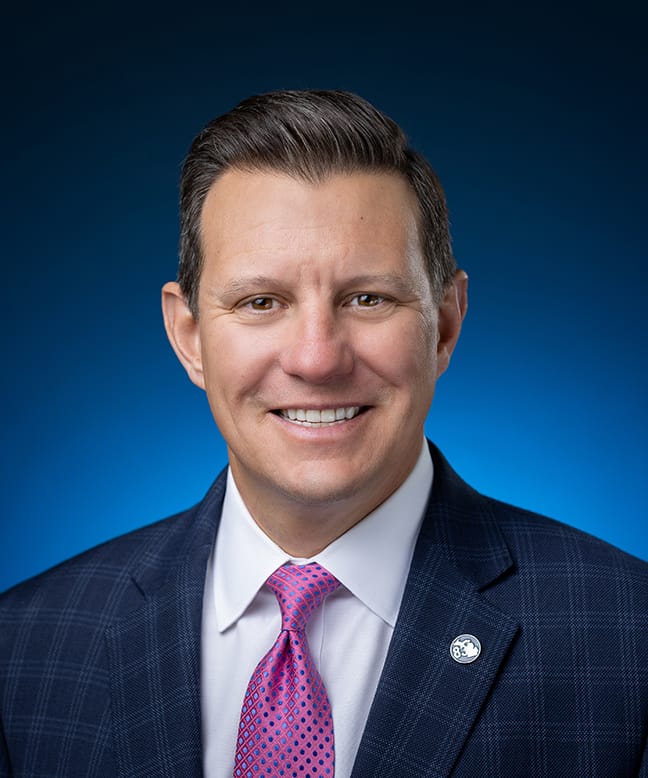
“Unlike cities, villages and townships, counties do not receive constitutional revenue sharing and therefore do not benefit from automatic increases tied to the growth in state sales tax collections,” said MAC Executive Director Stephan Currie in a statement. “County revenue sharing is entirely dependent upon annual legislative appropriations. When those appropriations remain flat, counties fall further behind — regardless of the state’s overall revenue growth.”
How the funding model works
In Michigan, the primary difference between state revenue sharing for counties and that for cities, villages and townships (CVTs) is their legal protection. CVTs receive a guaranteed payment under the state constitution, whereas counties depend entirely on the legislature’s yearly budget decisions.
Constitutional revenue sharing is "guaranteed" money, but it is only for CVTs. The formula, which is distributed on a per capita (per person) basis, uses the most recent decennial census data and requires that 15% of the first 4% of sales tax collected be distributed to CVTs.
Because it is constitutional, the state legislature cannot "cut" or redirect this money to balance the state budget.
Whitmer's suggested budget is projected to reduce this amount by approximately $25 million compared to the previous year because, although overall sales tax collections are trending upward, the amount available for local distribution is lower because of a 2025 road funding deal that replaced the sales tax on motor fuel with a fuel tax increase, which does not feed into the revenue sharing formula.
Statutory revenue sharing, by comparison, is "discretionary" money that must be approved by the state legislature every year. Both counties and CVTs are eligible, but the programs are managed separately.
Unlike the simple per-capita constitutional formula, statutory payments are often based on complex factors like "tax effort," "inverse taxable value," and compliance with "accountability and transparency" requirements (e.g., posting a public dashboard of finances).
Whitmer's suggested budget is projected to maintain the funding at the current $333 million level; however, this will ultimately mean less money for counties like Ottawa.
Officials react to proposed funding levels
Although the budget proposal points to increases in road funding as an offset to flat county revenue sharing, "these funds are restricted for road purposes only and cannot be used to fund courts, jails, prosecutors, public health, veteran services, emergency management, elections or any of the other constitutionally and statutorily mandated services counties are required to provide," Currie said.
"Counties are the backbone of local public service delivery, and restricted infrastructure funding does not address the growing operational costs of these essential services," he said. "Counties are partners with the state in delivering critical public services to Michigan residents. A sustainable, predictable and growing statutory revenue-sharing commitment is essential to maintaining those services. We urge the governor and Legislature to work with counties to ensure state revenue growth is shared equitably and that counties have the resources necessary to fulfill their constitutional and statutory responsibilities.
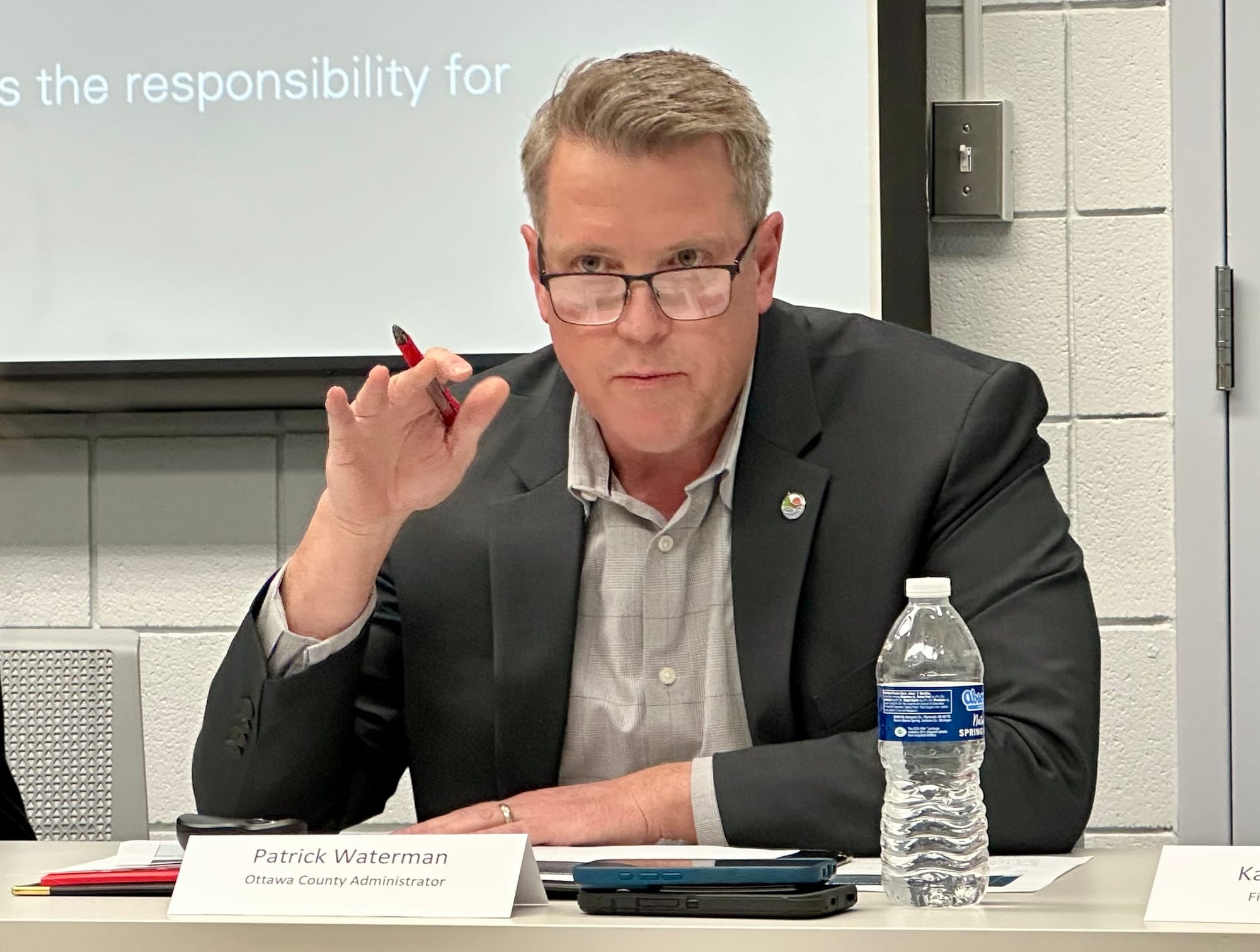
County Administrator Patrick Waterman explained that although the flat funding level doesn't seem all that bad, a portion of the money must now be reserved for "public safety funding," a specialized category of state payments — both ongoing and one-time — designed to support local police, fire and emergency services that evolved into a more formal program in the FY 2026 state budget to address local funding gaps and rising crime rates.
"This amount includes the new 'public safety funding' that the legislature passed, meaning our total statutory revenue sharing was reduced and replaced by an equal amount that is now restricted to public safety-related expenditures," Waterman said. "So while this is not technically a decrease in shared revenue funding for the county, it does not account for inflation while also restricting how a portion of these funds can be spent, which I do not view as good news."
Ottawa County Revenue Sharing Funds by Sarah LeachWhat happens next
The Michigan House and Senate Appropriations committees are now reviewing the proposal to develop their own competing versions.
A consensus revenue estimating conference in May is expected to provide the updated revenue projections needed to finalize the bills.
The legislature and governor must reach an agreement and enact a balanced budget by July 1, before the fiscal year begins Oct. 1.
Meanwhile, Ottawa County will continue to watch what will happen.
"It is too early to say what these changes will mean for the upcoming budget year," Waterman said.
The county's fiscal year matches the state's, meaning FY 2027 will begin Oct. 1.
"We will filter through what we get from the state and work our budget and services to what we can and can’t do," said Ottawa County Commissioner Phil Kuyers, who was elected to the MAC's board of directors in October. "It’s the same thing we've been doing, and we will make it work the best we can."
— Sarah Leach is the executive editor of the Ottawa News Network. Contact her at sleach@ottawanewsnetwork.org. Follow her on Twitter @ONNLeach.


