

New records: Complaints filed against former county HR director prior to $40K severance
When former HR Director Scott Hawkes walked away from Ottawa County with a $40,000 severance deal in June, his personnel file contained no complaints or disciplinary actions, after an ONN FOIA request. Now, proof has emerged that complaints against Hawkes were indeed made before his departure.

OTTAWA COUNTY — When former Human Resources Director Scott Hawkes walked away from Ottawa County with a more-than-$40,000 severance deal on June 17, his personnel file contained no complaints or disciplinary actions, after an Ottawa News Network Freedom of Information Act request.
Now, proof has emerged that complaints against Hawkes were indeed made before his departure, raising new questions about how the HR director left the county's employ.
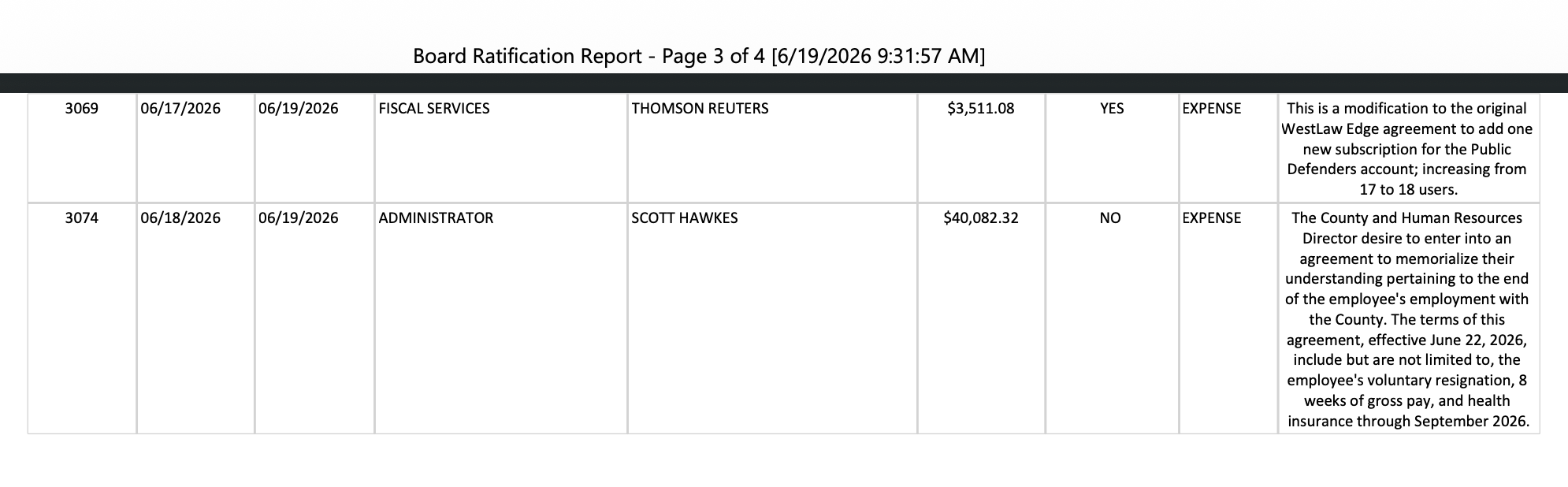
The agreement between the county and former HR director Scott Hawkes was approved by county commissioners at a June 23 meeting. The document and its details, however, were not disclosed in the public documents commissioners consider when voting during meetings, often referred to as the meeting's "packet."
The only information made public at that time was that the agreement had a value of $40,082.32 and that the county and Hawkes "desire[ed] to enter into an agreement to memorialize their understanding pertaining to the end of the employee's employment" and that, effective June 22, Hawkes would receive eight weeks of gross pay and health insurance through September in exchange for his voluntary resignation.
Read More: County: HR director who received $40K severance deal had no complaints, discipline on record
Agreement details
Ottawa News Network obtained the severance agreement on July 13 through a FOIA request filed on June 19.
The agreement states that Hawkes received a lump-sum payment of $23,082.32 and is entitled to up to 26 weeks of unemployment.
As of this publication, it was unclear if Hawkes is currently employed. A LinkedIn profile had not been updated since 2017.
The county also agreed to list Hawkes' official reason for leaving as a "voluntary resignation and provided him a letter of reference and a "brief endorsement" for future employers.
That endorsement, penned by county Administrator Patrick Waterman, says Hawkes is "a knowledgeable, professional human resources director, who could be an asset to your organization."
Hawkes, for his part, agreed not to apply for positions within the county "or any of its funded units of government." He also agreed to release the county from "any and all claims, complaints, charges, demands, grievances, claims for arbitration, and/or other causes of action (pending or contemplated) of any kind.
What those potential claims could be, however, have not been made clear.
In its FOIA request, ONN also requested a copy of Hawkes' personnel file. According to records provided by the county on July 13, Hawkes received no complaints or disciplinary action from the county.
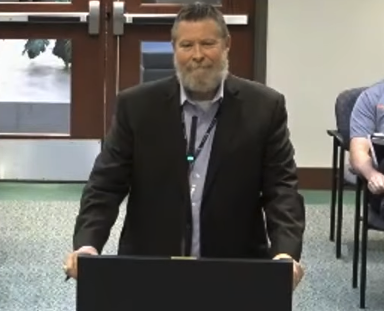
On July 17, however, the county released complaints not previously disclosed that showed that at least two county department heads filed grievances against Hawkes — just days before his severance agreement.
Wage study pushback
The timing of Hawkes' departure comes just weeks after commissioners approved an employee wage study for county employees on May 19.
The study, however, was not popular with all employees, particularly because the recommended adjustments left more than a dozen employees unsure of where they stood on wage advancement. It also excluded union employees, which affected dozens of employees, including those in the county's health and community health departments and courts and the sheriff's department.
"I would like you to reconsider preventing the union employees from benefiting from the wage study immediately," health department employee Tom Niebor said at the board's April 30 meeting.
Niebor, who serves as the local union representative for the health department, said the wage study had several flaws, including that certain positions such as managerial, administrative assistant, fiscal and treasurer roles were "clearly favored."
"I'm sure they are all well deserved, but the distribution of these shows clear favoritism," Niebor said.
In addition, Niebor said the bigger step wage increases only apply after four years, and before that, employees are actually paid less.
"This essentially red circles new employees to benefit the long-term employees," he said. "Any union group that would accept this as part of a wage study is hurting itself."
Hawkes, for his part, publicly supported the study by Baker Tilly, saying it allowed the county to remain competitive and attract top talent. The delays, however, seemed to be a point of frustration.
"There have been some delays internally," he told commissioners at the April 30 meeting. "That is going to delay our employees once again from market increases that are due to them."
He also appeared to not support including union employees in the wage study.
"Those employees don't have the right to bargain," he said of non-union employees. "Our other employees that are unionized will have their rights to bargain."
The board tabled the study at the April 30 meeting.
The pushback led to several delays of the wage study's implementation.
Niebor pointed to 2023 and 2024, when the far-right faction on the board known as Ottawa Impact held a controlling majority of commissioner seats and that the handling of the most recent wage study hearkened back to OI's tactics of gaining leverage of union employees.
"You can offer the wage study increases to union employees at any time. The unions will call a vote from our members, and they will decide if they approve it or not. This allows for a democratic workplace and gives the wage study extra validity if it is passed," Niebor said.
"Not providing this option is the same tactic used by Ottawa Impact when they ran the board previously in order to gain leverage in negotiations."
Ultimately, the board approved the wage study at its next meeting on May 19 — without including union employees.
Waterman and Hawkes signed the severance agreement 29 days later.
The agreement noted that Hawkes had been given 21 days to consider the agreement; however, it allowed him to voluntarily sign the agreement in less time.
What the complaints say
The two complaints were filed by Jennifer Brozowski, director of the Ottawa County Community Action Agency, and Adeline Hambley, the county's public health officer.
Both complained about the handling of the county's wage study, which eventually was approved on May 19 after several public delays.
"I am submitting this letter as [a] formal grievance concerning the following issues with Scott Hawkes, Human Resources Director," Brozowski wrote in a memo dated June 11 to Waterman and Deputy Administrator Brian Disette.
Brozowski said that, "under Mr. Hawkes’s leadership, there have been multiple instances of miscommunication and inconsistent information regarding the implementation of the wage study."

"These inconsistencies have created confusion regarding the interpretation of the study results and the options available to affected employees," she said.
Brozowski said she had 15 different email exchanges with Hawkes and other county HR staff before she had accurate information to share with her employees.
"This lack of clarity has contributed to employee frustration and concerns regarding fairness and transparency in the process," she said.
Brozowski also said she experienced "disrespectful communication" from Hawkes.
When she tried to advocate for an employee regarding the wage study, Brozowski said she was "given limited opportunity to fully express my concerns, and when I did speak, I was interrupted multiple times."
"During the discussion, Mr. Hawkes characterized the concern as essentially being that an employee was upset because they wanted to make more money immediately. I felt this statement minimized the legitimate concerns being raised regarding the employee's compensation and years of service," she said.
Hawkes also told Brozowski that the employee in question would not be allowed to appeal the wage study findings.
"I suggested that the employee be allowed to appeal the wage study findings or apply for [a] newly established role. Mr. Hawkes stated that neither option was available and further indicated that moving into a different role was also not an option," Brozowski said.
The employee felt devalued and said the wage increase they received was "a slap in the face after all of the hard work" completed during their tenure, she said.
"I was concerned that these feelings were not acknowledged during the discussion and that little consideration was given to the potential impact on the employee or the department," Brozowski said. "Mr. Hawkes's repeated interruptions, unwillingness to engage in meaningful discussion regarding possible solutions, and overall tone during the conversation were perceived as dismissive and disrespectful.
"What I find most concerning is that Mr. Hawkes, as the head of the Human Resources Department, engaged in this behavior toward a department head in the presence of the deputy county administrator and one of his subordinates," she said. "This raises concerns about the extent to which Human Resources values and respects Ottawa County employees. It also leads me to question whether similar interactions may be occurring with other employees throughout the organization."
There were, in fact, other employees experiencing similar problems.
Hambley also submitted a formal complaint requesting an administrative review of Hawkes and detailed what she described as a sustained pattern of incorrect HR guidance, lack of collaboration, disregard for past practice and overstepping authority.
"My concern is not a single disagreement or a matter of personal friction," Hambley said. "It is a sustained, documented pattern in which HR direction under Mr. Hawkes’ leadership has frequently been incorrect, has set aside departmental expertise and established past practice, and has produced outcomes that disadvantage employees and the county."
Hambley argued that Hawkes' behavior created unnecessary administrative rework, legal and grievance exposure, poor employee retention, and weakened trust in leadership.
"The cumulative effect is significant: avoidable rework for department heads and administration, grievance and liability exposure, devaluation of highly skilled staff, weakened trust between departments/staff and human resources, and erosion of Ottawa County’s standing as an employer of choice," Hambley said.

Hambley outlined specific concerns with an employee in the environmental health department, who, after earning a promotion for completing additional education and certifications, received a wage increase of only 12 cents per hour.
When Hambley attempted to intervene on the employee's behalf, she said Hawkes "presented a predetermined decision" and did not allow input from her or others.
"His central rationale was that, with the establishment of the [OCDPH employees] union, the relationship had changed in a way that reduced management discretion, and that under the AFSCME [collective bargaining agreement] additional education and training does not entitle an employee to automatic advancement on the salary schedule."
She said the experience not only left a longstanding valued employee without answers for nearly a month, but underscored a discrepancy between how employees in similar circumstances are treated.
She said, of the four employees that recently moved to senior environmental public health specialist (Grade U10) under the current union collective-bargaining agreement, two received increases of 14.7%, while a third, credentialed in March, was incorrectly placed at roughly a 1.5% increase "and will likewise require correction."
"Each is a potential grievance carrying back-pay exposure from the regrade date, and the inconsistency discourages the credentialing the department depends on," Hambley said.
Hambley said Hawkes also refused to process a state-funded nurse retention and loan repayment program application, claiming a lack of board approval and research time — despite zero financial risk to the county.
"When a public health nurse sought to participate, Mr. Hawkes effectively declined the request, saying he had 'asked around' and that the county does not do this. No meaningful attempt was made to understand how the program benefits the county, and the nurse’s eligibility window was placed at risk," Hambley said.
"Only after administration and corporation counsel became involved did the matter move forward, with the county ultimately participating. The episode discouraged staff and consumed leadership time that an informed HR response would have avoided."
Hambley also noted other things that Hawkes refused to accommodate, such as a planned and budgeted four-week overlap of a supervisor position to allow for training as a longstanding manager retired.
Hambley said Hawkes' decision forced her to appeal to Waterman's office, which ultimately approved the plan; however, her concerns with the deviation from historical practices.
"This reflects decision-making authority that does not rest with the HR Director, and a disregard for department head expertise and the budget realities within which we work. The process also converted a well-supported, cost-neutral request into an avoidable expenditure of leadership time."
"This reflects decision-making authority that does
not rest with the HR Director, and a disregard
for department head expertise and the budget realities within which we work. The process also converted
a well-supported, cost-neutral request into an
avoidable expenditure of leadership time."
~ Adeline Hambley
Ottawa County administrative health officer
She also referenced her concerns with the county wage study, which she said had inconsistent, incomplete, or unprovided communication and that there was limited engagement with department heads to understand positions and operational needs.
"On several occasions, the messaging suggested that staff should be grateful the county was undertaking the study at all, with comments that this either had not occurred at Mr. Hawkes’s prior employers or that the employer there had simply implemented what it wanted, reflecting a misunderstanding of how local government compensation decisions are made," Hambley said.
She said she provided HR with input for her department; however, consistent problems and errors persisted.
"Input I provided through HR was met with pushback or ignored, and no questions were directed to me to better understand the positions at issue," Hambley said. "Specific documented errors and classification concerns were raised repeatedly over several months and were addressed only after administration or Baker Tilly became involved. In some cases, a correction would appear on one draft only to be reintroduced as an error on the next."
Still no clear reason
The county is an "at-will" employer, meaning either the employer or employee can end the working relationship at any time, without notice and for any (or no) reason.
Employers, however, sometimes offer severance packages to at-will employees to protect themselves from future lawsuits, protect trade secrets, prevent former workers from soliciting clients, or to manage image, among other reasons.
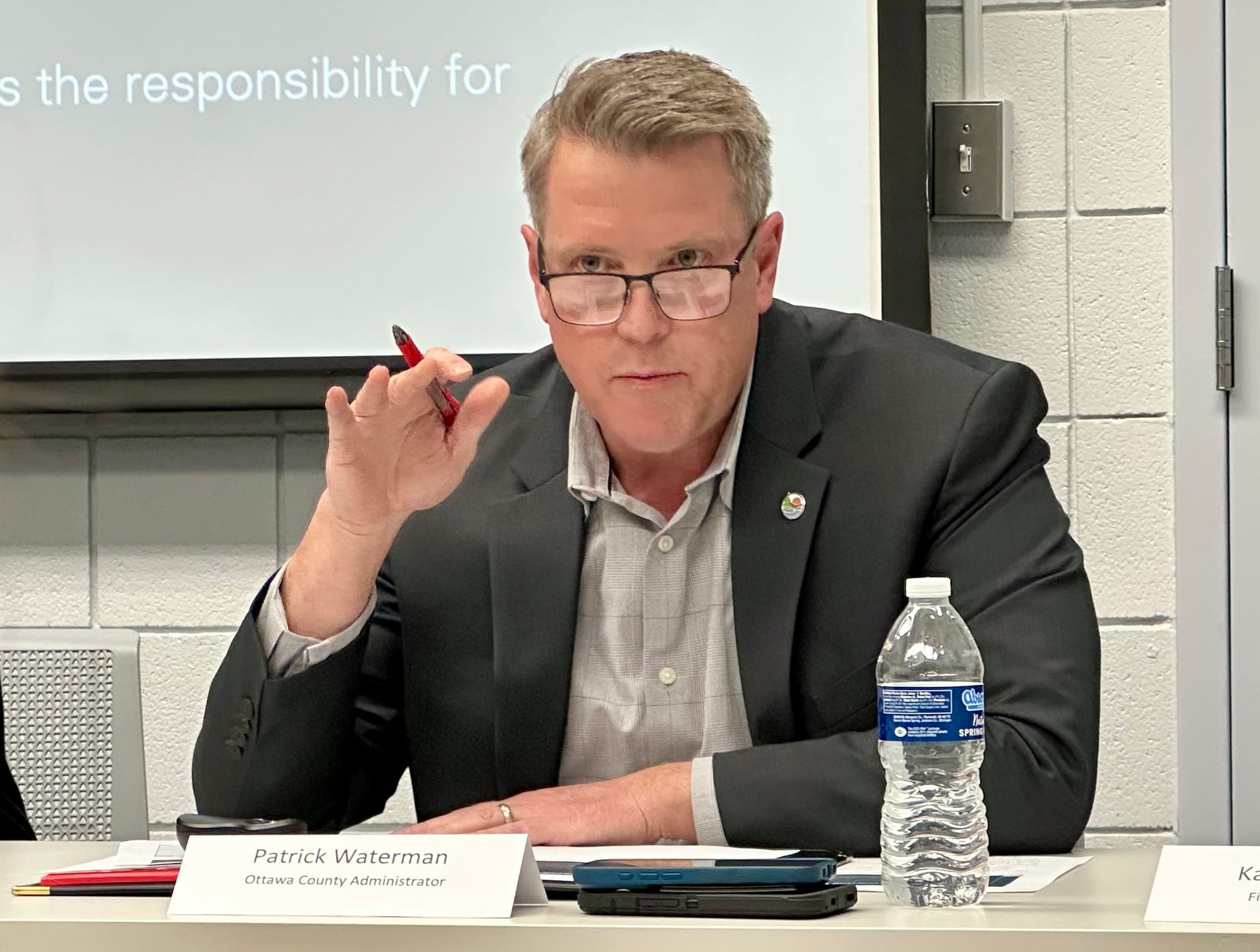
Current policy allows County Administrator Patrick Waterman to authorize and sign contracts up to $70,000 without prior approval by the board of commissioners.
To satisfy legal oversight, these contracts are subsequently brought before the board during regular meetings in the form of a post-execution ratification list, which is how Waterman presented the Hawkes severance agreement on June 23.
Commissioner Doug Zylstra, the lone Democrat on the board, questioned at the board's June 23 meeting the need for a severance agreement if there were no clear reasons to do so.
"I believe in treating all our employees with dignity and generosity, both ongoing and outgoing employees alike," Zylstra said, "but I also think we need to treat our employees with even-handedness and fairness.
"Unless outgoing severance is going to be a standard practice for all our departing employees, I don't think an agreement of this nature is a precedent that we should be setting."
The post-ratification contracts list was approved at the meeting by a 10-1 vote, with Zylstra voting against the measure.
Waterman told ONN in a July 18 email that the choice to pursue a severance was not unorthodox.
"It is common, both in the public and private sectors, for severances to be provided to top-level officials in unusual circumstances when an immediate amicable separation is in the best interests of both parties. Such was the case here," he said.
In a July 17 email to ONN, Brugger said it wasn't the board's role to question Waterman's decision to put the severance agreement through the post-ratification contracts list.
"In a professionally run organization that is future-focused, the amicable resignation of an employee and a reasonable severance of 60 days isn’t something that merited a lengthy discussion," Brugger said. "From my perspective, when presented with the concept of a severance, the thought of litigation or “avoiding it” never crossed my mind. It simply wasn’t a factor."
Brugger said the role of administrator is not unlike that of an NFL football coach, where, "for the team to be successful, the coach or administrator needs to be given the leeway necessary to make decisions that he or she feels are in the best interest of the county; particularly when it comes to staffing at the executive level," Brugger said.
"With this in mind, the board’s nearly unanimous support of the administrator’s amicable separation agreement with Mr. Hawkes was a vote of confidence in Mr. Waterman, and we believed, in the best interest of the county."
Brugger said he would like to get back to business to focus on broader issues the county faces.
"The board's primary focus is on ensuring that staff has the tools and resources needed to carry out the unanimously adopted strategic plan," Brugger said. "Housing affordability, groundwater usage, and the many challenges that come with living in one of the fastest-growing counties in the state, if not the Midwest, are what we're focusing on."

Controversial hiring
Hawkes' hiring came at a tumultuous time for Ottawa County.
The same day the county board approved a controversial severance agreement for former interim administrator Ben Wetmore in December 2024, he told Hawkes to report for work — without completing the county's hiring process.
Read More: County commissioners say they were misled, pressured to approve severance agreements
The move caused internal confusion over whether Hawkes' hiring was valid and if Wetmore had the authority to continue accessing confidential employee information.
Wetmore signed his original agreement on Dec. 10, 2024; however, the agreement was re-approved on Dec. 19 after a lawsuit challenged its validity.
Read More: Howard challenges legality of severance agreements, Crockery Lake contract
“On Tuesday, Dec. 17, Ben (Wetmore) requested HR provide an update on the background check process for Mr. Hawkes," then-interim HR director Zac VanOsdol wrote in a Dec. 19 email to county commissioners. "Per the (board of commissioners) approved ‘Severance and Separation Agreement’ for Ben, HR was unable to provide Ben with an update on the process because that is confidential information and violates Ben’s agreement."
VanOsdol said Wetmore contacted Hawkes directly and told him to report to work on Thursday, Dec. 19, even though the required background and reference checks through the county’s systems had not yet been completed.
The OI-led board did not address the hiring process discrepancy, and Hawkes' employment was permitted to continue.
What happens next
Hawkes' departure adds to a mass exodus of the county's HR senior leadership since 2024.
Former longtime director Marcie VerBeek resigned in May 2024 after numerous lawsuits filed against the county and the board included allegations of wrongful termination, retaliation and hostile work environment claims against the OI-led board.
After Hawkes was hired over VanOsdol, who had been serving in the interim director role, VanOsdol resigned in mid-2025. A longtime benefits specialist also recently left the county's employ.
Currently, the county shows Sarah Allen as interim director. The assistant director position is currently vacant, as is one of five analyst positions.
The county publicly posted the position for the HR director role. The deadline for applications was July 15.
— Sarah Leach is the executive editor of the Ottawa News Network. Contact her at sleach@ottawanewsnetwork.org. Follow her on Twitter @ONNLeach.


