

Ottawa County surveys: Employee morale rebounding, but resident tax, trust concerns growing
Although internal employee engagement, leadership confidence and retention have rebounded significantly over the past two years, public confidence in county financial management and overall direction has eroded.

GRAND HAVEN — Newly released data from two comprehensive Ottawa County surveys paints a sharply contrasting picture of county operations: Although internal employee engagement, leadership confidence and retention have rebounded significantly over the past two years, public confidence in county financial management and overall direction has eroded amid heightened resident anxiety over taxes and housing affordability.
Presented during a special work session of the Board of Commissioners on Friday, Nov. 13, the 2026 Citizen Survey and the 2026 Employee Engagement Survey provided commissioners and county leadership with detailed benchmarks to guide strategic planning, workforce retention and public communication.
Citizen survey: Tax frustrations, trust gaps grow
Kelly Sullivan of EPIC-MRA presented the findings of the 2026 Citizen Survey, the ninth in a series of biennial public opinion studies dating back to 2006 (with a pandemic-era gap between 2021 and 2026).
Conducted July 6-10, the survey included live-operator telephone interviews with 400 registered Ottawa County voters who voted in the general election in 2022 and/or 2024 — or were newly registered — with 81% (324 interviews) completed via cellphone.
The sample was stratified across five county regions and carries a 95% confidence margin of error of plus or minus 4.9 percentage points.
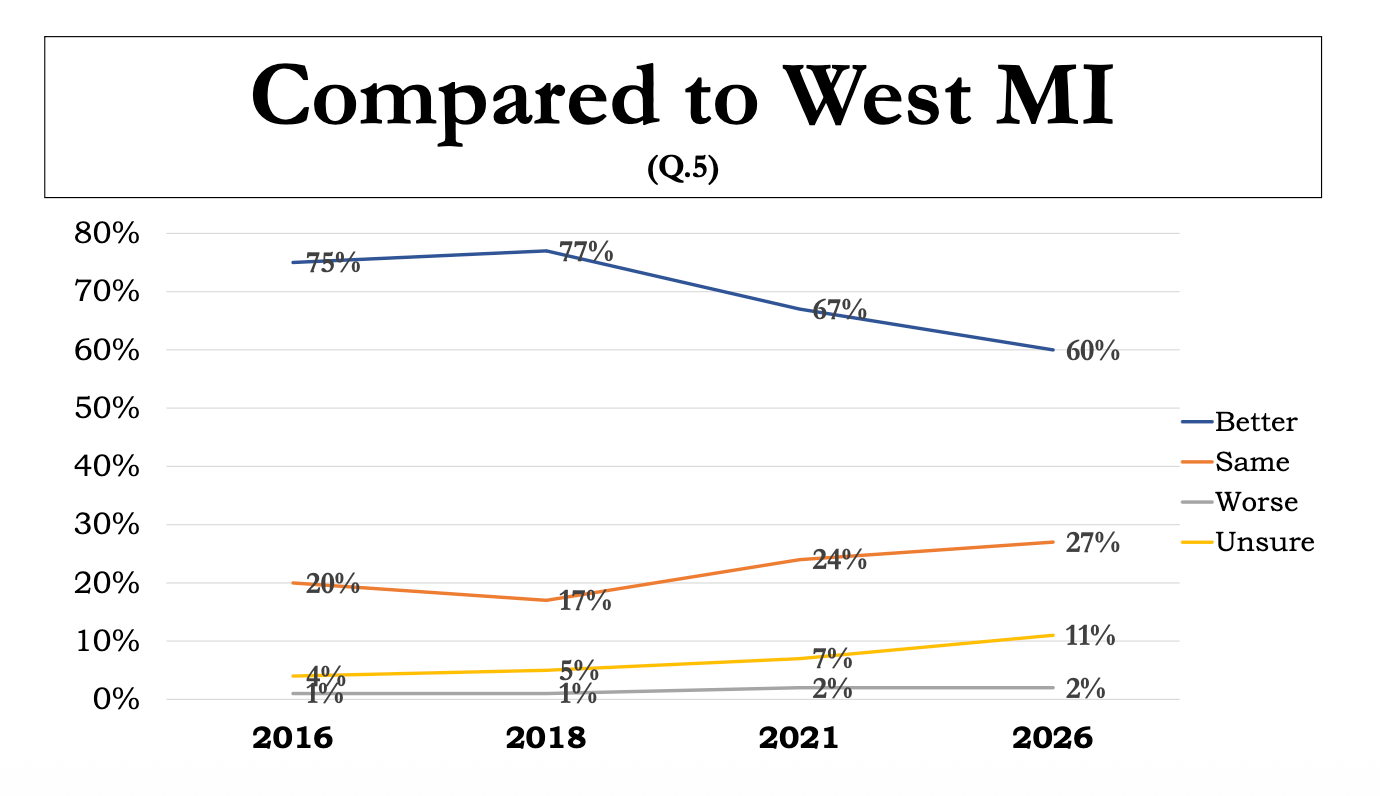
While 60% of residents said they still believe Ottawa County is a "better" place to live compared with other West Michigan counties — down from 67% in 2021 and 77% in 2018, with 27% saying it is "about the same" and just 2% rating it "worse" — key indicators of public sentiment declined:
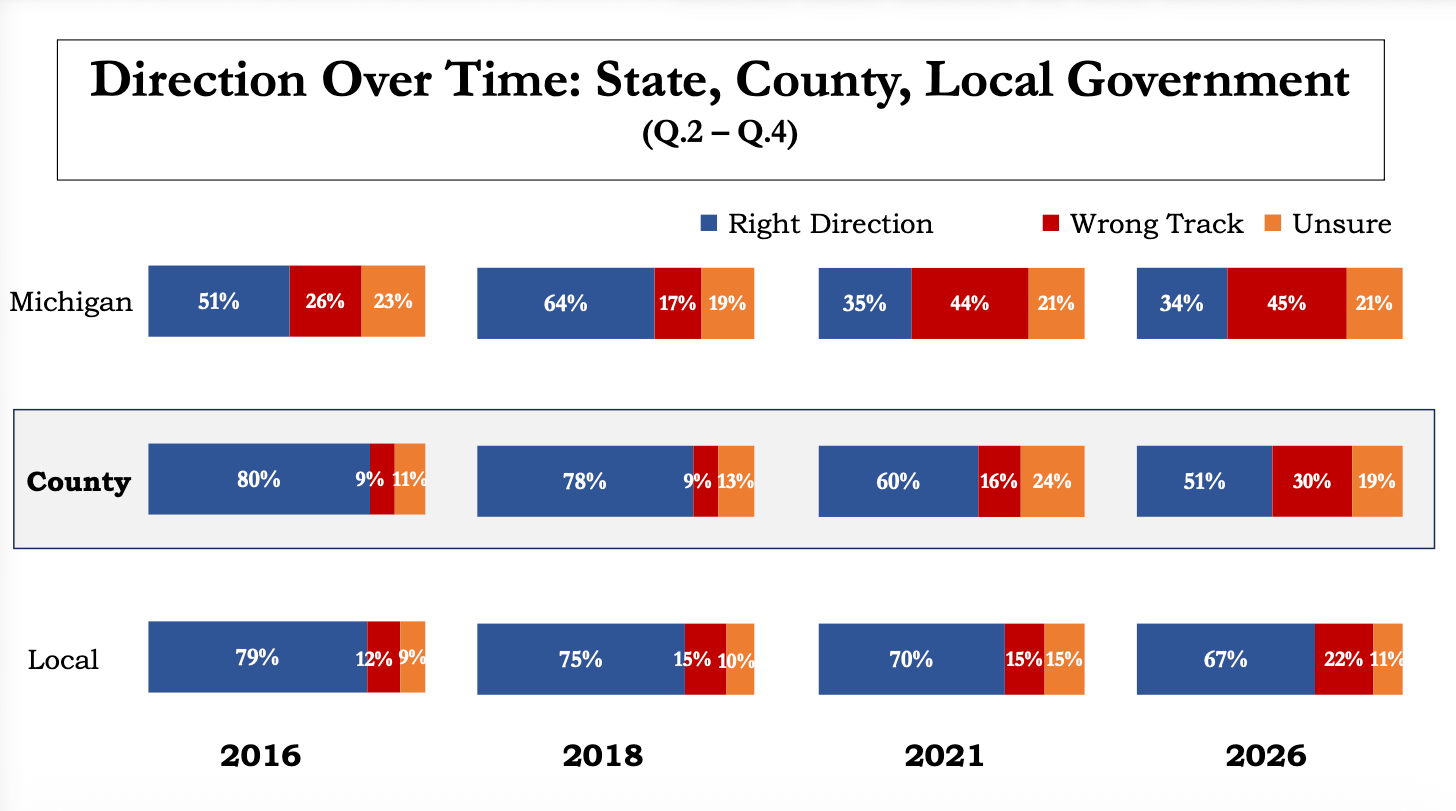
- Direction of the county: Fifty-one percent of respondents said Ottawa County is headed in the "right direction," down 9 points from 60% in 2021 and 27 points from 78% in 2018. Conversely, the share of residents who feel the county is on the "wrong track" nearly doubled over five years, rising from 9% in 2018 to 16% in 2021 and 30% in 2026 (with 19% unsure). By comparison, 67% rated their local city or township on the right track (22% wrong track), while only 34% said the state of Michigan was headed in the right direction (45% wrong track).
- Enthusiasm to recommend: On a 0-to-10 scale measuring how likely residents are to recommend Ottawa County as a place to live, the mean score slipped from 8.601 in 2018 and 8.350 in 2021 to 8.054 in 2026. Top ratings of "9 or 10" fell from 51% in 2021 to 43% in 2026, while middling "6 to 8" ratings rose from 38% to 46%.
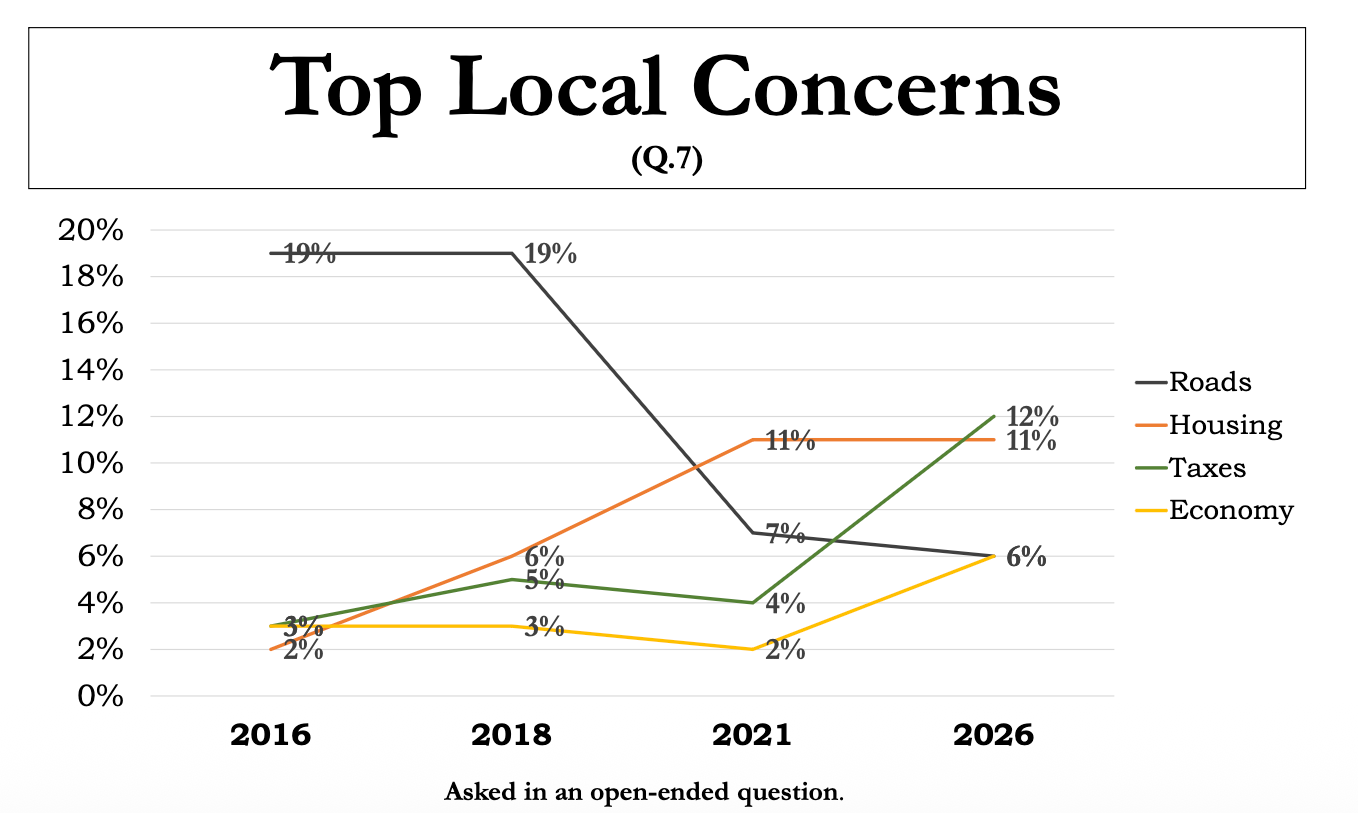
- Taxes as the top concern: In an open-ended question asking for the single most important local problem, "Taxes emerge as the No. 1 concern, up 8 points from 4% in 2021 to 12% in 2026," Sullivan noted during the presentation, marking the first time taxes topped the list in the survey’s history. Affordable housing remained second at 11% (unchanged from 2021), while road concerns dropped to 6% (down from 19% in 2014-2018 and 7% in 2021) and the economy/cost of living rose from 2% to 6%.
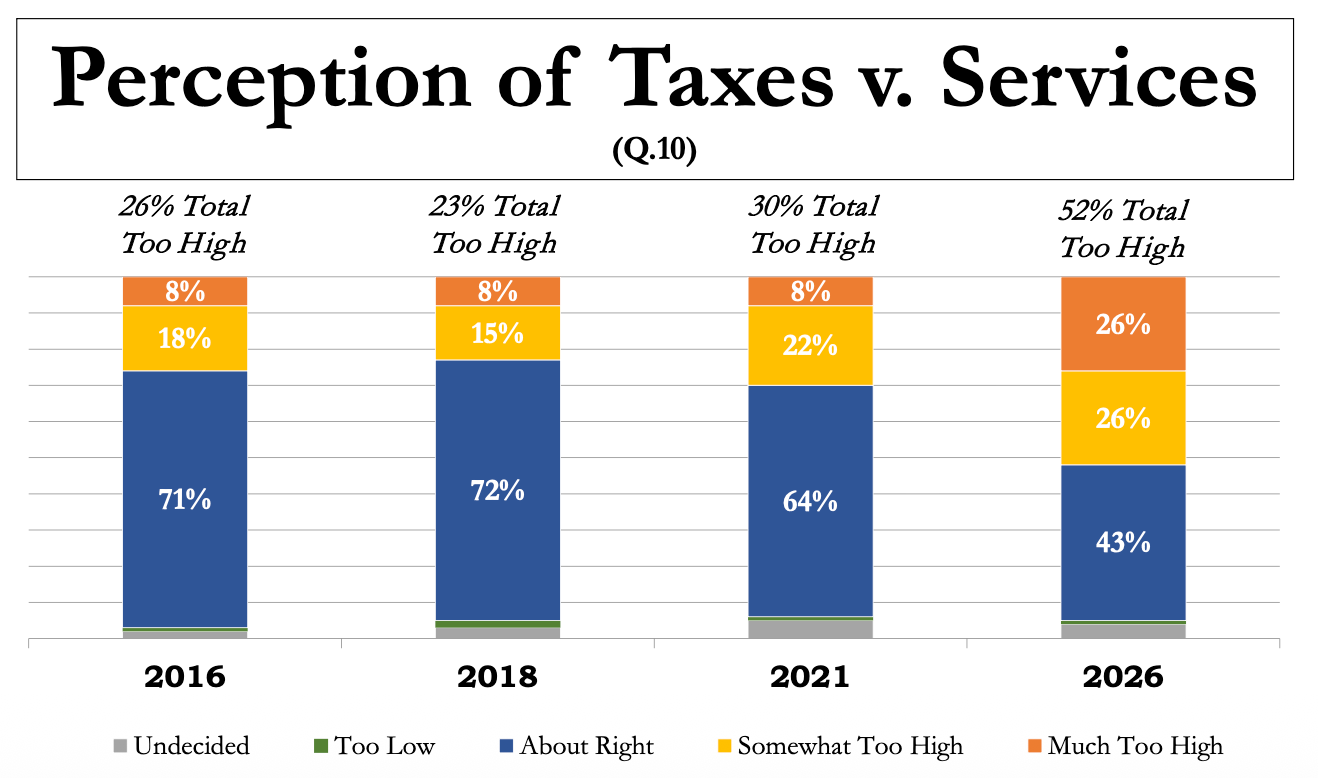
- Record tax burden perception: Fifty-two percent of residents said county property taxes and fees are "too high" given the services received — up 22 points from 30% in 2021 to set an all-time survey high. Notably, those calling taxes "much too high" more than tripled from 8% in 2016-2021 to 26% in 2026, while those saying taxes are "about right" fell 21 points to 43%.
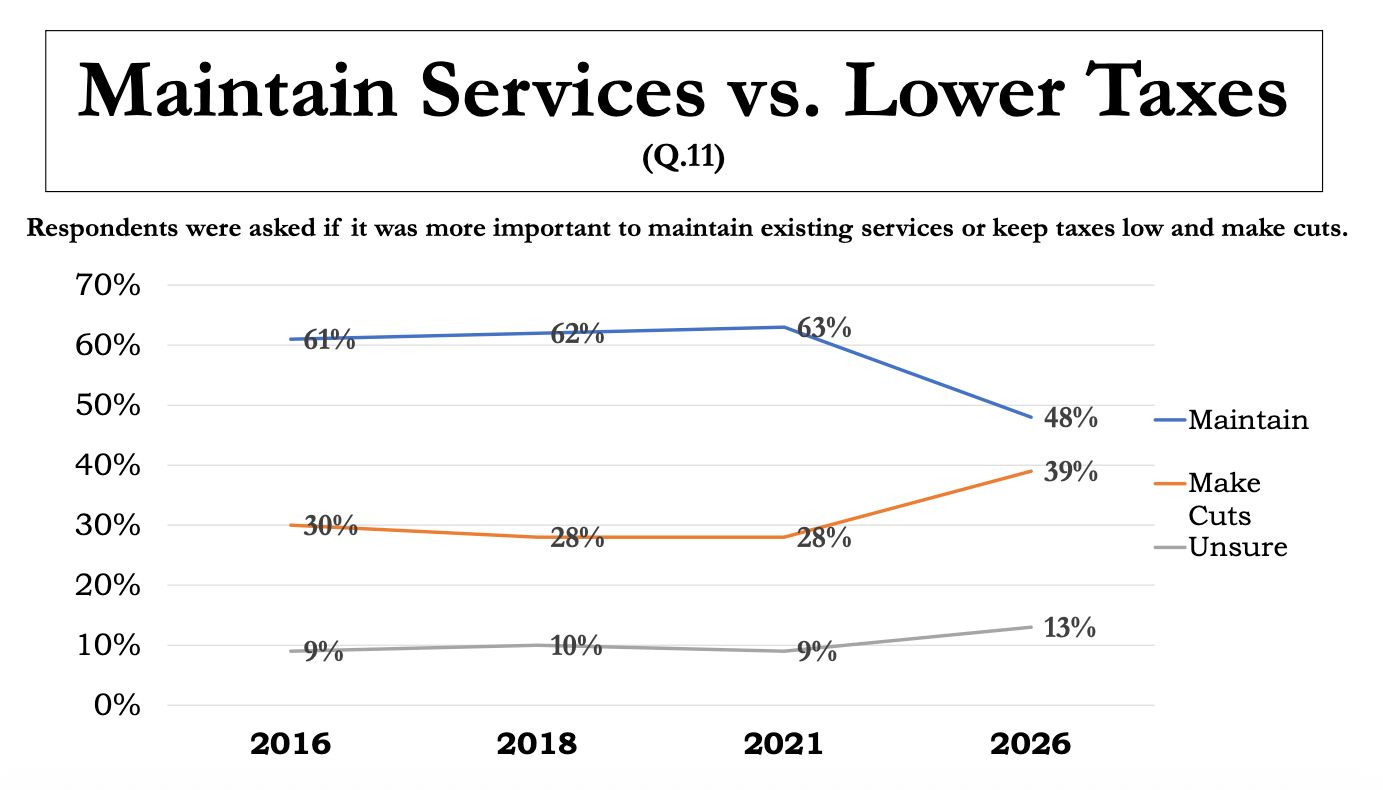
- Taxes vs. services trade-off: Support for maintaining existing county service levels even if it requires higher taxes fell 15 percentage points from 63% in 2021 to a 48% plurality in 2026, while support for keeping taxes and fees as low as possible — even if it means reducing services — rose 11 points from 28% to 39% (with 13% undecided).
[Ottawa County Citizen Survey: July 2026]
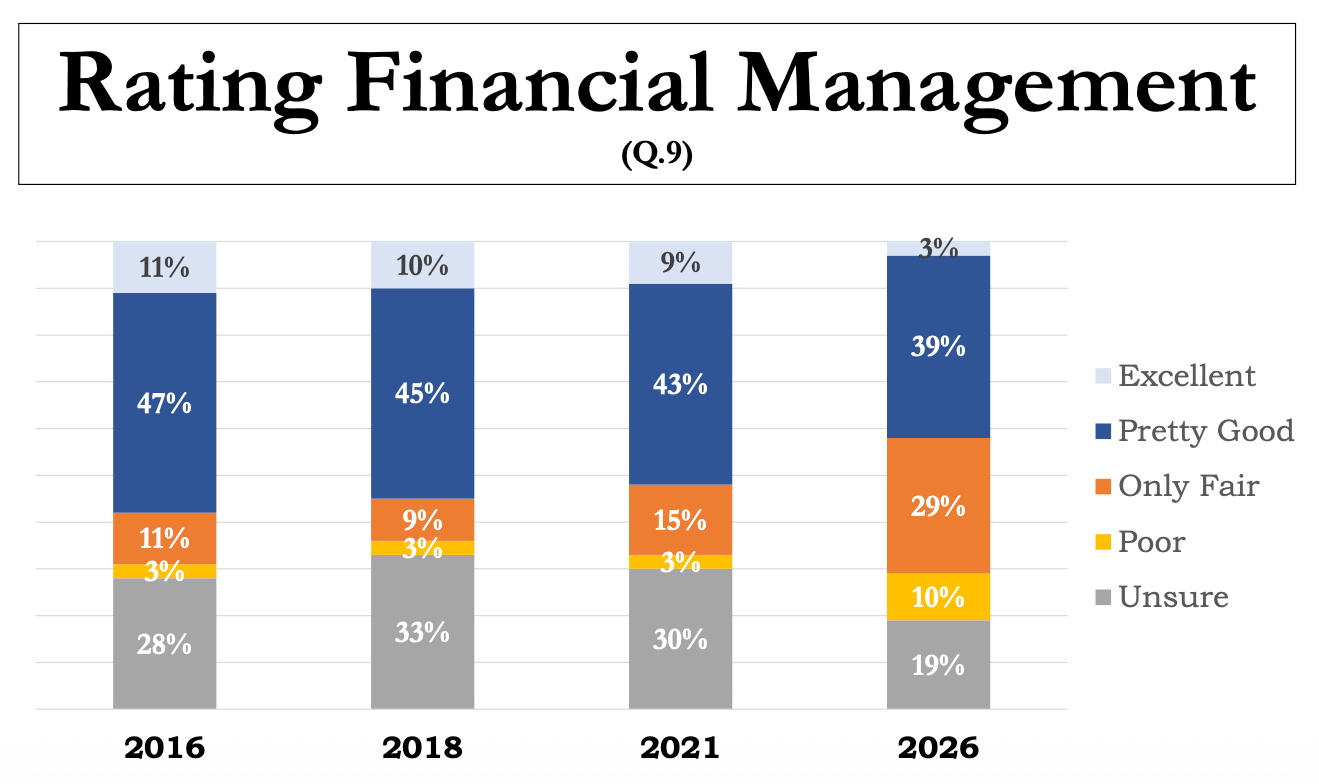
- Financial management confidence: Positive ratings of the county’s financial management dropped 10 points from 52% in 2021 to a nine-survey low of 42% in 2026 (3% "excellent" and 39% "pretty good"), nearly tied with a record-high 39% negative rating (29% "only fair" and 10% "poor"), while undecided responses fell from 30% to 19%.
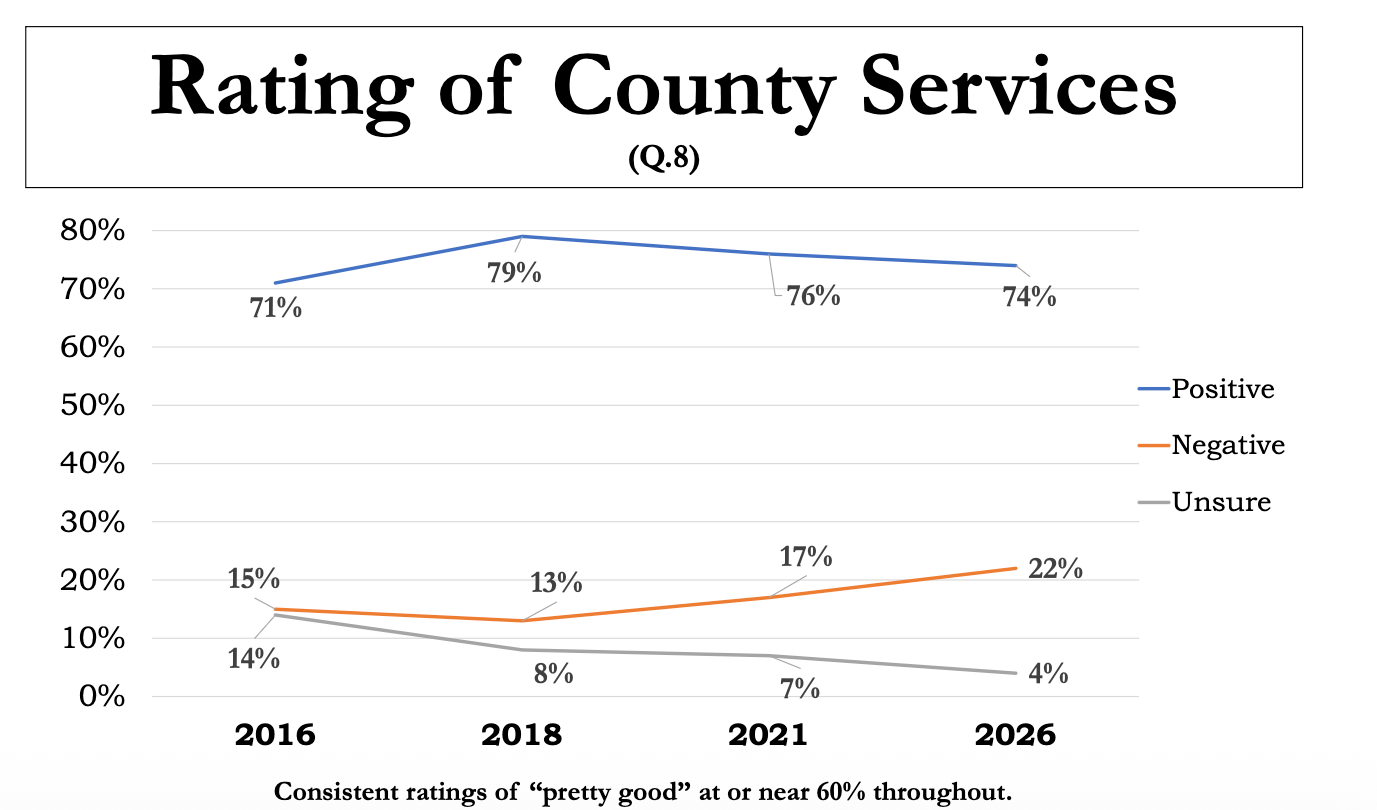
Despite financial skepticism, satisfaction with day-to-day county operations and safety remained strong. Seventy-four percent rated the county's delivery of basic services positively (13% "excellent" and 61% "pretty good," down slightly from 76% in 2021), though negative ratings climbed to a series-high 22% (18% "only fair" and 4% "poor").
For the first time in survey history, a unanimous 100% of respondents reported feeling safe in their neighborhoods, including 75% who felt "very safe."
One in four households (25%) reported contacting a county office or department in the past year — most frequently the Sheriff's Office/police (31%), EMS/911 (9%) and Parks and Recreation (8%) — with 72% reaching out by phone and 16% in person. Among those 97 respondents, overall satisfaction fell 14 points from 88% in 2021 to a series-low 74% (48% "very satisfied," down from 66%), while dissatisfaction more than doubled from 11% to 23% — a shift Sullivan cautioned carries a roughly 10-point margin of error due to the smaller sample size.
Meanwhile, public awareness of county activities reached an all-time high of 71% (up 13 points from 58% in 2021, with "very aware" jumping from 3% to 13%).
When asked whether the county is doing enough across 16 program areas, residents expressed the strongest desire for "more" or "much more" action on emerging growth pressures, while largely viewing traditional services as sufficient and identifying zero areas where the county is doing "too much":
- Top areas for more action: Attainable, affordable housing (65% more, including 36% "much more"), preserving farms and agriculture (62% more; 30% "much more"), mental health services (50% more; 23% "much more"), protecting groundwater (49% more; 20% "much more"), veterans services (48% more; 28% "much more"), keeping residents informed (47% more; 18% "much more"), senior citizen services (45% more; 26% "much more"), public transportation (39% more; 16% "much more") and youth justice services (38% more, up 14 points from 2021).
- Areas where enough is being done: Law enforcement (76% enough), county parks and recreation (75% enough), public health services (62% enough), operating the county jail (60% enough, with 33% undecided) and economic development (52% enough).
Strategic priorities, resident transparency challenges
Sullivan noted that resident concerns closely validated the board’s new strategic plan, with strong majorities rating all three core goals as important:
- Ensuring a sustainable groundwater supply: 94% important, including 64% calling it a "top priority." To address water concerns, 86% supported water conservation education, 76% supported engineering-based groundwater replenishment, 69% backed infrastructure solutions such as extending city water to rural areas and 61% supported conservation ordinances or sprinkling restrictions (with 35% opposed).
- Building trust and confidence in county government: 85% important (42% "top priority").
- Managing growth: 70% important (28% "top priority"). When asked about specific growth-related problems, 91% called housing affordability a serious problem (58% "very serious"), followed by reliable drinking and irrigation water (86% serious; 63% "very serious"), loss of farmland (81% serious; 50% "very serious"), too much residential and commercial development (74% serious) and traffic congestion (69% serious), while public transportation gaps divided respondents (40% serious vs. 36% not serious).
On institutional trust statements, 77% agreed the county provides services fairly and respectfully, 68% agreed information and data are easy to obtain, 63% agreed the county makes ethical decisions and 62% agreed it is responsive to questions.
However, agreement dropped sharply on decision-making transparency: Only 53% agreed Ottawa County tells the truth (34% disagreed), 51% agreed it explains why decisions are made (35% disagreed) and 50% agreed it considers public input when making important decisions (35% disagreed).
Sullivan linked the declining ratings partly to perceived leadership instability alongside broader statewide anxieties over taxes, inflation and cost of living — noting that EPIC-MRA has observed similar erosion across other Michigan municipalities over the past year.
That instability followed the turbulent 2023-2024 tenure of the Ottawa Impact board majority, whose abrupt firings of veteran staff, controversial hires and legal disputes — including a lawsuit from Administrative Health Officer Adeline Hambley that made national news, $368,000 in related health officer litigation costs, a $225,000 age-discrimination settlement, a $190,000 wrongful-termination settlement with former administrator John Gibbs, and late-2024 separation payouts for interim administrator Benjamin Wetmore and executive aide Jordan Epperson — ultimately cost county taxpayers millions of dollars in severance agreements, legal fees and lawsuit settlements.
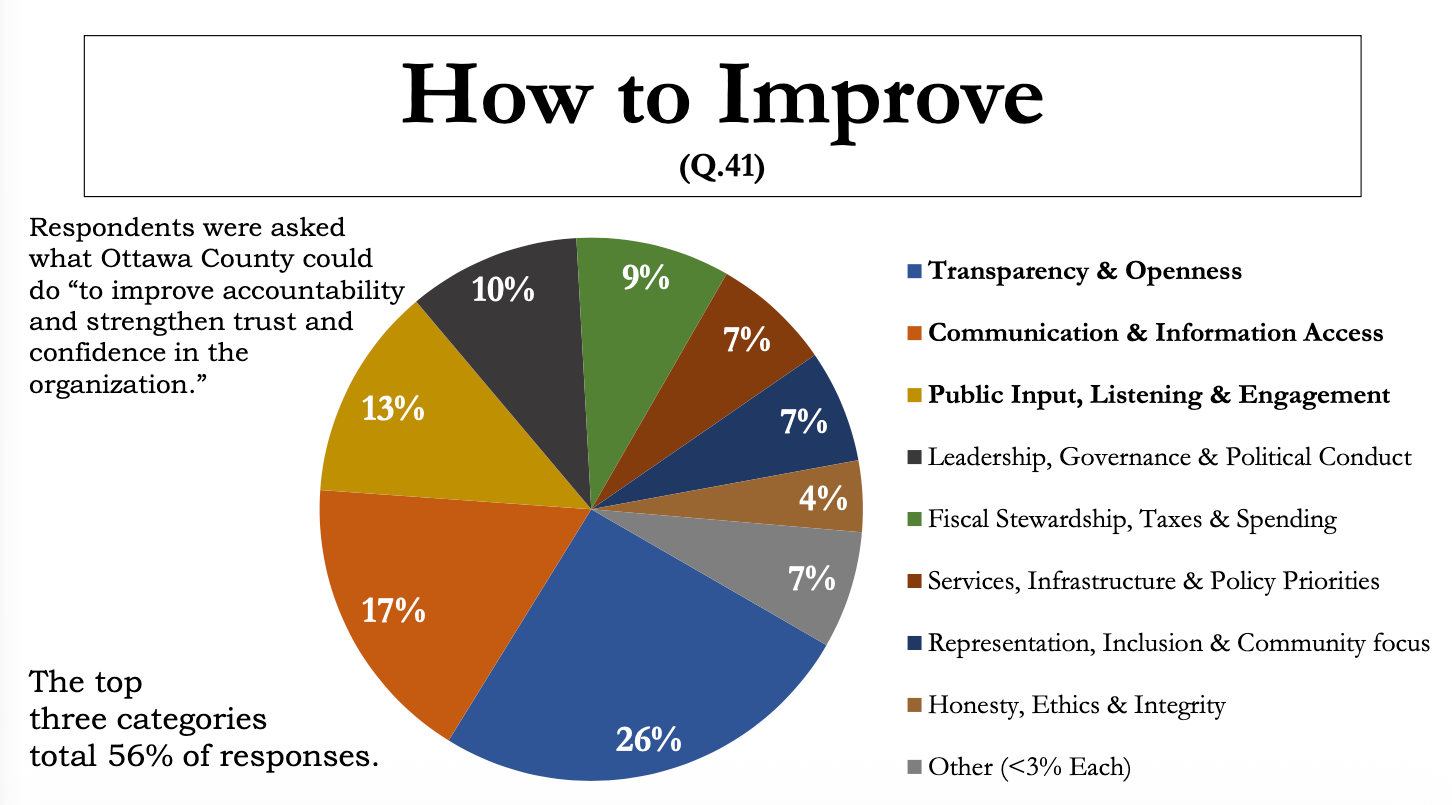
When asked in an open-ended question "how to improve" accountability and strengthen trust and confidence in the organization, 56% of all resident responses centered on three core categories: 26% cited "transparency and openness," 17% cited "communication and information access," and 13% cited "public input, listening and engagement."(20% explicitly requested transparency, 14% called for more or improved communication, 6% urged leaders to listen to residents, 4% wanted less focus on politics, 3% cited fiscal responsibility, and 3% cited honesty.)
To bridge that gap, county communications staff proposed showing residents decisions and their rationale, providing clear and timely information, and creating meaningful listening sessions and dashboards.
"We have public comment periods, and we've had them for many years, [but] it does sometimes feel like just a ritual," said Shannon Felgner, the county's communications director. "Maybe we need something a little bit more meaningful for our public — so just looking at some ideas about how we can really dig in to listening a little bit more."
Rethinking that approach means changing how county staff share information and gather input, which Felgner broke down into a simple three-step framework.
"When I look back at the ways to improve, there are three top categories, and I kind of look at them as: 'Show me, tell me, and hear me,'" Felgner said. "'Show me': Be transparent about decisions and actions, and the reasons behind them. 'Tell me': Make information clear, accessible, timely, and easy to find. And then 'hear me': Provide meaningful opportunities for residents to ask questions, offer input, and feel that their perspectives are at least considered.
"So those are things that we can, I think, do better as a county altogether, as staff, to make some meaningful improvements on this citizen survey," she said.
Some commissioners took the feedback to mean that individual officials might want to dig further into the data.
"These questions are about their view of the board and their perceptions of, essentially, their elected officials," said Ottawa County Commissioner Jordan Jorritsma. "If that looks different depending on where they're at in the county, [it] might be very helpful for an individual commissioner [to] say, 'Oh, well, hey, people generally think this about me — I might want to change how I'm acting,' or, 'People think things are great — that's good for me to know.'
"I just think it would be more helpful if it was [broken down] even regionally, if you don't have individual [districts]," he added.
Sullivan replied: "We can break that data out for you in basically any way you would like."
Board Chair Josh Brugger said the information was helpful to have: "I think one thing that was clear to me is we have work to do."
Employee survey: Engagement rebounds, retention improves
In sharp contrast to external public skepticism, internal morale within Ottawa County government rebounded substantially over the past two years.
Human Resources Director Sarah Allen introduced the 2026 Employee Engagement Survey conducted by Arthur J. Gallagher & Co., which has partnered with the county for its 2024 and 2026 assessments as part of a two-decade history of workforce polling.
Chris Dustin, managing director and senior advisor of Arthur J. Gallagher & Co., said the survey was administered online between Aug. 11 and Sept. 1, drawing 732 respondents out of 1,241 eligible staff — a 59% participation rate (down slightly from 63% in 2024 and below the 79% external benchmark) — with a margin of error of plus or minus 2.321 percentage points.
Key metrics demonstrated broad organizational improvement across the workforce:
- Higher overall scores: The combined survey score climbed from 4.23 in 2024 to 4.50 in 2026 (against a 4.57 external norm), lifting Ottawa County from the 36th to the 49th percentile among comparable public entities. Overall favorability rose from 75% to 82%, with 40 of 56 repeat items (71%) showing improvement.
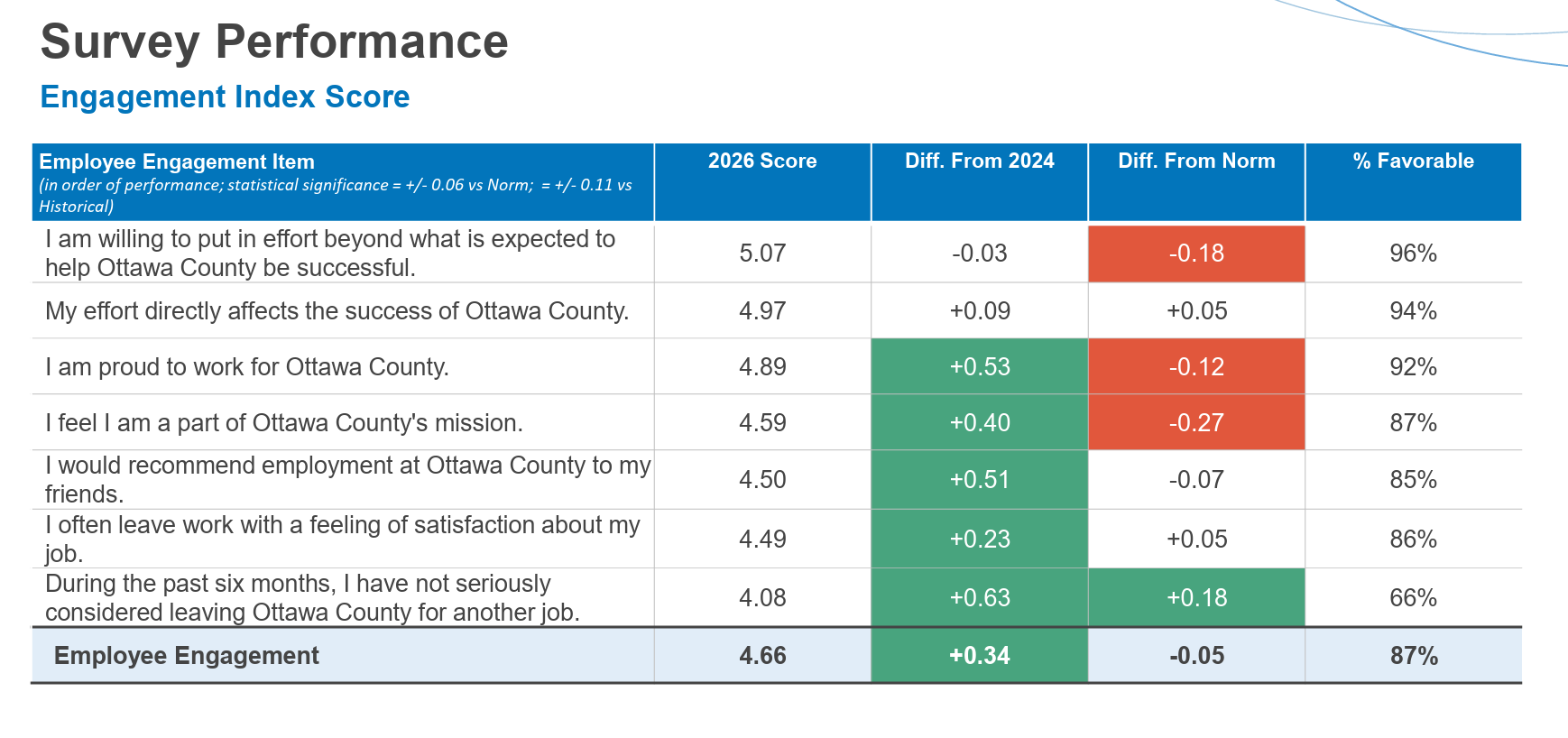
- Engagement index surge: The core Engagement Index rose from 4.32 to 4.66 (87% favorable, up from 78% in 2024), jumping from the 13th to the 43rd percentile. Five of the seven index components improved significantly, led by pride in working for Ottawa County (4.89, +0.53), willingness to recommend the county to friends (4.50, +0.51) and feeling part of the county’s mission (4.59, +0.40). Ninety-six percent reported willingness to put in extra effort for the county's success.
Employee Engagement Survey Results: Ottawa County 2026 [Arthur J. Gallagher & Co]
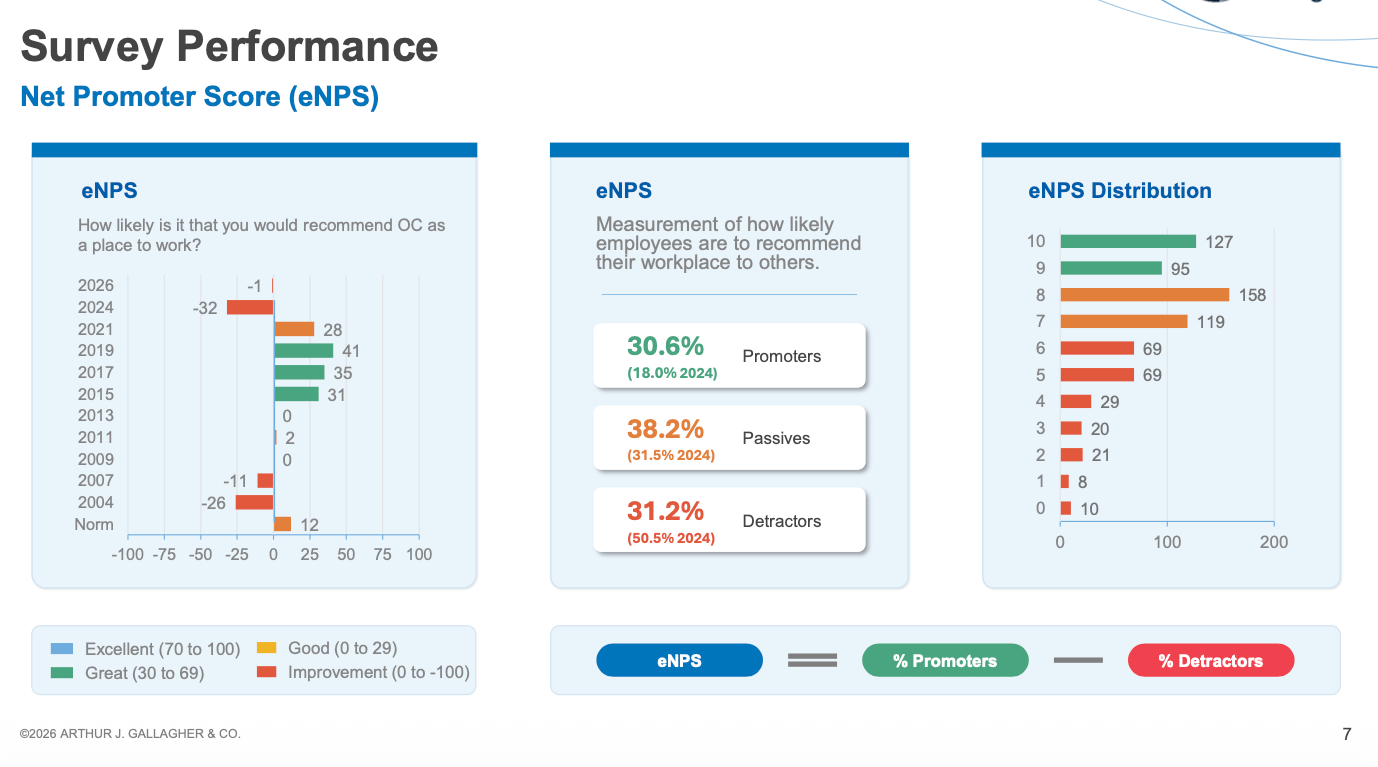
- Net promoter recovery: The county's Employee Net Promoter Score (eNPS) — which plummeted to -32 in 2024, just after Ottawa Impact lost the board majority, after reaching +28 in 2021 and +41 in 2019 — rebounded 31 points to -1 in 2026 (compared with a +12 norm). Employee "promoters" rose from 18.0% to 30.6%, "passives" rose from 31.5% to 38.2% and "detractors" dropped sharply from 50.5% to 31.2%.
- Stronger retention outlook: "Almost half of your workforce were considering leaving in '24, and now that has dropped down to 34%," Dustin told the board, noting the 15-point drop brings Ottawa County close to the 32% external benchmark. Among those who had considered leaving, top cited reasons were compensation (21.9%), trust in leadership (19.0%), work environment/culture (17.3%), work-life balance (10.1%), limited career growth (8.0%), lack of recognition/value (7.6%), quality of supervision (6.8%) and benefits (5.1%).
Demographic disparities, rebounding leadership scores
Engagement gains spanned nearly every demographic and job category, though notable disparities remained.
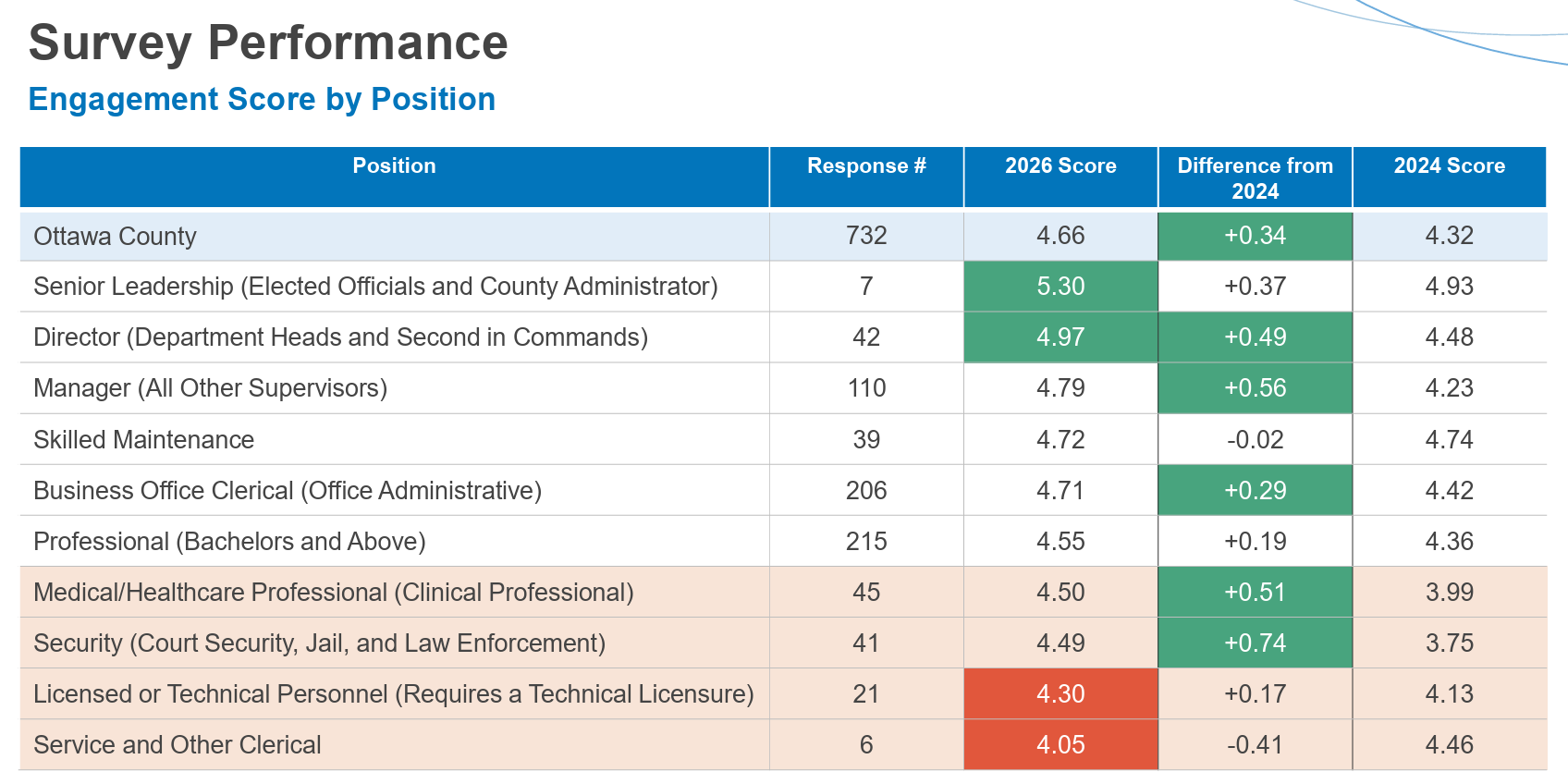
By position, senior leadership scored highest at 5.30 (+0.37), while security personnel (court security, jail and law enforcement) posted the largest gain, rising 0.74 points to 4.49, followed by managers (+0.56 to 4.79) and medical/health care professionals (+0.51 to 4.50). Conversely, service and other clerical staff fell 0.41 points to 4.05, and licensed or technical personnel scored 4.30.
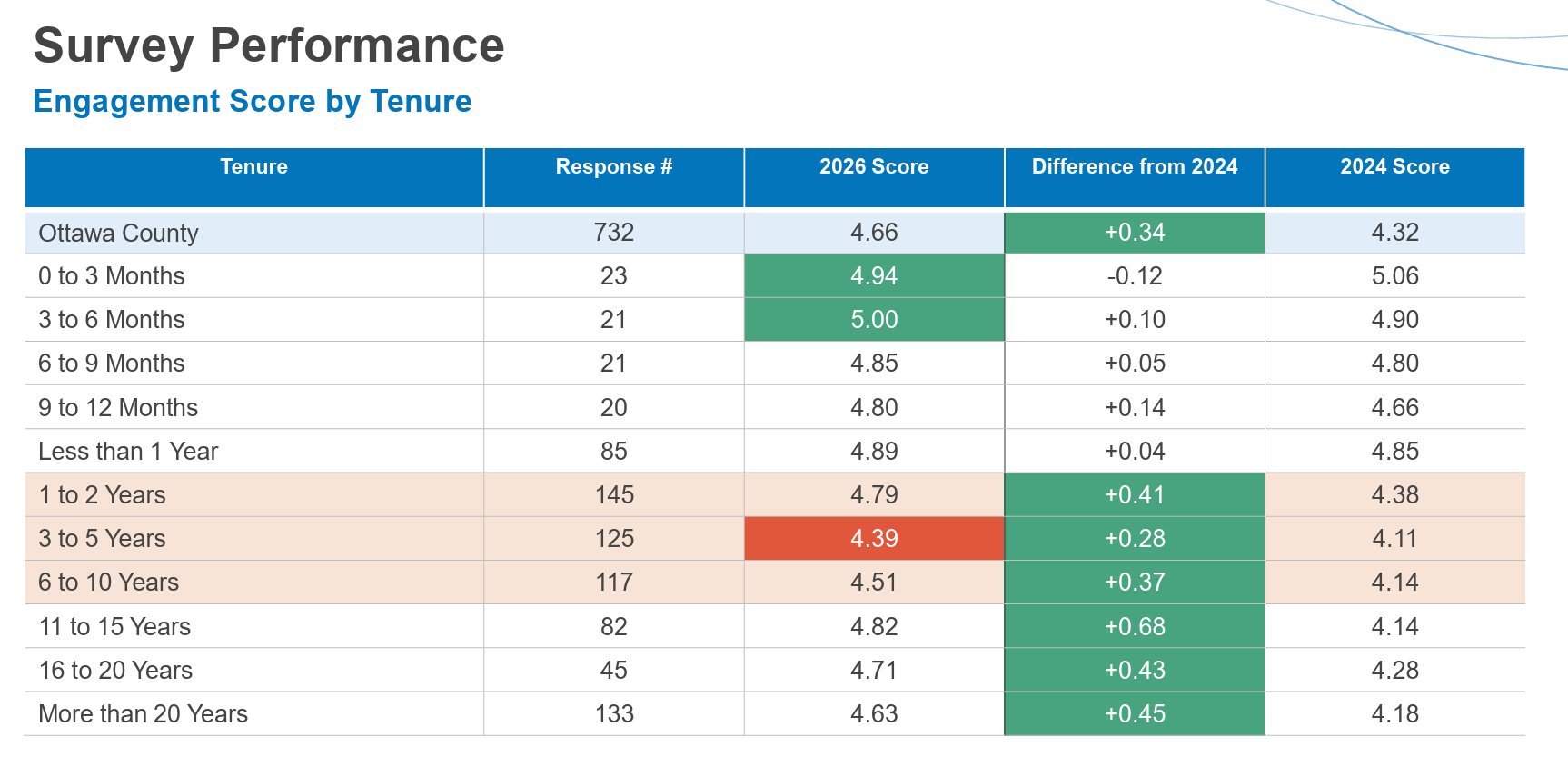
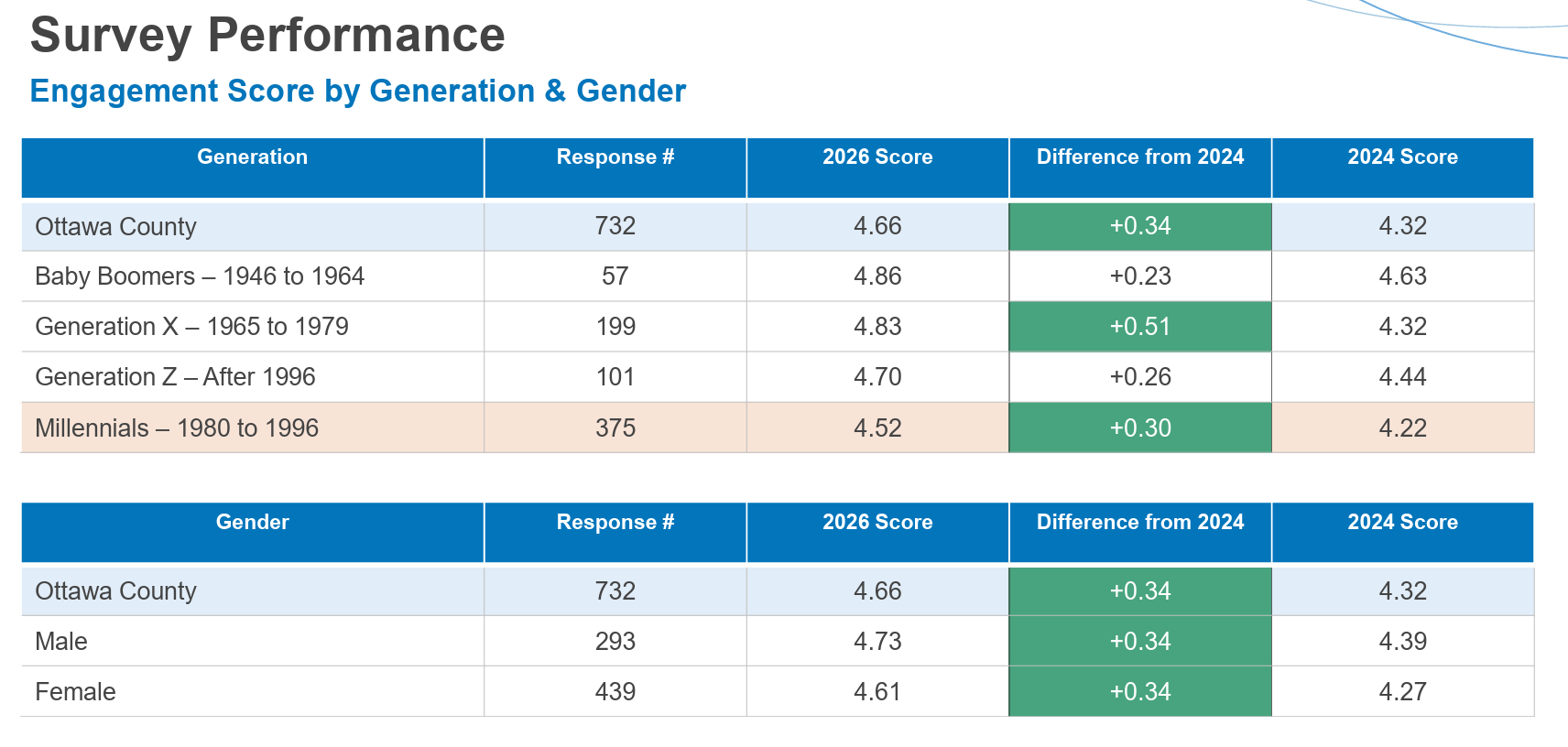
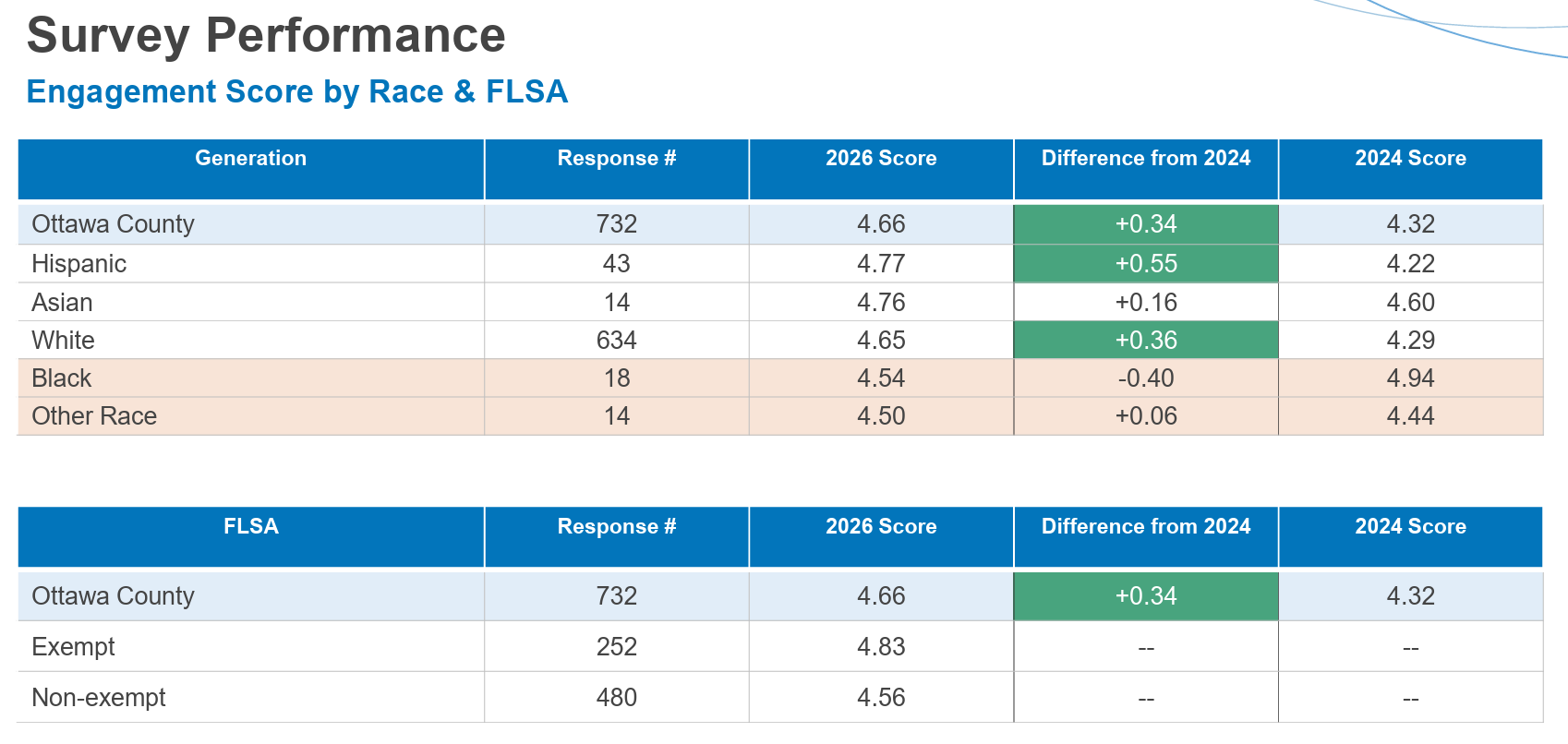
Across generations, baby boomers led at 4.86 (+0.23), followed by Generation X at 4.83 (+0.51), Generation Z at 4.70 (+0.26) and millennials at 4.52 (+0.30). Exempt employees scored significantly higher than non-exempt staff (4.83 vs. 4.56). By tenure, engagement was highest among employees with 3-6 months of service (5.00) and dipped lowest among mid-tenure staff with 3-5 years of service (4.39, though up 0.28 from 2024) — a group HR flagged alongside millennials, licensed/technical staff, service/clerical workers, Black employees (whose score fell 0.40 points to 4.54) and non-exempt employees as most at risk of turnover.
Confidence in top county leadership saw the steepest upward rebound in the survey, even though scores remained well below national public-sector benchmarks:
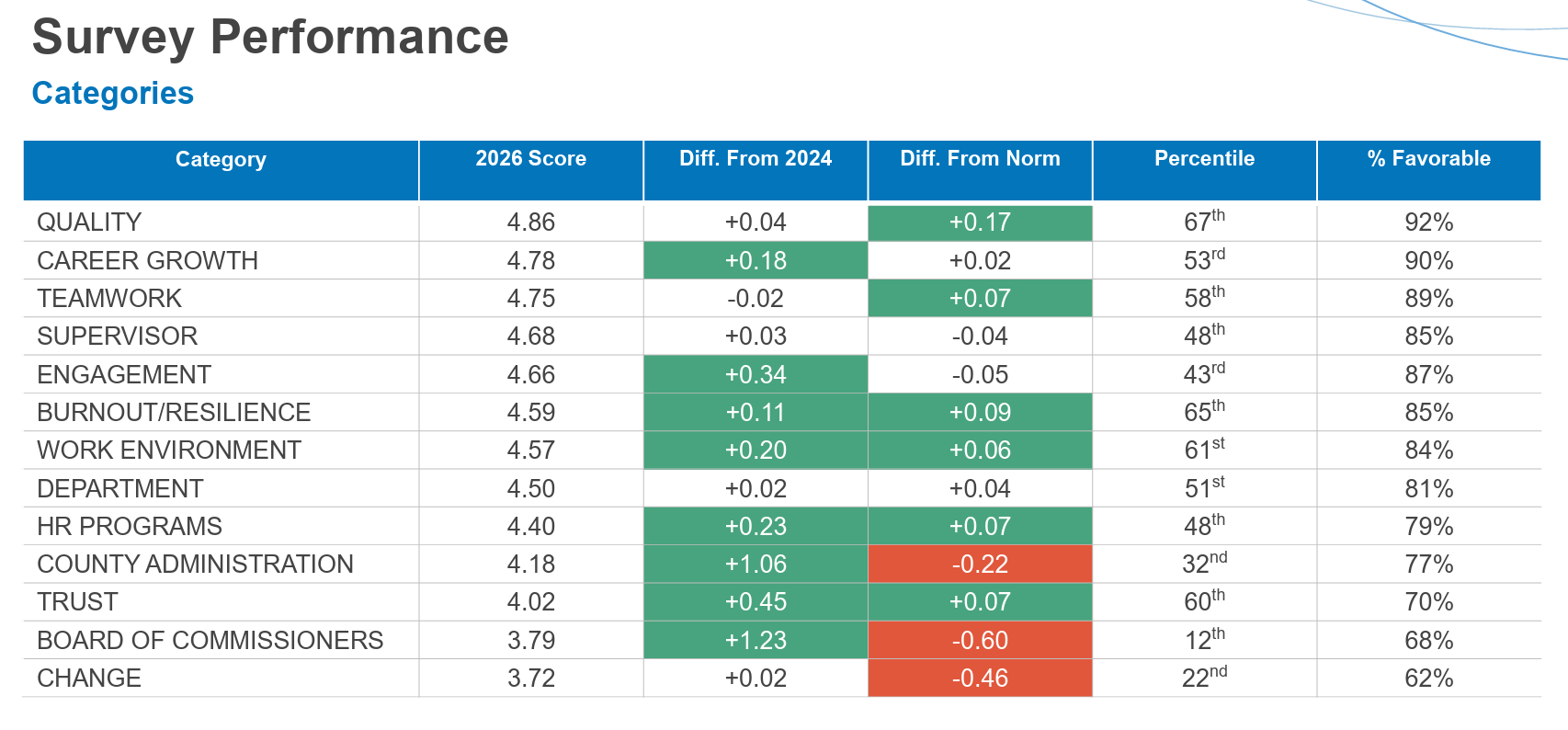
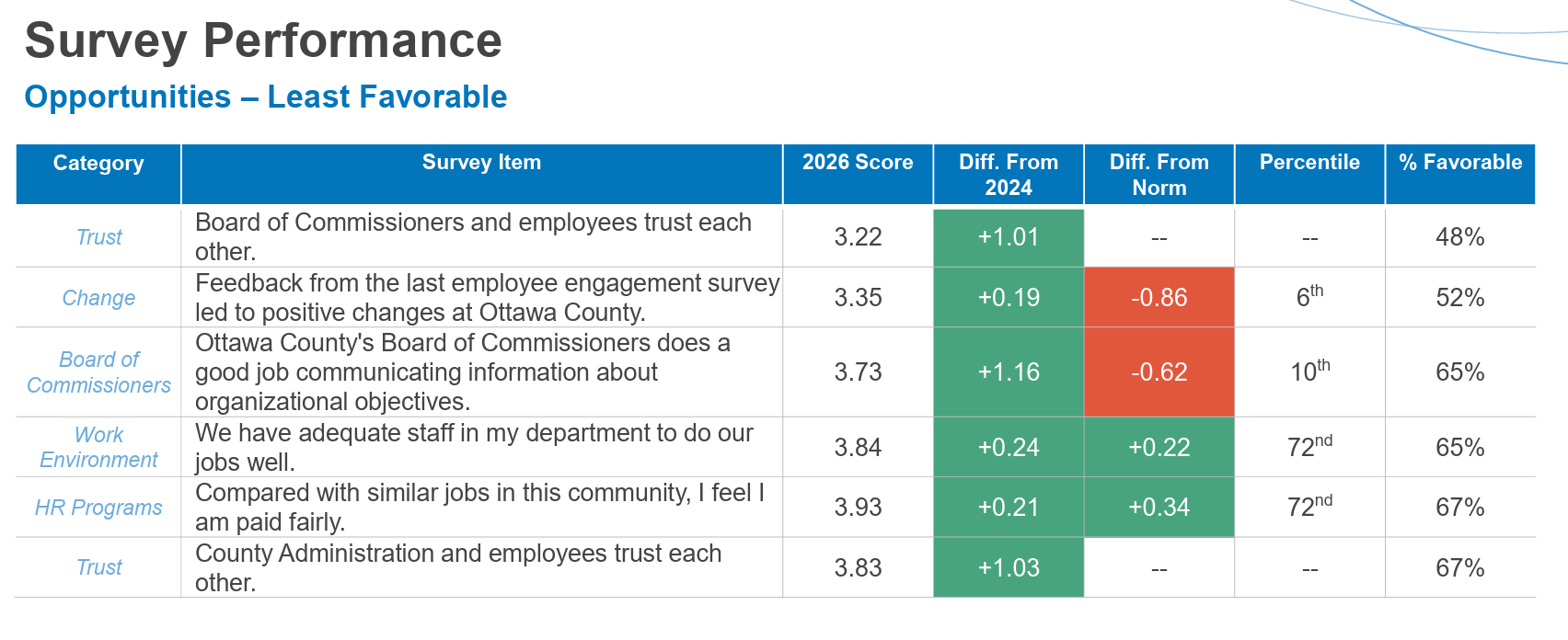
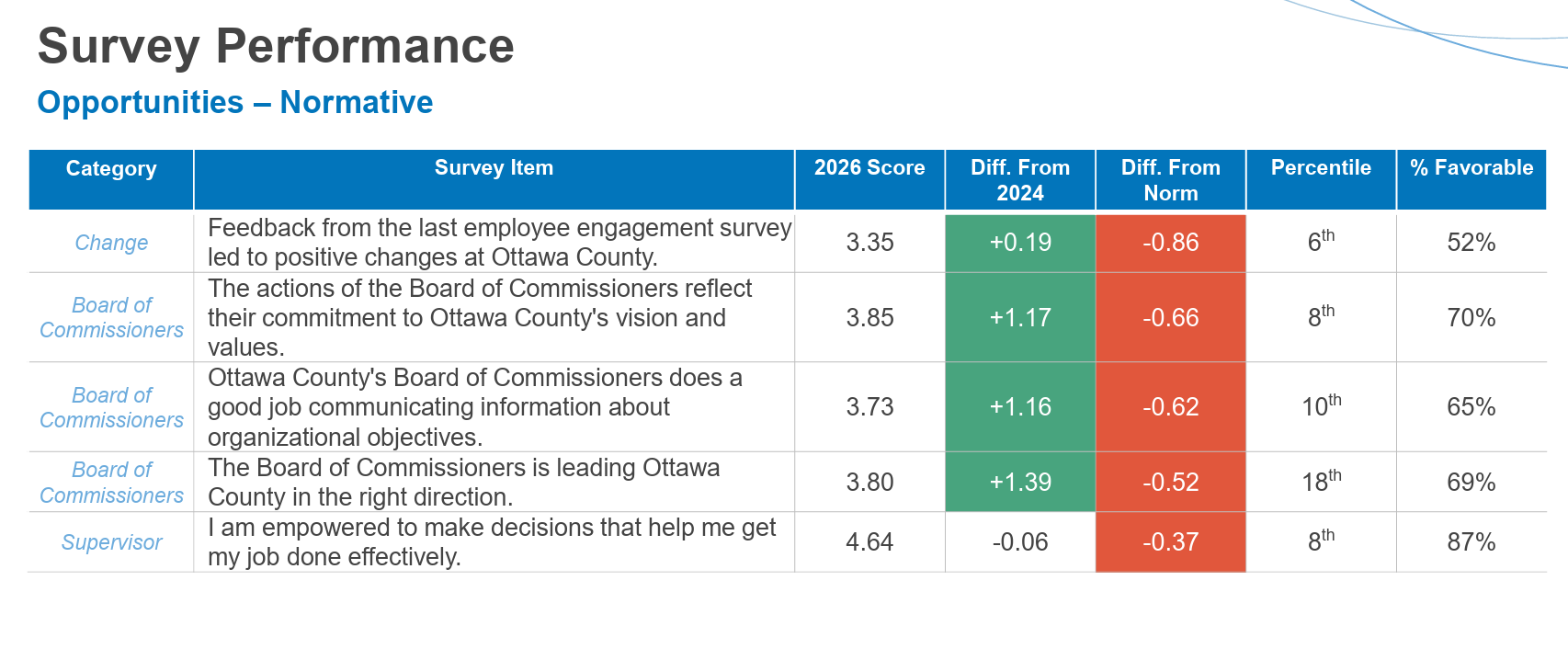
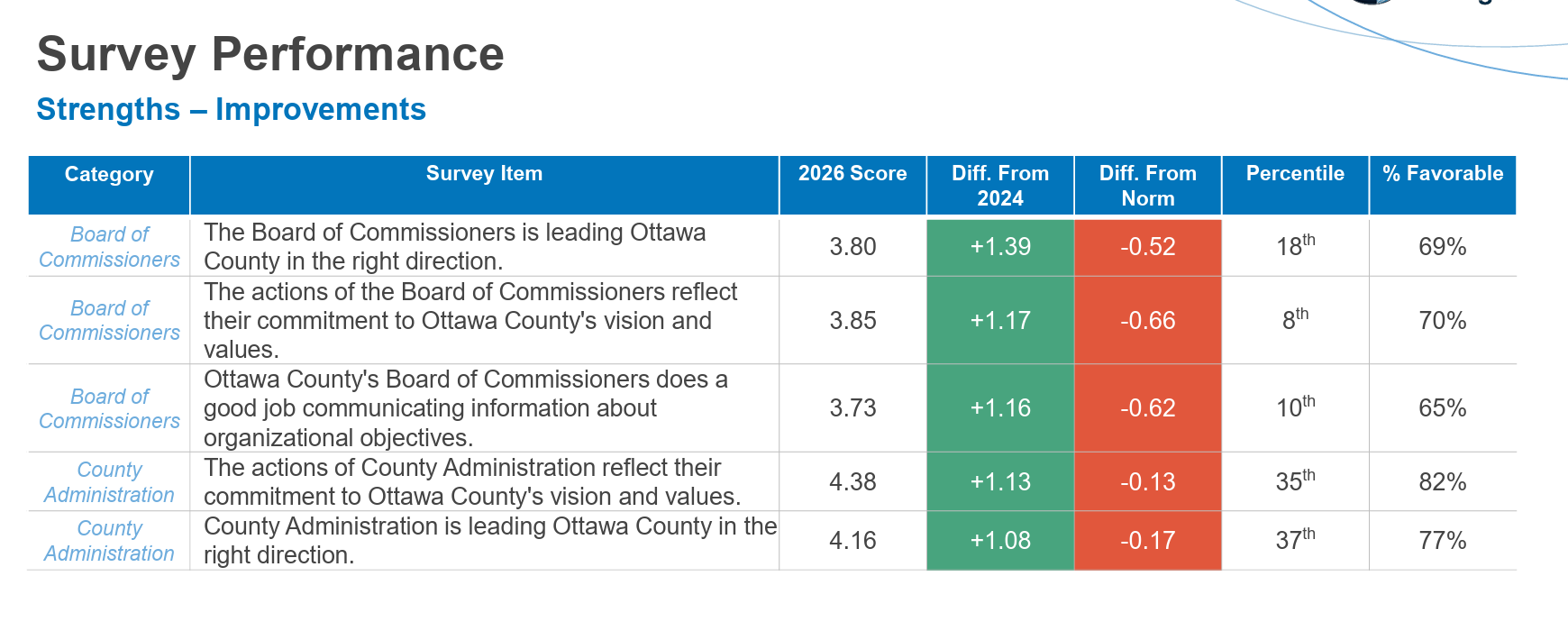
- Board of commissioners: The overall board category score surged 1.23 points to 3.79 (68% favorable), though it still ranked in the 12th percentile. Specific items showed major gains: Believing the board is leading Ottawa County in the right direction jumped 1.39 points to 3.80 (69% favorable, 18th percentile); believing board actions reflect commitment to the county's vision and values rose 1.17 points to 3.85 (70% favorable, 8th percentile); and rating the board's communication of organizational objectives increased 1.16 points to 3.73 (65% favorable, 10th percentile). Mutual trust between the board and employees rose 1.01 points to 3.22 (48% favorable), making it the single lowest-scoring item on the survey.
- County administration: The county administration category rose 1.06 points to 4.18 (77% favorable, 32nd percentile). Scores for administration actions reflecting county vision and values rose 1.13 points to 4.38 (82% favorable), leading the county in the right direction rose 1.08 points to 4.16 (77% favorable) and mutual trust between administration and employees jumped 1.03 points to 3.83 (67% favorable).
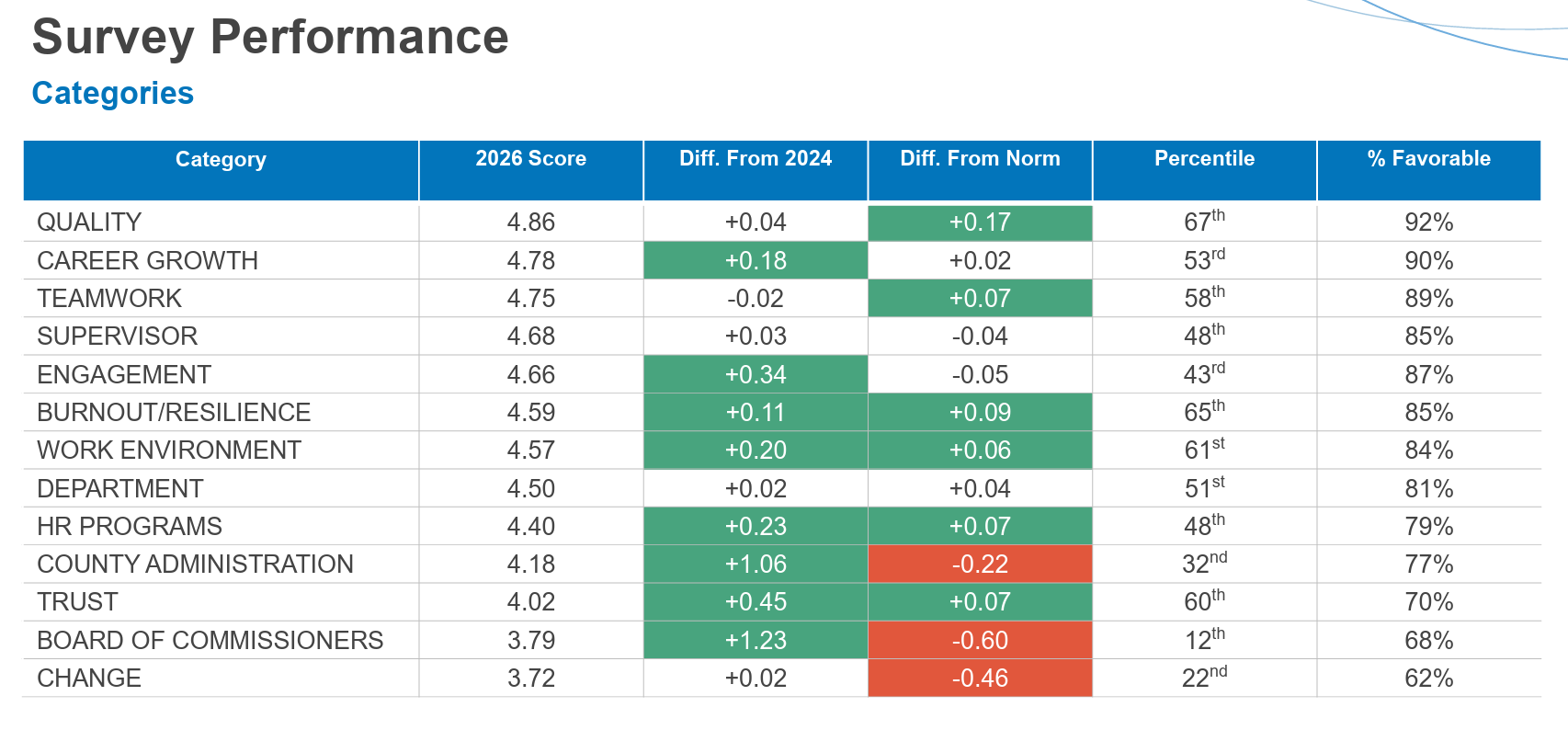
Employee Engagement Survey Results: Ottawa County 2026 [Arthur J. Gallagher & Co]
Burnout, employee feedback and action planning
Despite broad gains in quality (4.86, 92% favorable), career growth (4.78, 90% favorable) and teamwork (4.75, 89% favorable), persistent operational stressors weighed on staff.
Overall burnout — defined as feeling burned out "frequently" (24.4%) or "always" (6.6%) — declined by 6 percentage points from 37% in 2024 to 31% in 2026, with another 33.6% reporting feeling burned out "sometimes." Burnout was most acute among licensed or technical personnel, millennials and employees with 3 to 5 years of tenure.
Dustin’s analysis identified three primary "key drivers" influencing both engagement and retention: feeling a sense of belonging at Ottawa County, being challenged to do one's best and believing department leadership is interested in employee well-being.
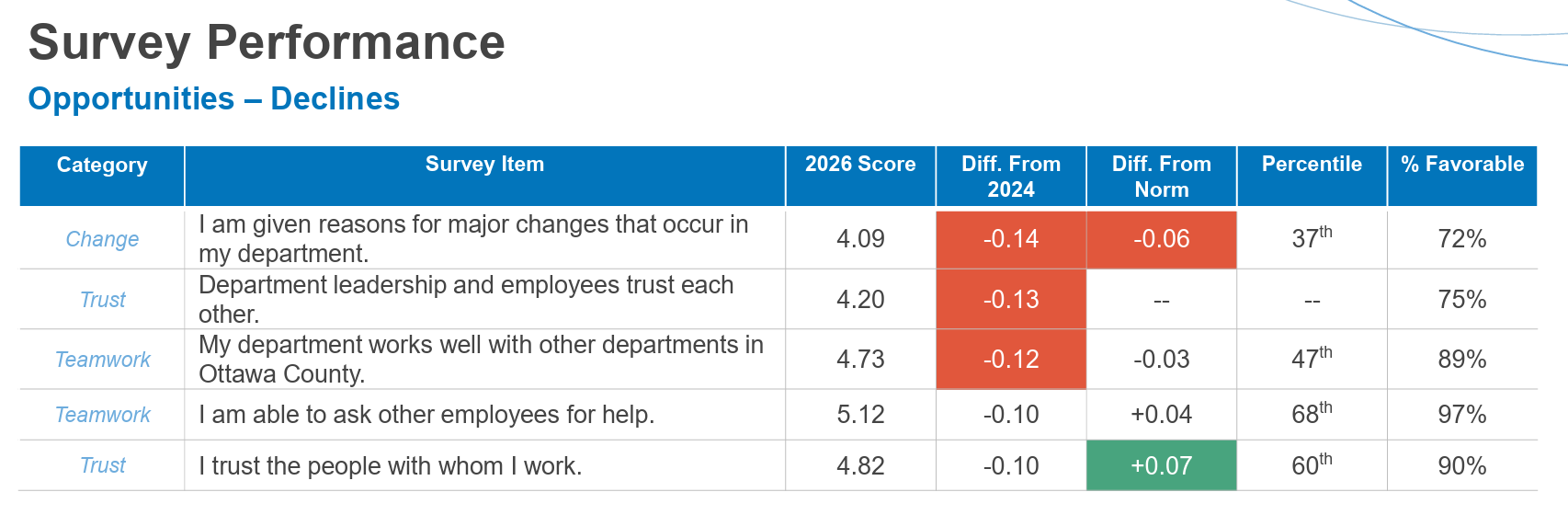
However, the survey also highlighted areas of statistical decline since 2024, including being given reasons for major departmental changes (4.09, down 0.14), mutual trust between department leadership and employees (4.20, down 0.13) and interdepartmental cooperation (4.73, down 0.12). Change management ranked as the lowest-performing category overall at 3.72 (22nd percentile), anchored by skepticism that feedback from the previous survey led to positive changes (3.35, 6th percentile).

In open-ended comments, employees echoed those themes:
- What keeps staff at the county: Employees cited benefits — particularly health insurance, paid time off and retirement (41%) — alongside workplace atmosphere, supportive coworkers and direct supervisors (26%), organizational strategy and mission-driven community impact (25%), leadership (18%) and pay (14%).
- Top desired changes: Staff most frequently requested improvements to benefits, citing reduced or complex health coverage under Vitality and lost pension/longevity perks (44%); pay and bonuses, including noncompetitive wages and uneven implementation of a recent wage study (35%); leadership accountability and reduced favoritism (34%); clearer communication (31%); and better change management (25%).
- Building trust and accountability: Employees called for stronger communication (42%), leadership accountability (34%), transparent change management — particularly regarding Community Mental Health’s (CMH) transition to an authority (30%) — productivity and staffing support (25%) and equitable benefits/wage policies (23%). Across departments including Public Health, CMH, the Sheriff’s Office, Courts and the Clerk/Register, staff repeatedly cited chronic understaffing, role creep and heavy workloads.
To sustain momentum, Gallagher recommended three systemic action priorities:
- Build trust through transparency and credibility: Holding quarterly leadership town halls, publishing "You Said, We Did" updates, increasing commissioner and administrator visibility in departments and creating confidential feedback channels.
- Improve change management and employee voice: Forming employee advisory groups, conducting listening sessions before major changes, piloting initiatives and clearly communicating timelines and rationales.
- Strengthen workforce capacity, staffing and sustainability: Conducting department-by-department staffing assessments, prioritizing hiring in high-burnout areas, cross-training staff and using workload-monitoring dashboards.
When Commissioner Allison Miedema, a member of Ottawa Impact, asked for individual department results that gave lower scores to county leadership, Administrator Patrick Waterman pushed back.
"First of all, the survey was completely anonymous and confidential. We want to protect that, right? So I think what's important for me, as administration and HR, is to dive into areas of concern where we're seeing any potential flags in departments and deal with those," Waterman said. "I think we're trying to give the board a high-level look at where employee sentiment is, and we'd be happy to have any conversations, but I really don't want to start to call out [specific] departments."
Commissioners also requested that HR prepare a dedicated presentation of the survey findings for the independent Community Mental Health board, as CMH employees were included in the countywide polling.
— Sarah Leach is the executive editor of the Ottawa News Network. Contact her at sleach@ottawanewsnetwork.org. Follow her on Twitter @ONNLeach.


