

Ottawa County weighs using vacant 8-acre parcel for 'small footprint' specialized housing
Ottawa County officials are weighing an unorthodox strategy to combat the region's escalating housing crisis, stepping into the development process to "de-risk" local zoning before handing land over to the private sector.

OTTAWA COUNTY — Ottawa County officials are weighing an unorthodox strategy to combat the region's escalating housing crisis, stepping into the development process to "de-risk" local zoning before handing land over to the private sector.
The proposal, presented by Strategic Impact Director Paul Sachs, suggests leveraging an underutilized, county-owned eight-acre parcel in Holland Township to build a community of "small footprint homes."
The initiative aims to provide affordable, for-sale housing options for the county’s workforce and aging population.
"Every local unit of government have their own zoning ordinances. ... Every local community has a minimum home size that can be built and they also have a minimum lot size that can be built. So we're gaining traction having some real discussions about the value of this product type as we're talking about housing," Sachs told county commissioners at the June 9 Planning and Policy Committee meeting.
"What can Ottawa County continue to do to support the housing space? There are myriad opportunities. ... One of those ideas is how do we leverage county property to support housing needs? And there's one parcel that has materialized for me over the last couple years through discussions, and it ties in with what our housing needs are."
The parcel in question is undeveloped land east of West Shore Mall between Felch and James streets, which Sachs would like to see developed as housing in partnership with Holland Township.
The parcel and its potential
Sachs noted that the parcel has proximity to the county's Community Mental Health Department, the mall, a senior living center, public transportation, grocery stores and retail outlets as well as offices for the Ottawa County Department of Public Health and Michigan Department of Health and Human Services.
"This one is the first one that kind of rose to the top of my stack quicker than the rest of the county property situated in Holland Township," Sachs told ONN after the June 9 meeting.
"It's eight acres, and it's just east of West Shore Mall. Over the years, I have had conversations, for instance, with our community mental health department and with subcommittees thereof, and learned more about the housing needs within that population of those with intellectual or developmental disabilities, and they need less severe challenges, and there are housing needs and stability challenges with that population."
Sachs said the county purchased 10 acres around 2003 and provided two acres to the Children's Advocacy Center, which is to the immediate east of the county's parcel, in 2017. Its current value is between $1.8 and $2 million.
He said the county has no current plans for the property, which already has water and sewer connections for potential development.
"It elevates as a parcel that we could leverage to do something in this housing space," Sachs told commissioners, saying he's received positive feedback from realtors.
"The average price per acre in this area is about $210,000 per acre," he said. "It has water, sewer, and it is commercially zoned. That definitely elevates the potential value of it."
A widening housing gap
According to a comprehensive housing needs assessment completed in 2025, Ottawa County is facing a critical shortage of entry-level, for-sale properties.
While the current market has many high-end rentals and sprawling single-family homes, middle-income earners are being priced out.
"Developers want to build smaller; they just can't because infrastructure costs or zoning are a primary combination — and then there's pushback because people are scared of density," Sachs said, noting a pervasive regional misconception that smaller, $200,000 homes negatively impact neighboring property values.
Sachs said the needs assessment shows that the county needs nearly 3,000 homes that fall between the range of $171,000-$274,000, which would require an income range of $51,000-$82,000.
"We think about who those individuals are: elementary teachers, nurses, manufacturing, construction, and this kind of breaks down what their available income is for housing. And that kind of threshold is no more than 30% of their income should go towards housing," Sachs said.
"So, how do we create reasonable stock to do that? It's really difficult when you look at the for-sale product today on what's being built. On average, it's about $415,000 right now for a home in Ottawa County. The average size is 2,400 square feet."
Sachs said working with the county's newly revamped housing advisory board helps determine how to "create this authentic, charming, smaller density, smaller starter home that we used to build?"
"We're just not doing that anymore," he said. "So, we're very intentional about creating a conversation in the county about that product type."
Sachs also noted his department's "Small-Footprint Homes Initiative" that launched earlier this year. The pilot program aims to jumpstart the construction of 1,000-square-foot dwellings, with the county releasing a free series of 16 open-source architectural plans ranging from 440 to just over 1,000 square feet.
Read More: Officials pitch small homes to help solve housing shortage as Ottawa County reviews options
"How do we create good, reasonable conversation with local officials about what that product type looks like?" Sachs said of the program. "And these 16 variations, these are based on the neighborhoods that we know and love and have charm and authenticity that used to be built. These are the homes that reflect our character and our style."
Sachs pointed to several other efforts that the county has undertaken to improve housing options in Ottawa County, including supporting a revolving capital loan fund to create affordable housing opportunities through Jubilee Ministries and Habitat for Humanity.
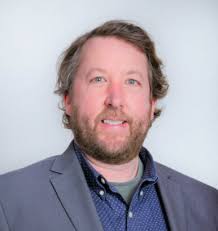
"You've also provided continuation of funding for eviction prevention that looks at the housing stability part of the ecosystem with eviction-prevention dollars," Sachs told commissioners. "We've also supported housing projects through the Brownfield Redevelopment Authority with the new legislation that opened up tax increment financing opportunities to support housing developments."
He also noted the need for more housing for the area's aging population as well as those with special needs who are able to live on their own or with minimal service aids.
"The housing needs assessment report identified that seniors 65 and older is one of the largest-growing segments of our population," he said, highlighting the need for "zero-step opportunities" and "downsizing opportunities."
"Additionally, we have had discussions with Community Mental Health for a few years about our disabled population. ... There's a range of persons in this county with disabilities. So those with less severe challenges, there's a lack of housing ... There's an increasing number who are becoming homeless. They're struggling to find housing."
Sachs said CMH has evaluated the site and said "it hits all these amenities to provide a product type there."
"It's near transportation. It's near mental health services, near environmental health. It's got recreational amenities. It definitely is a parcel that offers potential for the right type of housing development for our persons of need."
Sachs said, by leveraging county property, the county could "create some possibilities for housing" for those with disabilities and seniors.
"We can derisk this development ... meaning that we would take this site and, as a county, we can design it the way that we want to serve our residents," he said.
The next step would be to get preliminary approval from Holland Township for a planned-unit development, which allows for more creative, mixed-use layouts (e.g., combining retail, offices and housing) and greater design flexibility in exchange for community benefits.
"That brings that parcel a long way," Sachs said. "Then we would release a request for proposal to the development community and we could get bids for those developers to say: 'Yes, that's the type of development that we want to build. We'll buy it and we'll activate it and if we get it to the point of de-risking and we get preliminary approval, that helps lower costs of the products that we want to bring forward.'"
Sachs said he is passionate about helping to identify solutions.
"This is really important to me, and
I'm sure all of us here in this room respect this space with their clients and who they serve. I've met with their executive team and we've talked about this concept of this county parcel and there's an opportunity. We have the ability to lay out what we want it to look like."
Paul Sachs, director of the
Ottawa County of Strategic Impact
What is de-risking?
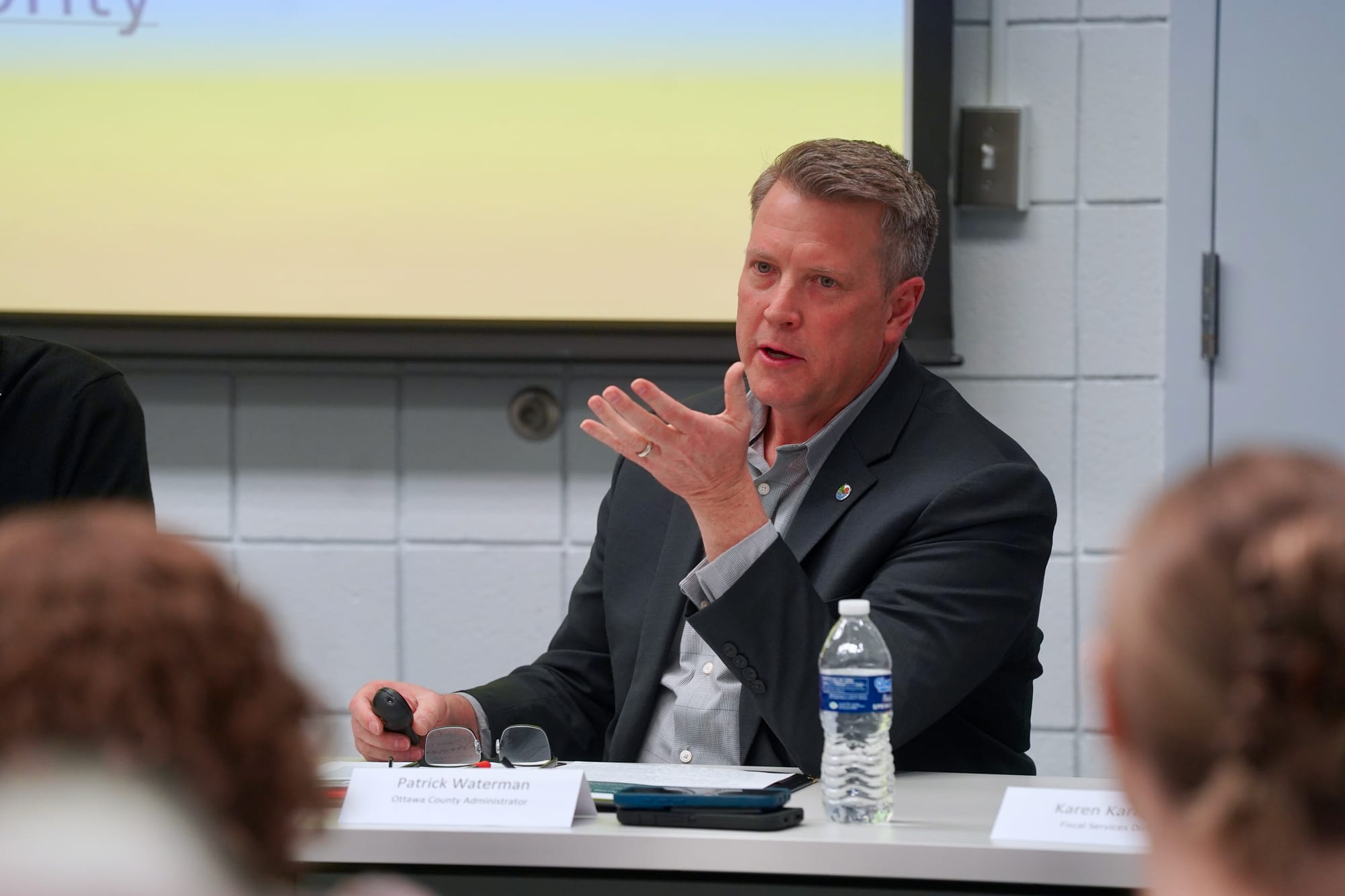
The idea of "de-risking" is appealing, County Administrator Patrick Waterman said after Sachs' pitch to commissioners.
"It really appeals to both of us because, as you know, at the county level we don't impact local zoning, but we do work to try to remove barriers to challenges, and the cost is a barrier for a developer. If that can result in a more affordable housing product, where you've got buy-in from the developer, the local unit that's making the decision and furthers the county's goals of housing. It's a win-win-win. So, I think it's a great model."
Waterman said the model could be replicated elsewhere with other municipalities.
"I applaud Paul for his foresight in thinking of this, and we can replicate this. We've got a lot of other properties that we can look at."
Sachs said Holland Township officials are aware of the proposal and are supportive of moving forward.
"I've talked with the township manager and with their planning director on multiple occasions and his staff, trying to understand what this could look like moving forward. They've been very supportive and willing to sit at the table with us as we pursue the concept," Sachs said.
Mixed reaction from commissioners
Despite the enthusiasm, several commissioners expressed their hesitancy to move forward with the idea.
Commissioner Jordan Jorritsma said the idea seemed interesting.
"I think if you're going to try the validity of the small footprint houses, it's the place to do it," he said.
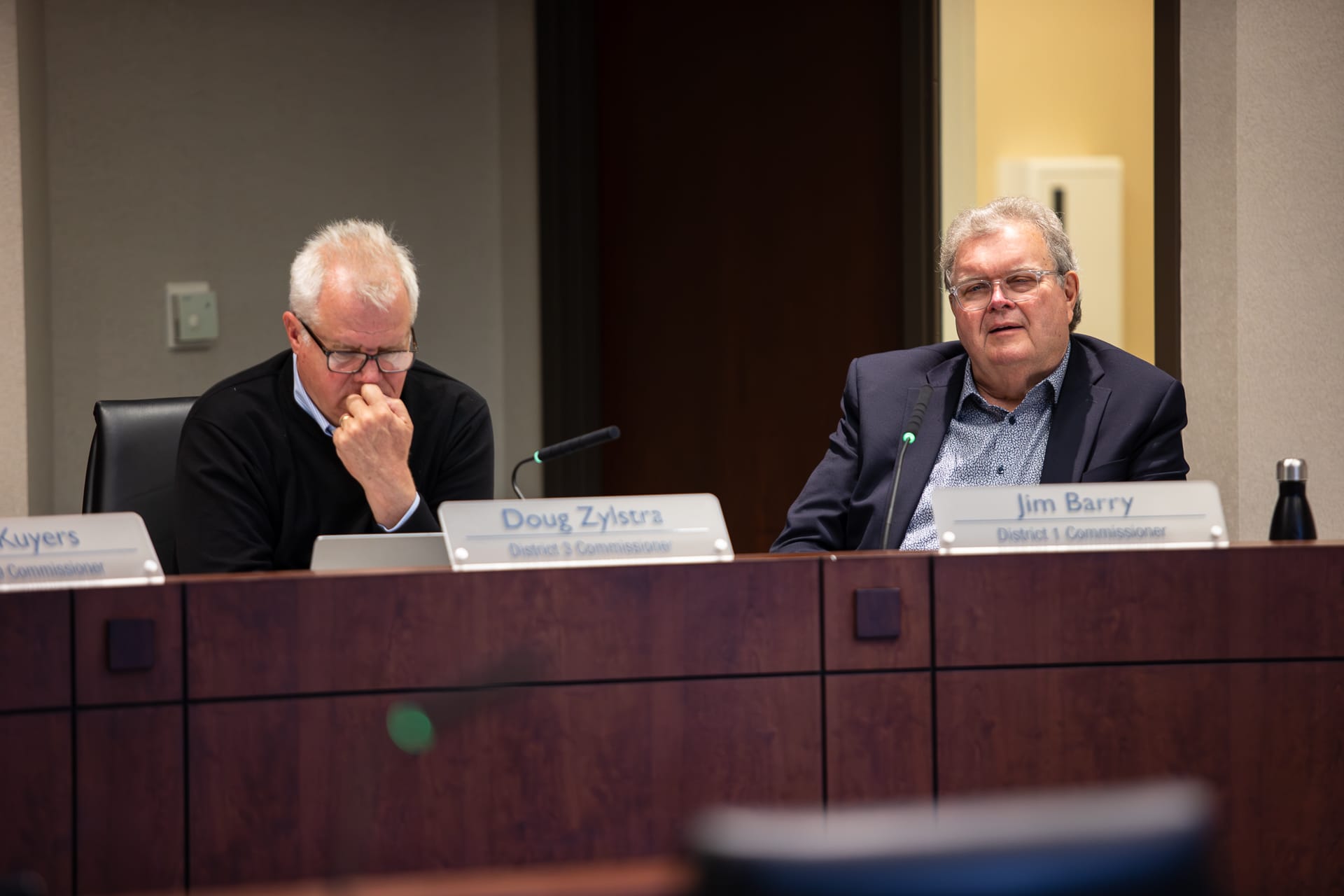
Commissioner Jim Barry, a realtor, said the plan could pave the way for removing barriers that developers often face, preventing developments from moving forward.
"The way this normally goes for developers, you go to the township or city or whatever it is, and you've got a beautiful idea on what you want to do, but then all of a sudden, well, 'it's too many units,'" Barry explained.
"They want you to do less. 'Oh, there's going to be traffic.' So, they want you to put a turning lane in, and they want ingress and egress for emergency. So, you start with a plan and, by the time you get through with some of the township stuff, it can change greatly.
"So, if we can minimize the risk for the developer going forward, that makes this a much more viable project going ahead. I think this is great," Barry said.
Commissioner Allison Miedema, a member of the far-right Ottawa Impact faction on the board, asked if the county would sell the land as part of the plan.
"We're stepping out of the way," Sachs affirmed. "We're not in the housing management business."
If the board were to allow the project to move forward, the county would create a special revolving fund for certain pieces it owns to be developed in similar ways.
"That's a decision to be made, and how you want to utilize those proceeds," Waterman said.
Commissioner John Teeples, however, said he thought the concept, while interesting, potentially could create a precedent he wasn't sure was right for the county.
"My head is reeling right now. I really applaud you for thinking out of the box here. I've got to really think about this personally. I mean, I can see it happening," Teeples said. "But I'm asking myself ... what's our purpose? What's our value? What do we want to do? And I think it's obviously a housing priority for us that we've identified."
"It has so much potential, but it also has this pushback of 'should we be doing this?'"
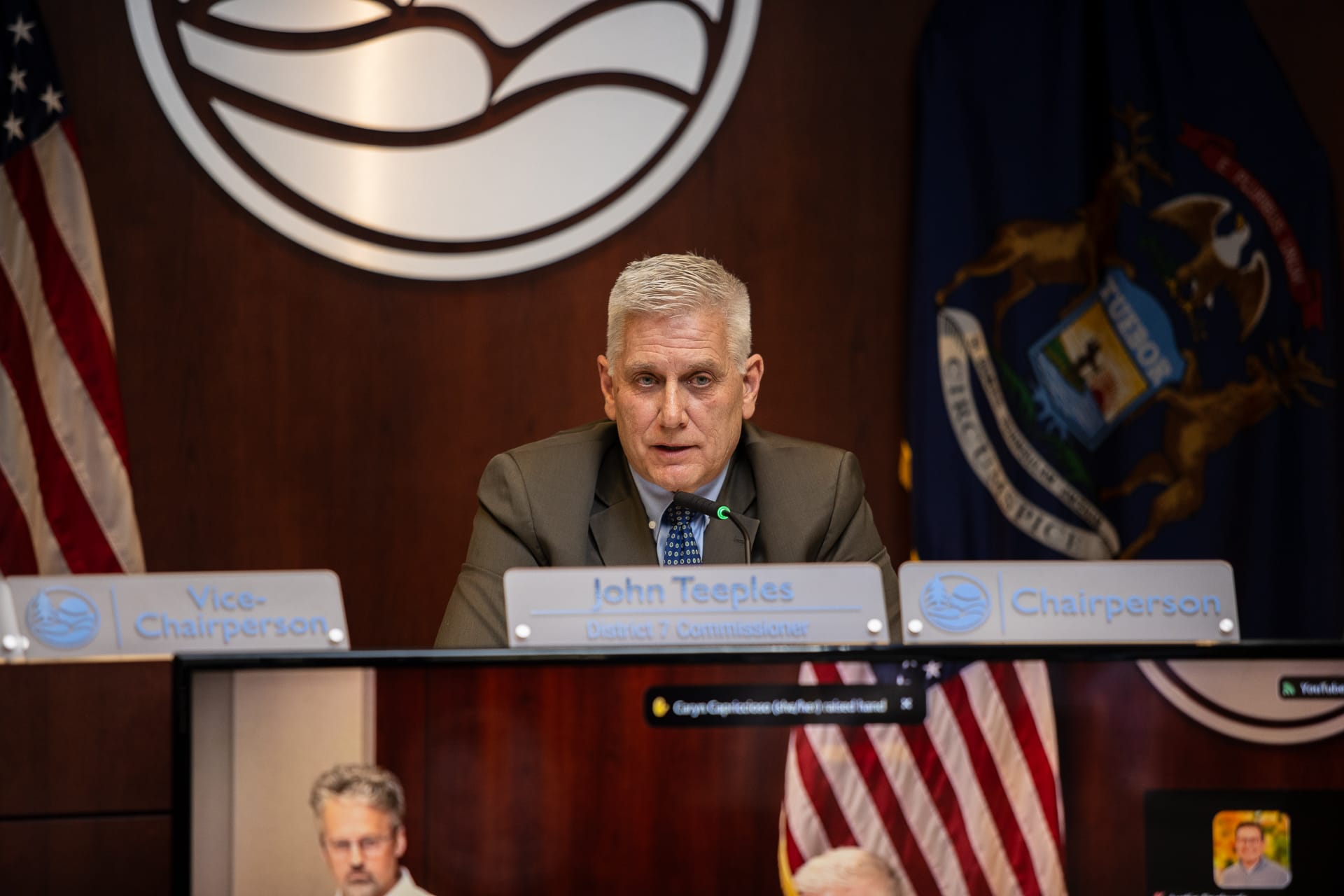
One concern he had was whether the project would inspire Holland Township and others to consider changing zoning of land parcels to incentivize more housing developments.
"You can build small houses, and people will come," he said, "but will it really convince a township to change their zoning rules to allow this kind of development in their areas? Will it really have that impact? Because, if it doesn't, then we're simply doing this piecemeal and we're using taxpayer dollars to set it up.
"It's got to have a legacy effect."
Waterman said the current alternatives are to do nothing or to sell the property for fair market value and not have any input in how the land is developed.
"The alternative is the county says 'we're going to sell this property, put it for sale, sign it, and whatever happens happens,'" he said. "If we're trying to change the dynamic in which housing products are available in this county, this is an opportunity.
"We have a finite ability with the properties that we own to do this. But if you model it and it's successful, the hope is that the private sector can do that on other pieces of property that they find and decide to develop."
Sachs said one of the biggest problems in solving the housing crisis is community perceptions.
"What I have heard on many, many occasions from the development community and the realty community is there's demand for the smaller product type," Sachs said. "Developers want to build smaller; they just can't because the infrastructure cost to get you there or the zoning are a primary combination, and then there's pushback with projects that come forward because people are scared of density."
He said there is a perception that homes at the $200,000 price point mean lower-income residents, which could affect property values.
"That's the misconception that is really strong right now across the region. A $200,000 home — we're talking about that as affordable," Sachs said. "And then there's this perception that that must be lower income because all the homes we're building are $400,000. So if you're going to build a $200,000 house, it must be for the low-end individual and it's going to affect my property taxes or my property values. It's going to impact crime and safety and aesthetics.
"We need to overcome that hurdle."
Jorritsma said he didn't disagree with Sachs' assessment, but that residents have "valid fears."
He complimented Holland Township for having nearly every type of housing, but implementation is key.
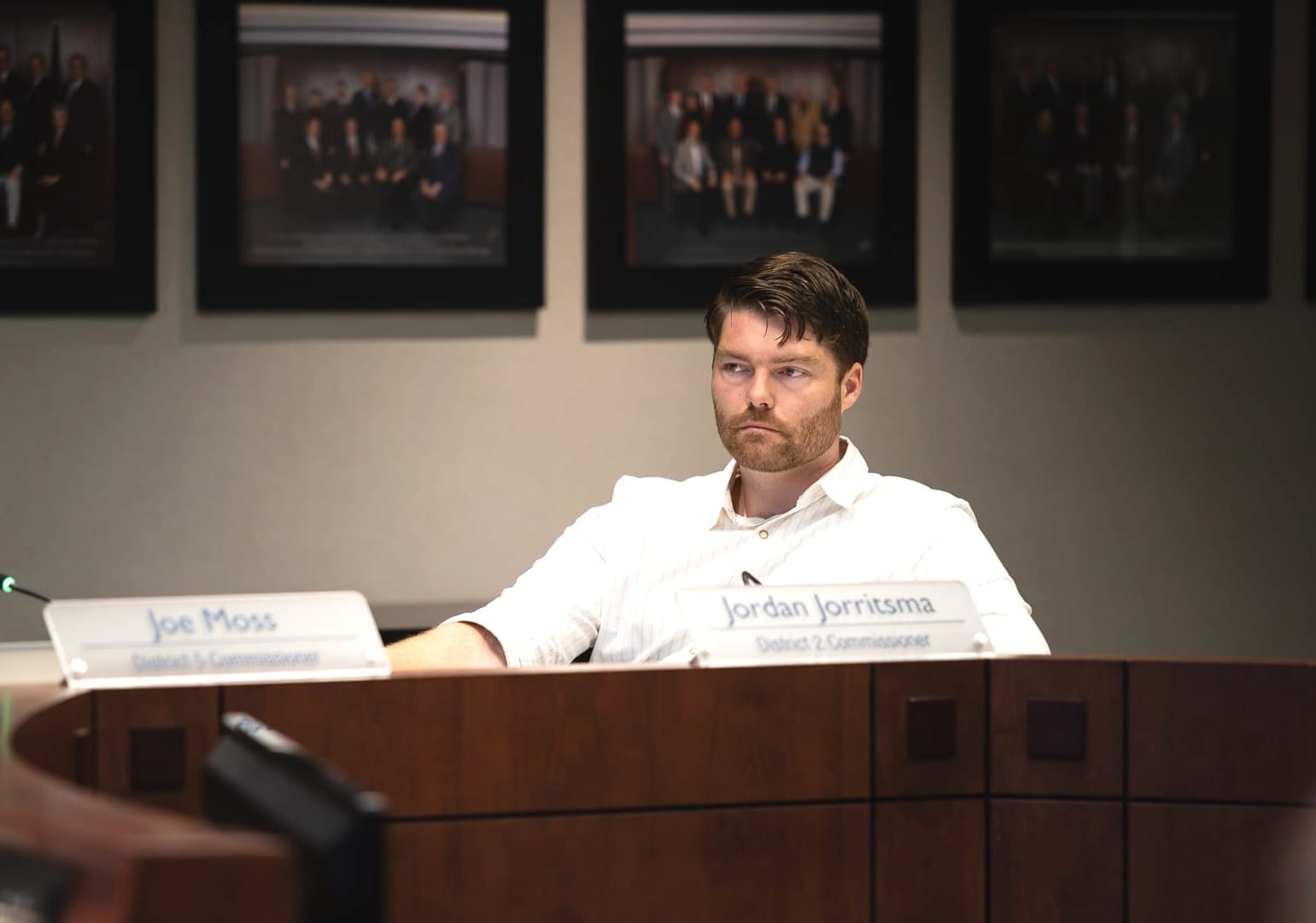
"Holland Township has a breadth of all different types of housing. It's got trailer parks. It's got apartments. It's got beautiful neighborhood developments. It's got rural. It's got it all," Jorritsma said. "I would say Holland Township specifically has been one of the leaders, if not the leader, in the county in putting in more housing at every level — but especially on the lower-income side. I think it just depends on how you do it. I think there is a viability test."
Jorritsma, the youngest commissioner on the board, said the Gen Z generation is open to smaller footprints; however, families still need space.
"I've asked people in my generation, and I have friends that would move into a small-footprint house. They don't necessarily want to move into a condo ... unless you're going to live in a downtown area, there's not really an option to have kind of that smaller footprint size.
"Do I have questions about whether families can live in these houses? Yes. I'm not 100% convinced with specifically these small footprint houses that it would — I'm just thinking about my own family — but we don't know until we try."
Back to the drawing board?
Teeples said he would like to see more buy-in from the county's municipalities to convince him of the pilot's potential.
"If the county is going to say: 'We're willing to take a piece of property that's worth $2 million in Holland Township ... but if we do that, we'd like you to take another parcel and rezone that area to make it available for housing. We'll show you the example. We'll invest in your community. We'll put these houses on the tax rolls for you, but you've got to do something in the game. You have to have skin in the game, too.'
"Try to get something at the front end from them," Teeples told Waterman and Sachs.
Sachs said it was an interesting idea that he thought "township leadership would be open to."
He noted that there are "three other parcels in Holland Township that for-profit developers are looking at" with the small footprint concept in mind.
"That'd be if Holland Township's open to move something forward," Sachs explained, "and I think that's really moving the needle and can show other communities what it can be."
Despite the dialogue, Miedema remained skeptical.
"Commissioner Teeples, I appreciate your brainstorming, your strategic thinking. ... I am concerned with some of the potentials [sic] of us going outside of our lane with some of that," she said. "We are not in the zoning requirements of local townships."
Commissioner Jacob Bonnema also had reservations.
"I'm a little concerned at the moment. I like your brainstorming," he told Teeples, "but I'm a little concerned there with a little bit of the carrot-stick approach. What is our role? What fits our values?
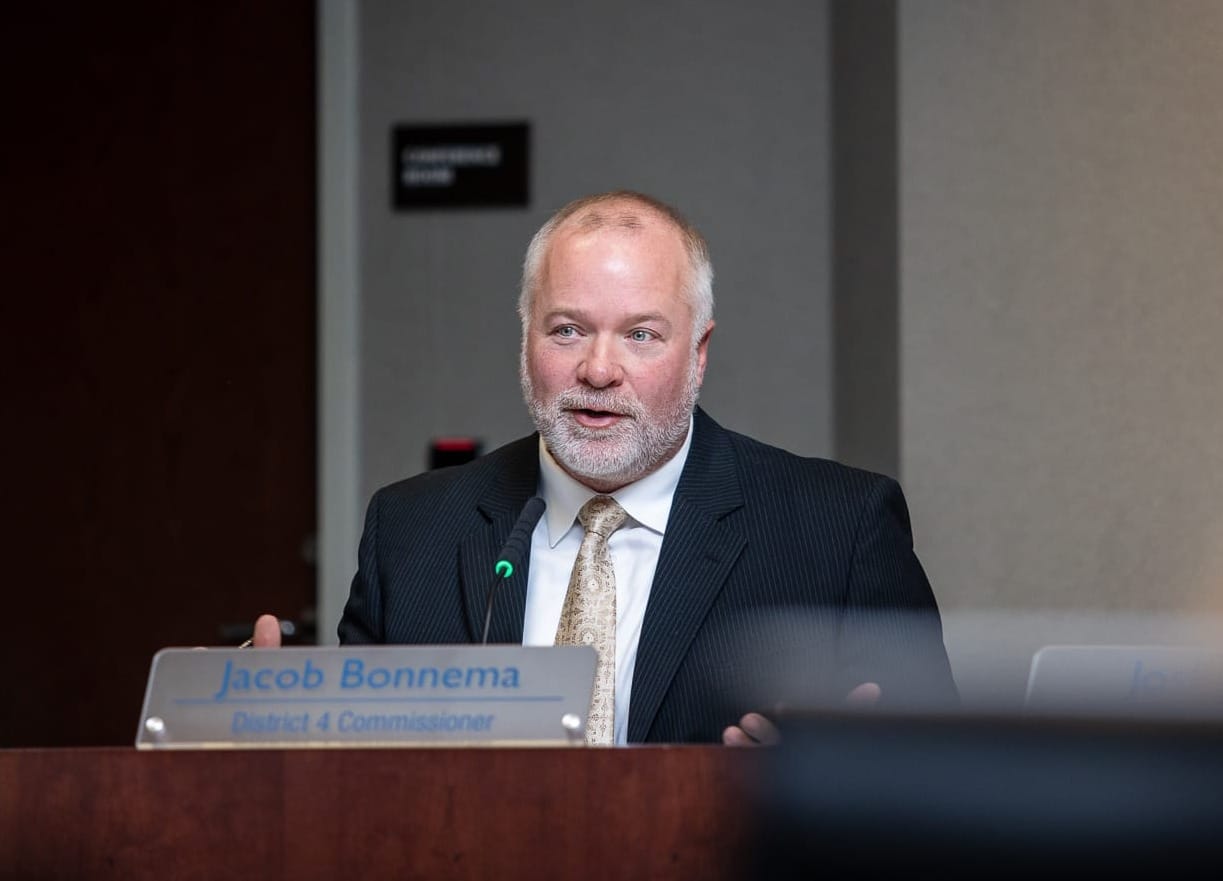
"What I'm trying to balance is we're elected to serve the public. This is definitely a vocalized need that's been well-documented. Housing is not affordable in a lot of our county. So, where do we, as this body, be able to effect change in a meaningful way? And while this project is very interesting and I love where your head's at," he told Sachs and Waterman, "we need 20 of these, 30 of these going on. Not us doing it, but to actually move the needle in a meaningful way to start providing options to young families, teachers, firefighters, elderly people that desire to downsize out of their family home into something more manageable to create space for young families that are coming in.
"But we need to be doing something as a body. What exactly that is ... I think it's creating an environment by which it's enticing for developers to come in to be the solution — not us be the solution — but us to help foster an environment where it can happen," Bonnema said. "I'd like to see some activity happen, but I also don't want to look at this as the government is here to rescue the people that can't afford homes. That's not our role."
What happens next?
Sachs told ONN after the Planning and Policy meeting that he will take the feedback from commissioners to the township to discuss options and next steps.
"I'll have to better understand where [Teeples'] perspective was coming from, but from my county perspective and how I operate within the Department of Strategic Impact, for me, it's always been highly collaborative with our local units of government," Sachs said.
Collaboration is the only option, however, as local units of government — not the county — have control over land zoning and how development happens.
"As a county, I have no authority to, for lack of a more eloquent expression, tell them what to do or force them to do something," Sachs explained, "and as I have worked with local governments and talking about their existing zoning, I also approach it very intentionally of not going to a local unit of government and saying: 'You need zoning reform, you need to do this, you need to do that.'
"I have been very intentional about finding real projects, real parcels that we can then have some real conversations with the community and say this is how we could collaboratively get the type of development that meets all the needs of our residents, and it's a multiple-win scenario. ... So, I just want to get people around the table with these discussions."

Despite the mixed input, Sachs said he felt confident that the idea still had a lot of potential.
"I'm anticipating and hopeful that I can get a green light to start engaging deeper with the township on this parcel, and say this is what it could be. I presented to the Holland Township Planning Commission already on thinking about lot size and lot widths differently, thinking about building minimum home-size footprints allowed via townships. I've already been greasing the skids, if you will, in that space for them to fully engage and understand the big picture on how this can contribute to overall housing needs and quality of life for the county.
I don't want to use a stick; I want to use carrots.
As to the other county parcels that could follow if the pilot proves successful, Sachs said each one would be evaluated for its particular attributes and potential in terms of housing development.
"They're all very unique, and that precisely illustrates why I want to approach each community with looking at opportunities within their jurisdiction, not just a generic sample of this is what can happen, but let's really look at your space in your community, and how can we balance this out," he said.
Sachs said he is eager to see the Holland Township parcel become a "showcase piece" to prove how creatively collaborative government units can be when working together.
"If we can move this parcel along on the backside, where it's right for development, and the community is behind what we've proposed, then the development community can say, 'Yes, we want to team up and activate something,'" he said.
The Planning and Policy Committee next meets at 10:30 a.m. Tuesday, July 14.
— Sarah Leach is the executive editor of the Ottawa News Network. Contact her at sleach@ottawanewsnetwork.org. Follow her on Twitter @ONNLeach.


