

The Business Next Door: EV Construction: Back to the future
The genesis of the company dates to 1945 when two young men, Peter Elzinga and John Volkers, formed a partnership to construct homes in Fremont, Michigan. But its story begins before that.

EV Construction (EV) caught my attention and sparked my curiosity because I perceive it as a left-brained, analytical commercial construction management firm; yet it publishes books on right-brained, human-centered business leadership. What I discovered is that these complementary philosophies are part of EV’s roots.
The genesis of the company dates to 1945 when two young men, Peter Elzinga and John Volkers, formed a partnership to construct homes in Fremont, Michigan. But its story begins before that.
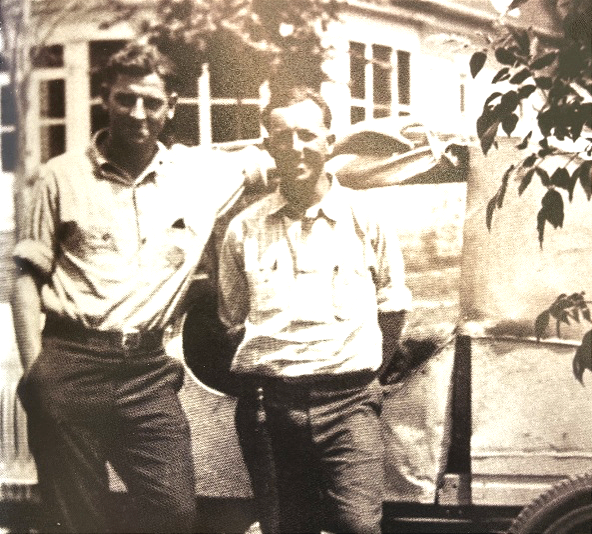
Peter Elzinga
Peter Elzinga was born in 1906. Sadly, his mother died that same year. Although his father remarried, Peter was raised by his grandmother, JanettaJa Meeusen, on a farm located on the northeast side of Zeeland, near the one-room Town Line Grade School he attended on the corner of 96th Avenue and Quincy Street.
After graduating from Zeeland High School, Peter enrolled at Hope College. Unable to keep up with tuition payments, he took a job with Wichers Lumber Company in Zeeland and, simultaneously, studied drafting through correspondence courses from the Chicago Technological Institute. Interested in electricity, Peter also worked with an inventor and marketer of an electric razor until a distant relative advised him to stick with drafting. Those plans, however, were interrupted by a different type of learning that equally expressed Peter’s gifts and personality.
In 1926, Peter and his cousin Dick Elzinga — who was one year older than Peter — decided to take a trip to Yellowstone National Park. For transportation, they bought a 1915 Model T Ford, took off its body and fenders, replaced them with a wood and canvas design of their own, put on some new parts (including a set of 30.0-by-3.5-inch tires), and covered the front of the vehicle with a 1919 Ford hood and radiator shell. Because they also worked as farmhands, they decided to leave in July, after the oat and wheat harvest. With $130 between them, they took off. This is how Dick Elzinga described their adventure:
On our first day, we drove around Lake Michigan to Milwaukee, Wisconsin, to visit some family and friends. We had good pavement all the way. The next day was different! A short distance west of Milwaukee, the pavement ended. It was gravel road all the way to Yellowstone National Park ...
For sleeping, we used many straw sacks, as this was the season for threshing grain. Food was very reasonable. Once in a while we would see a sign that read, “Dinner — all you can eat for 50 Cents.”
Our first interesting place to see was the Black Hills near Rapid City, South Dakota. It was here, too, that we had our first car trouble. One of our new tires on the rear wheel blew out. It happened near a gas station. A young man at the gas station said the reason it blew out was that the rim was worn so thin that it cut the bead of the tire and that the whole wheel should be replaced. He said he had a good steel wheel at home. ... From then on, the car had three wooden spoke wheels and one steel wheel!
After we left the Black Hills, we entered Wyoming, and after only a few miles we visited the Devil’s Tower National Monument. This was an old volcano core of solid rock 875 feet high. Continuing west, we entered the city of Sheridan. Here we were informed that the high pass just ahead should be avoided and that we should go northwest through Billings, Montana, and then drop down to Cody, Wyoming, the eastern entrance to Yellowstone National Park. On the way to Billings, we stopped to see the Custer Battlefield National Monument. The highlight of our whole trip, though, was visiting Yellowstone National Park. The main attraction was the Old Faithful Geyser. We took many pictures.
We left Yellowstone through the southern entrance and stayed in the small town of Moran. Here we had our second car trouble. When we started out in the morning, the car would not move. The rear wheel hub had broken. We put a jack under the axle by the broken hub, and while [Peter] took it apart, I hitchhiked about 25 miles to get a new one at a gas station. It cost $2. By noon we were back on our way. From here we headed southeast to Cheyenne, Wyoming, where we stopped to tighten up the connecting rods by filling the rod caps to get rid of the knocks. When we entered Nebraska, the engine was firing only on three cylinders, so we stopped in the city of Chappell and bought a new wiring harness for $3, and that took care of the trouble.
When we entered Iowa, we got as far as Iowa City, where all traffic stopped because of heavy rain. The road to Dubuque was open, however, and there we could get on a paved road to Chicago and from there back to Zeeland. … With this experience we enjoyed traveling the rest of our lives.
Surviving his adventure to Yellowstone may have given Peter the creative confidence to pursue drafting full-time. Still, he needed a mentor. In 1929, he found one in Harvey Weemhoff, who worked out of an office on the second floor of the Peoples State Bank building in downtown Holland. Unfortunately, after the 1929 Stock Market Crash and the Great Depression that followed, the construction industry ground to a halt. Fortunately for Peter, during that time he met Harry Colton, a well-established architect, who had designed Eastown Theater and the since-razed gymnasium for St. Andrew's Cathedral High School, both in Grand Rapids.
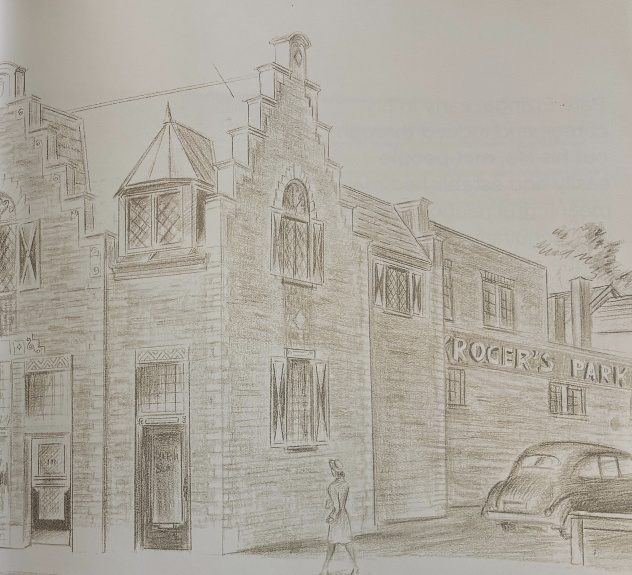
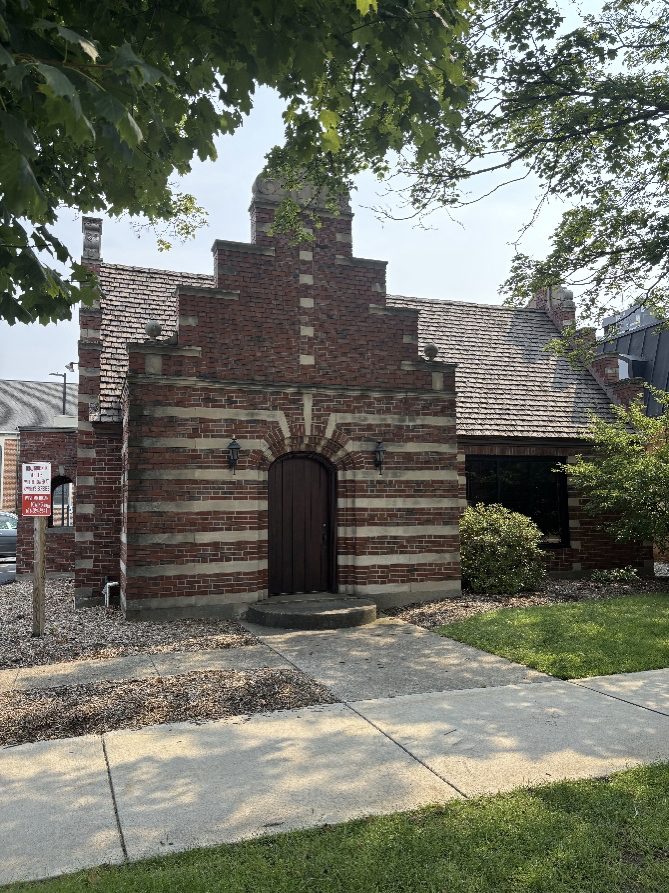
Colton’s next big project client was Charles Sligh Jr., who later made a name for himself by creating the Sligh-Lowry Furniture Co., a maker of desks, grandfather clocks, and office furniture. This project, however, was for a Dutch-style building (hereafter referred to as “The Dutch Building”) on the corner of Ninth Street and River Avenue, which would become home to Holland’s newest Kroger’s Store. Upon completion, Colton and Elzinga moved to an upstairs office in the building. Next, they designed the Dutch-style office building on the corner of 10th Street and Central Avenue for Dr. Bill Winters and Dr. John Winters, as well as homes on Southshore Drive, in Waukazoo Woods, and along Lake Michigan.
Meanwhile, Peter had the good pleasure of meeting Florence Ver Hage. Florence was born in 1899 and graduated from Zeeland High School in 1917. Her father, Marten VerHage, owned the M.C. VerHage Hardware Store at 146 E. Main St. in Zeeland. Florence, however, went in a different direction. First, she worked in the Zeeland telephone office, then located above the Van Brie Drug Store, less than one block east of her father’s hardware store. She also worked as a teacher’s aide in Miss Anna Huizenga’s first grade class.
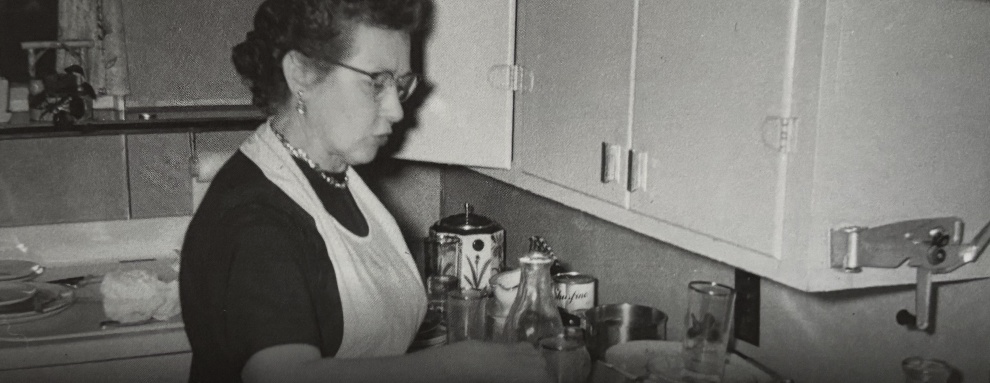
Next, Florence worked as a receptionist and bookkeeper for the Star Furniture Company, before it was renamed Herman Miller. Then, after attending the Holland Business College (present site of Bowerman’s on the corner of Eighth Street and Central Avenue in downtown Holland), she secured an administrative assistant job at the Zeeland State Bank. Peter and Florence were married in 1934. When they learned they were expecting a child, they moved from an upstairs apartment near the corner of Southshore Drive and Graafschap Road into a tiny house that Peter had designed at 131 W. 21st Street. Their son Paul was born in 1937; their son Marshall in 1939. Despite their ability to build larger houses, Peter and Florence spent the remainder of their lives in that humble home. Their business success was due in no small part to one of their neighbors, John Volkers.
John Volkers
John Volkers was born in Allegan in 1893. John’s early adulthood adventure wasn’t a road trip to Yellowstone National Park; it was aboard a British transport ship as part of the 339th Infantry Division of the U.S. Army, which he boarded immediately after being drafted into World War I. That ship took him to one of the coldest cities on earth, Arkhangelsk (Archangel), Russia, which is on the White Sea just 124 miles south of the Arctic Circle. There he helped guard supplies. While there, he contracted pneumonia. Thankfully, he survived.
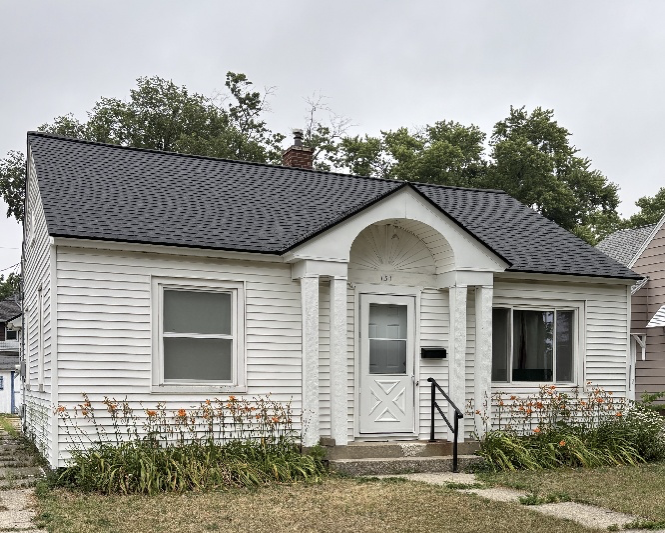
When John returned to Holland, he married Anna Smith. He not only worked on “The Dutch Building,” but also built three houses on 21st Street between Michigan Street and Pine Avenue, only one block east of Peter’s residence, and moved into one of them.
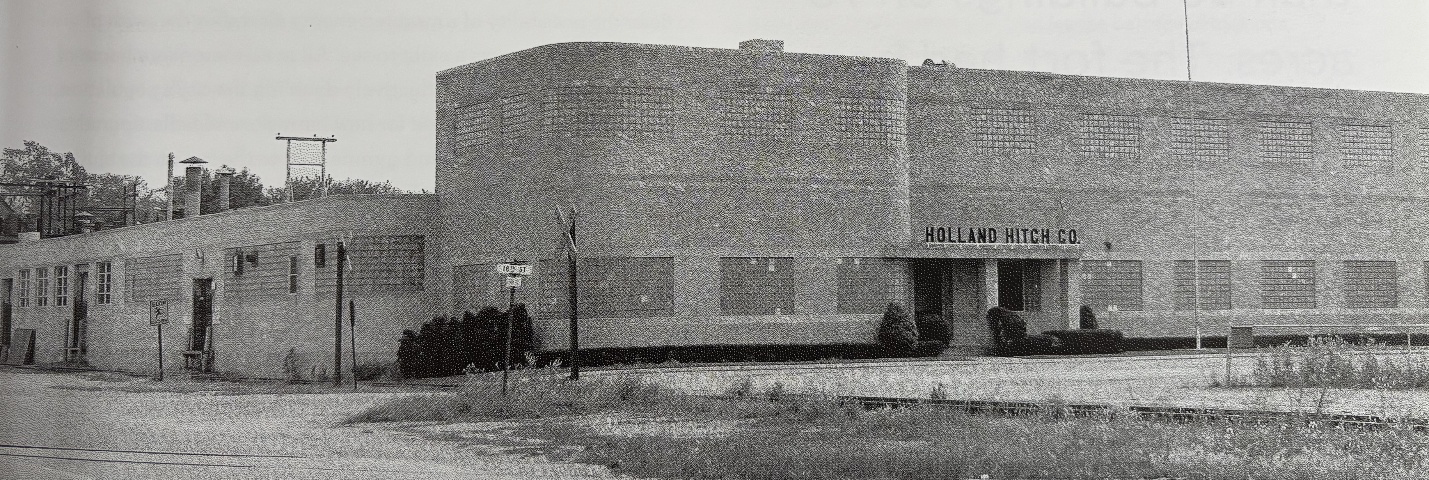
With the onset of World War II, Harry Colton took up employment with the Homeowners Defense Corporation, and Peter Elzinga with W.E. Wood Construction. Peter also partnered with Charlie Fauquhar to begin work on the corporate office and manufacturing plant of Holland Hitch, a unique challenge because, due to wartime rationing, they had to rely on reinforced concrete instead of structural steel I-beams and columns.
Next, Peter worked with Daverman Associates to supervise and manage the construction of a commissary at Fort Brady, located at “the Soo Locks” near Sault Ste. Marie. There, Peter and Florence’s boys, Paul and Marshall, were able to watch the construction of the MacArthur Lock and see up to 30 freighters pass by each day!
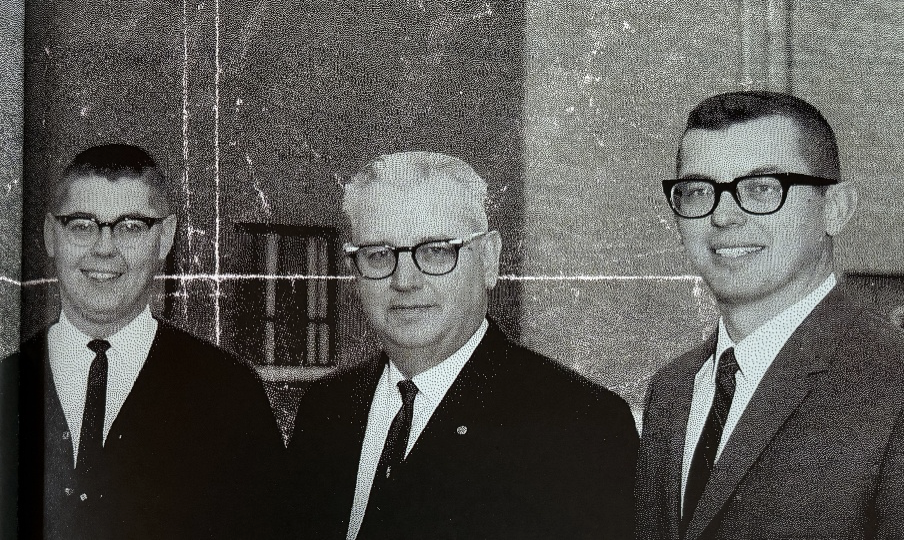
By all accounts, Peter was gregarious, likable, and unassuming, a genuine person who enjoyed being social and building relationships, which he did by walking around job sites asking questions and encouraging progress, taking clients hunting, and meeting his friends (and even competitors) at the Tavern Club (part of the Warm Friend Tavern in downtown Holland).
Elzinga and Volkers
Peter Elzinga and John Volkers formed Elzinga & Volkers (E&V) in 1945 after the Gerber Co. in Fremont recruited Peter to design and construct six homes. In 1948, they decided to incorporate as a general contractor. Then, they converted Ben Lievense’s battery shop on the corner of Central Avenue and Seventh Street into Holland’s first bowling alley and built Durfee Hall on the campus of Hope College.
During the construction of Durfee, Peter and John met Jim Miller, a former engineer at Alcoa Aluminum turned entrepreneur. Miller not only provided the aluminum entrances for Durfee Hall but also became one of E&V’s significant clients and suppliers. Initially, Miller considered building a manufacturing facility in Holland on the south side of Sixth Street between Central and College Avenues. But he chose Reed City instead. EV then purchased the block for its eventual home.
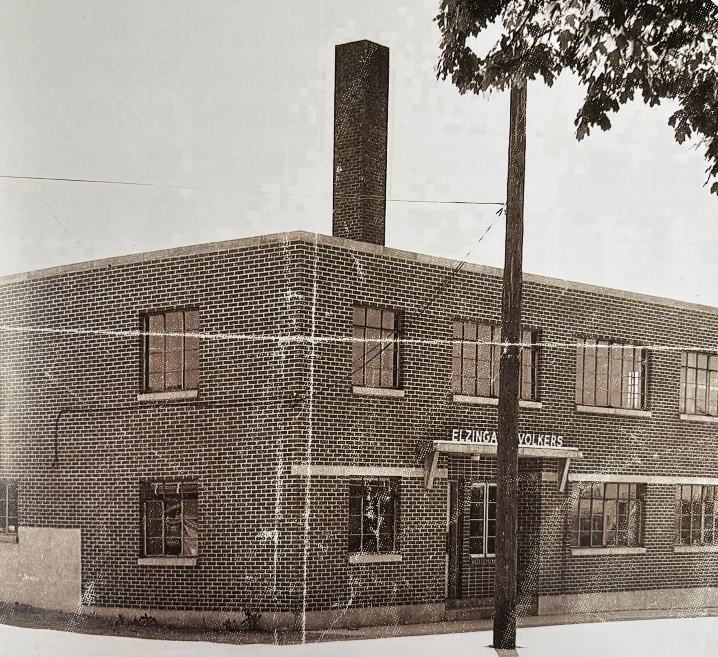
Developing the block was a much-needed improvement for Holland. Previously, on the north side of Sixth Street at Central Avenue had been a city dump site; later it became the disposal site for material dredged from the channel between the city and Lake Michigan.
In 1950, E&V began renovating the former Cappon and Bersch/Armour and Company tannery on the north side of Lake Macatawa for Parke Davis, the pharmaceutical company. During the late 1950s and 1960s, E&V built the two buildings on the south side of Sixth Street for its offices and its warehousing and distribution functions.
Meanwhile in 1955, Peter and Florence’s son Paul began his formal engineering education at Hope College, before earning his civil engineering degree at The Michigan College of Mining and Technology (now Michigan Technological University).
E&V entered the prefabricated steel building industry in 1963 when it formed DEW-EL Corporation and hired Bob DeWilde, a former salesperson with American Seating, to run it. One of DEW-EL’s first design-build projects was the R.E. Barber Ford dealership building at the corner of East Eighth Street and the U.S. 31 bypass in Holland. Over time, the DEW-EL’s business evolved into building portable classrooms and supplying school furniture.
In 1968, Marshall Elzinga recruited Gordon M. Buitendorp to form a separate design firm, GMB Associates. E&V and GMB’s first joint project was an industrial plant for Excello in Holland. In 1969, E&V began to develop its construction management (versus general contractor) program to better serve clients' interests.
The construction management decision was due in no small part to E&V’s new president, Ed Haltenhoff.
Ed Haltenhoff, construction management
Before joining E&V, Ed made a name for himself managing the construction of the Mackinaw Bridge. The bridge opened in 1957. Nine years later, Ed was looking for his next assignment. His call to adventure came from Paul Elzinga.
Ed became E&V’s general manager in 1965. Already, E&V had been working on the City of Wyoming’s water treatment plant on New Holland Street and the Paul Gezon Pump Station in the City of Wyoming and a four-story addition to Holland Community Hospital. Next, they were awarded a 28.5-megawatt expansion for the James DeYoung power plant in Holland, a wastewater treatment plant for the City of Zeeland, and municipal marina projects funded by the Michigan Department of Natural Resources. But the project that opened the most eyes was the 32-room hotel, restaurant, and lounge built for Richard “Dick” Den Uyl called Point West, located on the south side of Lake Macatawa where it enters the channel to Lake Michigan.
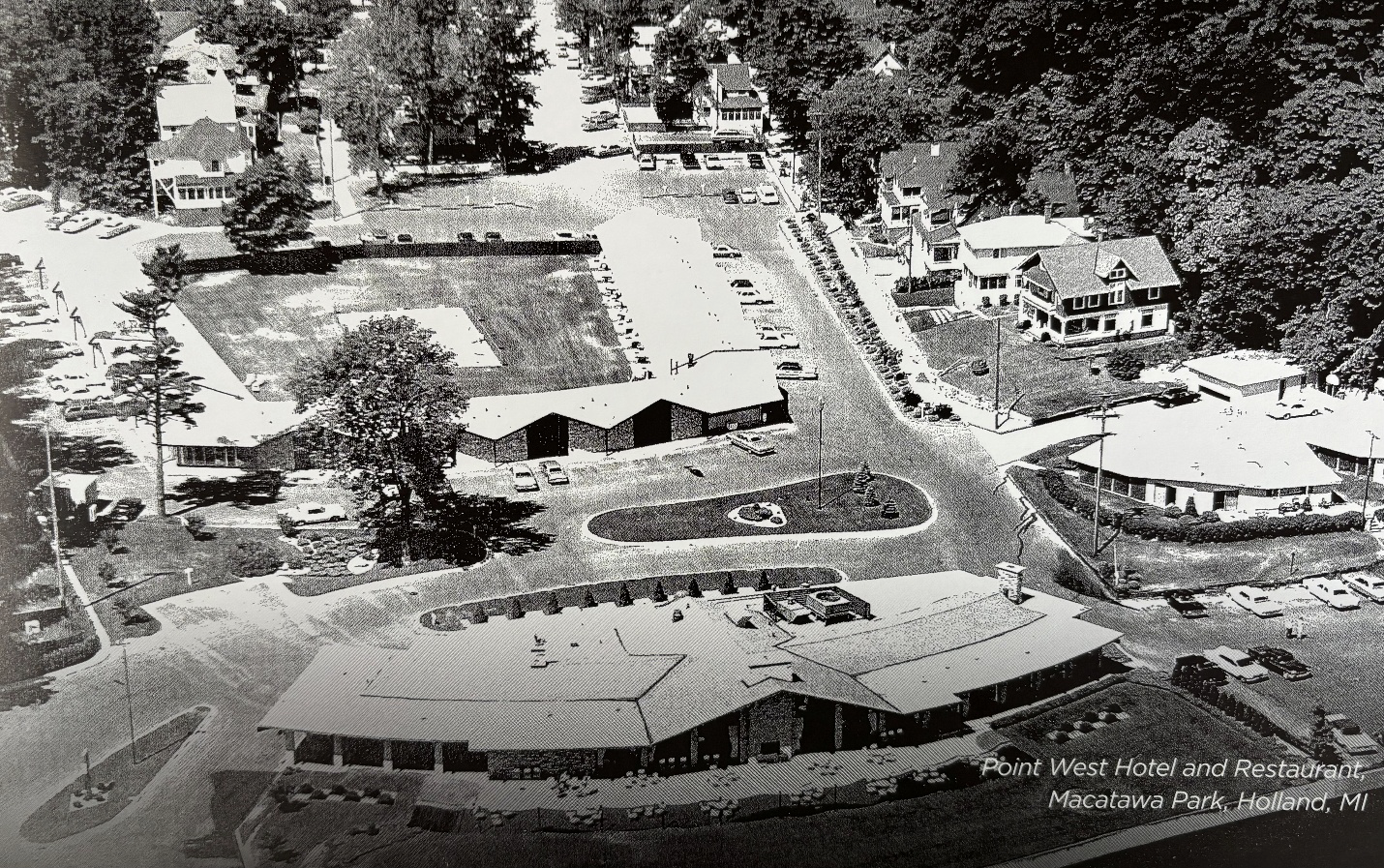
Notably, in 1969, E&V began offering construction management seminars at the University of Wisconsin. In 1970, the year Ed became president, E&V was awarded power plant projects in Boyne City, Marquette, and Celina, Ohio.
From power plants and water treatment facilities, E&V moved to food processing. In 1980, E&V built an automated distribution center in Lodi, California for General Mills, which led to more than 100 projects with both General Mills and Kraft Foods.
When Ed retired in 1985, Paul and Marshal Elzinga took on E&V’s leadership roles. By 1988, E&V had offices in four states, was building “big box” stores for retailers such as Meijer and Target, and had been ranked three times by Engineering News Record as one of the Top 100 Construction Management Firms.
Thus, by the 1990s, E&V had evolved from a residential builder to managing the construction of colleges, chemical and pharmaceutical and power plants, churches and public schools, and “big box” stores and food processing plants. It was also anticipating a boom in healthcare and senior living infrastructure, which proved to be the case. But E&V also did small local special projects: in 1987 it constructed Holland’s Window on the Waterfront, in 1988 it worked on Holland’s snowmelt system; in 1999 it restored the blades on Holland’s DeZwaan windmill.
Mike King and business, risk management
In 1994 Mike King, a Fortune 500 company CEO from California, became E&V’s general manager and then president and CEO. Unlike Ed Haltenhoff, whose expertise was in construction management, Mike’s gifts were in business and risk management, accounting and finance. One of Mike King’s mentees was Mike Novakowski.
Mike (“Nova”) Novakowski grew up in Grand Rapids. Although his dad engaged in problem-solving as a detective, Mike had other interests. At the age of 10, he had a paper route. But after his grandfather, uncle, and neighbor introduced him to carpentry, Mike built tree houses. While at West Catholic High School, Nova took courses in residential construction at Kent Skills Center.
After graduating from West Catholic, Nova studied construction management at Ferris State University, where he also served for three years as a resident advisor for 70 students. While at Ferris he interviewed for a scholarship sponsored by E&V. When E&V offered him a job in estimating, which meant he would spend much of his day working with Lotus spreadsheets, he wasn’t as interested in the job as much as in working for E&V.
But Nova’s next role was as a project engineer for the construction of Meijer and Target stores, which led to the role of project manager. Meanwhile, Nova took courses at Grand Valley State University and earned his MBA. But his real passion was developing people.
Mike Novakowski, employee-centric culture
In 1995, E&V established the EV Group to serve the food and beverage industry with supplemental staffing and professional services. In 2003, E&V began work on the Maple Creek senior living and Zeeland Community Hospital projects. Nova was named President of E&V in 2005. Soon thereafter, in 2007, EV was recognized as one of a “101 Best and Brightest Company to Work For,” a national award based on employee surveys and operational metrics. When Mike King retired from the business in 2011, Nova was named president and CEO.
In 2015, EV celebrated its 70th anniversary with a book entitled "Unmistakably Elzinga & Volkers," which is the basis of most of this article. In 2018, EV published "Becoming Unmistakable," which emphasizes putting people first and leading with trust and empathy, and launched a consulting company of the same name.
In 2020, E&V began building the Farmstead for Resthaven and broke ground on the Pediatric Center for Behavioral Health at Pine Rest. E&V also rebranded itself as EV Construction, adopted the tagline “Built Around People,” and published Right Brain Justified, a book based on the theories of neuroscience and the practices of complementing logical, process-driven metrics with emotional intelligence and relationship building, a business philosophy I don’t normally associate with a large-scale construction company.

I believe EV Construction’s emphasis on employee-centric culture would make the gregarious, likable, unassuming, genuine, social, and relationship-building Peter Elzinga proud.
— Steve VanderVeen ("dr v") is a biographer, educator, and learner, discovering entrepreneurial leaders and sharing their stories and wisdom. You can find his articles at start-upacademeinc.com.


