

Appeals court considers: Did a real 'energy emergency' justify DOE order to keep the Campbell open?
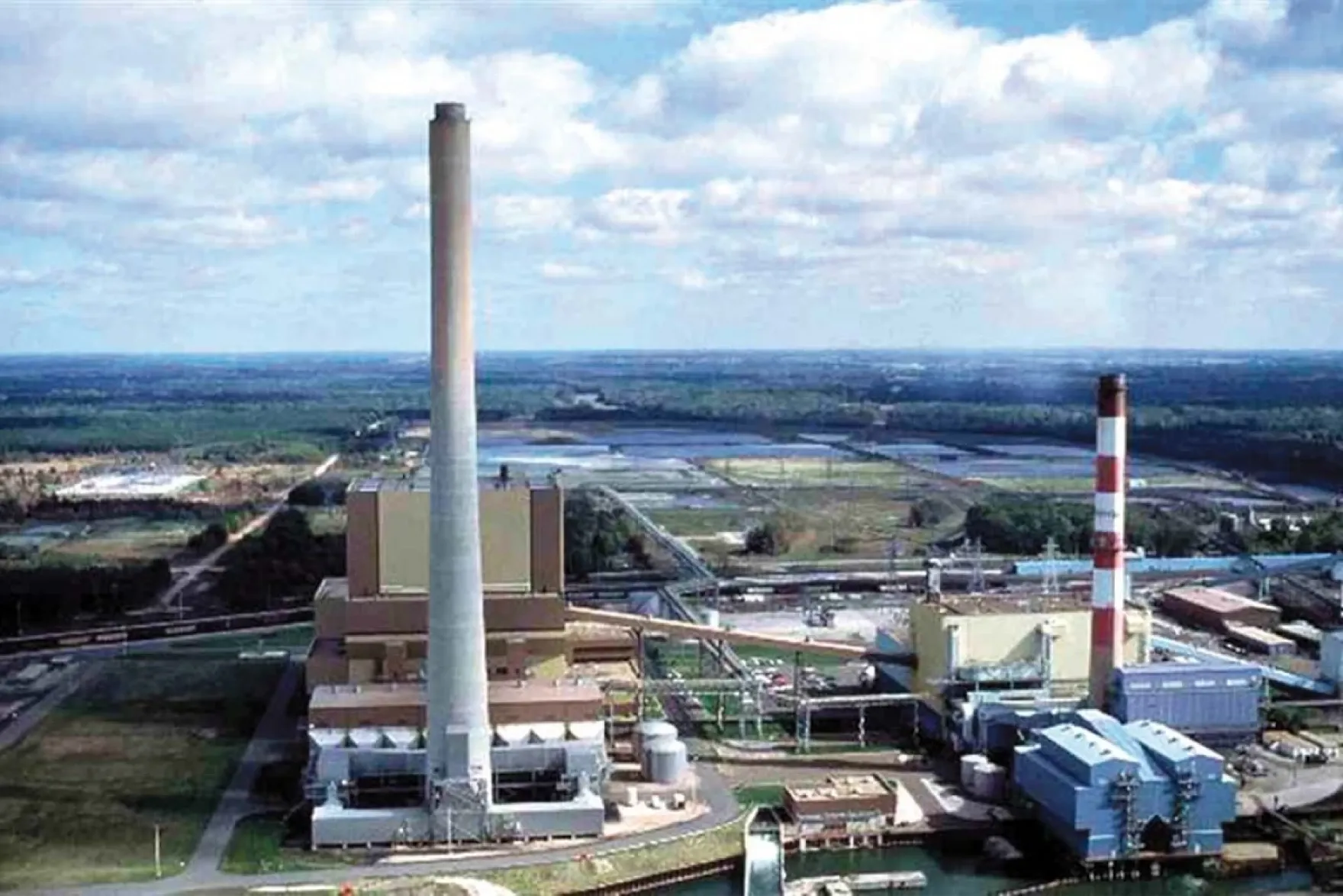
State and U.S. attorneys battled in federal appellate court Friday with the fate of the J.H. Campbell plant in Ottawa County's Port Sheldon Township hanging in the balance.

WASHINGTON, D.C. — Did U.S. Energy Secretary Chris Wright properly wield his authority over what constitutes an energy "emergency" when he ordered a coal-fired power plant in Ottawa County to continue operating, bypassing a years-long planned closure in 2025?
State and U.S. attorneys battled in federal appellate court Friday over that very question, with the fate of the J.H. Campbell plant in Ottawa County's Port Sheldon Township hanging in the balance.
Read More: As Campbell plant gets fourth order to keep operating, Nessel vows to keep fighting back
How we got here
The Campbell plant, owned by Consumers Energy, was scheduled to close on May 31, 2025.
Wright, however, intervened on May 23, exercising a wartime powers act to order the utility to continue operating the plant for 90 days, citing a looming energy "emergency."
The Energy Department has said the emergency order — and the three extensions that have been issued since — are authorized by Section 202(c) of the Federal Power Act and are in accordance with a national energy emergency that President Donald Trump announced on Jan. 20, 2025, just hours after his inauguration for his second term.
"As a coal-fired facility, it would be difficult for the Campbell plant to resume operations once it has been retired,” Wright said. “Specifically, any stop and start of operation creates heating and cooling cycles that could cause an immediate failure that could take 30-60 days to repair if a unit comes offline.
“In addition, other practical issues, such as employment, contracts, and permits may greatly increase the timeline for resumption of operations. If Consumers were to begin disassembling the plant or other related facilities, the associated challenges would be greatly exacerbated. Thus, continuous operation is required in such cases so long as the Secretary determines a shortage exists and is likely to persist,” Wright said in the order.
The states and environmental groups argue that the move was a political justification for accelerating fossil fuel projects.
“The Department of Energy has once again failed to show any legitimate energy emergency after almost a year of unlawfully forcing the J.H. Campbell Plant to remain operational,” Nessel said in a Feb. 20 statement. “Instead of respecting Michigan’s careful planning and the rule of law, this administration is propping up an aging coal plant at a staggering and completely unnecessary cost to ratepayers,” she said.
What's happening now
Michigan Assistant Attorney General Lucas Wollenzien appeared in the U.S. Court of Appeals for the District of Columbia Circuit on Friday morning, speaking for the states of Michigan, Illinois and Minnesota as well as several environmental groups.
"The department's claim of authority here is unprecedented and unchecked, which transformed the structure of power for regulating resource planning as it has been commonly understood for decades," Wollenzien said.
Section 202(c) of the Federal Power Act, which was created by Congress in 1935, was intended to be "constrained fundamentally by the existence of an emergency," Wollenzien said. "That is to say, conditions necessitating immediate action by the secretary."
Appellate Judge Robert L. Wilkins said the arguments from both sides seem to hinge on how to define an emergency and what warrants invoking the federal statute's powers.
"It seems that there's a lot of ink spilled in the briefs about definitions of emergency in various dictionaries and statutory contexts, and one of the arguments ... seems to be on whether an emergency is something that has to be kind of unforeseen or unforeseeable," said Appellate Judge Robert L. Wilkins.

Wollenzien said there could be "emergency occurrences that could be somewhat foreseeable," but that the underlying principle was energy secretary establishing the "immediate need" for intervention and invoking the Federal Power Act.
"So you believe that exigency is really more relevant or important to defining emergency than foreseeability," Wilkins said.
"Yes," Wollenzien said. "We have so many regulatory processes already in place to address that. ... There's a breadth of mechanisms starting at the state level, including federal regulation, before the secretary's specific emergency authority kicks in, and that makes sense because his power under 202(c) is extraordinary, and it provides no procedural safeguards or notice of hearing."

Judge Cornelia Pillard clarified whether it was the states' position that the wartime powers should only be exercised as "a last resort."
"I take your response to be that 202(c) is only available as sort of a last resort, and it's structured into the statute as a last resort ... because there are all these layers of longer-term planning, and DOE has a role also in triggering that," she said.
Wollenzien agreed, saying the federal government even acknowledged in its own legal filings that "existing processes are also just simply better positioned to address these resource planning questions."
"There are a variety of factors here, for interference of process reasons, for the incredible costs that are entailed with making mistakes in that process, and for just a straightforward capability reason, it would not make common sense to give the secretary a unilateral override as to the robust and intricate processes that currently exist for resource planning," Wollenzien said.
Wollenzien also said the DOE failed to present substantial evidence to support its "emergency" determination, then failed to "appropriately tailor its order to address any emergency," which presents the basis for the court to rule the order unlawful and set it aside.

Robert Stander, who represented Wright and the Department of Energy, argued that the energy secretary had "sole discretion" delegated by Congress "to determine how much risk is too much risk, how much of a shortage is too short," and that Wright's orders should be affirmed, "so long as it's supported by substantial evidence."
He referred to the Webster's Dictionary definition of an emergency.
"They define emergency as an unforeseen combination of circumstances that calls for immediate action, and then the statute adds specific circumstances that may call for immediate action, including a shortage of electricity," Stander said.
"Now that definition is fine as far as it goes, but it doesn't at all answer the question here, which is when the circumstances call for immediate action. How much risk of a blackout is too much risk? And Congress delegated that solely to the discretion of the secretary," he said.
Chief Judge Sri Srinivasan questioned Stander on the government's stance on what constitutes an emergency.
"Your assertion of authority actually is that something can constitute an emergency for 202(c) purposes, even if it doesn't require immediate action?"
"I'm not making that argument here today," Stander said. "202(c) does not require intensifiers, it doesn't say last resort, it doesn't say 'absolutely we mean it, only if absolutely necessary right now.' It doesn't have all these added intensifiers, all these imminent things ... that's our argument today."
"It's just an emergency, and here's what an emergency is: an unforeseen combination of circumstances that calls for immediate action — that's our point."
Stander also insisted that the only order at issue for Friday's proceedings was Wright's first order issued in May 2025, even though three subsequent extensions have taken place, forcing Consumers to continue operating the plant for nearly a full calendar year beyond the planned closure.
Wilkins challenged Stander on that stance, as Nessel has legally challenged all of Wright's renewal orders as well, which are winding their way through the courts.
"I don't understand that response, because if all we're reviewing is the initial order, which identified an emergency based on the events that were projected to happen in August 2025, why are we here?" Wilkins said. "Because that's come and gone. The reason that we're still here, and I guess that this isn't moot, is because it's capable of repetition and could evade reviews.

"Therefore, why don't we look at what the purported emergency is now, because it appears to be repeating. I mean, I don't understand what basis you think there is for us to ignore the facts as they exist right now, or the justifications that have been given to continue the emergency."
"The current order is a continuing shortage of electricity," Stander said. "So, again, the statute delegates discretion to the secretary to decide how much risk is too much risk."
Srinivasan asked if that meant that every power plant in the country could be subject to the federal government's intervention.
"I think this brings into play the backdrop of the executive orders that are at least the determinations about coal power that are kind of in the air here," Srinivasan said. The first line of your brief is the United States is facing a national energy emergency. Does that mean it's a 202(c) case? I assume you mean an emergency in the 2o2(c) sense, so does that mean that right now, throughout the nation, any plant that wants to reduce its operations or shut down is in play?"
Stander said his argument was limited to just the Campbell order.

"Why isn't that a position? Why isn't a national energy emergency an emergency for 202(c) purposes? Because I think it would help me to understand what the distinction is," Srinivasan said.
"In this case, we're just talking about a single order, and we think it supports its evidence and supports the shortage in this case," Stander said.
What happens next
The outcome of the case is likely to have broader consequences beyond the Campbell, as Wright has issued similar emergency orders that prevented the closure of coal, natural gas or oil plants in four other states: Washington, Indiana, Colorado and Pennsylvania (although the impact of those orders affects another dozen states that share energy grids with the affected home states).
Those orders also face challenges from states and advocacy groups who want to see the plants shut down as scheduled.
Trump has made rescuing coal a top priority in his second term, something he promised and failed to do during his first term. The administration is approving mining leases, fast-tracking permits for mines, and forcing some coal-fired power plants to remain open while exempting others from EPA rules.
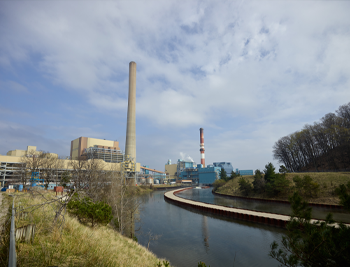
Since the Obama Administration, more than 300 power plants — the primary destination for U.S. coal — have stopped burning coal, while coal production has fallen by half since 2006.
Critics say the forced continuations to operate are actually causing additional costs for Michigan residents rather than avoiding them.
When it announced the intended 2025 closure of the Campbell in 2021, Consumers said the move was expected to save working families and businesses $600 million by 2040.
Consumers has said the cost of keeping the plant open is $615,000 a day and reported at least $135 million in costs associated with the Campbell plant past the scheduled retirement date, not including ongoing costs of running the plant from Dec. 31 to the present.
Consumers Energy is not fighting Wright's use of emergency powers, but intervened in the case to ensure it could collect payments from other states on the MISO grid to pay for the cost of generating electricity at Campbell, which runs at a loss.
After selling the power it generated since May, Consumers racked up an outstanding bill of $180 million through the end of March, the company said in federal financial filings.
Zachary C. Schauf, who represented Consumers at the hearing, said the company "intervened" in the lawsuit — where a third party, not originally part of a lawsuit, joins ongoing litigation to protect their own interests — to have assurance that they will recover their losses of continuing to operate the plant through the Federal Regulatory Energy Commission.
"Our limited purpose here is really just to ensure that nothing in this case undermines our ability to recover the roughly $43 million in net costs we incurred under this order, and we're seeking to recover those costs by the other track of Section 202(c)'s track scheme, which vests emergency authority in DOE, and then cost recovery issues in FERC," Schauf said.
Wright's latest emergency order expires Monday, May 18. Consumers Energy officials have said they expect another order to replace it.
Srinivasan, Pillard and Wilkins are all President Barack Obama appointees.
The court could take up to three months to issue its ruling.
The case referral number is: 25-1159 People of the State of Michigan v. DOE.
— Sarah Leach is the executive editor of the Ottawa News Network. Contact her at sleach@ottawanewsnetwork.org. Follow her on Twitter @ONNLeach.


