


The Business Next Door: Surviving Against the Billion-Dollar Majors, Part 3
In the 1980s and 1990s, Trendway grew at an astonishing average annual rate of 24%, and three times, “Michigan Business Magazine” recognized it as one of the state’s “one hundred fastest growing privately held businesses.”

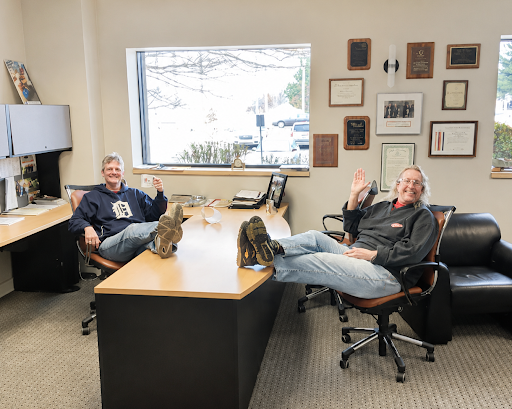
In 1973, George Heeringa purchased a struggling Trendway Corp. and recruited his sons, Jim and Don, to run the company. Jim exited the company in 1995. Don continued until 2019, when Trendway was sold to Fellowes Brands.
In the 1980s and 1990s, Trendway grew at an astonishing average annual rate of 24%, and three times, “Michigan Business Magazine” recognized it as one of the state’s “one hundred fastest growing privately held businesses.”
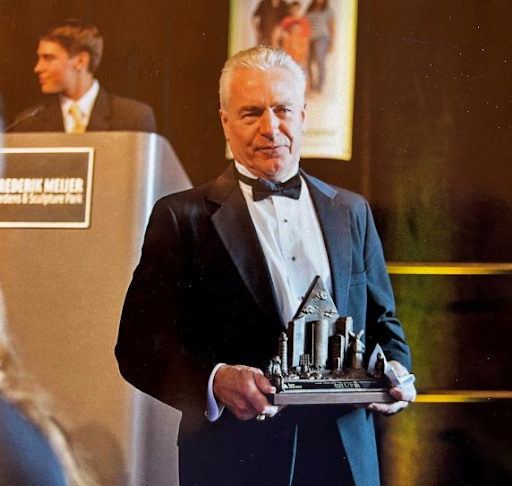
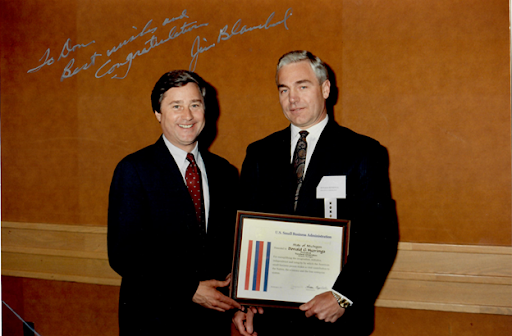
In addition, in 1983, Don was named the Michigan Small Businessperson of the Year; and, in 2014, the Junior Achievement of the Michigan Great Lakes Business Hall of Fame.
More interesting is why these results and accolades occurred.
Don’s story and the history of Trendway is documented in the book “Surviving the Billion-Dollar Majors” available at Reader’s World in downtown Holland.
In ONN, we offer an abridged version, in three parts:
- Part I: The Call
- Part 2: The Market
- Part 3: Lessons Learned
Here is Part 3.
Although the Trendway story had an unhappy ending due to industry consolidation and Fellowes Brands’ decision to shutter the company, we can still learn from Don Heeringa’s experience. Here are seven valuable management lessons.
Lesson 1: Engage others in decision-making
Although Don doesn’t use the phrase “abandoning oneself to the strengths of others,” it is, I believe, the most important lesson of the Trendway story.
Don abandoned himself to the strengths of others on multiple occasions, which resulted in positive actions: buying Peterbilt and Kenworth semi-trucks, floating a truck on a barge, hiring manufacturers’ reps, and offering same-day shipping, all of which were described in Part 2 of this story. Below are additional, and sometimes humorous, examples.
The powder-coating line
In Trendway’s early years, products were shipped to a vendor to be painted. But logistics was a problem, which negatively affected lead times (or the time it takes to manufacture and deliver a product to the customer once it is ordered), which was a barrier to Trendway’s success. Overcoming paint logistics problems helped Trendway gain its competitive advantage.
Dave Williams, Trendway’s manufacturing engineer, explained the situation:
It was a mess. We had two people to schedule paint stuff: They would schedule getting stuff out of the Trendway plant and then over to the paint plant to be coated and then back. In those days, the lead times were about eight or nine weeks.
So, once we got the powder coat in line, we were able to drop our lead times by half. We could now control our own destiny, and paint today and assemble tomorrow. Plus, there was no inventory to speak of if we could pull raw in the morning or the night before and then paint it first thing in the morning. We could also paint all our colors on the same day.
But building a powder coating line wasn’t an easy thing to do, and mistakes were made. Eventually, Dave designed a straight-line powder coating system.
According to Dave:
If you've ever painted before, turns are the worst thing in the world because stuff gets caught and falls off. So, I designed it as a straight line. The line went through the washer, made one turn out in the open, out inside of a wall or building, and then straight out through the powder application area, and into the oven, and then you took it off the line.
After Don approved the design, Don and Dave encountered a problem:
Don came to me and said a mistake in measurement had been made and we were minus 25 feet. So, we started out with another turn. We made one loop inside of the powder-coat building and then back in and then we took the product off.
The investment was substantial: The powder-coating system cost $2 million to install.
Thankfully, Dave did excellent work. In gratitude, Don invited him to lunch at the Holland Country Club. While there, Don noticed Dave was nervous. So, Don asked him why. He said, “The only time I had lunch with the CEO, I got laid off.”
Eventually, like frosting on a cake, Dave eventually got to install his powder-coating system with no turns.
The steel side-rail project
Not only did Dave stay at Trendway, but his next product benefited Trendway even more.
Dave explains:
My next project was a support frame for the freestanding office panels. They were made from aluminum, and aluminum is a lot more expensive than steel. So, Trendway had put together a team of seven or eight people, and they were working on trying to get a new panel.
Well, they weren’t successful. Some just lost their drive; there was too much infighting … all that political stuff. So, when the powder coating project was finished, I told Don's VP of operations, “I’d like to take over that project, but we're going to get rid of that team, and I'm going to take that young kid and I'm going to take that young kid — two young engineers — and we're going to do it.”
So, because the previous team was floundering, Don said, “Let him have it.” So, I took it over, and it was two young kids. They were just a joy to be involved with. They were smart and energetic, and it was just great.
Don adds:
Trendway happened to have a supplier that specialized in roll-formed parts. This made it possible to take Dave’s design and, with the addition of a few machines, manufacture the newly designed side rail out of steel rather than aluminum.
Next, Dave worked on the robotic line. In his words:
We made a steel tube … and designed a welder that was a lot size of 1 [meaning it is optimized for extreme customization], so that when you put the pieces into the frame and pushed the button, it squeezed them together, and that told the computer what size it had to be, and then it told the two robots what do with these eight corners, and so it did that, and then it … was on a seesaw, so while one was welding, one was unloading and loading the other side.
The most important part was it was a lot size of 1, because that's how we built things. So, whatever was going down the line — whatever order was going down the line, whatever size they had, that was the size that we did. You didn't have to change it.
We put that together and we spent $1 million on building that piece of equipment. And I told Don my number and said that because of the material cost, it would save him $1 million a year. … I was giddy. That machine ran every day. … We even had it one day — and I wish I had pictures — that we were running that million-dollar piece of equipment off the batteries from the golf cart!
Don added:
Of all the projects we completed over the years, the aluminum-to-steel side rail project was easily the largest cost-saving initiative in Trendway’s history.
Gifts for foster children
Trendway was a successful company because its people cared and, because of leaders within the company, were able to channel that care.
For instance, the employees of Trendway donated blood monthly. Initially organized by Marlene Serne DeKoeyer, the Red Cross came in every month, and 30-40 people gave blood each time. This went on for 15 years!
In addition, Trendway employees volunteered to clean up the trash along U.S. 31 from Quincy Street south to James Street.
In addition, Trendway team members bought gifts for foster children.
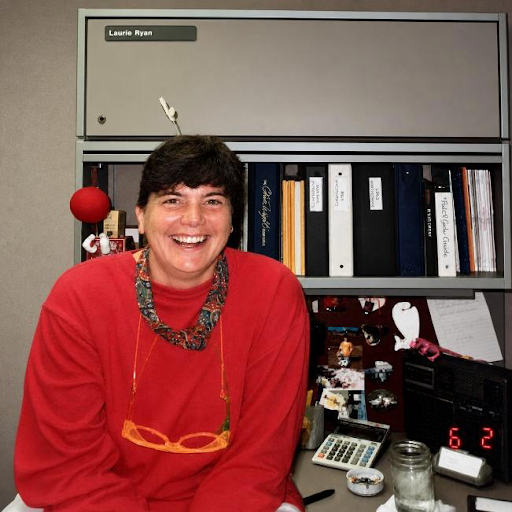
Every year, Luann Ryan, who worked in Trendway’s quality department, placed a Christmas tree in front of her area with 30-40 slips of paper shaped like Christmas trees. On these pieces of paper were names of children who lived with foster families throughout Ottawa County.
According to Don:
Also written on the slips of paper was the age of the child and the name of a gift that each child hoped to get for Christmas that year. Employees pulled that slip of paper off the tree and proceeded to go shopping for that gift.
Luann and the participants took great pride in knowing all foster children in Ottawa County would have at least one gift, and that special gift they had hoped for, to open for Christmas. Luann organized that activity for many years.
Eventually, Trendway received a letter from the head of foster care in Ottawa County. The letter thanked us for that activity and stated that we were the only company in the county that did this. Luann took great pride in that letter.
The Cruise-In Benefit Car Show
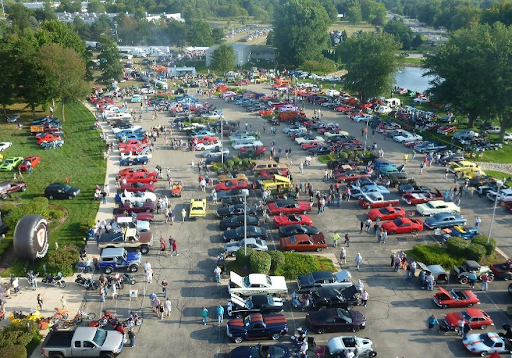
Trendway launched its Cruise-In Benefit Car Show in 2001, after an employee asked how the company could support a team member whose husband — an independent truck driver — was injured in a fire. Ken Harper, then a new employee from Howard Miller, organized the show. The first car show raised $8,000.
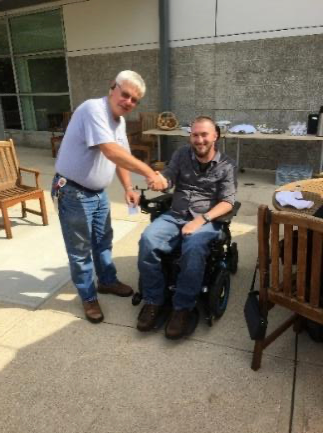
Encouraged by the success of the first show, the next year Trendway sponsored the show again to help a young girl suffering from bulimia. When she saw all the participants, she asked, “Are all those people here for me?”
Financial support came from donations: food and prizes that were sold and raffled off at the show. In addition, throughout the year, Trendway team members did fundraisers, like selling popcorn and hot dogs for a dollar or hosting chili cook-offs. Then, Trendway employees would nominate who in the Holland community should receive the benefits.
One year, the show included 550 cars. In its 17th year, it raised $40,000 for a young man suffering from paralysis.
In these and other ways, Don abandoned himself to the strength of others. That is an important management lesson. But there are others.
Here they are in Don’s own words:
Lesson 2: Be on time, be positive
Come to work on time every day unless your work activities bring you elsewhere. Every person who works for your company watches every move you make, and they observe your behavior every day. Soon they will emulate it. And it helps to encourage their behavior positively.
Our HR Department created a point system that gave team members a negative point each time they were late or absent for any reason. If they obtained 10 points in a year, they were dismissed. This was a very harsh policy, but we needed our people at work on time so we could meet our commitments.
But after a year or two, we adjusted the policy to give employees a positive point if they were not late or absent for a year. And, if they met that standard, they were awarded a week’s pay as a bonus.
During the final years of the company, 80% of our employees received that bonus.
Lesson 3: Control your temper
During our early years, we had a small group of Trendway team members who played basketball together several nights a week. Some of the people I knew well, and some I did not.
After one of their basketball nights, one member of the group informed HR that he had hurt his knee at work and he needed to see a specialist. He was positive that he hurt himself at work and he expected our workers' compensation policy to cover it.
One of the basketball players was a good friend of mine and came to me and informed me that the injured employee had hurt himself while playing basketball.
So, the next day I told him in person we were on to his plan. In response, he proceeded to go around to each department in the plant and inform them that the company did not have workers' compensation insurance.
It did not take long before I learned what he was doing. I became angry and lost my temper. I stormed out of my office and hunted him down. When I found him, I grabbed him by the shirt and told him we did not need his type around here.
Of course, there were numerous people who witnessed this event. For at least two weeks, whenever I entered the plant, they hid from me.
Lesson 4: Plan strategically
A plan is like a golden goose. In our case, the idea of planning evolved when we were about $20 million in annual sales volume. At that time, I was invited by a friend to join YPO (Young Presidents Organization).
During the first few meetings, I thought YPO was simply an ego-feeding organization. Then I learned that its members — about 50 — half of whom were family-owned businesses, were people like me who shared similar problems.
The organization introduced me to the American Management Association, which had developed a formal planning system. I took our senior leaders to their location in New York City, and went through their three-day process. The resulting plan was not perfect, but the process got us started in the right direction.
Lesson 5: Fire bad attitude
Do not shy away from terminating people who have a bad attitude or are poor performers.
During the recession of 2007, for the first time in our corporate life, we were faced with our first major layoff.
At the end of that horrible day, as I sat somber in my office reflecting on what we had done, a long-term plant employee visited me. He said it had been a tough day for everyone, but he wanted to let me know that we had done the right thing because he was sick of working with one individual, a poor team member.
I went home with different thoughts about that day.

Lesson 6: Combat rumors proactively
Every company with more than a few people deals with rumors. Because the rumors are rarely positive, you can’t ignore them. The bathroom is usually the place where they start, but they can start anywhere whenever someone says, “Have you heard about ...?”
At Trendway, we were not spared from the rumor mill, especially when the company faced uncertainty, which is inevitable in business. Seeing as it is part of human nature, we analyzed ways in which we could deal with this phenomenon on a positive basis. We decided to implement the following plan.
Every two weeks, the computer randomly selected 25 employees to attend a company-sponsored lunch of pizza and drinks. At least two officers were asked to attend this lunch. We called them the “You Talk” lunch.
Each invited employee was asked to solicit his or her coworkers for questions or outstanding issues to present during the lunch. We would then go around the room asking each employee to share their questions.
If we knew the answer to the question, we would answer it. If we didn’t know the answer, we would publish it in the printed minutes for all to read. Because the program seemed to work well, we decided to take the concept to a wider audience.
For the last number of years, we held plant-wide (first shift only) meetings in the shipping dock area. The meeting usually lasted 10-15 minutes. I attended the meetings and shared information. The meetings were well received. People appreciated getting the latest information straight from "the boss."
Lesson 7: Answer the phone (in person)
As businesspeople, we spend hours on the phone and staring at screens. As customers, we know there is nothing more frustrating than talking to a machine.
At Trendway, we always had real people answer the phone. If the main line was busy, the system bounced the caller to the next live person on the list.
Most issues can be handled quickly, and they usually were. If not, the answer was, “I'll check it out and call you back.” And we called back.
This seems like common sense, but it always amazed me how many businesses interact with their customers through an automated answering service.
It also amazes me that many leaders don’t take the time to interact in person with their employees. Sometimes I was astounded by what I learned.
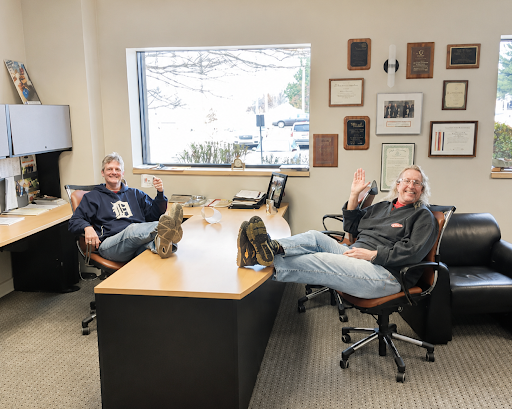
Trendway was a remarkable company. But as the poet Robert Frost said, “Nothing gold can stay.” In 2018, Trendway celebrated 50 years in business. Fellowes Brands purchased Trendway in 2019. That year, Trendway’s employees gave Don a surprise retirement party. Then, in 2024, Fellowes Brands closed Trendway.
These lessons, however, endure.
— Steve VanderVeen ("dr v") is a biographer, educator, and learner, discovering history and developing future entrepreneurs. See start-upacademeinc.com.


