

When 'home' is no longer safe: Unpacking familicide, domestic violence, and healing after Grand Haven Township tragedy
Understanding how a home transforms from a sanctuary into a crime scene requires examining the psychology behind domestic violence, recognizing subtle red flags and equipping parents with the tools to guide children through complex trauma.

GRAND HAVEN TWP. — When news broke that eight family members were found dead inside a Grand Haven Township home on July 24, the surrounding Ottawa County community was thrown into deep collective grief.
Authorities confirmed that Kristopher Karolkiewicz carried out the horrific killings, taking the lives of his partner, Amanda "Mandy" Karolkiewicz, and their children before ending his own life.
Police confirmed on Monday, July 27, that Kristopher shot his family with his legally registered handgun before turning the gun on himself and starting fires in multiple areas of the home.
The family pets also died, overcome by smoke inhalation from the fire.
Yet beneath the public shock of a tragedy that wiped out an entire household lies a harrowing, specific criminal profile: “familicide,” often referred to as family annihilation.
Understanding how a home transforms from a sanctuary into a crime scene requires examining the psychology behind domestic violence, recognizing subtle red flags and equipping parents with the tools to guide children through complex trauma.
What is a 'family annihilator'?
A family annihilator is typically a parent or partner — most often a male — who kills multiple immediate family members, including a spouse and children, frequently ending the event by suicide.
Criminologists and psychological researchers emphasize that these extreme acts rarely occur without warning. They are almost always rooted in systemic domestic abuse, power dynamics and acute psychological stressors.
"Intimate partner homicides are very common, unfortunately," says Megan Hennessey, executive director of Resilience Advocates for Ending Violence.
The nonprofit works to respond to, reduce and prevent domestic and sexual violence in Ottawa and Allegan counties and provides an emergency shelter, supportive housing, trauma therapy, individual support and case management, and a sexual assault nurse examiner program.

As of Monday, July 27, authorities said they did not have a confirmed motive for the Karolkiewicz killings as local media and social media disclosed personal information about the couple, their financial status, and speculation about the state of the couple’s relationship.
While Hennessey said she didn’t know any details about the Karolkiewicz case, she said domestic violence usually revolves around an abuser maintaining control.
“Oftentimes, violence will escalate in times where the abuser thinks that they are losing control, or they perceive that they're losing control,” Hennessey said. “So whether that's something based in reality, whether that's a shame-based reaction — it is about at least perceived control over your partner.”
What is unusual, however, is the escalation of violence against children, Hennessey said.
“It’s startling how common threats are to kill children,” she said of abusive relationships. “‘If you leave me, I'm going to kill you. I'm going to kill kids. If I can't have you, nobody else can.’ Threats like these are very common and should always be taken seriously. And if someone has threatened to hurt or kill their partner or their children in the past, that can be a high indicator that something can happen.”
Hennessey noted that the period following a decision to leave an abusive relationship is statistically the most dangerous: Victims are five times more likely to be killed by an intimate partner in the 18 months after separating, but that violence against children in these situations is uncommon.
“The murdering of children is very unusual,” she said.
Lisa Aronson Fontes, a senior lecturer at the University of Massachusetts Amherst, published research earlier this year on familicide, reporting that although most domestic abusers don't kill, women are five times more likely to be killed by a current or former intimate partner than men.
In familicide cases, 91 percent of the perpetrators are men.
"After killing everyone else, abusers sometimes commit suicide, with guns being the weapon of choice 90 percent of the time," Aronson Fontes said.

Facts of the case released by authorities
The fire was set after the mother and children were already dead, according to police.
When emergency crews were called to the 14900 block of Riverside Trail on July 24, they were responding to reports of smoke. What they found inside was the deadliest domestic tragedy in Ottawa County in recent history.
At Monday’s news conference, Capt. Jake Sparks of the Ottawa County Sheriff’s Office laid out the timeline established by forensic autopsies completed over the weekend.
Read More: News conference gives facts, no rationale for GH Twp. husband, father of 6 to murder his family
Read More: Police: Father killed wife, 6 children before setting Grand Haven Township home on fire
All seven victims died from gunshot wounds before Kristopher set the fire. The medical examiner ruled the deaths of Amanda and the six children as homicides. The children were four boys, ages 15, 12, 11, and 5, and two 11-year-old girls. The boys were biological; the girls, adopted. Authorities are not releasing their names.
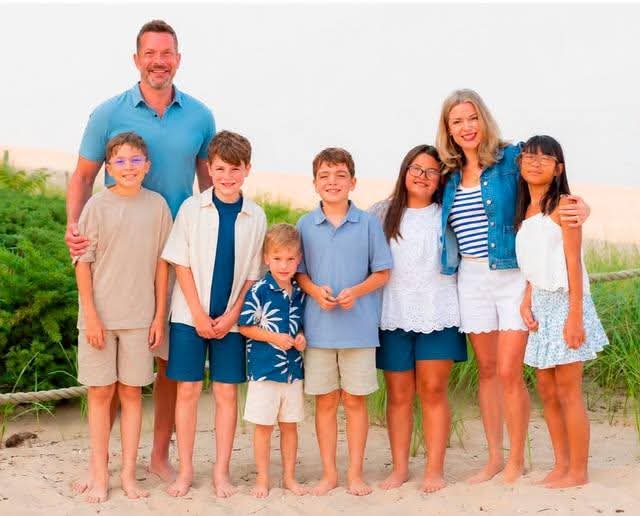
Friends and family, however, have publicly named the children: Keegan, Bennett, Teddy, Smith, Caroline and Ella.
Sparks fielded numerous questions from the media on Monday, but wasn’t able to answer all of them.
"This is far more than a news story," Sparks said, reading a statement on behalf of Sheriff Eric DeBoer. "This situation personally impacts dozens, if not hundreds, of people in the county. Our hearts go out to those families, the neighbors, the co-workers, the teachers, the students of Grand Haven Public Schools, and the friends of the victims. This is an unspeakable tragedy that we may never completely understand why it happened, but we'll do our best to find the answers and to honor the memory of those victims."
Investigators think the violence unfolded Thursday night or in the early morning hours Friday. Neighbors noticed the smell of smoke early that morning, though visible smoke was not reported until 11:42 a.m.
Though the basement was heavily damaged, detectives collected paper records and documents from the home. They are reviewing them to see if Kristopher left behind any written notes or clues about his motivation for the shootings.
"There was a lot of documentation that we seized from the scene, and we're going to go over it,” Sparks said.
Recognizing the signs: Beyond physical violence
A common misconception is that domestic violence always presents as physical abuse.
Experts stress that emotional manipulation, psychological control, and threats often precede any physical act — and in roughly one-third of intimate partner homicides, the lethal event is the very first instance of physical harm.
“A lot of times you'll see that domestic violence — it's not necessarily physical violence. It's manipulation, threats,” Hennessey said.
Shaina Johnson, a Grand Rapids-based licensed master social worker specializing in trauma, said domestic violence — whether emotional or physical — can be difficult to spot for friends, family and co-workers.
“It's one of those things where there are some basic signs that we can look for — like emotional or behavioral signs,” Johnson said.

Things to watch for, she said, include sudden changes in children’s behavior in school or an aversion to discussing how things are going at home.
“I think a lot of times, when we're all kind of interconnected, we see something, and we don't want to say something because we know this person, or we're like, 'No, they would never do something like that,' Johnson said. “But I think that's where we can miss the mark sometimes of when we see something.
“Maybe we don't bring it up to the person directly. Maybe we kind of keep our eye open, or if we need to file a [Child Protective Services] complaint, it doesn't hurt. Or maybe we need to do a wellness check if there's a concern, so that we call a police officer to make sure that everything's OK,” she said.
Red flags in adults and partners
- Perceived loss of control: Extreme jealousy, monitoring of movements, or hyper-controlling behavior over household finances and decisions.
- Escalating isolation: Restricting access to family, friends, or outside support systems.
- Coercive threats: Explicitly threatening self-harm, pet harm, or violence against children if a partner attempts to leave.
Subtle behavioral signs in children
Children living in unsafe environments often exhibit behavioral changes before they ever speak about what is happening at home:
- Withdrawal: Becoming quiet, uncommunicative, or detached from school and extracurricular activities.
- Behavioral shifts: Sudden spikes in anxiety, aggression, or hyper-vigilance.
- Guardedness: Hesitation to discuss family life or invite peers home.
Johnson also cautioned against placing the burden of reporting on young shoulders while encouraging open-door adult support.
"We don't want to put emotional responsibility on the child to save their friend," Johnson explained. "We want to ensure that parents and school staff are educated and provide an open door,” she said.
If a child mentions a friend has unexplained injuries or seems fearful, adults need to follow up — whether that means requesting a police wellness check or filing a report with protective services, she said.
How to talk to children
When horrific events occur within a school district or neighborhood, children absorb the news quickly — often through social media or peer conversations.
Johnson said it’s important to talk with children sooner rather than later, especially when there are multiple child victims.
“Parents want to be the ones to tell them in a safe place and have it come from them is really important,” Johnson said. “The best way to tell them is in a very quiet and private place that the child feels emotionally safe.
She said it’s important for adults to be direct about what happened, and to be open to questions.
Parental guidance: Talking to kids about trauma
1. Start with facts and curiosity: Ask: "What have you heard already?" Correct inaccuracies gently without over-sharing graphic details.
2. Match development and age: Use clear, direct language. Avoid vague euphemisms that can cause confusion.
3. Validate emotional waves: Reassure kids that sadness, anger, fear, or even numbness are normal responses to grief.
4. Maintain daily routines: Structure provides safety when a child's worldview feels disrupted.
5. Let the child lead: Rather than delivering a scripted lecture, start by assessing what they already know. "Kids are trying to make sense of their safety in the community," Hennessey said. "Step one is to let your child lead the conversation. Ask them: 'What have you heard already? What are your friends saying?' Then gently correct the parts that aren't accurate."
6. Be direct yet age-appropriate: Johnson emphasized that parents should deliver news in a private, quiet setting where the child feels emotionally secure. "Give information in very small pieces because they are going to have questions. Validate whatever they feel — whether it's anger, fear, confusion, or even temporary numbness," Johnson said.
7. Maintain consistency: Grief in children rarely follows a linear path. A child may cry one minute and ask to play outside the next. “Maintain your regular schedules while treating their emotions with delicacy,” Johnson said.
“It's a really delicate subject, but along with that delicacy, being very clear on what happened. So, saying: 'I have some very sad news,' and being direct with filtering based on their age group and what's appropriate,” she said. “Express to them what happened and let them know, ‘This is what happened,’ and provide that emotional support, and give information in very small pieces because they're going to ask questions.”
It’s important to allow children to experience a wide range of emotions, whether it’s fear, confusion, anger or apathy, Johnson said.
“Let them know that it's OK to feel sad and then anger, confused, fearful, or just if they don't feel anything at all right away — that's also very normal in that grief process,” she said. “They may have very big reactions; they may have very small reactions. But just meeting them where they're at as far as their emotions in that moment.”
Offering reassurance also is an important factor.
“Remind them that they are loved and that they are supported, and you're here for them because I think, with grief, one of the biggest things, regardless of what the grief is about, is feeling very alone — especially if someone grieves in a different way than you, which is a reality,” Johnson said. “Just offer reassurance and expect those conversations to keep coming up.”
She noted that grief, for children, typically is a new emotion to process.
“Kids are so new to grief in a lot of ways, especially with this being a friend or a classmate, and it being such tragic news. A lot of us don't experience grief until a grandparent passes away or the loss of a pet,” she said. “It's going to be one of those things where there's going to be continuous conversations over time.”
Another key strategy is to maintain routines with which children are familiar.
“Kids really thrive off of that, and if things are kind of too thrown off, that's also going to be really scary to add into the mix,” Johnson said.
As the school year is set to start Aug. 26, parents should expect children to come home with rumors and gossip — the most important thing to note in these cases is to stick to the facts while being emotionally supportive.
“Stay knowledgeable on the facts as they come up and then be able to talk openly about 'these are the facts' and understanding and hearing them out, and then, again, giving that reassurance as it comes up,” Johnson said. “What's important is grief and trying to process it rather than pushing it away.
“I think the biggest thing is trying to help the children have the resources they need to be able to express it, so they're not holding all of this in. Because if they don't know how to express it, how are they supposed to get it done?”
A broader community conversation
Preventing domestic violence extends beyond crisis response — it requires changing cultural conversations around emotional regulation and relationships.
Hennessey said she would like to see broader conversations in the community talking about domestic violence — not just to help the victims, but also to prevent it from manifesting in the first place.
“I think we have a bigger conversation to have in terms of preventing domestic violence. That's around our culture and the way that boys aren't allowed to cry or show weakness or deal with any of those feelings,” she said. “The only really acceptable emotion for men and boys is anger.”
She said that’s why ongoing conversations with children, especially boys, are important.
"How can we work as a community to bring more awareness to mental health to start being able to — not necessarily that we can fully prevent it — but at least be able to have conversations about it more openly, so that it's not hidden in the home so much?”
~ Shaina Johnson, social worker
“Intimate partner violence is a very gendered problem,” Hennessey said. “We recognize that domestic and sexual violence is mostly perpetrated by men, so talking with boys about what healthy masculinity is, what healthy relationships look like, having those conversations, getting other men and older boys to model what dealing with difficult feelings can look like in ways that are healthy.”
Johnson agreed, saying the only way to reduce domestic violence rates is to talk openly and often.
“How can we work as a community to bring more awareness to mental health to start being able to — not necessarily that we can fully prevent it — but at least be able to have conversations about it more openly, so that it's not hidden in the home so much?” she said.
At Resilience Advocates for Ending Violence, Hennessey said it’s important to ensure that those seeking help are supported at all stages of processing their trauma.
“We know that domestic and sexual violence is something that takes power and control away from the victim, so our service philosophy is: How can we put as much control and choice back in the hands of our client?” Hennessey said. “So, services are what people want them to be: Whether it's that they're not interested in leaving their partner and want to talk about safety planning or they do want to talk about leaving their partner, what that safety plan could look like — we're available 24/7.”
Schools, mental health offer community support
Meanwhile, various community organizations offered support services for those affected by the Karolkiewicz tragedy.
Family members of the victims have started a GoFundMe to help cover funeral costs as well as to establish scholarships in the children's names.
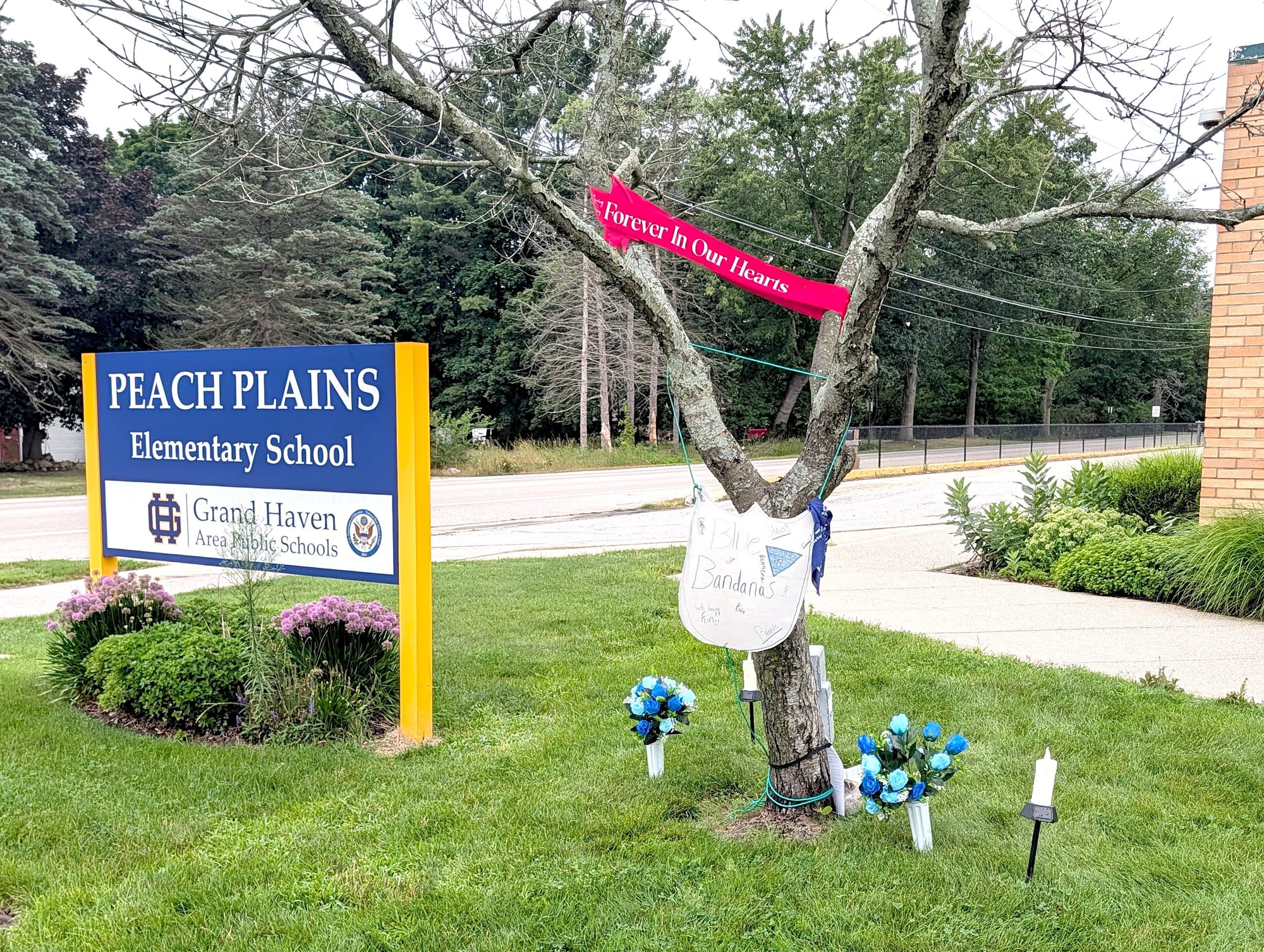
The Grand Haven Public Schools system has been particularly affected by the killings, as all six children attended GHAPS schools and Mandy Karolkiewicz worked as a longtime substitute teacher at Peach Plains Elementary.
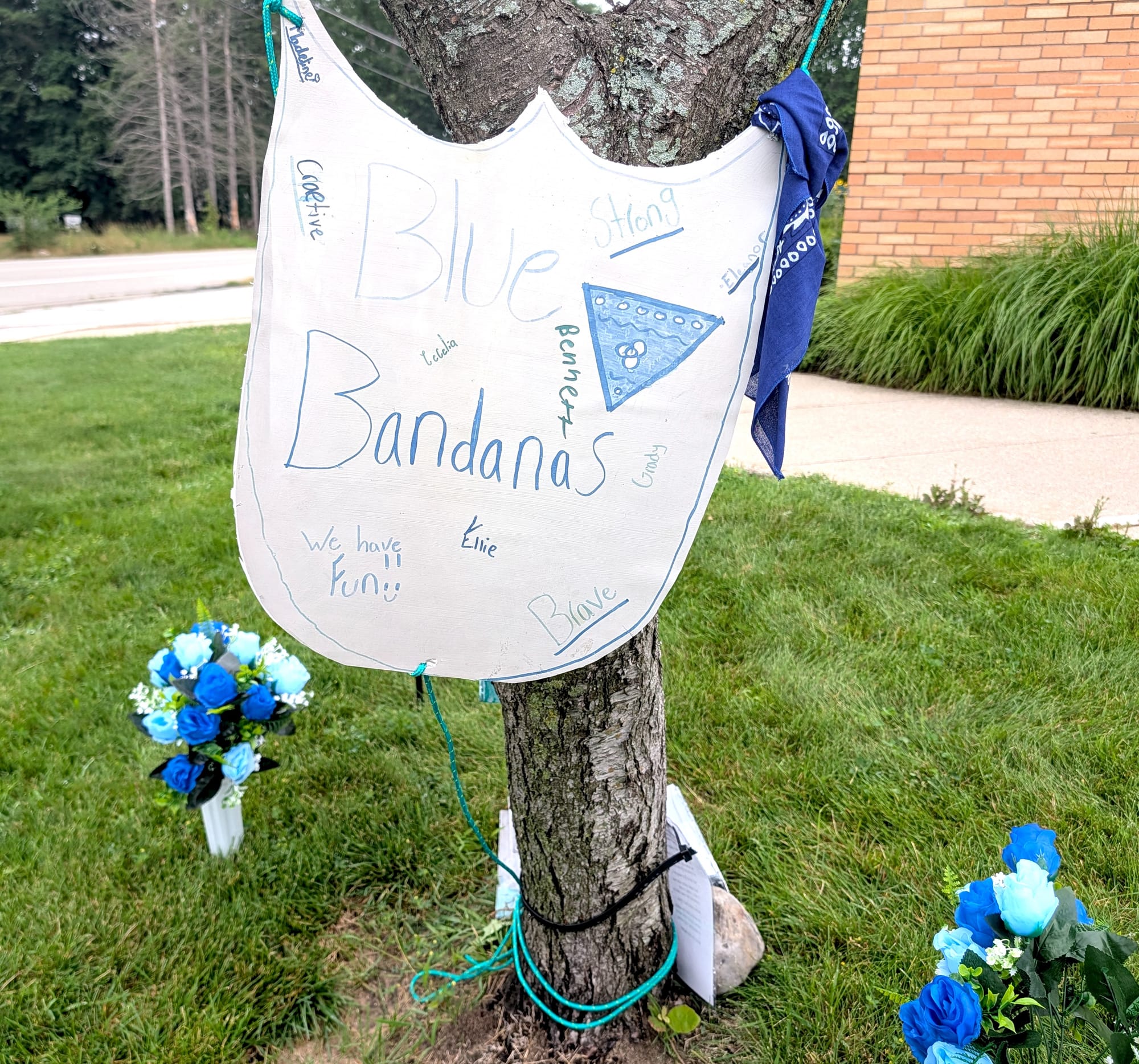
"Our GHAPS family is mourning alongside the entire Grand Haven community in the wake of Friday's tragic incident," Superintendent Kristin Perkowski said Monday in a district-wide statement.
Perkowski described Karolkiewicz as an educator who served "with kindness, compassion, and a willingness to step in wherever she was needed."
"Our hearts are with their family, friends, neighbors, and all who knew and loved them. Amanda, or "Mandy" as many of us knew her, served our students and staff with kindness, compassion, and a willingness to step in wherever she was needed. She touched the lives of countless students and colleagues throughout her years with our district and will be deeply missed," Perkowski said.
The Karolkiewicz incident also is the third death-related tragedy for the district after a student was killed in October in an ATV crash and White Pines Intermediate School Principal Mike Shelton passed away from cancer in December.
In partnership with local organizations and community partners, the district said it was coordinating support resources for students and staff — even though the academic year doesn't begin until Aug. 26.
"There are no words that can ease the pain of a loss like this, but we are grateful for the compassion and care our community continues to show one another," Perkowski said. "We ask that you continue to keep everyone affected in your thoughts as we move forward together."

Services available
- Wednesday (5-7 p.m.): Hope Church, 14932 Mercury Drive. Licensed therapists from Mosaic Counseling will provide a safe, supportive space for students to talk, ask questions, or simply be present. Free; no appointment is necessary.
- Mosaic Counseling: Their team can provide a confidential intake, help assess your family's needs, and connect you with appropriate counseling and support services during this difficult time.
- Dougy Center: A nationally recognized organization that supports grieving children, teens, and families, the Dougy Center's materials are organized by age and developmental stage, helping adults understand how children experience grief at different ages. The resources also include guidance for answering difficult questions and strategies for helping children process feelings in healthy ways.
Community Mental Health of Ottawa County also offered its support on Tuesday.
"In the wake of a tragedy, it’s normal to experience a wide range of thoughts, emotions, and reactions. You may feel sadness, fear, anger, numbness, or have difficulty sleeping or concentrating, while others may feel little immediate impact. There is no "right" way to respond," CMH said in a July 28 statement. "Many people find comfort in family, friends, faith communities, and familiar routines, while others may seek additional help. Trusted support is key during life's hardships and losses."
- If you or someone you know is in a mental health crisis, please call the CMH Helpline at 866-512-4357 or TTY 711.
- Click here to learn more about emergency and after-hours services.
"No one in our community needs to face difficult times alone — help is available," CMH said.
— Sarah Leach is the executive editor of the Ottawa News Network. Contact her at sleach@ottawanewsnetwork.org. Follow her on Twitter @ONNLeach.


